Coastal Living
The Cost of Restoring Coastal Grasscloth, Sisal, and Textured Wallcoverings: Mitigating Humid Mildew, Fiber Bleeding, and Professional Cleaning Standards in Grand Strand Homes
Discover the costs, safety measures, and professional restoration protocols for delicate coastal grasscloth and textured wallpapers damaged by humid Grand Strand salt-air.
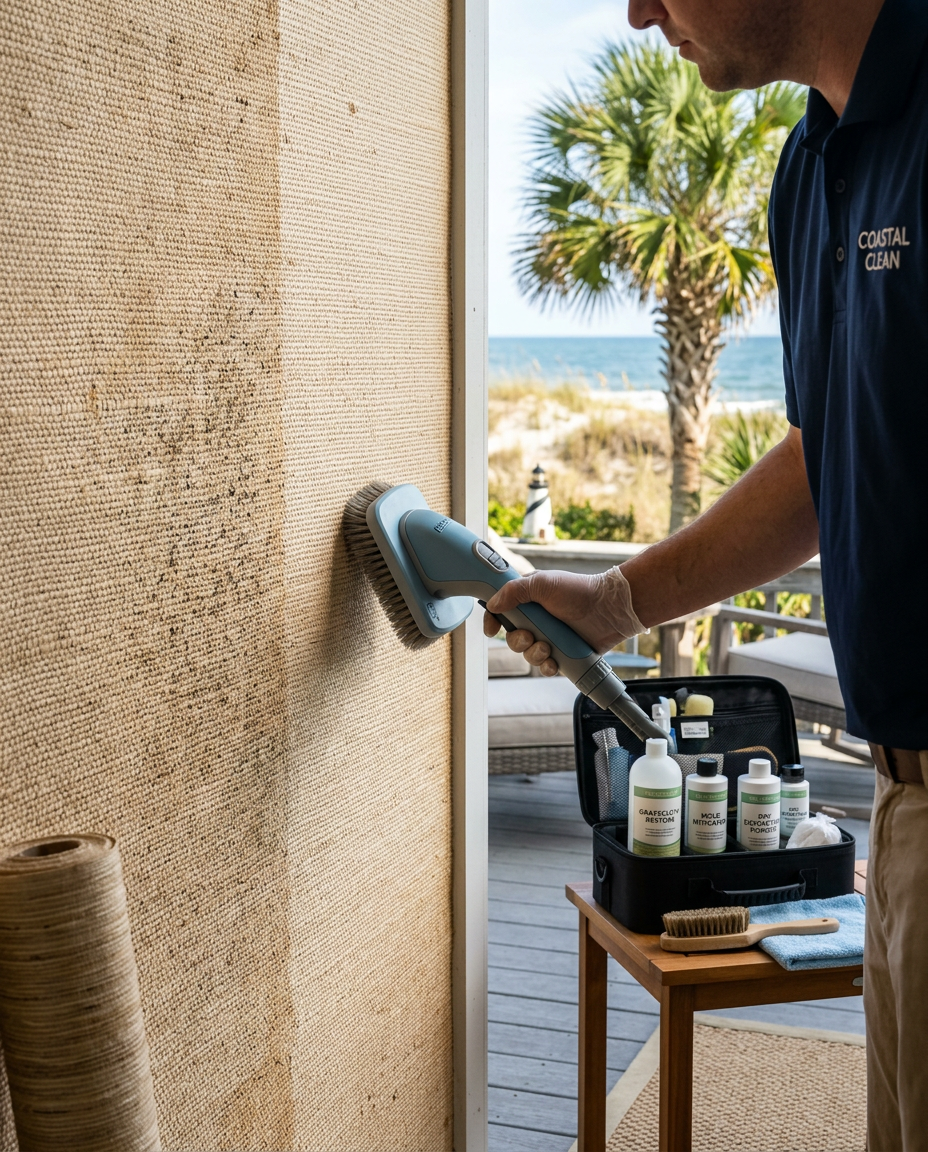
Natural grasscloth, sisal, and hemp wallcoverings bring an organic, sophisticated texture to Grand Strand homes, but our coastal environment presents severe challenges to their preservation. The combination of salt-laden air, high relative humidity, and fine windblown sand can quickly dull these delicate materials, leading to mold growth and adhesive failure. Standard home cleaning methods will ruin these luxury natural fibers, turning a minor dusty spot into an expensive, bleeding stain. Homeowners must understand the specialized science behind restoring these custom finishes safely and cost-effectively.
The Vulnerability of Coastal Grasscloth and Textured Wallcoverings
Natural grasscloth, sisal, and hemp wallcoverings are prized in Myrtle Beach homes for their rich, organic textures and coastal warmth. However, because these materials are crafted from raw, minimally processed plant fibers woven onto a paper backing, they are incredibly vulnerable to environmental shifts. Unlike synthetic vinyl wallpapers, natural fibers are highly hygroscopic, meaning they constantly absorb and release moisture from our humid coastal air, which quickly initiates material degradation.
The backing of these high-end wallcoverings is typically applied using water-soluble potato starch or wheat paste. When humidity levels inside a Grand Strand home rise above fifty-five percent, these adhesives begin to soften and break down. This softening causes the heavy woven fibers to pull away from the drywall, resulting in bubbling, sagging seams, and a complete loss of structural integrity that cannot be fixed with standard household glues.
Furthermore, the natural dyes used to color sea grass, bamboo, and arrowroot are highly unstable and water-sensitive. Even minor exposure to moisture—whether from a humid ocean breeze, a localized plumbing leak, or an improper cleaning attempt—can cause these pigments to run and bleed. This creates dark, permanent water-ring stains that strip the wallpaper of its aesthetic value and require professional intervention to restore.
Understanding the Degradation: Salt-Air Cement, Mold, and Dye Bleeding
In the coastal Grand Strand environment, airborne salt particles act as a natural humectant, pulling moisture directly out of the air and depositing it onto wall surfaces. When these microscopic salt crystals lodge between the tight weaves of a grasscloth or sisal wallcovering, they form a sticky layer that attracts fine dust and sand. Over time, this mixture solidifies into a dull, greyish salt-dust cement that masks the natural colors of the fibers.
This trapped mixture of organic plant fibers, dust, and constant moisture creates an ideal breeding ground for mold and mildew spores. Mold can colonize the back of the paper backing where moisture is trapped against the drywall, as well as the outer textured surface. Once mold takes hold of grasscloth, the hyphae feed directly on the cellulose fibers, causing irreversible structural decay and leaving deep, dark staining that cannot be wiped away.
Attempting to treat this mold with traditional household cleaners or water-based sanitizers is catastrophic. Any liquid introduced to the surface dissolves the water-soluble vegetable dyes, causing them to bleed across the paper backing and create permanent color blocks. The liquid also rewets the starch adhesive underneath, leading to seam splitting, fiber fraying, and a complete delamination of the luxury wallcovering from your walls.
The Financial Reality: Repair, Restoration, and Replacement Costs
When dealing with damaged grasscloth, homeowners in the Grand Strand must weigh the costs of professional dry restoration versus total replacement. A professional dry-extraction cleaning and sanitization for a standard-sized accent wall typically ranges from $350 to $750, depending on the severity of the dust and mold accumulation. This process safely lifts dry soils and neutralizes surface mold spores without using water or harsh chemicals.
If the wallcovering requires seam repair, re-pasting, and localized spot-dyeing to correct minor color loss, homeowners can expect to pay an additional $200 to $500. Professional technicians use specialized conservation-grade wheat starch pastes and custom-blended, non-bleeding pigments to carefully realign loose seams and mask minor water stains. This detailed hand-detailing is highly skilled work that preserves the existing installation and prevents a costly tear-out.
In contrast, the cost of fully replacing damaged grasscloth is exceptionally high. High-quality grasscloth material runs between $50 and $150 per single roll, and a standard room can easily require six to ten rolls. When you add specialized removal, drywall preparation, priming with moisture-resistant sealers, and the precision hanging labor of a master paperhanger, total replacement costs can easily soar to between $2,500 and $6,000, making early professional restoration highly economical.
The High Risks of DIY Cleaning on Natural Plant Fibers
Many homeowners assume that a gentle wipe-down with a damp microfiber cloth or a mild soapy water solution is safe for grasscloth, but this is the most common cause of permanent ruin. Water causes raw plant fibers like jute and sisal to swell, twist, and shrink unevenly as they dry. This uneven movement tears the delicate hand-woven wefts, warps the seams, and leaves unsightly gaps that expose the white drywall underneath.
Using household scrubbing brushes, magic erasers, or abrasive pads is equally destructive to textured wallcoverings. The friction from scrubbing shreds the outer protective layer of the plant fibers, creating fuzzy, frayed patches that permanently alter the texture of the wall. Once these fibers are frayed, they lose their natural luster, become highly susceptible to holding onto dirt, and cannot be smoothed back down.
Furthermore, consumer chemical sprays—including all-purpose cleaners, vinegar solutions, and bleach—will chemically burn natural cellulose fibers. Bleach strips the natural pigments and leaves stark white patches, while acidic or alkaline cleaners alter the pH of the plant fibers, causing them to turn yellow or brown. These chemical burns are irreversible, meaning DIY attempts often turn a minor spot into an immediate replacement project.
Professional Restoration Protocols: Dry Extraction and Solvent-Safe Sanitization
Professional restoration of coastal grasscloth relies on strict low-moisture and dry-extraction engineering to protect the integrity of the fibers. The first step involves using specialized vulcanized natural rubber dry-cleaning sponges. These sponges are wiped across the wallcovering under firm, even hand pressure, lifting dry soot, fine sand, and surface dust out of the weave through static attraction without releasing a single drop of liquid.
For areas affected by oily residues, fingerprints, or sunscreen stains, technicians utilize highly volatile dry solvents (VDS) that contain no water. These specialized solvents dissolve oils on contact and evaporate almost instantly, leaving no moisture behind to react with the starch adhesives or vegetable dyes. The solvent is carefully blotted using white cotton cloths to pull the dissolved oils out of the natural fibers.
To address surface mold and mildew, professionals utilize low-moisture botanical sanitizing mists applied via ultra-low volume (ULV) foggers. This technique deposits micro-droplets of sanitizing agent that neutralize mold spores on contact without dampening the fibers. Combined with commercial LGR (low-grain refrigerant) dehumidifiers running in the room, this protocol ensures the wallcovering remains structurally dry while achieving complete biological sanitation.
Product Safety, Chemical VOCs, and Botanical Sanitisers
When cleaning and restoring wallcoverings in living areas, bedrooms, and dining spaces, product safety is paramount for families, pets, and indoor air quality. Traditional mold-remediation chemicals often rely on harsh quaternary ammonium compounds or chlorine-based formulas that release strong volatile organic compounds (VOCs). These gases can linger in the porous weave of grasscloth for weeks, triggering respiratory sensitivities and leaving chemical residues.
Professional coastal cleaners prioritize botanical, EPA-registered sanitizers derived from natural plant extracts like thymol (essential oil of thyme). These botanical solutions provide a hospital-grade, broad-spectrum sanitizing action that effectively neutralizes mold, mildew, and bacteria without leaving toxic chemical residues behind. This ensures the treated room is immediately safe for occupancy by children and pets without any chemical off-gassing.
Additionally, the carrier agents used in professional spot-removers are carefully selected for their low-toxicity profiles and rapid evaporation rates. By avoiding heavy chlorinated solvents and opting for biodegradable, low-VOC dry cleaning agents, technicians protect both the fragile cellulose structure of the grasscloth and the delicate air quality of your coastal home. This balanced approach preserves your luxury investments without compromising your family's health.
Crucial Questions to Ask a Professional Cleaning Company Before Hiring
Before allowing any cleaning company to touch your high-end grasscloth or textured wallcoverings, you must vet their technical knowledge of natural textile care. Many standard residential cleaners are untrained in dry-solvent extraction and will mistakenly apply water-based products, resulting in instant damage. Asking specific, targeted questions will help you identify qualified professionals who understand the delicate nature of coastal home restorations.
Start by asking about their specific cleaning methodology for natural plant fibers. A qualified company should immediately state that they use dry-cleaning sponges, volatile dry solvents, and low-moisture botanical sanitizers rather than hot water extraction, steam, or liquid spotters. If they suggest using steam, running a damp cloth over the surface, or using standard household cleaners, do not hire them for your luxury wallcoverings.
You should also inquire about their experience with moisture control and seam repair. Ask if they bring their own commercial dehumidification equipment to manage room relative humidity during the process. Ensure they carry comprehensive liability insurance that specifically covers delicate textile and wallpaper restoration, protecting your property in the rare event of color bleeding or fiber shrinkage.
- Do you use vulcanized natural rubber dry-cleaning sponges to lift coastal dust and salt?
- What is your protocol if you encounter water-soluble vegetable dyes that are prone to bleeding?
- Are your sanitizing products EPA-registered and botanical, or do they rely on chlorine and heavy VOCs?
- How do you manage relative humidity in the room while the cleaning and restoration is taking place?
- Can you provide references or examples of successful natural grasscloth or sisal restorations you have performed?
Preventative Maintenance: Protecting Your Coastal Textured Walls Year-Round
The key to avoiding expensive restoration or replacement of your grasscloth is implementing consistent preventative maintenance tailored to the Grand Strand climate. Keeping your home's relative humidity strictly below fifty-five percent year-round is the most effective defense against mold growth and adhesive failure. Running a properly sized HVAC system and utilizing whole-house or localized dehumidifiers will keep the fibers dry and stable.
Regular, gentle dry vacuuming is also essential to prevent salt and sand from settling deep into the woven textures. Use a vacuum cleaner equipped with a clean, soft horsehair brush attachment, and glide it lightly across the wallpaper in the direction of the weave. Avoid vacuuming with standard plastic floor attachments or stiff nylon bristles, which can scratch, fray, and damage the delicate surface fibers over time.
Finally, protect your natural grasscloth from direct, harsh Grand Strand sunlight, which can cause rapid UV fading and dry out the natural fibers, making them brittle. Utilize high-quality window tints, blinds, or UV-blocking drapes during peak sun hours to preserve the original rich hues of the grasscloth. By controlling humidity, dust, and sunlight, you can extend the life of your luxury wallcoverings for decades.
Key takeaway
Preserving delicate grasscloth and textured wallcoverings in our humid coastal climate requires dry-extraction techniques and specialized botanical sanitizers that protect both the natural fibers and your family's health. Avoid the catastrophic damage of DIY wet-cleaning methods and rely on professional restoration protocols to maintain your home's luxury finishes. Contact A2Z Cleaning & Linen Services at 843.800.2788 to schedule a professional assessment and safely protect your coastal investments.
Keep Reading
Coastal Living
The Cost of Restoring Coastal Natural-Fiber Rugs: Mitigating Humidity-Driven Rot, Sand-Grit Fiber Shredding, and Water-Staining in Grand Strand Homes
ReadCoastal Living
The Coastal Home Library, Bookshelf, and Paper Ephemera Decontamination Protocol: Mitigating Humid Paper-Mold, Silverfish Infestations, and Botanical Airway Protection in Grand Strand Homes
ReadCoastal Living
The Cost of Restoring Coastal Luxury Vinyl Plank and Engineered Hardwood Flooring: Mitigating Sand-Grit Micro-Scratches, Salt-Damp Seam Swelling, and Residue Build-Up in Grand Strand Homes
ReadReady for a spotless property?
Call 843.800.2788 or request a free quote from A2Z Cleaning & Linen Services.