Coastal Living
The Coastal Dehumidifier and Condensate Drain Line Maintenance Protocol: Mitigating Bio-Sludge, Spore Reservoirs, and Indoor Air Quality Failures in Grand Strand Homes
Discover how to safely clean and maintain your coastal dehumidifier without harsh chemicals. Protect your home from mold, bio-sludge, and poor indoor air quality.
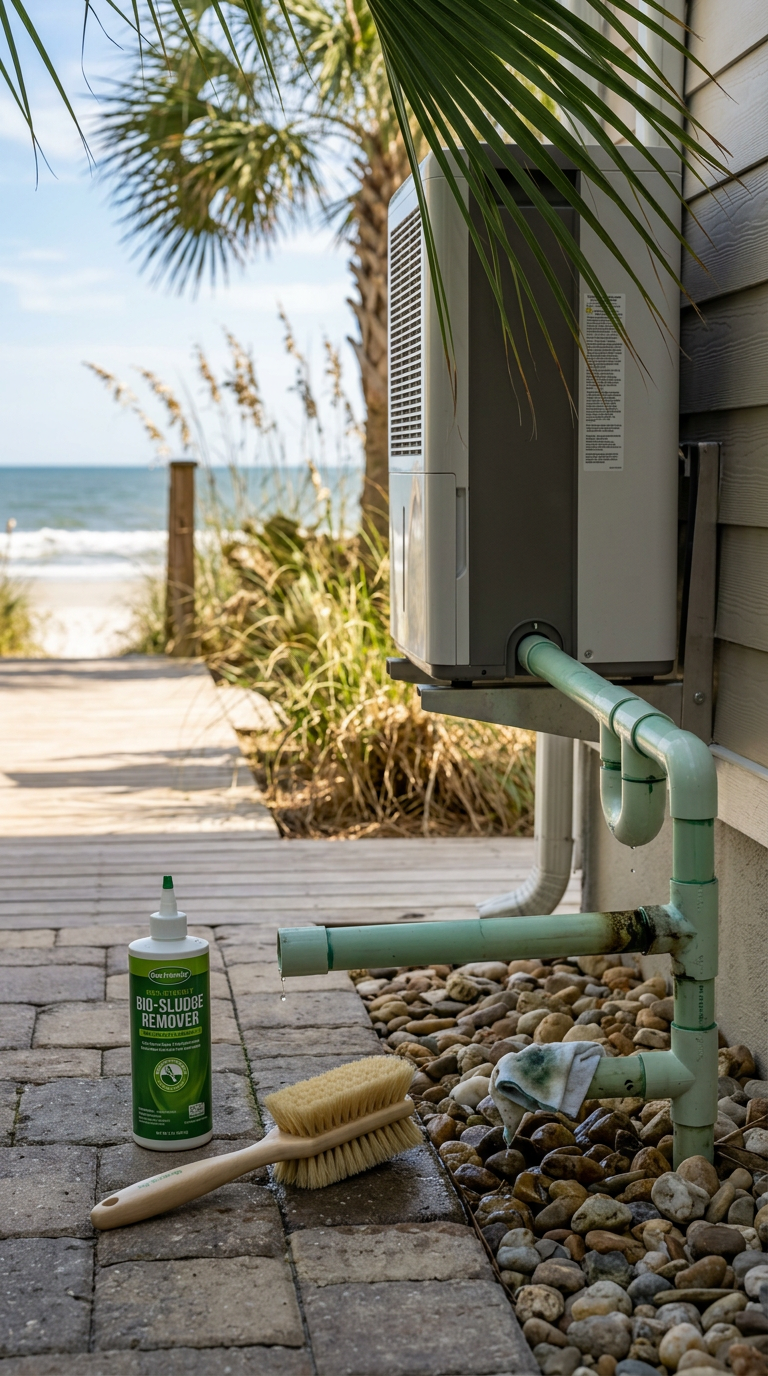
In our humid Grand Strand climate, managing indoor moisture is essential for preserving both your property and your family's health. While dehumidifiers are powerful tools for keeping relative humidity levels below the mold-growth threshold, these machines can easily become breeding grounds for the very allergens they are meant to control. Stagnant water, dust, and coastal spores frequently combine inside these units to form a thick, toxic bio-sludge. This guide outlines a safe, sustainable protocol to keep your dehumidifier running efficiently and your indoor air clean.
The High-Humidity Coastal Challenge: Why Dehumidifiers Become Microbial Amplifiers
Coastal homes along the Grand Strand regularly face outdoor relative humidity levels exceeding eighty percent, forcing HVAC systems and standalone dehumidifiers to pull gallons of water from the air daily. When warm, humid indoor air drawn from kitchens, bathrooms, or crawl spaces hits the cold evaporator coils of a dehumidifier, rapid condensation occurs. This creates a highly localized, wet environment that acts as a magnet for airborne dust, pollen, pet dander, and fungal spores floating through the home.
Without regular intervention, the dark, damp interior chambers of these appliances facilitate rapid spore germination within twenty-four to forty-eight hours. The unit's internal fan then blows these newly multiplied allergens directly back into your living spaces, neutralizing the health benefits of your moisture-control efforts. For Grand Strand residents suffering from asthma, seasonal allergies, or chronic respiratory conditions, this continuous cycle can cause persistent and unexplained symptoms.
Sustaining a healthy home environment requires recognizing that dehumidification equipment demands its own specialized, non-toxic sanitization protocol. Simply emptying the collection bucket is not enough to stop the spread of microscopic irritants. To protect your indoor air quality, you must look deeper into the machine's components to eradicate mold and bacteria at their source.
Identifying the Bio-Sludge Reservoir: Coils, Buckets, and Condensate Pumps
To stop mold before it starts, we must identify the specific anatomical points where bio-sludge and pink yeast gather. The collection bucket is the most obvious site of standing water, but the real hazard lies deeper within the gravity drain lines, the condensate pump reservoir, and the delicate copper evaporator coil fins. Dust particles often bypass coarse primary filters, settling onto wet coils to form a nutrient-rich organic paste that feeds fungal colonies.
Over time, this organic matter washes down into the drain pan and enters the condensate pump. Here, it mixes with stagnant water to form a thick, gelatinous biofilm known as bio-sludge. This sludge can easily clog narrow drain lines, leading to water backups that ruin drywall, subfloors, and carpets, while introducing high concentrations of mold spores directly into your home's breathing zone.
Identifying these trouble spots early prevents mechanical failure and safeguards your family's health. Homeowners should look for slow drainage, a persistent musty odor emanating from the unit's exhaust, or a visible pink or gray film inside the reservoir. Addressing these indicators promptly keeps the unit running efficiently and prevents small issues from escalating into costly repairs.
- Evaporator Coils: Where airborne dust and condensation form a fertile paste for mold spores.
- Collection Buckets: Stagnant water basins that quickly develop pink yeast and bacterial biofilms.
- Condensate Pump Reservoirs: Hidden chambers where bio-sludge accumulates and clogs mechanical floats.
- Gravity Drain Lines: Narrow pathways susceptible to complete blockages from gelatinous organic buildup.
The Danger of Chlorine Bleach in HVAC-Adjacent Systems
When homeowners discover mold or biofilm in their dehumidification equipment, their immediate instinct is often to pour undiluted chlorine bleach down the drain lines and into the collection bucket. This approach is highly problematic for both respiratory health and machine longevity. Chlorine bleach releases harsh volatile organic compounds that irritate the lungs, eyes, and mucous membranes, which defeats the purpose of maintaining clean indoor air.
Furthermore, bleach is highly corrosive to the copper coils, aluminum fins, and plastic housing of modern dehumidifiers. Over time, repeated bleach applications degrade the plastic components of condensate pumps and corrode the metal heat exchangers, causing premature system failure and costly refrigerant leaks. Additionally, bleach does not effectively penetrate porous biofilms; it merely kills the top layer while leaving the underlying organic anchor intact to grow back rapidly.
Choosing a sustainable, non-corrosive alternative is essential for preserving indoor air quality and protecting your investment in home comfort systems. Green cleaning methods provide superior results without introducing dangerous chemical residues into your living spaces. By switching to eco-friendly alternatives, you protect both your household's health and your household appliances.
Botanical Chemistry and Green Solutions for Biofilm Disruption
Safe, sustainable home maintenance relies on botanical chemistry to disrupt biofilms without off-gassing harmful chemicals. Formulations based on thymol, which is derived from thyme oil, or natural citric acid are highly effective at breaking down the cellular walls of mold and bacteria. These green agents penetrate the thick, protective polysaccharide matrix of biofilms, lifting the sludge from plastic and metal surfaces so it can be safely flushed away.
In addition to botanical antimicrobials, enzymatic cleaners are highly effective at digesting organic matter such as skin cells, pet dander, and pollen that collect in drain lines. These enzymes break complex organic compounds down into water-soluble elements, preventing the sticky buildup that allows mold spores to anchor and colonize. This process keeps drain lines completely clear without using toxic ingredients.
By utilizing these biodegradable, non-toxic solutions, Grand Strand homeowners can maintain pristine indoor air quality while protecting local waterways from harsh chemical runoff. This eco-friendly chemistry is completely safe for children, pets, and the delicate electronic components of modern home appliances, making it the ideal choice for everyday maintenance.
Step-by-Step Decontamination Protocol for Standalone and Whole-House Units
Decontaminating a dehumidification system requires a systematic, step-by-step approach to ensure all hidden reservoirs are thoroughly sanitized. Always begin by disconnecting the power supply to eliminate electrical hazards. Remove the collection bucket and the primary air filter, setting them aside for separate treatment in a sink filled with warm water and a botanical dish soap or citric acid solution.
Next, access the condensate pump or gravity drain line. Use a soft-bristled brush dipped in a thymol-based cleaner to gently scrub the interior walls of the pump reservoir and the drain pan beneath the coils. Flush the gravity drain line using a flexible wire brush or a specialized flush kit, followed by a warm water rinse mixed with an enzymatic cleaner to clear any remaining bio-sludge.
Finally, mist the evaporator coils with a self-rinsing, plant-based coil cleaner, allowing the condensation to wash the dirt down the drain. Reassemble the unit only after all components have dried completely, ensuring no residual moisture is trapped inside the closed compartments where mold could reform during storage or downtime.
- Power Down: Unplug the unit or shut off the dedicated breaker to ensure complete safety before cleaning.
- Filter and Bucket Wash: Submerge and scrub removable parts in warm, soapy water with a botanical cleaner.
- Reservoir Scrub: Use a soft brush and a thymol-based solution to remove film from the pump and pan.
- Drain Line Flush: Clear out gelatinous blockages with a flexible brush and an enzyme-based flush.
- Coil Treatment: Apply a self-rinsing, botanical coil cleaner directly to the aluminum fins to lift dust.
Mitigating Allergen Dispersion: Filter Upgrades and Dust-Mite Controls
Simply removing mold from the unit is only half the battle; preventing allergen dispersion requires optimizing the system's filtration capabilities. Standard mesh filters on most retail dehumidifiers only catch large dust bunnies, leaving fine mold spores, pollen, and dust mite allergens free to recirculate. Upgrading to a unit that accommodates a high-efficiency media filter or running a dedicated HEPA air purifier alongside your dehumidifier dramatically improves indoor air quality.
Maintaining an indoor relative humidity level between forty-five and fifty percent is the most effective biological control against dust mites, which cannot survive in environments below fifty percent humidity. Lowering the humidity also halts the active sporulation of mold species common to Myrtle Beach, such as Aspergillus and Penicillium. This dual action significantly reduces the allergen load in your home.
By pairing consistent humidity control with advanced filtration and green cleaning, you create an inhospitable environment for allergens while ensuring clean, breathable air for your household. This is particularly beneficial during high-pollen seasons on the Grand Strand, when outdoor irritants easily find their way indoors.
Integrating Dehumidifier Care into the Seasonal Coastal Maintenance Calendar
The subtropical climate of the Grand Strand requires a proactive maintenance schedule that aligns with seasonal weather shifts. In the humid spring and summer months, dehumidifiers operate continuously and should be inspected bi-weekly for any signs of biofilm or slow drainage. A mid-summer deep clean of the condensate pump and coils ensures the system runs efficiently during the peak of the high-humidity season.
As the cooler, drier autumn air arrives, units should undergo a thorough winterization process before being stored or dialed back. This involves draining all residual water from the pump, flushing the lines with a botanical sanitizer, and allowing the unit to run on 'fan-only' mode for several hours to dry the internal chambers completely. This simple step prevents winter mold growth.
Storing a damp dehumidifier in a garage or crawl space over the winter guarantees a severe mold infestation by the following spring. Consistent, season-based care preserves the operational life of your appliance and protects your indoor air year-round, saving you money on premature replacements and professional remediation.
Professional Vetting: When to Call Myrtle Beach Indoor Environmental Specialists
While routine cleaning can be easily managed at home, certain situations demand the expertise of professional environmental services. If your dehumidifier has been sitting in a flooded crawl space, exhibits heavy black mold growth deep within the fan assembly, or smells strongly of burning plastic or ozone, it is time to seek professional assistance rather than attempting a DIY fix.
At A2Z Cleaning & Linen Services, our trained technicians understand the unique environmental challenges of Myrtle Beach and the Grand Strand. We utilize advanced, eco-friendly green chemistry and professional-grade extraction tools to clean, sanitize, and restore your home's air systems without introducing toxic VOCs. Our focus on health and sustainability ensures your home remains a safe haven.
Protect your family's health and restore your indoor air quality by partnering with local experts who prioritize safety, sustainability, and detail-oriented care. For assistance with home sanitation, indoor environmental care, or linen management, call A2Z Cleaning & Linen Services today at 843.800.2788.
Key takeaway
Maintaining your coastal dehumidifier with safe, botanical chemistry is vital for keeping mold and bio-sludge out of your home's air. By establishing a consistent, eco-friendly maintenance routine, you protect both your family's health and your equipment. For expert assistance with deep cleaning and home health services in Myrtle Beach, contact A2Z Cleaning & Linen Services at 843.800.2788.
Keep Reading
Coastal Living
The Green PTAC and Mini-Split Sanitization Protocol: Eliminating Coastal Bio-Films and Respiratory Irritants in Grand Strand Condos
ReadCoastal Living
The Coastal Window Treatment and Blackout Drapery Sanitization Protocol: Mitigating Humid Mold Spores, Pollen Reservoirs, and VOC-Free Allergen Release in Grand Strand Homes
ReadCoastal Living
The Sub-Plank LVP Moisture Trap: Preventing Subfloor Mold, Joint Swelling, and Indoor Air Quality Failures in Grand Strand Homes
ReadReady for a spotless property?
Call 843.800.2788 or request a free quote from A2Z Cleaning & Linen Services.