Coastal Living
The Green PTAC and Mini-Split Sanitization Protocol: Eliminating Coastal Bio-Films and Respiratory Irritants in Grand Strand Condos
Discover how to safely sanitize ductless coastal AC units using green surfactants and vapor steam to eliminate deep-seated mold, yeast, and salt-crust without chemical off-gassing.
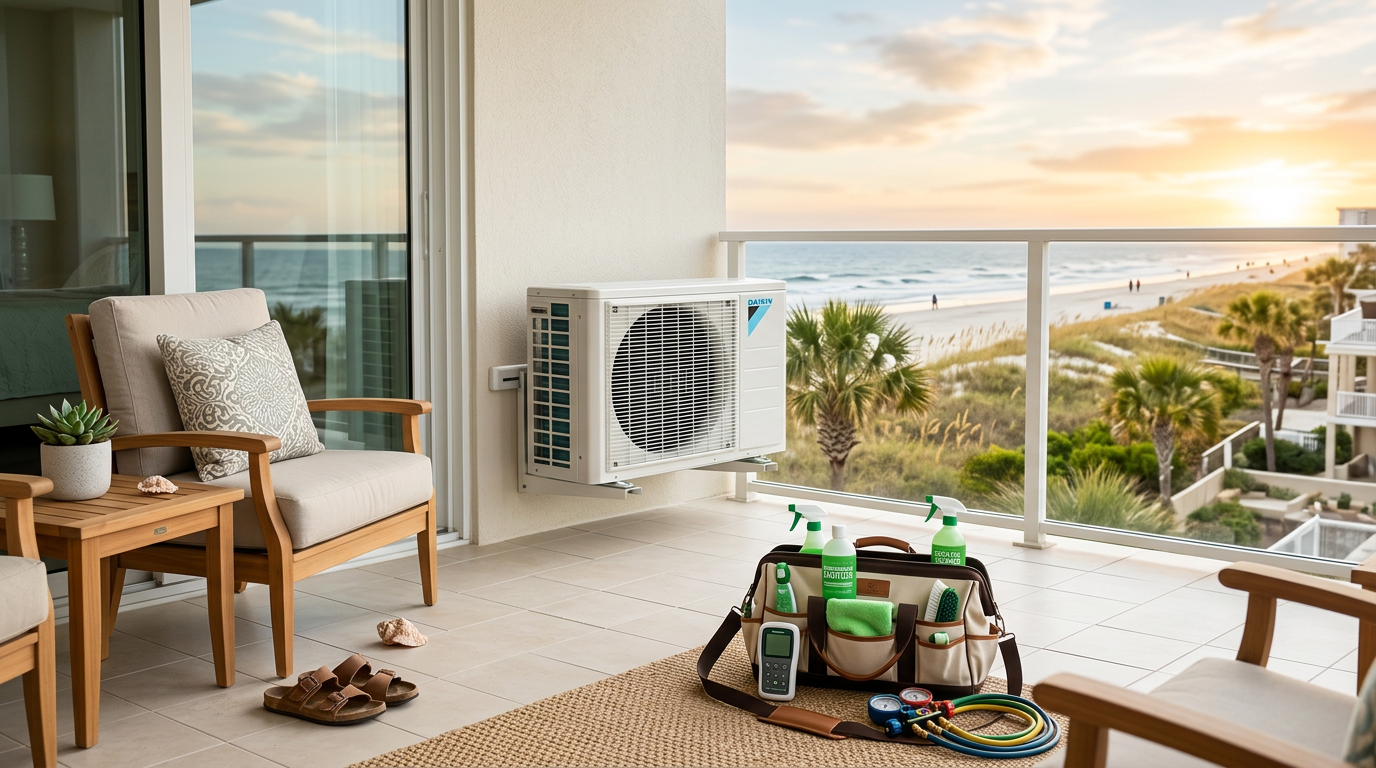
In our coastal Grand Strand environment, ductless heating and cooling systems like PTACs and mini-splits are essential for maintaining indoor comfort. However, the unique combination of high ocean humidity and salt-laden air creates a rapid accumulation of biological growth inside these wall-mounted units. Standard cleaning methods often rely on harsh, volatile chemicals that compromise indoor air quality and threaten guest health. Implementing a green, non-toxic sanitization protocol is the safest and most effective way to protect both your mechanical systems and the respiratory health of everyone inside your property.
The Coastal Micro-Climate Inside PTAC and Mini-Split Units
The unique coastal environment of Myrtle Beach and the wider Grand Strand presents a constant challenge for indoor air quality. High ambient relative humidity, frequently exceeding 80 percent during the summer months, combines with airborne sodium chloride from the ocean. When PTAC and mini-split systems pull this moist, salty air directly into their chassis, rapid condensation occurs as it collides with the cold evaporator coils. This creates a perpetual wet zone inside the dark, enclosed casing, transforming the unit into an active incubator for biological growth.
Unlike ducted central HVAC systems with filters located far from living spaces, PTACs and mini-splits discharge conditioned air directly into bedrooms and living areas. Their compact design means the blower wheel, drain pan, and coils are compressed into a very small footprint. When airborne dust, pet dander, and salt spray bypass the thin mesh filters, they adhere to these wet surfaces, forming a sticky, organic paste that hosts microbial colonies.
This issue is worsened by typical guest occupancy habits in vacation rentals. Guests often turn units completely off when leaving for the beach, then crank them down to low temperatures upon their return. This extreme temperature fluctuation causes rapid sweating along the unit's plastic housings and louvers. Moisture pools in hidden crevices, saturating the interior insulation wraps and encouraging mold germination within 24 to 48 hours.
The Pathology of the Bio-Film: Yeast, Mold, and Salt-Crust
The primary contaminant growing inside these wall units is a thick, dark bio-film composed of black yeast, Aspergillus, and Penicillium species. These organisms thrive on the organic dust, skin flakes, and clothing fibers pulled in from the room. Over time, the bio-film embeds itself into the textured plastic of the cylindrical blower wheel blades, creating a slick, dark layer that resists simple wiping and actively reduces airflow.
Coastal air also carries microscopic salt crystals that settle on the aluminum fins of the evaporator coil. When salt mixes with moisture and biological matter, it forms a corrosive, crusty barrier. This crust not only reduces heat exchange efficiency but also traps mold spores beneath it, shielding them from superficial cleaning methods. Every time the fan runs, it shears microscopic fragments of this mold-and-salt matrix, blowing them directly into the breathing zone.
Asthmatics, young children, and elderly guests are highly vulnerable to these airborne biological triggers. Symptoms often present as sudden congestion, watery eyes, coughing, or throat irritation, which guests frequently mistake for a seasonal beach allergy. In reality, they are reacting to a concentrated stream of mycotoxins and fungal spores circulating continuously within the closed indoor environment.
The Toxic Off-Gassing Hazard: Why Harsh Acid and Chlorine Cleaners Fail
Many property maintenance teams rely on heavy acid-based foaming coil cleaners or concentrated chlorine bleach sprays to dissolve mold quickly. While these chemical agents are highly biocidal, they leave behind harsh, volatile organic compounds (VOCs) that linger in the tight confines of a condo or bedroom. The off-gassing from these chemical residues can cause severe respiratory distress, headaches, and skin irritation for sensitive occupants.
Bleach is also structurally ineffective on the porous plastics and insulation foams found inside AC units. Because bleach contains a high percentage of water, it evaporates quickly while leaving behind salt residues that can accelerate metal corrosion inside the chassis. Furthermore, chlorine cannot deeply penetrate the cellular structures of mold embedded in porous foam panels, merely bleaching the surface pigment while leaving the root system intact to regenerate rapidly.
Green cleaning science utilizes plant-derived surfactants, such as those derived from coconut or corn, combined with natural enzyme packages. These solutions work by breaking down the surface tension of water, allowing the cleaner to penetrate and lift the lipid bilayers of fungal cell walls. By breaking down the organic binder of the bio-film naturally, these products neutralize allergens without releasing toxic chemical vapors into your indoor air.
- Avoid sodium hypochlorite (standard bleach) on porous internal foams to prevent rapid mold regrowth.
- Eliminate caustic acid-based foaming cleaners that corrode copper coils and release toxic VOCs.
- Shun synthetic fragrances and chemical deodorizers that mask musty odors instead of neutralizing the source.
- Choose EPA Safer Choice-certified surfactants that break down bio-films naturally and rinse away cleanly.
- Utilize botanical enzymes to safely digest organic matter inside the narrow condensate pathways.
Step 1: Mechanical Debridement and HEPA Vacuuming
A proper green cleaning protocol must begin with a thorough, dry mechanical extraction phase. Attempting to wet-clean a dusty PTAC or mini-split without removing loose debris first creates a muddy slurry that flows deeper into the drain channels, causing immediate clogs. Technicians must safely isolate the power source at the breaker before removing the outer plastic shroud to expose the inner mechanics of the unit.
Utilizing a commercial-grade vacuum equipped with a certified HEPA filter is critical during this phase. Standard vacuum cleaners lack the filtration capacity to trap microscopic fungal spores, simply exhausting them back into the living space. Technicians use soft-bristled detail brushes to gently dislodge dry dust and salt-crust from the delicate aluminum evaporator fins, capturing the released particles instantly with the vacuum nozzle.
The cylindrical blower wheel requires meticulous attention. On mini-splits, this wheel accumulates thick clumps of dust along its curved blades. Using specialized narrow-channel HEPA vacuum attachments, the technician clears the dry bulk of this buildup. This physical removal step eliminates up to 80% of the loose allergen load before any liquid cleaning agents or steam are introduced to the delicate components.
Step 2: Low-Moisture Vapor Steam and Bio-Based Surfactants
Once dry contaminants are removed, the wet sanitization phase begins. Technicians apply a direct mist of a green, biodegradable surfactant cleaner to the evaporator coils and the blower wheel. This solution is allowed a specific dwell time of five to ten minutes to loosen the stubborn bio-film, emulsify grease, and dissolve salt deposits without corroding the aluminum or copper metallurgy.
Next, dry steam vapor technology is introduced. Using a commercial steam generator operating at temperatures exceeding 220 degrees Fahrenheit with low moisture content (under 6%), technicians systematically flush the coils, housing, and blower wheel. The high thermal energy of the steam acts as a powerful natural sanitizer, instantly rupturing the cellular membranes of mold, yeast, and bacteria on contact without the need for synthetic biocides.
Because the steam is low-moisture, it evaporates almost instantly, preventing water from pooling behind the drywall or penetrating sensitive electrical control boards. The thermal extraction process leaves no chemical residues behind, ensuring that when the unit is turned back on, the discharge air is completely odorless, clean, and free of synthetic chemical perfumes that can trigger sensory sensitivities.
Step 3: Flushing the Condensate Pan and Drain Lines
The condensate drain pan and its corresponding exit line are critical failure points in coastal HVAC units. Algae, mold, and dust combine in the standing water of the pan to form a gelatinous sludge. This sludge easily blocks the narrow drain orifices of mini-splits and the shallow gravity-fed pans of PTACs, leading to water overflows that damage wall finishes, carpet, and baseboards, fostering hidden mold growth in the structural framing.
Technicians physically clear the drain line using a specialized low-pressure flush or a dedicated wet-extraction vacuum to pull out any compacted debris. Once clear, the pan is thoroughly scrubbed with a botanical surfactant and sanitized with steam. This ensures that any microscopic spores remaining in the corners of the pan are neutralized, preventing the rapid re-establishment of the biological sludge layer.
To maintain ongoing drain health without toxic chemicals, eco-friendly enzyme tablets can be placed in the pan. These slow-dissolving, bio-enzymatic pucks release beneficial bacteria that continuously digest organic matter, proteins, and starches as water flows over them. Unlike traditional corrosive chlorine tablets, these green enzymes are non-toxic, biodegradable, and do not emit noxious chemical gases through the air supply vents.
Restoring Airflow and Efficiency: Environmental and Financial Benefits
Beyond the immense health benefits of clean indoor air, deep-cleaning these units yields dramatic operational efficiencies. When dust, mold, and salt crust clog the tiny gaps between aluminum evaporator fins, static pressure increases, and airflow is restricted. The unit must work significantly harder and run longer cycles to reach the thermostat setpoint, which rapidly escalates energy consumption in hot coastal summers.
Clean coils allow for optimal heat transfer, directly reducing the load on the compressor motor. Removing the insulating layer of bio-film from the blower wheel also restores its aerodynamic balance. This reduces mechanical strain on the fan motor, minimizes operational noise, and lowers electricity draw. For property owners and managers, this translates to a measurable reduction in monthly utility bills and a significant extension of the equipment's operational lifespan.
This energy reduction aligns perfectly with environmental sustainability goals. Lowering power demand reduces the overall carbon footprint of Grand Strand properties, while extending the life of the HVAC equipment keeps costly metal and plastic assemblies out of Horry County landfills. It is a rare operational strategy where green health practices directly yield high-ROI financial savings.
Establishing a Proactive Seasonal Maintenance Cycle
Maintaining pristine indoor air quality requires a disciplined, structured maintenance schedule aligned with the Grand Strand’s seasonal shifts. A deep green sanitization of PTAC and mini-split units should be performed at least twice a year: once in early spring before the peak cooling season demands constant operation, and once in late autumn to clear out the biological accumulations of the humid summer months before winter heating cycles begin.
Between professional deep cleans, property owners and onsite staff must execute basic preventative tasks. Filters should be removed, vacuumed, and washed with warm water and mild botanical soap every two to four weeks during high-occupancy seasons. Allowing dust-clogged filters to remain in place forces the unit to draw air from around the edges of the filter frame, accelerating the contamination of the internal coils and blower wheel.
Partnering with a professional cleaning service that understands the technical nuances of green sanitization ensures that these systems are cared for correctly without compromising occupant health. A2Z Cleaning & Linen Services provides specialized, highly thorough cleaning solutions tailored to the unique environmental demands of the Grand Strand. By prioritizing green chemistry, HEPA extraction, and thermal sanitation, we protect both your property assets and the breath of every guest who steps through your door.
- Schedule professional deep green sanitization twice annually, matching spring and autumn transitions.
- Wash unit filters every two to four weeks with warm water and mild, plant-derived soap.
- Inspect exterior condenser grates monthly for salt-crust buildup and clear them with fresh water.
- Keep a 3-foot clearance zone around units free from drapes, furniture, and luggage to ensure unrestricted airflow.
- Monitor wall surfaces around mini-splits daily for any signs of condensation or moisture staining.
Key takeaway
Maintaining ductless AC units in the Grand Strand requires a specialized, non-toxic approach to neutralize mold, yeast, and salt-crust safely. By combining HEPA extraction, biodegradable surfactants, and dry steam, property owners can protect indoor air quality and lower energy costs. For expert assistance with your property's deep cleaning and sanitization needs, call A2Z Cleaning & Linen Services at 843.800.2788.
Keep Reading
Coastal Living
The Coastal Dehumidifier and Condensate Drain Line Maintenance Protocol: Mitigating Bio-Sludge, Spore Reservoirs, and Indoor Air Quality Failures in Grand Strand Homes
ReadCoastal Living
The Coastal Window Treatment and Blackout Drapery Sanitization Protocol: Mitigating Humid Mold Spores, Pollen Reservoirs, and VOC-Free Allergen Release in Grand Strand Homes
ReadCoastal Living
The Sub-Plank LVP Moisture Trap: Preventing Subfloor Mold, Joint Swelling, and Indoor Air Quality Failures in Grand Strand Homes
ReadReady for a spotless property?
Call 843.800.2788 or request a free quote from A2Z Cleaning & Linen Services.