Coastal Living
The Coastal Portable Air Purifier and HEPA Filter Restoration Standard: Mitigating Salt-Damp Dust Loading, Mold-Spore Colonization, and Botanical Cleaning Alternatives in Grand Strand Homes
Discover how the Grand Strand's salt-laden humidity impacts indoor air purifiers, and learn our professional protocol for botanical-safe sanitization and HEPA restoration.
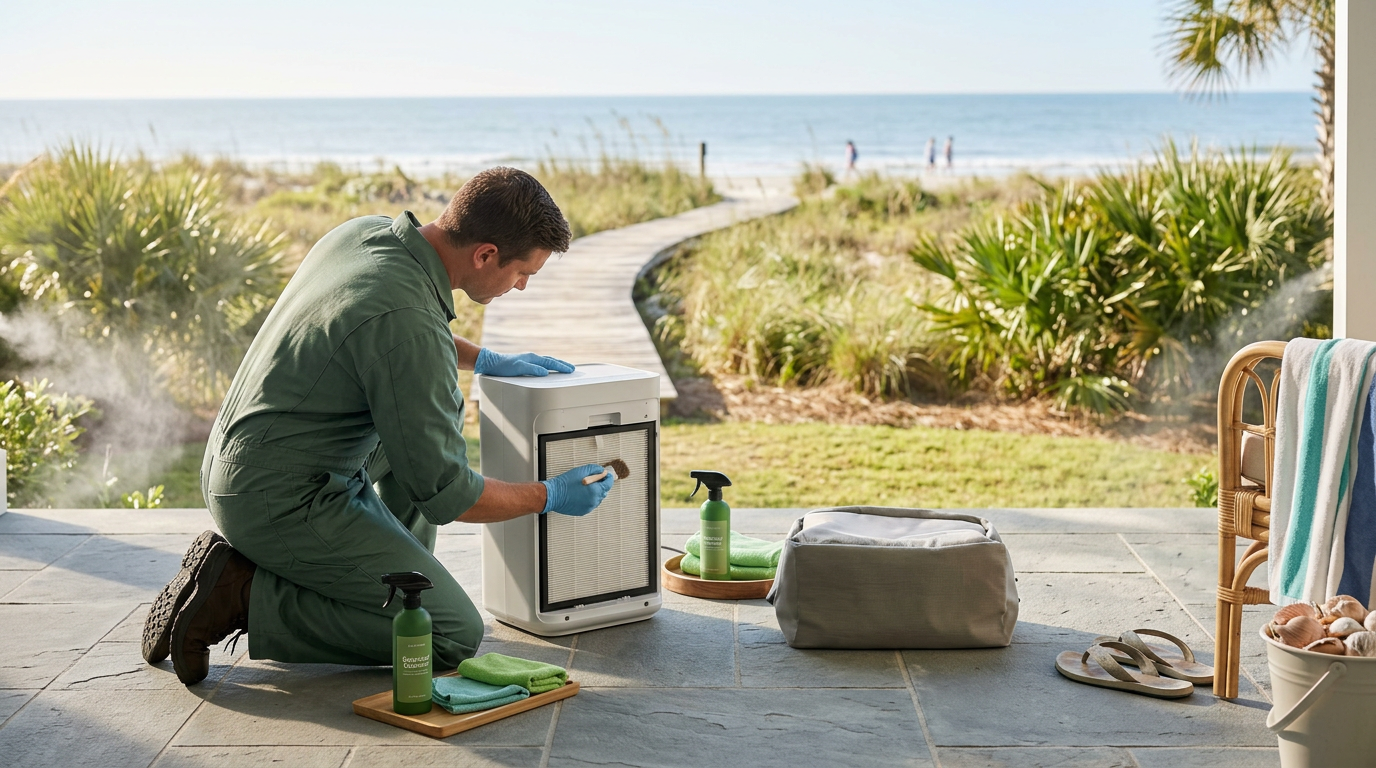
In our coastal Grand Strand environment, many homeowners and property managers rely on portable HEPA air purifiers to maintain clean indoor air. However, the unique combination of high relative humidity and salt-laden ocean air fundamentally changes how these filtration systems operate. Without a highly specific, localized maintenance protocol, these beneficial appliances can quickly transform into damp reservoirs for biological contaminants. At A2Z Cleaning & Linen Services, we advocate for proactive, green-certified protocols to keep your indoor air safe, clean, and entirely free of mold and chemical residues.
The Coastal Air Purifier Paradox: How Humid Salt Air Mutates Filtration Systems
In oceanfront areas like Myrtle Beach and North Myrtle Beach, salt-spray aerosols routinely penetrate residential building envelopes. These microscopic sodium chloride particles are highly hygroscopic, meaning they naturally attract and retain water from our humid air. When drawing air into a portable purifier, these damp salt particles bind directly with incoming organic dust, pet dander, and pollen.
This binding action creates a sticky, dense cake over the filter media rather than a dry, easily dislodged layer of dust. Instead of passing smoothly through the filter fibers, airflow becomes severely restricted, forcing the purifier's motor to run hotter and pull more power. Over time, this damp crust compromises the electrostatic charge of HEPA filters, reducing their overall particulate capture efficiency.
Furthermore, this damp, nutrient-dense dust cake provides the ideal environment for biological growth inside the machine. Instead of purifying your living space, an unmaintained unit can end up circulating stale, salt-damp odors throughout your home. Understanding this coastal phenomenon is the first step toward reclaiming your indoor air quality and extending the lifespan of your filtration equipment.
- Hygroscopic salt particles draw continuous moisture from the air directly into the filter media.
- Sticky dust-salt mixtures create premature airflow restriction and strain the purifier's motor.
- Loss of electrostatic charge decreases the capture rate of fine sub-micron allergens.
- Damp filter cakes emit a distinct musty, oceanic odor when the machine is operating.
The Mechanics of Mold Spore Colonization Within HEPA Media
True HEPA filters are designed to capture 99.97% of particulates down to 0.3 microns, which easily includes common coastal mold spores like Aspergillus, Penicillium, and Cladosporium. However, once these spores are trapped within a damp, salt-crusted filter, they do not simply disappear. The organic dust collected alongside the spores—such as sloughed human skin cells and pet dander—acts as an abundant food source.
Under sustained indoor humidity levels above 55%, these trapped spores can germinate directly inside the fiberglass paper of the HEPA filter. The fungal hyphae begin to grow through the dense filter web, eventually reaching the clean side of the filter media. When the purifier cycles on, microscopic fragments of mold, along with volatile organic compounds (mVOCs), can be shed directly into your breathing zone.
This cycle poses a direct health concern for asthma sufferers, seasonal allergy guests, and young children in Grand Strand homes. Standard vacuuming of the HEPA filter surface is insufficient to address this deep fiber colonization and can actually rupture the delicate filter pleats. A strict, botanical-safe decontamination and replacement schedule is the only reliable method to interrupt this biological pathway.
Carbon Filter Saturated VOC Re-Emission Vulnerabilities
Most quality portable air purifiers feature an activated carbon stage designed to adsorb odors, chemical fumes, and volatile organic compounds (VOCs). In coastal households, carbon filters face a dual challenge: high ambient humidity and heavy chemical loads from standard sunscreen aerosols, beach-day cosmetics, and damp-coastal humidity neutralizers.
Water vapor molecules in humid air actively compete with VOCs for the limited adsorption sites inside the carbon's microscopic pore structure. When the air is highly saturated, water molecules can displace previously trapped chemicals, a phenomenon known as competitive desorption. This causes the carbon filter to rapidly saturate and begin releasing concentrated bursts of trapped odors and VOCs back into the room.
To prevent this chemical re-emission, Grand Strand properties require a more frequent carbon filter replacement cycle than inland homes. Relying solely on the manufacturer's generic timeline—often calibrated for dry, low-pollen environments—can result in saturated carbon stages that actively degrade your indoor air quality for months before the filter replacement indicator light ever turns on.
Botanical-Safe Sanitization Protocol for Outer Casings and Grilles
When restoring a portable air purifier, the structural housing, intake grilles, and impeller blades require careful decontamination to remove accumulated biological films. We strongly advise against using harsh synthetic chemicals, chlorine bleach, or ammonia-based cleaners on these components. These chemicals can degrade the plastic housings, leave behind irritating chemical residues, and react with trapped dust to create secondary indoor pollutants.
Our green-certified protocol utilizes botanical surfactants derived from natural thyme oil (thymol) or citric acid solutions. These plant-based chemistries provide robust antimicrobial activity without releasing toxic VOCs into your home. To clean, first disconnect the unit from power and remove all filters to isolate the plastic and mechanical components.
Using a slightly damp, lint-free microfiber cloth saturated with a botanical sanitizing solution, carefully wipe down the intake grilles, sensor ports, and the interior walls of the filter chamber. For the exhaust grilles and hard-to-reach fan blades, use soft-bristled detail brushes slightly dampened with the botanical solution to lift sticky dust. Allow all components to air-dry completely before reassembling the unit.
- Isolate the appliance from power and remove all internal filters before beginning.
- Use thyme oil or citric acid-based botanical sanitizers to avoid toxic chemical off-gassing.
- Target the sensor ports and impeller blades where sticky, salt-laden dust accumulates.
- Ensure every internal compartment is 100% dry before introducing new filter media.
HEPA and Carbon Filter Inspection, Maintenance, and Replacement Scheduling
To offset the aggressive nature of our coastal climate, Grand Strand homeowners must establish a customized maintenance and inspection calendar. While inland manufacturers often suggest annual HEPA replacements, oceanfront properties with high summer guest turn-overs and open-window habits should inspect filters every 60 days. In high-traffic or pet-friendly coastal homes, a full HEPA swap is often required every 4 to 6 months.
Pre-filters, which capture larger sand particles, pet hair, and lint, require attention every 30 days. If your unit features a washable foam or fabric pre-filter, wash it in warm water with a fragrance-free, plant-derived dish soap. It is absolutely vital that these washable pre-filters are completely, bone-dry before being reinserted; even a trace of residual moisture will accelerate mold growth inside the adjacent HEPA media.
For non-washable pre-filters, use a vacuum equipped with a sealed HEPA filtration system to gently sweep the surface dust. Never use a standard, non-HEPA vacuum to clean these filters, as you will simply exhaust fine mold spores and salt dust back into your living areas. If the HEPA filter shows any signs of graying, damp compaction, or a musty smell, bypass cleaning attempts and replace it immediately.
Safe Disposal and Handling of Bio-Burdened Filter Media
Replacing a saturated HEPA or carbon filter can inadvertently release millions of trapped mold spores, dust mites, pollen grains, and dried salt-crusted dander back into your home. When performing a filter replacement, always shut off the room's HVAC system first to prevent any airborne particles from being drawn into your central ductwork.
Wear protective nitrile gloves and a well-fitted particulate mask (such as an N95 or KN95) to safeguard your respiratory tract during the swap. Gently slide the old filter out of the purifier housing and immediately place it into a heavy-duty, sealable plastic trash bag. Seal the bag completely while still inside the room to prevent any puff of dust from escaping during transit.
Once the old filter is securely bagged, wipe down the filter gasket seating track inside the machine with a botanical wipe to remove any bypassed dust. Dispose of the bagged filter in your outdoor waste receptacle immediately. Wash your hands and forearms thoroughly after completion to ensure no active biological material or allergens remain on your skin.
Integrating Eco-Friendly Botanical Fragrance and Allergen Neutralizers
Many property owners try to mask musty coastal odors by using synthetic plug-in air fresheners, aerosol sprays, or ozone-generating machines. These methods are highly counterproductive to indoor health. Synthetic fragrances release phthalates and synthetic VOCs, while ozone generators create harmful gas-phase reactions that irritate the lungs and damage soft furnishings.
Instead, address odors at their source by maintaining clean air purifiers and utilizing safe, botanical-based odor neutralizers. Natural, plant-derived products containing soy-based or plant-ester odor absorbers can be used to safely bind with airborne odor molecules without leaving synthetic chemical trails behind.
Additionally, ensure your home's relative humidity is kept strictly between 45% and 53% using dehumidifiers and your central HVAC system. Keeping the humidity in this target zone prevents mold spores from germinating in the first place and stops dust mites from multiplying. This holistic, chemical-free approach ensures your coastal home remains safe, fresh, and genuinely healthy for everyone.
- Avoid synthetic chemical deodorizers, chemical sprays, and lung-irritating ozone generators.
- Utilize plant-ester or soy-based botanical absorbers to neutralize organic odors safely.
- Maintain indoor relative humidity levels strictly below 55% to halt mold germination.
- Pair healthy air filtration with consistent, natural source control for optimal IAQ.
Vetting Professional Eco-Conscious Cleaning Partners in Myrtle Beach
Maintaining optimal indoor air quality in a busy Grand Strand home or rental property requires consistent attention to detail. When selecting a professional cleaning partner, it is essential to ask detailed questions about their equipment, cleaning chemistries, and staff training protocols. A truly professional service should clearly understand the science of coastal indoor air quality.
Ensure your cleaning service utilizes CRI Green Label Certified HEPA vacuums that keep captured dust locked inside the machine rather than blowing fine allergens back into your rooms. Ask if they use plant-derived, EPA Safer Choice, or green-certified cleaning products rather than standard, harsh industrial chemicals. A committed partner will be proud to discuss their eco-friendly chemical portfolio and their specific protocols for allergen control.
At A2Z Cleaning & Linen Services, we specialize in high-standard, health-conscious cleaning solutions tailored specifically to our unique Grand Strand climate. From comprehensive home cleaning to specialized linen care, our family-owned team is dedicated to preserving your health, safety, and property value. Contact our Myrtle Beach office at 843.800.2788 to discuss a customized green cleaning plan for your property.
Key takeaway
Maintaining portable air purifiers in the humid Grand Strand climate requires a dedicated, green-certified protocol to prevent salt-damp dust from cultivating mold. By utilizing botanical sanitizers and a coastal-specific filter replacement schedule, you can protect your indoor air quality and safeguard your family's health. For professional, eco-friendly cleaning services that understand the unique demands of coastal living, call A2Z Cleaning & Linen Services at 843.800.2788.
Keep Reading

Coastal Living
The Coastal Dehumidifier and Condensate Drain Line Maintenance Protocol: Mitigating Bio-Sludge, Spore Reservoirs, and Indoor Air Quality Failures in Grand Strand Homes
ReadCoastal Living
The Green PTAC and Mini-Split Sanitization Protocol: Eliminating Coastal Bio-Films and Respiratory Irritants in Grand Strand Condos
ReadCoastal Living
The Coastal Window Treatment and Blackout Drapery Sanitization Protocol: Mitigating Humid Mold Spores, Pollen Reservoirs, and VOC-Free Allergen Release in Grand Strand Homes
ReadReady for a spotless property?
Call 843.800.2788 or request a free quote from A2Z Cleaning & Linen Services.