Coastal Living
The Coastal Family Cat Litter Station and Scratching Post Decontamination Protocol: Mitigating Humid Ammonia Off-Gassing, Silt-Grit Tracking, and Kid-Safe Botanical Care in Grand Strand Homes
Discover how coastal humidity intensifies cat odors and litter tracking, and learn our professional, kid-safe protocol to sanitize feline zones in your Grand Strand home.
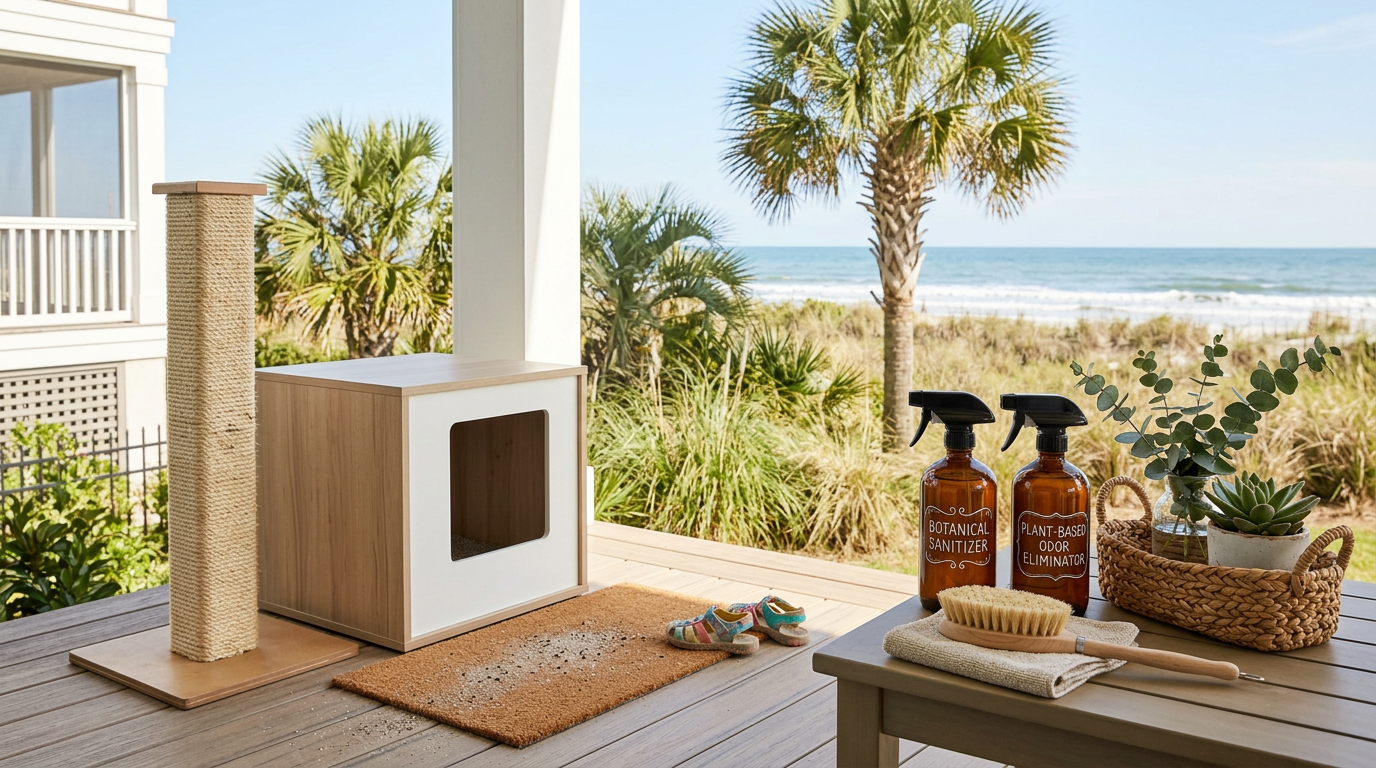
Living along the Grand Strand brings unparalleled coastal beauty, but our signature high humidity and airborne salt present unique challenges for multi-pet households. For cat owners, the combination of warm, damp air and fine beach sand can transform a standard litter station into a hotbed for rapid ammonia off-gassing and abrasive grit tracking. Balancing effective pet odor control with the safety of crawling toddlers and allergy-prone children requires a specialized, biochemically sound approach. At A2Z Cleaning & Linen Services, we have developed a practical, non-toxic decontamination protocol designed to neutralize coastal feline soils while protecting your family's health and home assets.
The Chemistry of Coastal Ammonia: How Grand Strand Humidity Accelerates Odor Off-Gassing
In the humid subtropical climate of Myrtle Beach, indoor relative humidity levels often hover above the ideal fifty-percent threshold, even with active air conditioning. This elevated moisture creates a catalyst for rapid bacterial activity in and around cat litter boxes, where urea is quickly broken down into gaseous ammonia. Unlike dry climates where liquid waste evaporates rapidly, coastal humidity traps moisture within the litter substrate, accelerating chemical decomposition and intensifying sharp, organic odors.
Furthermore, airborne salt molecules in our coastal breeze can bind with gaseous ammonia, creating a heavy, lingering odor profile that settles into nearby drywall, baseboards, and soft furnishings. This damp, acidic environment not only compromises your home’s indoor air quality but can also trigger respiratory sensitivities in young children and asthma sufferers. Standard grocery-store deodorizers merely mask these molecules with heavy synthetic perfumes, which can aggravate childhood allergies and cause feline litter-box aversion.
To effectively halt this chemical process, homeowners must target the moisture-retaining properties of the litter zone. Utilizing highly absorbent, non-scented clay or natural wood-alternative litters, coupled with consistent humidity management, is the foundational step. By keeping the surrounding air dry and neutral, you disrupt the bacterial pathway that converts liquid feline waste into breathable airborne irritants.
Sand-Grit and Litter Clumping: Preventing Silt Tracking Across Family Flooring
Grand Strand busy households constantly contend with sand tracking from beach trips, backyard play, and pet paws. When fine coastal silica sand enters the home and mixes with tracking-active cat litter, it creates an abrasive paste on feline paw pads. As cats exit their litter stations, they deposit this gritty mixture onto luxury vinyl plank, hardwood, and carpeted floors, where foot traffic grinds the sharp silica particles deep into flooring grains.
Over time, this micro-abrasion strips the protective wear layers off high-end coastal flooring, leaving dull, scratched surfaces that are highly vulnerable to moisture penetration and deep-set staining. For crawling infants and toddlers, this tracked grit is not just an aesthetic issue; it represents a direct contact point for fecal coliform bacteria, parasites, and dust-mite allergens that concentrate at floor level. Minimizing this tracking requires a dual-zone defense system that captures both moisture and fine particulates before they disperse.
We recommend placing a heavy-duty, dual-layer honeycomb trapping mat directly outside the litter enclosure exit, followed immediately by a washable microfiber runner. The honeycomb mat forces the cat's paw pads to splay naturally, releasing trapped litter grains and beach sand into a lower containment tray, while the microfiber runner absorbs residual paw moisture. This mechanical interception prevents abrasive grit from migrating into your main family living areas, protecting both your children and your flooring investment.
Scratching Post Restoration: Extracting Trapped Pet Hair, Dander, and Humidity-Bound Yeast
Sisal and carpeted scratching posts are essential for feline behavioral health, but their coarse, fibrous textures act as highly efficient filters for loose pet hair, sloughed claw sheaths, and dander. In our humid coastal environment, these organic materials absorb atmospheric moisture, turning the scratching post into a prime breeding ground for environmental yeast, mold spores, and dust mites. Left uncleaned, these vertical surfaces release clouds of allergens every time your cat stretches and scratches.
Vacuuming alone is insufficient to release the static-bound pet hair and deeply embedded dander woven into tight sisal coils. To properly restore these fixtures without degrading the natural adhesives holding the fibers together, a dry-extraction and localized sanitization process is required. This routine keeps the scratching post smelling fresh, prevents structural fiber rot, and ensures that children playing nearby are not exposed to high concentrations of airborne allergens.
To execute this deep cleaning, start by using a rubber-bladed squeegee or a specialized pet-hair scraping tool to pull bound fur out of the sisal grooves. Once the bulk hair is removed, lightly mist the post with a diluted, child-safe isopropyl alcohol and water mixture (one-to-one ratio) infused with a botanical enzymatic digester. Avoid soaking the post, as excess water will dissolve the internal wood glue and invite mold growth; instead, let it air-dry completely under a ceiling fan or near a dehumidifier.
The Toddler-Safe Barrier: Designing and Sanitizing Cat Zones to Protect Crawling Children
In a busy family home, maintaining physical separation between inquisitive toddlers and the cat's litter zone is paramount for sanitary safety. Young children exploring their environment on hands and knees are naturally drawn to hidden spaces, making open litter boxes a severe biological hazard. Implementing physical barriers, such as top-entry litter enclosures or child-proof door straps that only allow gap access for cats, is the first line of defense.
Equally critical is the sanitization of the perimeter flooring extending three to five feet around the litter station. Even with top-tier tracking mats, microscopic droplets of urine and fine litter dust inevitably settle onto the surrounding floor, where toddlers sit and play. This high-contact zone must be sanitized daily using non-residual, non-toxic chemistry that eliminates pathogens without leaving behind harmful synthetic chemicals that children can ingest through hand-to-mouth contact.
For daily floor maintenance in this perimeter zone, avoid harsh disinfectants containing quaternary ammonium compounds or bleach, which can irritate sensitive toddler skin and paws. Instead, utilize a microfiber flat mop dampened with an EPA-approved hydrogen peroxide-based cleaner or a diluted food-grade citric acid solution. These agents break down organic bio-burden into harmless water and oxygen, leaving a pristine, residue-free surface safe for the entire family.
- Install top-entry litter enclosures to physically block toddler access to waste.
- Use adjustable door straps to allow cat-only entry to designated laundry rooms or closets.
- Establish a four-foot sanitization zone around the litter station for daily micro-mopping.
- Avoid using pine-oil or phenol-based cleaners, which are highly toxic to felines.
- Utilize color-coded microfiber cloths strictly dedicated to the pet-zone decontamination process.
Step-by-Step Deep Cleaning Protocol for Litter Enclosures and Plastic Trays
Over months of use, plastic litter boxes develop micro-scratches from cat claws during digging, creating tiny pockets where bacteria, yeast, and crystallized urine salts bind to the polymer matrix. Simply dumping the litter and rinsing the box with water will not dislodge these deeply embedded pathogens, which continue to emit odor even with fresh litter. A monthly deep-cleansing protocol is necessary to strip these deposits and restore the structural hygiene of the plastic.
To begin, safely empty all litter into a waste bag and transport the empty plastic pan outdoors or to a dedicated utility sink. Do not use family bathtubs or kitchen sinks for this process to avoid cross-contaminating food prep and personal bathing areas. Spray the entire tray with an enzymatic cleaner designed specifically to break down uric acid crystals, letting it dwell for ten minutes to soften the bound mineral crust.
Scrub the surface gently with a non-scratch nylon utility brush, paying special attention to the corners and floor of the pan. Rinse thoroughly with hot water, then dry the entire surface with clean utility towels. Before refilling with fresh litter, wipe the interior down with a light layer of child-safe isopropyl alcohol to sanitize the micro-scratches, allowing it to flash-dry completely to prevent chemical transfer to your cat's paws.
Botanical and Child-Safe Chemistry: Selecting Non-Toxic Sanitizers for Coastal Pet Zones
When choosing cleaning agents for areas shared by children and pets, navigating product labels can be challenging. Many commercial disinfectants rely on benzalkonium chloride or synthetic fragrances to overpower pet odors, but these ingredients are known respiratory irritants and can cause chemical dermatitis in sensitive family members. In the closed, humid air-conditioned environments of coastal summer homes, these chemical vapors concentrate rapidly.
For safe, highly effective odor neutralization, opt for botanical formulations that leverage natural enzymes, lactic acid, or hydrogen peroxide. Enzymatic cleaners work by physically consuming the organic proteins, starches, and lipids found in pet waste, converting them into odorless carbon dioxide and water. Because they rely on biological action rather than chemical toxicity, they are inherently safer for use around busy toddlers and allergy-prone children.
When dealing with persistent urine odors on surrounding baseboards or walls, search for products certified by the Carpet and Rug Institute (CRI) or carrying USDA Biobased designations. These certifications verify that the chemistry is free from heavy metals, optical brighteners, and volatile organic compounds (VOCs). Implementing these clean-label standards protects your family's lungs while delivering professional-grade sanitation to your home’s high-traffic pet zones.
Air Quality and Ventilation: Mitigating Airborne Litter Dust and Dander in Humid Homes
The movement of indoor air in Grand Strand homes is highly managed by central HVAC systems, which can inadvertently circulate airborne dander and fine litter dust throughout the entire household. In high humidity, these airborne particulates absorb moisture, making them heavier and more likely to cling to air vents, return grilles, and ceiling fan blades. This creates a continuous cycle of allergen re-emission every time the cooling system cycles on.
To break this cycle, place a dedicated, portable HEPA air purifier within six feet of the feline litter station. Look for a unit equipped with an activated carbon pre-filter, which is specifically engineered to adsorb gaseous ammonia and volatile organic compounds before they escape the room. This localized filtration captures up to ninety-nine percent of airborne dander and fine silica dust at the source, drastically reducing the respiratory load on your family.
Additionally, ensure your home's central HVAC filter is rated at MERV 11 or higher, and replace it every thirty days during peak coastal cooling seasons. Regularly wipe down the supply vents and return grilles in the pet room with a damp microfiber cloth to remove static-bound dander build-up. These simple air-management habits keep your coastal home's air smelling clean, crisp, and completely free of musty, pet-related undertones.
Establishing the Daily and Weekly Coastal Maintenance Rhythm
For busy Grand Strand families, consistency is key to preventing pet odors and sand-grit from overwhelming the home. Establishing a structured, easy-to-follow maintenance rhythm ensures that pet care fits seamlessly into your daily lifestyle without becoming a time-consuming chore. By dedicating just a few minutes each day to targeted maintenance, you can completely avoid the need for intensive chemical interventions later on.
Each morning, perform a quick sweep of the litter station, scooping solid waste and clumped liquid into a sealed waste receptacle, and tap the tracking mats to settle loose grit. This three-minute habit prevents waste from sitting in humid air where it can begin the ammonia conversion process. On a weekly basis, wipe down the exterior of the litter enclosure and the surrounding floor area with your child-safe botanical cleaner, and vacuum the adjacent tracking mats.
For comprehensive assistance with deep sanitation, professional deep-cleaning services can be scheduled periodically to thoroughly restore your home's high-contact zones. Our team at A2Z Cleaning & Linen Services is always available at 843.800.2788 to handle the heavy lifting, deep-extracting carpets, sanitizing tile grout, and restoring vertical surfaces to pristine condition. Together, we can maintain a clean, healthy, and happy coastal home for your entire family.
- Scoop litter boxes twice daily to minimize ammonia gas buildup in humid conditions.
- Vacuum tracking mats weekly using a brush-roll vacuum to dislodge deep-set sand.
- Wipe down adjacent baseboards and walls weekly with a damp botanical microfiber cloth.
- Rotate and wash the microfiber traction runners every week in hot water with pet-safe detergent.
- Schedule a professional quarterly deep clean to sanitize hard-to-reach pet dander reservoirs.
Key takeaway
Managing a busy coastal household with children and pets requires balancing effective sanitization with safe, non-toxic cleaning chemistry. By establishing a dedicated pet-zone decontamination protocol and neutralizing humidity-driven odors, you protect your indoor air quality and preserve your home's flooring. For expert assistance with deep home cleaning and restorative sanitation along the Grand Strand, trust the family-owned team at A2Z Cleaning & Linen Services.
Keep Reading
Coastal Living
The Coastal Shiplap and Tongue-and-Groove Wood Ceiling Decontamination Protocol: Mitigating Salt-Damp Dust Binding, Mold-Spore Colonization, and Breathable Allergen Re-emission in Grand Strand Homes
ReadCoastal Living
The Coastal High-Velocity Ceiling Fan and Vaulted Ceiling Decontamination Protocol: Mitigating Static-Cling Allergen Crust, Humidity-Driven Mold Spores, and Eco-Friendly Dust Capture in Grand Strand Homes
ReadCoastal Living
The Coastal Dehumidifier Coil and Reservoir Decontamination Protocol: Mitigating Mold Biofilms, Allergen Re-emission, and Botanical Sanitization in Grand Strand Homes
ReadReady for a spotless property?
Call 843.800.2788 or request a free quote from A2Z Cleaning & Linen Services.