Home Cleaning
The Coastal Family Cat Tree, Sisal Scratching Post, and Litter Box Enclosure Decontamination Protocol: Mitigating Humid Sebum-Saturated Sisal, Dander Felting, and Child-Safe Botanical Sanitization in Grand Strand Homes
Discover how high coastal humidity turns pet dander and skin oils into stubborn, allergen-binding grime, and learn our child-safe, botanical steps to restore your family's pet spaces.
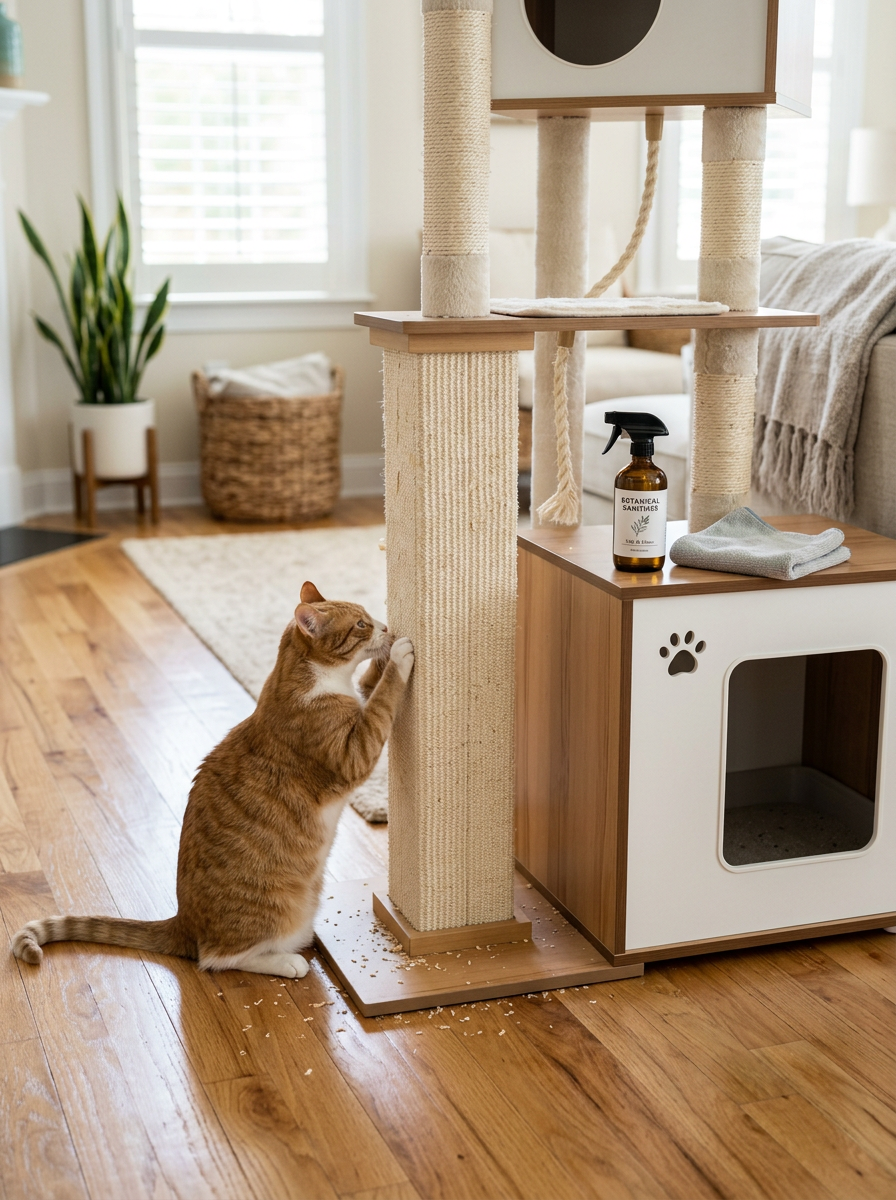
Living along the beautiful Grand Strand means balancing active family life, beloved pets, and the unique challenges of a coastal climate. In our high-humidity environment, standard pet cleanup requires a more targeted, scientific approach to keep your home healthy. Feline climbing trees, scratching posts, and hidden litter box enclosures present unique cleaning hurdles where high humidity, pet dander, and oils collide. This guide provides a practical, step-by-step protocol to decontaminate these zones safely using child-safe, pet-friendly techniques.
The Anatomy of Coastal Feline Habitats: Why Humidity Changes the Cleaning Equation
Coastal South Carolina homes face environmental factors that fundamentally alter how we manage pet areas. In the Grand Strand's high-humidity environment, loose cat dander, skin oils, and shed fur do not simply sit loosely on surfaces. Instead, the damp indoor air binds these organic materials into a dense, felted layer across carpeted cat trees and climbing towers. This sticky accumulation quickly becomes a breeding ground for mold spores, dust mites, and yeast, posing direct respiratory risks to young children playing nearby.
When family cats use sisal rope scratching posts, they leave behind sebum, a naturally occurring skin oil, along with scent gland secretions from their paws. In dry climates, these oils dissipate or dry harmlessly, but in Myrtle Beach, persistent humidity keeps these residues tacky. Over time, this sticky sebum binds with airborne salt dust and fine sand-grit, locking allergens deep within the natural rope fibers. This creates a stubborn, dark crust on the sisal that regular vacuuming cannot remove and that children can easily touch during play.
Maintaining a sanitary home requires looking beyond visible dust to address these hidden, humid bio-contaminants. For busy local households, a cat tree is often located in the main living area where toddler play zones and pet environments overlap. Without a structured decontamination protocol, these multi-tiered structures continuously release micro-allergens into your indoor air whenever a pet jumps on them. Implementing a systematic, child-safe approach ensures your companion's favorite spots remain hygienic and completely safe for your entire family.
- Ambient humidity levels above fifty-five percent accelerate mold and yeast colonization in organic carpet fibers.
- Feline sebum acts as a natural binder, trapping microscopic beach sand and household dust.
- Traditional vacuum cleaners often bypass felted hair, simply exhausting smaller dander particles back into your living room.
- Children's respiratory tracts are highly sensitive to the airborne dander kicked up by active pets on uncleaned structures.
Phase 1: Mechanical De-felting and Static Cling Mitigation
The first step in restoring any feline habitat is the complete mechanical removal of felted hair and dander. Standard vacuum suction is rarely strong enough to pull woven-in cat hair out of carpeted cat tree platforms due to electrostatic charge. To break this static bond, we recommend using a handheld rubber squeegee or a specialized silicone pet hair brush. Pulling the rubber edge across the fabric in short, firm strokes gathers the deeply embedded hair into clean, manageable rolls that are easily picked up.
For highly contoured corners and tight crevices where carpet meets wooden supports, a pumice stone or a fine-wire slicker brush works best. Gently scrape the stone or brush along the seams to lift the compacted fibers and draw out hidden dander pockets. This process must be performed slowly to prevent dander from billing into the air, which can trigger asthma or allergy symptoms in children. Working in a well-ventilated room with an air purifier running on high is highly recommended during this mechanical extraction phase.
Once the bulk hair is piled and removed, follow up with an upholstery vacuum attachment equipped with a HEPA filter. Run the attachment slowly over every surface, spending extra time on the underside of tiers where cats rub their faces and backs. This targets the fine, powdery dander and dried saliva proteins that contain the primary allergens responsible for pet sensitivity. By systematically stripping away this physical barrier of hair, you prepare the textile surfaces for deep sanitization without creating a muddy paste.
- Use dual-directional strokes with a rubber squeegee to release stubborn hair from plush carpets.
- Avoid aggressive scrubbing with wire brushes on cheap faux fur to prevent tearing the backing fabric.
- Always utilize a certified HEPA-vacuum to capture micro-dander particles down to 0.3 microns.
- Focus heavily on joints and structural junctions where fur naturally accumulates due to feline rubbing behaviors.
Phase 2: Deep Extraction of Sisal Rope and Structural Carpet Tiers
Deep cleaning sisal rope and structural carpet tiers requires a careful balance of moisture and chemistry. Because sisal is a natural plant fiber, saturating it with water will cause the rope to swell, warp, and rot from the inside out. Furthermore, most commercial cat trees are constructed with particleboard or heavy cardboard tubes that disintegrate when wet. To safely clean these areas, you must use a low-moisture cleaning technique combined with a child-safe, non-toxic botanical sanitizing spray.
Begin by lightly misting the sisal rope with a specialized enzyme-based or thyme-based cleaner, ensuring the fibers are damp but never soaked. Use a medium-stiff utility brush to work the cleaner into the twists of the rope, breaking up the hardened sebum and sand-grit deposits. As you scrub, blot the rope frequently with a clean, dry microfiber cloth to lift the dissolved oils and dirt away from the fibers. This blotting technique prevents the cardboard core from absorbing moisture and preserves the structural glue holding the rope in place.
After cleaning, accelerate the drying process by placing a high-velocity fan directly in front of the cat tree or using a dehumidifier. In our humid coastal climate, any dampness left in the wood or sisal for more than twenty-four hours will rapidly breed mildew. Ensure the structure is entirely dry before allowing either your children or pets near it. This fast-drying protocol preserves the integrity of the natural materials while neutralizing stubborn odors at their source.
- Limit moisture application to a light surface mist to protect underlying cardboard and glue.
- Use a stiff-bristled brush to agitate and lift ground-in dirt from deep within sisal twists.
- Blot continuously with white microfiber cloths to monitor soil transfer and prevent fiber saturation.
- Employ active air movers or ceiling fans to dry the clean structure within a four-hour window.
Phase 3: Decontaminating Litter Box Enclosures and Surrounding Flooring
Litter box enclosures designed as furniture pieces are excellent for hiding mess, but they present significant hygiene challenges. These dark, enclosed spaces trap high concentrations of micro-fine clay dust, tracking sand, and invisible urine splashback. Over time, the interior surfaces absorb uric acid crystals, which react with Grand Strand's indoor humidity to produce a constant, pungent ammonia odor. For families with crawling toddlers, keeping these hidden enclosures sanitized is absolutely vital to home health.
To clean the enclosure, completely remove the litter pan and use a HEPA vacuum to extract all loose sand and dust from the interior. Next, apply a child-safe bio-enzymatic cleaner specifically formulated to digest uric acid and organic waste. Spray the walls, ceiling, and floor of the enclosure, paying special attention to corners and door hinges where dust settles. Allow the enzymes to dwell on the surface for ten to fifteen minutes so they can completely break down the odor-causing organic compounds.
Wipe down the interior surfaces with a damp microfiber cloth, then dry them thoroughly with a clean towel. If the enclosure is made of painted wood or laminate, inspect the joints for swelling or cracking, which can harbor bacteria. Once dry, consider lining the floor of the enclosure with a washable, non-slip pet mat to catch tracking sand before it reaches your main flooring. This simple addition makes weekly cleanup faster and prevents abrasive sand from scratching your home's flooring.
- Extract all loose clay dust and beach sand before applying any liquid cleaning solutions.
- Select bio-enzymatic formulas that target and destroy uric acid crystals rather than masking them.
- Allow proper dwell time to let the natural enzymes fully digest organic residues.
- Inspect seams and joints for signs of moisture damage or bacterial colonization.
Chemical Safety Standards: Choosing Botanical and Child-Safe Disinfectants
When cleaning around children and pets, chemical safety must be your top priority. Many conventional household disinfectants contain phenols, bleach, or quaternary ammonium compounds, which are highly toxic to felines and irritating to young children. Cats groom themselves constantly, meaning any chemical residue left on their climbing structures will be ingested. Similarly, toddlers frequently touch these same surfaces and put their hands in their mouths, making harsh residues a significant safety hazard.
Instead of harsh chemicals, opt for EPA-approved botanical disinfectants featuring active ingredients like thymol, which is derived from thyme oil. These botanical solutions are highly effective against bacteria and viruses while remaining completely safe for pediatric environments and sensitive pet paws. Citric acid-based cleaners and food-grade hydrogen peroxide solutions are also excellent alternatives for lifting organic stains and odors without leaving behind toxic chemical vapors. Always check product labels to ensure they are free from synthetic fragrances, which can trigger respiratory distress.
It is crucial to avoid essential oils such as tea tree, eucalyptus, and citrus in your pet cleaning products. While these are often marketed as natural alternatives, they are highly toxic to cats because their livers lack the enzymes needed to metabolize them. Stick to simple, unscented, or botanically preserved formulas that perform the heavy lifting through physical extraction and safe bio-enzymatic action. Prioritizing these clean chemistries ensures your home remains a safe, healthy environment for your most vulnerable family members.
- Avoid phenols and benzalkonium chloride, which can cause chemical burns on sensitive pet paws.
- Look for EPA Category IV toxicity ratings, denoting the safest level of environmental products.
- Steer clear of tea tree, peppermint, and pine oils due to systemic feline toxicity risks.
- Utilize hydrogen peroxide-based formulas for safe, residue-free brightening of stained carpets.
Establishing an Allergy-Friendly Maintenance Schedule for Busy Families
Keeping a busy Grand Strand household clean requires a consistent, manageable routine rather than sporadic, exhausting deep cleans. For families with multiple pets and active children, we recommend establishing a tiered maintenance schedule. On a daily basis, perform a quick sweep of the litter box enclosure entry and a rapid misting of high-traffic pet areas with a water-diluted enzyme spray. This simple habit keeps bacterial populations low and prevents organic odors from settling into your home's fabrics.
Weekly, dedicate fifteen minutes to mechanical hair extraction on the cat tree and a thorough vacuuming of all adjacent carpets. This prevents the dander from felting into the fibers and keeps airborne dust levels low for allergy-prone family members. Wash any removable cat beds or fabric pads in hot water using a hypoallergenic, dye-free laundry detergent. Consistent weekly removal of loose fur and dander significantly reduces the load on your home's HVAC filters, helping maintain clean air throughout the house.
Monthly, execute the full decontamination protocol detailed in this guide, focusing on deep-brushing sisal ropes and sanitizing litter enclosures. By breaking the chores down into manageable increments, you protect your family's health without feeling overwhelmed by household chores. This structured approach ensures that pet habitats remain clean, odor-free, and safe for young children to explore without exposing them to hidden allergens or harmful bacteria.
When Professional Substrate Extraction is Required: The A2Z Difference
For busy property owners, parents, and managers along the Grand Strand, maintaining these detailed sanitation standards can be challenging. When pet dander, deeply embedded sand, and humid odors become too stubborn for residential tools, professional assistance is the most efficient solution. The experienced team at A2Z Cleaning & Linen Services provides specialized residential deep cleaning tailored to the unique demands of coastal family homes. We utilize commercial-grade, low-moisture extraction equipment and child-safe botanical sanitizers to restore your home's surfaces safely.
Our technicians are trained in advanced fiber identification and soil extraction, ensuring your carpets, upholstery, and pet structures are thoroughly cleaned without damage. We understand how Myrtle Beach humidity interacts with organic pet soils, and we use high-velocity air movers to guarantee rapid drying times. This professional approach not only eliminates stubborn pet odors but also significantly improves indoor air quality, providing immediate relief for family members who suffer from asthma or seasonal allergies.
Investing in professional deep cleaning services allows you to enjoy the best of coastal living with your family and pets without the constant stress of cleaning. Whether you need a seasonal restoration clean, a move-in deep scrub, or regular maintenance, we are here to help. Contact A2Z Cleaning & Linen Services today at 843.800.2788 to discuss your household's specific cleaning needs and schedule a professional service that prioritizes your family's safety and comfort.
Key takeaway
By implementing a targeted, low-moisture decontamination protocol and choosing child-safe botanical disinfectants, Grand Strand families can easily control pet dander, hair, and odors despite coastal humidity. Keeping these feline habitats meticulously clean ensures a healthy, allergy-friendly home where children and pets can play safely together.
Keep Reading

Home Cleaning
The Family Staircase and Safety Gate Decontamination Protocol: Mitigating Sunscreen-Grime Slurry, Pet-Hair Static, and Sticky Handprint Biofilms in Grand Strand Homes
ReadHome Cleaning
The Grand Strand Toddler and Pet Floor-Level Play Zone Decontamination Protocol: Mitigating Humid Sand-Grit, Dander Allergens, and Chemical-Residue Hazards in Busy Family Homes
ReadHome Cleaning
The Coastal Pet-Crate and Indoor Dog-Bed Restoration Protocol: Mitigating Humid Yeast Biofilms, Dander Reservoirs, and Urine-Ammonia Interactions in Grand Strand Homes
ReadReady for a spotless property?
Call 843.800.2788 or request a free quote from A2Z Cleaning & Linen Services.