Coastal Living
The Coastal Family Gear Audit: Child-Safe Sanitization for Strollers, Car Seats, and Pet Carriers in Myrtle Beach
Learn how to safely clean, sanitize, and preserve your family's strollers, car seats, and pet carriers from coastal sand-grit, salt air, and humidity-driven mold.
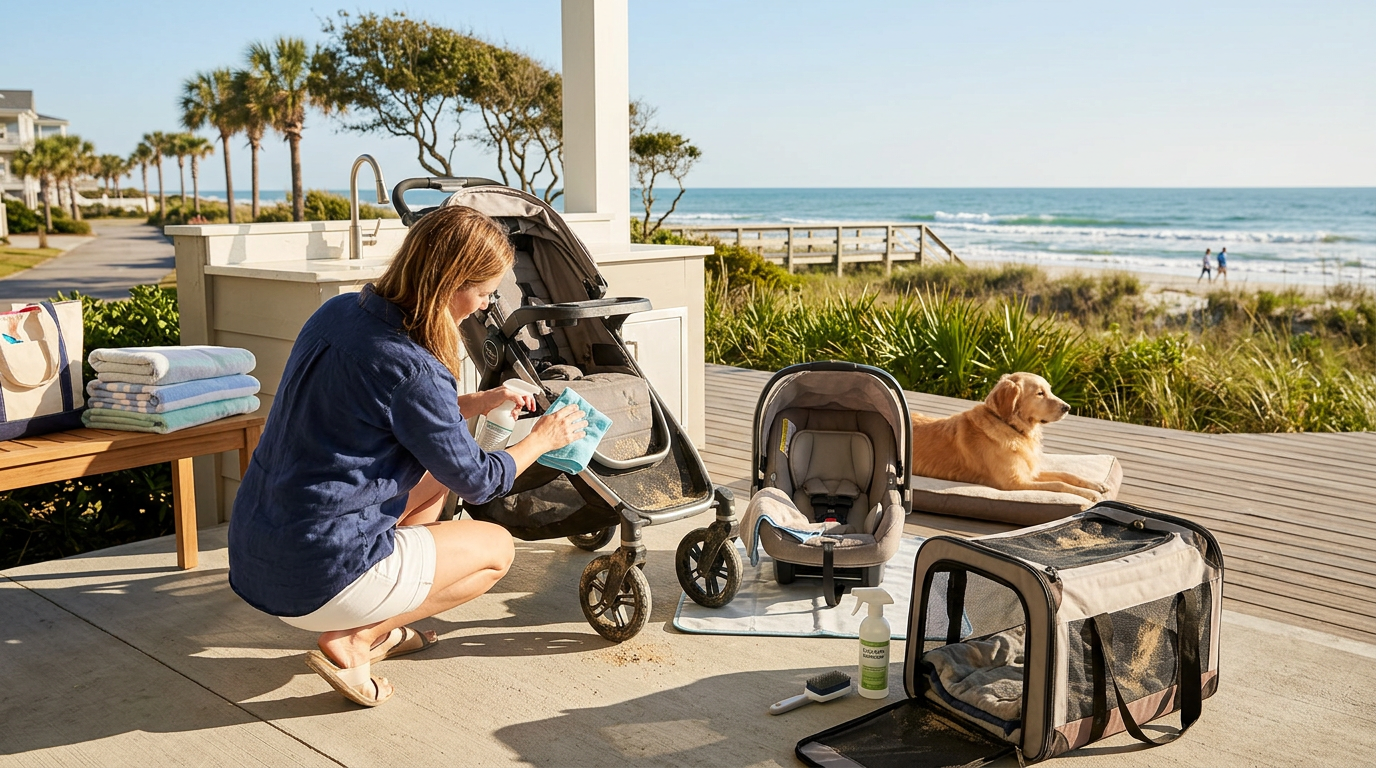
Living along the Grand Strand means balancing an active, outdoor lifestyle with the realities of coastal humidity, sand, and pet dander. For busy families, transitional gear like strollers, car seats, and pet carriers quickly become magnets for environmental allergens and moisture. Left unchecked in our warm climate, this combination can lead to deep-seated odors, mold growth, and skin irritation for children and pets. This guide provides a practical, child-safe protocol for deep cleaning and preserving your family’s most hard-working mobile gear.
The High-Humidity Mobile Biofilm: Why Family Gear Needs Special Attention in the Grand Strand
In our coastal environment, family life moves constantly between indoor and outdoor spaces. A stroller might travel from a morning walk at the Market Common to the sandy paths of Huntington Beach State Park, before being folded into a dark, warm SUV trunk. Along the way, it collects fine beach sand, salt spray, crumbs, and pet dander from the family dog. When these diverse elements combine under the hot South Carolina sun, they form a sticky, microscopic biofilm that clings to fabrics and harness straps, creating a prime breeding ground for bacteria.
The primary catalyst for this buildup is Myrtle Beach's persistent relative humidity, which frequently climbs above seventy percent. Unlike dry climates where crumbs and dander simply brush away, coastal humidity causes organic soils to bind directly to synthetic fibers. Over time, this damp mixture sinks deep into the crevices of car seats and stroller frames. This creates a persistent musty smell that cannot be masked by air fresheners and can aggravate respiratory issues in young children and sensitive pets.
For crawling toddlers and ground-level pets, the risks of this buildup are particularly high. They are in direct, constant contact with these fabric surfaces, often rubbing their faces or placing their hands on strap webbing. Using harsh household disinfectants to clean these surfaces is not a safe solution, as chemical residues can transfer to sensitive skin or be accidentally ingested. Effective management requires a systematic, mechanically sound approach that lifts soils without introducing toxic chemical residues into your family's daily environment.
The Chemistry of Child-Safe Sanitization: Steering Clear of Harsh Volatile Organic Compounds
When confronted with persistent mildew or sour odors on family gear, it is tempting to reach for heavy bleach or strong quaternary ammonium compounds. However, these harsh chemicals release volatile organic compounds that linger in the tight, enclosed cabins of family vehicles. Furthermore, chlorine bleach can permanently degrade the structural integrity of safety harness webbing and erode water-resistant coatings on outdoor fabrics. Safe coastal cleaning relies on choosing targeted, low-toxicity formulas that break down organic soils naturally.
To sanitize effectively without compromising safety, look for botanical disinfectants featuring thymol, or utilize simple household solutions like diluted isopropyl alcohol and distilled white vinegar. Isopropyl alcohol diluted to seventy percent is highly effective at neutralizing bacteria and mold spores on hard surfaces while evaporating quickly without leaving a residue. For organic stains and odors from dropped food or pet accidents, enzyme-based cleaners are indispensable. These enzymes break down proteins and starches at a molecular level, completely eliminating the source of the odor rather than merely masking it.
Equally important is the mechanical action of cleaning. Instead of using saturated sponges that push dirty water deeper into fabric padding, rely on dry extraction techniques first. High-efficiency particulate air vacuums, combined with microfiber cloths, allow you to lift away dry sand, dander, and dust mites before applying any moisture. This prevents the dry soils from turning into a muddy slurry that stains the fabric and extends drying times in our humid coastal air.
Stroller and Beach Wagon Restorations: Eradicating Sand-Grit, Salt Corrosion, and Juice-Spill Mildew
Strollers and beach wagons bear the brunt of Grand Strand outdoor adventures, meaning their mechanical parts require regular attention. Fine silica sand from local beaches easily penetrates wheel bearings and folding joints, leading to grinding noises and eventual mechanical failure. Additionally, salt air accelerates the oxidation of exposed aluminum and steel rivets. Cleaning should always begin with a thorough hose-down of the frame to flush out lodged sand, followed by a detailed hand-drying to prevent water spots and rust.
The fabric elements of strollers, such as canopies and under-seat storage baskets, require careful handling. Many of these canvases are treated with ultraviolet protective coatings that harsh scrubbing can strip away. To clean these surfaces safely, mix a few drops of dye-free, hypoallergenic dish soap with warm, distilled water. Work the solution into the fabric using a soft-bristled brush in circular motions, paying close attention to seams where crumbs and sand accumulate, then rinse thoroughly with clean water.
The harness buckles and straps are often the dirtiest parts of any stroller, sticky with juice spills and finger paint. To clean them without compromising safety, submerge only the plastic buckle mechanism in a cup of warm water to dissolve dried residue. Avoid soaking the woven straps themselves, as prolonged saturation can weaken the load-bearing fibers. Instead, wipe the straps down with a damp microfiber cloth lightly misted with a botanical, non-toxic sanitizing spray, then allow them to air-dry completely.
- Flush wheel bearings and folding joints with fresh water after every beach visit to remove salt and sand.
- Use a soft-bristled brush with hypoallergenic soap to lift sand-grit from canopy seams.
- Clean sticky buckle mechanisms by soaking only the plastic components in warm water.
- Wipe down strap webbing with a damp microfiber cloth instead of soaking the fabric.
- Lubricate wheel joints with a silicone-based dry spray to prevent sand from sticking to the moving parts.
Pet Carriers and Vehicle Crates: Dismantling Odor Reservoirs and Saliva-Dried Hair
Pet carriers and vehicle crates are major contributors to lingering pet odors and indoor allergens. Hard plastic carriers easily collect dried saliva, shedding hair, and urine trace deposits in their ventilation grates. Soft-sided travel crates, on the other hand, act like giant sponges for humidity and pet odors, which then circulate throughout your car and home. Addressing these reservoirs requires a deep sanitization process that neutralizes biological odors without irritating your pet's sensitive sense of smell.
For hard plastic crates, disassemble the top and bottom halves to access every corner. Spray the interior with a natural, enzyme-based pet odor neutralizer or a mild vinegar-and-water solution. Use a stiff utility brush to scrub the ventilation grates where hair and dried saliva build up. Rinse the plastic thoroughly with a garden hose or in a utility tub, then wipe it dry with a clean towel to prevent water spots and lingering dampness.
Soft-sided fabric carriers should be vacuumed inside and out with a brush attachment to lift embedded hair. If the carrier has a removable floor board, pull it out and hand-wash the outer fabric cover. Clean the interior fabric using a mixture of warm water and an allergen-reducing baby shampoo, which is gentle enough for both the pet and the children who handle the carrier. Ensure the entire carrier is completely dry before zip-storing it in a closet.
- Disassemble plastic carriers fully to clean hidden channels where urine or saliva can collect.
- Scrub metal and plastic grates with a stiff brush and an enzyme cleaner to remove dried saliva.
- Vacuum soft-sided carriers thoroughly with a HEPA vacuum to lift deep-seated pet dander.
- Use allergen-reducing baby shampoo to hand-wash delicate interior fabrics safely.
- Avoid heavily scented chemical deodorizers that can irritate your dog or cat's respiratory system.
The Canvas and Strap Drying Protocol: Preventing Off-Season Mildew and Spore Colonization
In the humid environment of the Grand Strand, proper drying is the most critical step of any gear-cleaning routine. If fabrics or straps are left slightly damp when reassembled or stored, mold and mildew spores can colonize the material within twenty-four to forty-eight hours. This issue is particularly common when gear is stored in unconditioned spaces like garages, screen porches, or outdoor sheds where the damp coastal air accelerates mold growth.
To dry gear safely and thoroughly, take advantage of the natural sanitizing power of the sun, but do so with careful timing. Direct sunlight is an excellent natural disinfectant that kills remaining mold spores and lightens organic stains. However, leaving plastic components or synthetic fabrics in intense midday UV rays for extended periods can cause brittleness and color fading. Aim for two to three hours of morning sun, then move the gear to a well-ventilated, shaded outdoor area to finish drying.
If you are cleaning gear on a rainy or high-humidity day, set up an active indoor drying station. Place the damp items in a room with a running dehumidifier and an oscillating fan to keep the air moving. This active circulation pulls moisture out of deep foam padding and woven straps much faster than passive air drying, ensuring your gear is dry, fresh, and completely safe for your children to use the very next day.
Developing a Weekly Transitional Audit: Keeping Outdoor Contaminants at the Threshold
The easiest way to keep family gear clean is to prevent sand, salt, and pet allergens from entering your home in the first place. Establishing a quick transitional audit at your home's entryway or mudroom helps keep outdoor contaminants confined to a designated zone. This routine only takes a few minutes but significantly reduces the amount of vacuuming and deep cleaning required inside your living spaces throughout the week.
Create a dedicated transitional cleaning kit and keep it near your main entry point or in the cargo area of your vehicle. This kit should contain a stiff-bristled brush for knocking dried sand off wheels and fabric, a lint roller for quick pet hair removal, and a spray bottle of water mixed with a few drops of baby shampoo. Before bringing a stroller or wagon inside, give the wheels a quick brush and wipe down the handle grip to remove sweat and sunscreen oils.
For car seats, make it a habit to shake out the crumbs once a week. Keep a small, hand-held vacuum charging in your vehicle to quickly clean up snack spills before they are ground into the fabric by active toddler feet. Consistently applying these minor habits prevents small spills from turning into a deeply embedded mess, keeping your family's daily travel gear clean, sanitary, and ready for your next coastal outing.
Integrating Professional Care: When to Call in Grand Strand Deep Cleaning Experts
While routine maintenance keeps daily dust and sand at bay, there are times when family gear requires a level of deep cleaning that standard home methods cannot achieve. Persistent sour odors, deep-set black mold spots on stroller canopies, or heavy pet stains require professional intervention. Attempting to scrub these issues away at home without specialized equipment can wear down fabrics and drive moisture deeper into internal cushioning, worsening the problem.
Professional cleaning technicians use advanced extraction systems and low-moisture sanitizing equipment designed to deep-clean delicate fabrics safely. These commercial systems remove embedded sand, pet dander, and allergen biofilms from the deepest layers of padding without saturating the materials. This process ensures that your valuable strollers, high chairs, and car seats are completely sanitized, thoroughly dried, and free from any chemical residues that could irritate your children's sensitive skin.
At A2Z Cleaning & Linen Services, we understand the unique environmental challenges that Grand Strand families face. Our expert team uses child-safe, pet-friendly cleaning protocols tailored to our humid, sandy coastal climate. Whether you need a comprehensive deep clean for your baby gear before a new arrival, or a seasonal refresh for your home's high-traffic spots, we are here to help. Contact us at 843.800.2788 to schedule your specialized cleaning service today.
Key takeaway
Maintaining clean, safe gear for your kids and pets along the Grand Strand requires consistent, moisture-conscious care. By using child-safe chemistry, cleaning mechanical parts regularly, and ensuring complete drying, you protect your family's health and prolong the life of your gear. For deeply embedded sand, dander, or mold, professional extraction provides the deep, safe clean your home deserves.
Keep Reading
Coastal Living
The Coastal Family Hamper and Mudroom Laundry Loop: Mitigating Yeast, Sand-Wear, and Mildew in High-Humidity Grand Strand Homes
ReadCoastal Living
The Kid-and-Pet Bedding Decontamination Protocol: Managing Sand-Grit, Pet Dander, and Humidity-Trapped Odors in Grand Strand Family Bedrooms
ReadCoastal Living
Sanitizing Coastal Soft Surfaces: Child-Safe Pet Bed, Toy, and Play Area Maintenance in High-Humidity Myrtle Beach Homes
ReadReady for a spotless property?
Call 843.800.2788 or request a free quote from A2Z Cleaning & Linen Services.