Coastal Living
The Coastal Family Mudroom, Beach-Drop Cubby, and Paw-Washing Station Decontamination Protocol: Mitigating Humid Sand-Grit Crust, Wet Dog Yeast, and Child-Safe Botanical Care in Grand Strand Homes
Learn how to keep your busy coastal home clean and allergen-free with our safe, family-friendly guide to decontaminating mudrooms, beach gear cubbies, and indoor pet-wash stations.
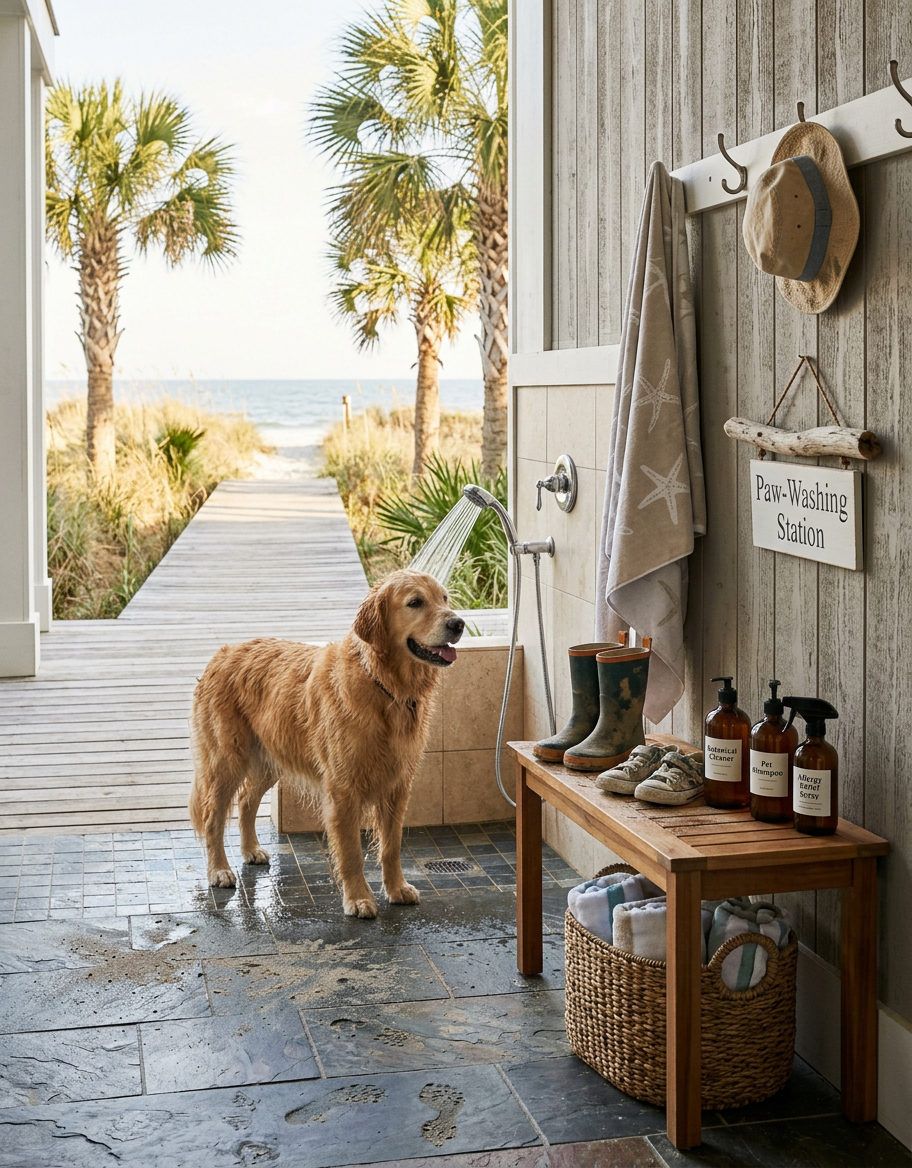
For active families living along the Grand Strand, the entryway or mudroom is the ultimate buffer zone between the beautiful, sandy outdoors and a clean, comfortable home. However, when children, pets, and humid coastal air collide in this high-traffic space, it quickly becomes a breeding ground for sand-grit buildup, pet odors, and mold spores. Standard cleaning methods often fall short or introduce harsh chemical residues that are unsafe for crawling toddlers and sensitive pet paws. This comprehensive decontamination protocol offers a safe, highly effective, botanical approach to maintaining a healthy and allergen-free coastal entry.
The Grand Strand Mudroom Ecosystem: Where Coastal Family Chaos Meets High Humidity
The mudroom or entryway of a Grand Strand family home serves as the front line of defense against the coastal environment. Between school runs, sports practices, and afternoon trips to the beach, this high-traffic transition zone collects an intense accumulation of organic and inorganic soils. When family pets and busy children pass through, they bring along a cocktail of fine quartz sand, salt crust, and damp environmental moisture.
In our humid Myrtle Beach climate, where indoor relative humidity often hovers near the upper limits of comfort, this collection of damp debris is not merely an aesthetic issue. The warm, moist air creates an ideal incubation chamber for mold spores, mildew, and bacteria on porous wood cubbies and textile storage bins. Without a specialized, targeted decontamination protocol, these soils quickly migrate deeper into your living spaces, compromising indoor air quality and triggering seasonal allergies.
To manage a busy, pet-friendly coastal household, homeowners must shift from simple surface wiping to a rigorous decontamination routine. This protocol must address both physical soils, like abrasive sand-grit, and biological loads, like wet dog yeast and pet dander. Crucially, because children and pets touch these storage surfaces constantly, the chemistry used must be free of harsh synthetic residues, relying instead on high-performance, child-safe botanical formulations.
The Chemistry of Wet Sand and Paw Sebum: Why Standard Cleaners Fail
Understanding the unique material bond of coastal soils is key to selecting the right cleaning chemistry. Wet sand from Myrtle Beach is not just loose dirt; it is comprised of highly abrasive, microscopic quartz particles that lock into wood grain and textured plastics. When combined with pet sebum (the natural protective oil secreted by a dog's skin) and human sweat, these minerals form a tenacious, sticky crust that resists standard dusting or basic multi-surface sprays.
Many conventional household cleaners rely on heavy surfactants and synthetic fragrances that leave behind a microscopic sticky film. Rather than cleaning, these residues act like a magnet for fine sand-grit and airborne dander, accelerating soil build-up within hours of application. Furthermore, harsh chemicals like chlorine bleach or synthetic quaternary ammonium compounds pose respiratory risks to crawling toddlers and sensitive pet paws sniffing the entryway floor.
A professional-grade, child-safe approach utilizes botanical surfactants derived from coconut or corn, paired with active enzymes and natural sanitizing agents like thymol or citric acid. These ingredients break down the hydrophobic lipid bonds of pet oils, allowing abrasive sand to be safely emulsified and wiped away without scratching delicate paint or wood finishes. This leaves surfaces clean, neutral, and completely free of toxic residues.
- Avoid harsh quaternary ammonium compounds that irritate sensitive canine paw pads.
- Use botanical enzyme formulations specifically designed to digest organic sebum and yeast proteins.
- Select citric-acid-based sanitizers to achieve a high biological kill rate without toxic fumes.
- Ensure all cleaning solutions are certified by environmental safety programs for family protection.
Decontaminating Beach-Drop Cubbies and Locker Surfaces: Child-Safe Sanitization
Beach-drop cubbies, backpack hooks, and shoe lockers are high-contact areas where children drop school gear, sandy beach toys, and damp sports equipment. Over the course of a humid Grand Strand summer, these dark, enclosed storage spaces trap dampness, leading to localized mold colonization and a persistent musty smell. Because kids frequently reach into these cubbies and then touch their faces or snacks, the cleaning protocol here must prioritize microbiological safety alongside surface preservation.
To decontaminate these zones, begin by emptying all items and using a HEPA-filtered vacuum with a soft brush attachment to extract loose sand from joints, corners, and screw holes. This prevents the abrasive grit from scratching painted or stained wood surfaces during the wet-cleaning phase. Once the loose particulate is removed, apply a light mist of a thymol-based botanical disinfectant to all interior walls, shelves, and hooks, allowing a ten-minute wet dwell time to neutralize mold spores.
After the dwell time, wipe down the cubby surfaces using a clean, damp microfiber cloth to lift the emulsified oils and dead microbial matter. Pay close attention to under-shelf lip areas and metal hooks, where sweat residues from backpack straps accumulate. Finally, use a dry microfiber cloth to remove all remaining moisture, ensuring the cubbies are completely dry before gear is re-loaded to prevent trapping residual humidity.
Managing Pet-Hair Felting and Sand-Grit in Entryway Rugs and Floor Mats
Entryway rugs and walk-off mats bear the heaviest physical burden in a coastal family home, acting as a barrier to trap sand, grass clippings, and pet hair. Because pet hair features microscopic cuticles that hook into carpet fibers, and wet sand settles deep into the backing of rugs, standard back-and-forth vacuuming is insufficient. Over time, this trapped grit acts like sandpaper, grinding away at the carpet fibers every time a family member steps on the mat.
To extract this deeply embedded sand-grit, implement a dual-direction vacuuming technique on a weekly basis. First, vacuum the rug thoroughly on both the face and the underside, allowing the vibration of the vacuum brush roll to dislodge sand trapped in the backing onto the hard floor below. Next, use a rubber-bladed squeegee or a specialized pet-hair rake across the surface of the dry rug to pull up felted pet hair that has woven itself into the pile.
For ongoing odor control and decontamination, avoid commercial carpet freshening powders, which frequently contain synthetic perfumes and baking soda that can clog HEPA filters and attract moisture in humid climates. Instead, lightly mist the rug fibers with a diluted botanical enzyme solution designed to digest odor-causing proteins at their source. This method neutralizes pet dander and musty seaside odors without leaving behind irritating powders that pets might ingest while grooming their paws.
- Vacuum rugs slowly in a criss-cross grid pattern to open up fiber loops and release sand-grit.
- Use a rubber squeegee tool to pull up deeply embedded pet hair before wet-treating.
- Avoid sodium bicarbonate powders, which can cake and trap moisture in coastal humidity.
- Wash removable, low-pile cotton entry mats weekly in hot water using an enzyme-based detergent.
The Indoor Paw-Washing Station and Dog Shower: Eradicating Yeast and Biofilms
An indoor dog-washing station or dedicated entryway foot-wash is an invaluable asset for Grand Strand homes, but it can quickly become a reservoir for yeast, bacteria, and black mold if not properly maintained. When wet dogs are rinsed after a run on the beach, a mixture of saltwater, sand, skin yeast, and dander washes down the drain. The textured tile and porous grout lines typical of these pet showers provide the perfect textured surface for these organic elements to cling to and fester.
The decontamination of this zone requires a systematic approach that addresses both the physical sand blockage in plumbing and the biological biofilm on surfaces. Start by clearing the hair-and-sand trap in the drain, which should be done weekly to prevent slow draining that allows contaminated water to pool. Next, apply a natural, plant-derived soap-scum and mineral-deposit remover to the tile and grout, scrubbing with a medium-stiff brush to dislodge the stubborn buildup of pet sebum and hard water minerals.
After scrubbing, rinse the shower basin thoroughly with warm water, then spray all surfaces, including the hand-held shower wand and hose, with a food-grade hydrogen peroxide sanitizer. Hydrogen peroxide is highly effective against yeast and mold biofilms, yet it decomposes into water and oxygen, leaving no toxic chemicals or artificial smells behind. Squeegee the tiles dry and leave a bathroom fan running to lower the localized humidity in the pet-wash alcove.
Odor Mitigation for Wet Towels, Life Jackets, and Mudroom Hooks
The damp, salty air of the Grand Strand, combined with wet pool towels, damp life jackets, and sweaty dog leashes hanging in a mudroom, creates a perfect recipe for sour, mildew-driven odors. When organic materials stay damp in a humid room with poor airflow, mold spores multiply rapidly, releasing volatile organic compounds that cause that classic musty smell. Standard air fresheners merely mask these odors with synthetic perfumes, which can trigger asthma and allergy symptoms in children and pets.
True odor elimination requires removing the organic source and treating the structural hooks and surrounding walls. Metal and wood hooks should be wiped down with a botanical sanitizer to remove salt deposits and skin oils left behind by family members and pet collars. Ensure that all hanging gear is fully dry before storage; hanging damp cotton towels directly against painted drywall will transfer moisture and lead to pinpoint black mold growth behind the fabric.
For items that cannot be easily washed in a washing machine, such as heavy life jackets, dog harnesses, and structured backpacks, use a botanical deodorizing spray containing active yeast-and-bacteria-fighting enzymes. Lightly mist the items and hang them in a well-ventilated area, preferably near a dehumidifier or ceiling fan, to speed up dry times. This process neutralizes the organic compounds responsible for the odor while keeping your home's air clean and chemical-free.
- Replace standard metal hooks with marine-grade stainless steel to prevent rust-salt oxidation.
- Hang damp towels and swimsuits only on designated, spaced-out pegs to allow airflow.
- Spray non-washable gear with a botanical enzyme deodorizer rather than synthetic perfume sprays.
- Maintain a minimum distance of three inches between hanging gear and mudroom walls to prevent moisture transfer.
Establishing a Weekly Allergy-Friendly Maintenance Routine for Busy Grand Strand Families
Maintaining a healthy, allergy-friendly coastal mudroom requires consistency, but it does not have to be an overwhelming chore. By establishing a simple weekly routine, you can prevent the buildup of allergens like pollen, dander, and mold before they migrate into your family's main living areas. This routine is designed to be highly efficient, taking less than thirty minutes once the initial deep decontamination protocol has been completed.
Begin your weekly routine by wiping down all high-touch points, including cabinet handles, door knobs, and bench seating, using a child-safe botanical wipe. Next, address the floors: perform the dual-vacuuming method on mats, then use a damp microfiber mop with a neutral pH, plant-derived cleaner on hard floor surfaces to capture fine quartz dust. Finally, empty and wipe down the base of shoe trays, which often hold a collection of dry sand, dried mud, and lawn fertilizer residues.
To keep the entire family involved, assign simple age-appropriate tasks like shaking out beach towels outside, placing sandy shoes neatly in designated trays, or wiping down dog toys. By keeping the entryway organized and free of organic soils, you dramatically lower the allergen load inside your Grand Strand home. This proactive approach ensures a clean, welcoming, and safe environment where your children and pets can thrive after a fun-filled day along the coast.
Key takeaway
Decontaminating your family's entryway and pet stations with safe, botanical methods is the best way to stop sand, mold, and pet odors from entering your living areas. By avoiding harsh chemicals and focusing on targeted, natural enzyme cleaners, you protect your children and pets while preserving your coastal home. For professional support with seasonal deep cleans or ongoing home care, contact A2Z Cleaning & Linen Services at 843.800.2788.
Keep Reading
Coastal Living
The Coastal Ductless Mini-Split AC Unit and Air Handler Decontamination Protocol: Mitigating Humid Mold Biofilms, Allergen Dispersion, and Safe Botanical Sanitization in Grand Strand Homes
ReadCoastal Living
The Cost of Restoring Coastal Glass Balustrades, Pool Fences, and Windbreaker Panels: Mitigating Salt-Scale Etching, Silica Bonding, and Coating Preservation in Grand Strand Homes
ReadCoastal Living
The Cost of Restoring Coastal Grasscloth, Sisal, and Textured Wallcoverings: Mitigating Humid Mildew, Fiber Bleeding, and Professional Cleaning Standards in Grand Strand Homes
ReadReady for a spotless property?
Call 843.800.2788 or request a free quote from A2Z Cleaning & Linen Services.