Coastal Living
The Coastal Family Mudroom Cubby and Paw-Clean Zone Decontamination Protocol: Mitigating Humid Sand-Slurry, Pet Sebum Odors, and Kid-Safe Sanitization in Grand Strand Homes
Discover how to manage the sand, pet hair, and moisture coming off Myrtle Beach shores into your entryway using safe, botanical cleaning protocols designed for busy families.
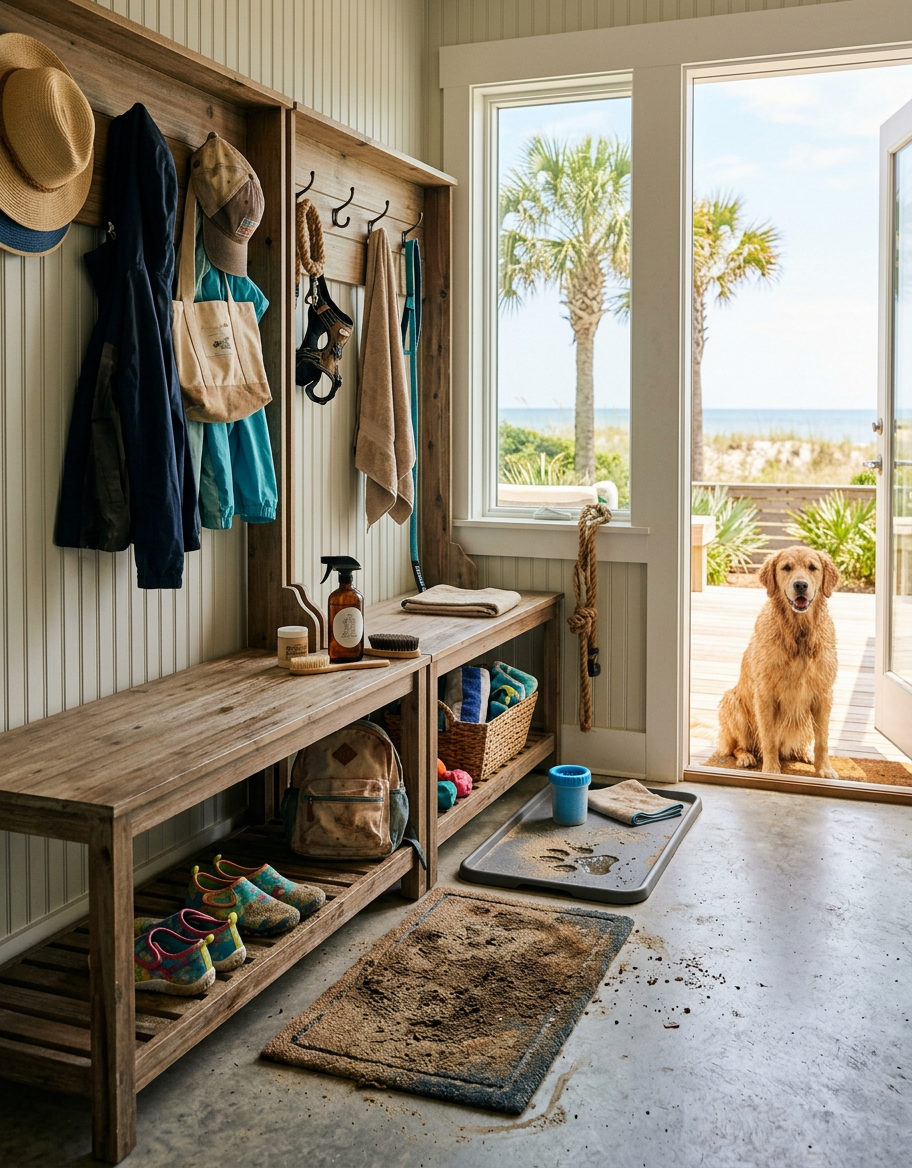
Transitioning from a sunny afternoon on the Grand Strand beaches back into your home often brings an unwanted guest inside: a heavy mix of wet sand, salt-damp moisture, and pet dander. For active families with children and pets, the mudroom or entryway quickly becomes a high-traffic battleground where outdoor grime meets indoor living. Without a structured decontamination routine, this damp sand-slurry ground into entry surfaces can degrade flooring, harbor bacteria, and create stubborn mildew odors. Implementing a systematic, kid-safe, and pet-friendly entry protocol protects your home's indoor air quality and keeps your living spaces clean.
The High-Traffic Coastal Entryway Challenge: Sand, Sebum, and Salt-Damp Dynamics
Coastal living along the Grand Strand brings unique environmental challenges directly to your doorstep. Fine quartz sand from local beaches combined with our region's high humidity creates a heavy, abrasive slurry when tracked indoors. Unlike dry inland dust, coastal grit quickly binds to damp paws, wet kid feet, and outdoor gear, sticking to surfaces instead of blowing away. This sticky mixture is highly abrasive, acting like sandpaper on hardwood, laminate, and luxury vinyl plank floors over time.
When pets are added to the mix, the entryway challenges multiply. Dogs returning from beach walks or backyard play carry fine silica grit embedded deep within their coats, along with natural oils and skin yeast. High humidity activates these oils, known as sebum, releasing that distinct wet-dog odor. This sebum transfers to baseboards, cubby doors, and floor mats where pets naturally brush against them, creating a sticky, dust-attracting residue that regular sweeping cannot remove.
Children bring their own set of variables to the entryway transition zone. Wet pool towels, damp swimsuits, and sandy water shoes are often dropped directly onto mudroom benches or shoved into dark cubbies. In our warm South Carolina climate, these damp, organic piles become prime breeding grounds for mold, mildew, and allergens within hours. To maintain a healthy household, families need a specialized approach that intercepts these contaminants at the threshold.
The Paw-Clean and Leash Station Protocol: Neutralizing Pet Sebum and Yeast
Creating a functional barrier at the threshold is the most effective way to keep outdoor soils from penetrating your home. A dedicated paw-clean and leash station acts as your first line of defense. This zone should be equipped with a high-friction scraper mat outside the door to catch coarse sand, followed by an ultra-absorbent microfiber mat immediately inside to capture fine moisture and remaining grit from paws and shoes.
To manage wet dogs effectively, keep a clean, dedicated bin of pet towels directly at the entry point. A damp dog should be thoroughly dried, paying special attention to the underbelly, legs, and between the toe pads where sand-slurry loves to hide. Storing these dirty towels in a ventilated, non-porous container prevents yeast and mildew from spreading to surrounding woodwork before laundry day.
Dog leashes, collars, and harnesses require regular sanitizing to prevent the buildup of pet oils. Because these items come into direct contact with your pet's skin and are frequently handled by children, they must be cleaned using residue-free, gentle agents. Laundering nylon gear in a mesh bag on a gentle cycle, or soaking leather gear in a mild, plant-derived soap bath, keeps these high-touch items clean and odor-free.
Selecting Kid-Safe, Pet-Friendly Botanical Chemistries
When cleaning and disinfecting a family entryway, chemistry matters. Traditional household cleaners often rely on harsh chemicals, such as quaternary ammonium compounds (quats), chlorine bleach, or synthetic ammonia. While these chemicals are powerful disinfectants, they leave behind toxic residues that can be harmful to pets who lick their paws after walking on the floor, or toddlers who crawl and play in the entry zone.
A safer, highly effective alternative is to use EPA Safer Choice or green-certified botanical disinfectants. Cleaners formulated with thymol (derived from thyme oil), citric acid, or hydrogen peroxide provide excellent sanitizing power without leaving hazardous chemical residues. These botanical agents break down natural organic matter, neutralize bacteria, and leave surfaces safe for bare skin and sensitive paws.
For odor control, avoid synthetic aerosol sprays and heavily fragranced plug-ins, which simply mask odors while releasing volatile organic compounds (VOCs) into your indoor air. Instead, look for unscented enzyme digesters or natural odor neutralizers containing zinc ricinoleate. These compounds physically bind to and destroy odor-causing molecules from pet sebum and mildew, eliminating the smell at its source.
Step-by-Step Decontamination Workflow for Cubby Hard Surfaces
An effective cubby cleaning routine begins with dry soil removal. Never apply liquid cleaners directly to loose sand and pet hair, as this creates a muddy paste that gets rubbed into wood grain, corners, and floor joints. Start by removing all items from the cubbies. Use a vacuum equipped with a HEPA filter and a soft brush attachment to thoroughly clean all surfaces, working from the top shelves down to the floor.
Once the dry sand and loose hair are completely removed, apply your kid-safe botanical cleaner. Lightly mist a clean microfiber cloth with the cleaning solution rather than spraying the wood surfaces directly; this prevents over-saturation of wood composites and joints. Wipe down all hard surfaces, focusing closely on high-touch areas like drawer pulls, bench seats, baseboards, and shoe shelves.
Pay special attention to any scuff marks or sticky residues left by shoes or pet oils. A damp microfiber cloth paired with a small amount of baking soda can gently scrub away stubborn marks without scratching painted or stained wood. Finish the process by running a dry, clean microfiber cloth over all surfaces to remove any remaining moisture, ensuring the wood is completely dry before returning items to the cubbies.
- Empty all cubbies, shelves, and baskets completely before starting the cleaning process.
- Vacuum from top to bottom to capture falling dust, sand, and pet hair efficiently.
- Mist microfiber cloths lightly with a citric-acid or hydrogen-peroxide-based cleaner.
- Wipe down all vertical and horizontal surfaces, paying close attention to handle grips and bench seats.
- Dry all surfaces thoroughly with a fresh cloth to prevent moisture-induced wood swelling.
Textile Care for Entryway Mats, Dog Towels, and Damp Outerwear
The textiles used in your entryway—such as floor mats, pet towels, and light jackets—absorb a massive amount of moisture, sand, and odor. Laundering these items incorrectly can damage your washing machine, as heavy sand can clog pumps and wear down mechanical parts. Always shake all mats and pet towels vigorously outside, away from the entryway, to dislodge loose sand before washing.
Wash these textiles using hot water and a high-quality, plant-based, unscented laundry detergent. Avoid fabric softeners, which leave a chemical coating on fibers that reduces towel absorbency and traps pet oils and odors inside the fabric. To strip away stubborn pet odors and break down hard-water minerals common in Grand Strand water, add a half-cup of distilled white vinegar to the rinse cycle.
Dry all entry textiles completely on a medium heat setting. Any lingering dampness will quickly turn to mildew when these items are returned to the humid entryway. Once dry, store clean pet towels in an open-wire metal basket to ensure air can circulate freely around them, keeping them fresh and ready for the next beach trip.
Air Quality and Odor Mitigation in Enclosed Entry Zones
In a humid coastal environment, stagnant air in closed entryways quickly leads to musty odors. To keep your mudroom smelling fresh, you must manage both moisture and airflow. Placing passive moisture absorbers, such as breathable linen bags filled with activated bamboo charcoal, inside cubbies and shoe drawers helps capture excess humidity and airborne odors without releasing synthetic chemicals.
Active ventilation is also highly beneficial. Whenever the weather permits, open nearby windows to establish cross-ventilation, or run a small, energy-efficient fan to keep air moving through the mudroom. Keeping air in motion prevents the warm, humid, and stagnant conditions that mold spores, mildew, and bacteria need to grow.
Wet shoes should never be allowed to sit flat on the floor or inside closed closets. Utilize a raised boot tray filled with natural river stones; this simple setup lifts wet soles out of standing water and allows air to circulate underneath, drying shoes rapidly. This setup also catches falling sand and water, keeping it contained and making cleanup easy.
- Place activated bamboo charcoal bags in shoe drawers and storage cubbies to absorb moisture.
- Use a raised boot tray filled with river stones to allow wet shoes to dry quickly and evenly.
- Keep a small circulating fan running in the mudroom to prevent stagnant, humid air.
- Avoid using synthetic aerosol sprays, which can irritate sensitive pet and child lungs.
Establishing a Sustainable Daily and Weekly Entryway Maintenance Rhythm
Keeping a busy coastal household clean requires consistent, manageable habits rather than occasional, exhausting deep cleans. Introduce simple daily rules for the whole family: shoes are removed immediately at the door, damp towels are hung on designated hooks, and sandy gear is wiped down outside. Keeping a lightweight cordless vacuum mounted near the door allows for quick, two-minute sweeps of the entry floor after afternoon outings.
Set aside fifteen minutes once a week for a structured entryway reset. During this weekly routine, empty the shoe trays, shake out the entry mats, wipe down the bench with your safe botanical cleaner, and swap out used dog towels for fresh ones. This simple routine stops sand and organic soils from building up and spreading deeper into your clean home.
For busy Grand Strand families, balancing work, kids, pets, and home maintenance can feel like a full-time job. Partnering with a professional cleaning service can provide the deep-cleaning support you need. A2Z Cleaning & Linen Services offers customized residential cleaning packages designed to keep your home healthy and beautiful, using safe, eco-friendly methods. Reach out to us at 843.800.2788 to schedule your service.
Key takeaway
Managing a busy coastal entryway requires a smart combination of physical barriers, regular dry-soil removal, and safe botanical cleaning products. By establishing a consistent entryway routine, you can successfully protect your Grand Strand home from abrasive sand, dampness, and pet odors while keeping your family safe. For professional assistance in keeping your home beautifully clean and fresh, call the team at A2Z Cleaning & Linen Services.
Keep Reading

Coastal Living
The Grand Strand Family Beach-Dog Entryway and Paw-Wiping Station Protocol: Mitigating Salt-Yeast Odors, Wet-Fur Dander, and Sand-Silt Tracking
ReadCoastal Living
The Coastal Family Bath and Pet-Wash Station Decontamination Protocol: Mitigating Humid Mildew, Sand-Clay Cling, Pet-Wash Hair Clogs, and Child-Safe Disinfection in Grand Strand Homes
ReadCoastal Living
The Coastal Kids' Toy Bin and Beach-to-Playroom Asset Decontamination Protocol: Mitigating Humid Saliva Biofilms, Pet-Dander Adhesion, and Sand-Friction Scratches in Grand Strand Homes
ReadReady for a spotless property?
Call 843.800.2788 or request a free quote from A2Z Cleaning & Linen Services.