Coastal Living
The Grand Strand Family Beach-Dog Entryway and Paw-Wiping Station Protocol: Mitigating Salt-Yeast Odors, Wet-Fur Dander, and Sand-Silt Tracking
A practical, family-safe guide to setting up a high-performance beach-dog transition zone in your humid Grand Strand home to stop sand, dander, and odors at the door.
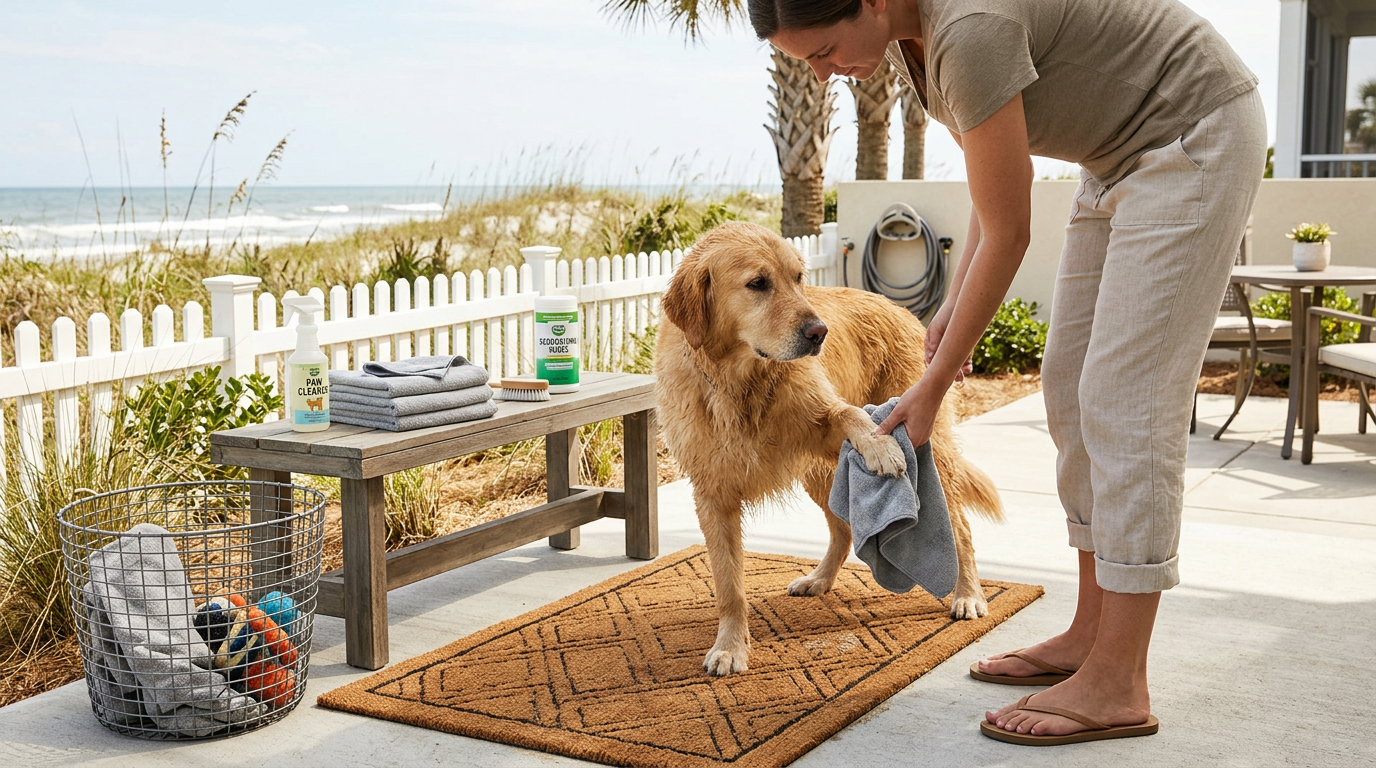
Families along the Grand Strand know there is nothing quite like a day at the beach with the family dog. However, bringing a wet, sandy pet back into a humid Myrtle Beach home can quickly turn your entryway into a breeding ground for sour yeast odors, airborne dander, and abrasive sand-silt. Without a structured protocol, these coastal elements combine with indoor humidity to damage flooring, trigger allergies, and create persistent odors that resist standard cleaning. This guide outlines a practical, family-safe system to manage your dog's transition from the shoreline to your living space, keeping your home clean, fresh, and safe for children and pets alike.
The Chemistry of Beach-Dog Grime: Why Coastal Pet Messes Are Different
When a dog plays in the Atlantic surf, its fur absorbs sodium chloride, organic proteins, and microscopic algae. Back home, our high Grand Strand humidity prevents the coat from drying quickly, creating a perfect incubation chamber for natural skin yeasts. This interaction is what produces that unmistakable, pungent wet beach-dog smell, which is far more intense and resilient than standard freshwater wet-dog odor.
Furthermore, Myrtle Beach sand is composed of extremely fine silica and shell fragments. When wet, these micro-particles cling stubbornly to paw pads, leg webbing, and undercoats. If this mixture is not neutralized at the threshold, your dog acts as a high-powered distribution system, grinding these abrasive minerals deep into luxury vinyl plank seams, hardwood grains, and carpet fibers throughout the house.
From an allergy perspective, dry dander easily airborne-binds with sticky salt-air humidity. This heavy, allergen-laden dust settles onto low-lying surfaces like baseboards and floor corners where toddlers crawl and play. To break this cycle, homeowners must address the specific chemistry of salt, moisture, and organic matter right at the primary entry point before it crosses into the wider living environment.
Deconstructing the Entryway Zone: Setting Up a Low-Maintenance Transition Area
Creating a dedicated containment zone is the foundation of managing coastal pet mess. Whether you enter through a mudroom, garage, or back door, this area needs clear physical boundaries defined by moisture-tolerant materials. Swap out absorbent woven cotton rugs for commercial-grade, non-slip rubber-backed scraper mats that can trap multiple pounds of dry sand and moisture before it reaches your interior floors.
Keep the wall surfaces in this zone cleanable by applying a semi-gloss or satin-finish paint, which resists the moisture and oils released when dogs inevitably shake off wet sand. Install heavy-duty, low-mounted hooks specifically for damp towels, harnesses, and leashes. This keeps contaminated gear off the floor, promoting rapid air-drying and preventing the dark, stagnant conditions where mold and yeast thrive.
For busy families, keeping a designated dirty bin and a clean bin in the entryway prevents cross-contamination. The clean bin should hold dry microfiber towels, paw wipes, and grooming brushes, while the dirty bin should be a ventilated plastic hamper lined with a washable mesh bag. This setup ensures that sandy, wet towels are immediately isolated and ready to be transported directly to the laundry room.
The Paw-Wiping Station: Microfiber Mechanics and Pet-Safe Soil Solubilizers
Cleaning sandy paws requires more than a casual swipe with an old bath towel. Standard cotton towels often push fine silica sand deeper into the crevices of a dog's paw pads, leading to skin irritation for the animal and tracked sand for your family. Instead, keep a stack of high-pile, 300 GSM split-fiber microfiber towels at your entry station to physically grab and lock in the micro-grit.
For deeply embedded sand and salt, keep a trigger spray bottle filled with a gentle, child-safe soil solubilizer. A simple mixture of warm water and a few drops of organic, fragrance-free liquid castile soap works beautifully to break down stubborn mud and salt crusts without stripping the natural oils from your dog's paws. Spray the paws lightly, massage the solution between the toes, and wipe clean with your microfiber cloth.
If your dog has thick or feathered fur on their legs, consider using a portable silicone paw-cleaning cup. Fill the cup with warm water, insert each paw, and let the gentle silicone bristles dislodge the sand. This method is highly effective for active Myrtle Beach dogs and is completely safe to use daily around young children who play on the floors immediately afterward.
Eradicating the Humid Yeast Odor: Safe Enzyme Solutions for Entry Mats and Walls
Traditional air fresheners and masking sprays only temporarily cover up wet-dog odors, often introducing synthetic fragrances that can irritate sensitive respiratory systems in both children and pets. To truly eliminate the odor, you must break down the organic proteins and lipids that the skin yeast feeds on. This requires a high-quality, fragrance-free enzymatic cleaner designed specifically for pet odors.
Spray the enzymatic cleaner directly onto your entryway mats, the lower sections of your doors, and any baseboards where your dog rests or shakes. The live enzymes work by consuming the organic compounds, converting them into harmless water and carbon dioxide. Because these formulas are non-toxic and biodegradable, they are completely safe to use in homes with crawling babies and curious toddlers.
For hard-surface walls and trim in the entryway, a regular wipe-down with a diluted white vinegar solution (one part vinegar to four parts warm water) helps neutralize alkaline salt residues and naturally deodorizes. The mild vinegar scent dissipates within an hour, taking the stale, humid dog odors along with it and leaving a clean, neutral slate.
Pet-Gear and Leash Sanitization: Mitigating Salt Corrosion and Mildew on Collars and Harnesses
Damp dog collars, harnesses, and leashes are major, often overlooked sources of lingering pet odors in Grand Strand homes. Nylon and leather gear absorb salt water and sweat, drying slowly in our humid climate. This constant dampness leads to mildew growth and causes metal rings and buckles to rust, which can compromise the structural safety of your pet's walking gear.
Establish a weekly sanitization routine for all pet walking gear. Soak nylon leashes and harnesses in a basin of warm water mixed with a tablespoon of pet-safe dish soap and a half-cup of baking soda. Use a stiff-bristled brush to scrub away embedded sand and body oils from the fabric weave, rinse thoroughly with fresh water, and hang them to dry in a well-ventilated area.
For leather gear, avoid soaking, which can cause cracking and dry rot. Instead, wipe the leather down with a damp cloth dipped in a highly diluted castile soap solution, then dry immediately with a clean towel. Applying a small amount of food-safe coconut oil can protect the leather from salt-air drying while keeping the material completely safe for households with young kids.
Daily Pet Hair Extraction: Managing the Static Cling of Dander on Low-Level Entryway Surfaces
In our coastal environment, pet hair does not just settle on the floor; it develops a static charge that causes it to cling to baseboards, shoe racks, the undersides of benches, and door frames. This hair is constantly coated in microscopic dander, which serves as a major trigger for indoor allergies and asthma in young children. Standard sweeping often lofts these particles into the air, where they circulate through your home.
To manage this, swap your broom for a rubber squeegee broom or a specialized static-attracting microfiber dry mop. Dragging a rubber blade across hard floors pulls hair and sand out of deep corners and joints without creating airborne dust clouds. For vertical surfaces like baseboards and furniture legs, run a damp microfiber cloth over them to neutralize the static charge and collect the dander efficiently.
Vacuuming the entryway transition zone should be done daily using a machine equipped with a sealed HEPA filter. This ensures that the microscopic dander particles and fine silica dust are captured and contained, rather than blown back out through the exhaust. Pay special attention to the seams where the floor meets the wall, as this is where the heaviest accumulation of sandy hair occurs.
Routine Maintenance Schedules for Busy Grand Strand Families
Keeping a busy coastal household clean requires a consistent, realistic routine that fits into a hectic family schedule. On a daily basis, focus solely on containment: wipe paws upon entry, place wet gear on dedicated hooks, and run a quick rubber broom over the entryway floor. This three-minute routine prevents outdoor grime from migrating into kitchen and living areas.
On a weekly basis, dedicate fifteen minutes to resetting the entryway. Toss the entry mats in the wash, wash the dog towels on a hot cycle with an extra rinse, and wipe down the baseboards and lower walls with your natural vinegar deodorizing solution. This weekly reset prevents the buildup of salt crusts and stops yeast odors from permanently bonding with your home's finishes.
If you find that the demands of managing a busy, active family and coastal pets are overtaking your free time, A2Z Cleaning & Linen Services is here to support you. Our professional team specializes in handling the unique cleaning challenges of Grand Strand homes, from deep dander extraction to salt-residue neutralization. Call us at 843.800.2788 to schedule a deep clean and give your family a fresh, healthy starting point.
Key takeaway
By establishing a dedicated paw-wiping station and using family-safe enzymatic cleaners, you can stop beach grime and yeast odors at the threshold of your home. A simple daily containment routine paired with weekly resets keeps your coastal entryway fresh, allergy-friendly, and safe for both children and pets.
Keep Reading
Coastal Living
The Coastal Kids' Toy Bin and Beach-to-Playroom Asset Decontamination Protocol: Mitigating Humid Saliva Biofilms, Pet-Dander Adhesion, and Sand-Friction Scratches in Grand Strand Homes
ReadCoastal Living
The Cost of Restoring Coastal Plantation Shutters: Sun-Baked Salt, Tension Mechanics, and Safe Chemistry for Grand Strand Homeowners
ReadCoastal Living
The Coastal Sliding Glass Door Track and Weep-Hole Decontamination Protocol: Mitigating Mold Bio-Sludge, Wind-Driven Allergens, and Chemical Runoff in Grand Strand Homes
ReadReady for a spotless property?
Call 843.800.2788 or request a free quote from A2Z Cleaning & Linen Services.