Linens & Laundry
The Coastal Linen Lifecycle: Preserving Tensile Strength and Brightness in Grand Strand Rentals
Learn how high-mineral municipal water, salt air, and inadequate par levels degrade rental linens in Myrtle Beach, and how commercial wash chemistry restores them.
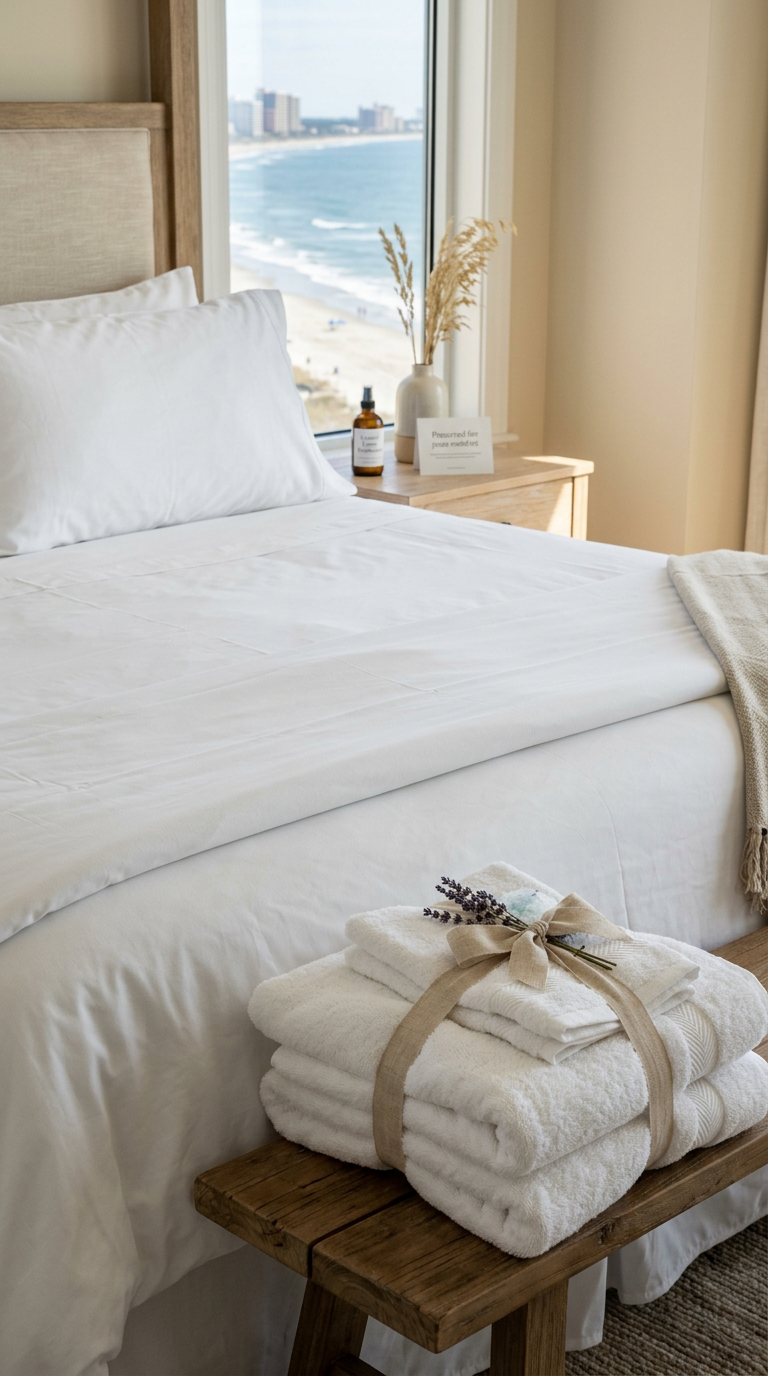
Providing five-star hospitality along the Grand Strand requires more than just clean sheets; it demands an understanding of textile science and coastal water chemistry. Between the abrasive salt air of Myrtle Beach and the high mineral content of our local municipal water, rental linens face an incredibly hostile environment. Without professional intervention, high-thread-count cotton sheets quickly become grey, stiff, and prone to tearing. This guide outlines how to protect your textile investments, manage par levels, and apply hotel-grade laundry practices to extend the life of your rental linens.
The Chemistry of Coastal Water: How Myrtle Beach Minerals Dull Fine Linens
The municipal water supply across Myrtle Beach and the surrounding Grand Strand contains varying levels of dissolved calcium, magnesium, and iron. When these minerals interact with standard retail laundry detergents in a domestic washing machine, they do not rinse away cleanly. Instead, they bond with the soap molecules to form an insoluble residue known as lime soap or curd. This sticky residue clings to the cotton fibers, building up a microscopic barrier cycle after cycle that dulls the fabric's appearance.
This mineral build-up is the primary cause of graying or yellowing in hospitality linens. The mineral barrier acts as a magnet for organic soils, body oils, and fine coastal sand, trapping them within the weave of the fabric. No matter how many times these sheets are washed in a standard home machine, they will continue to look dingy and feel unpleasantly stiff to your guests. Over time, the trapped minerals also dry out the fibers, making them brittle.
To break this mineral bond, professional laundry systems employ water softeners and specialized chelating agents. These additives chemically bind to the calcium and magnesium ions, preventing them from reacting with detergents. This keeps the minerals suspended in the water so they can be flushed down the drain. Home washing machines simply cannot replicate this process, which is why commercial-grade laundry chemistry is essential for maintaining that bright, crisp, resort-quality look.
- Calcium and magnesium ions bind with soap to form a dulling mineral crust.
- Untreated minerals trap body oils and organic soils within the fabric weave.
- Standard domestic detergents lack the chelating agents needed to break mineral bonds.
- Commercial water conditioning keeps minerals suspended and prevents fabric stiffness.
The Mechanics of Salt Crystallization: Why Beach-Adjacent Linens Fray
Oceanfront properties in areas like Cherry Grove and Garden City are constantly exposed to windborne salt spray. This salt air carries microscopic sodium chloride particles that settle onto towels, sheets, and draperies, even when windows remain closed. Unlike ordinary household dust, salt is highly hygroscopic, meaning it continuously absorbs moisture from the humid Grand Strand air. This constant cycle of wetting and drying causes salt crystals to grow and recrystallize directly inside the cotton fibers.
As these microscopic salt crystals expand within the weave of your linens, they act as tiny, sharp abrasives. When guests sleep on the sheets or use the towels, their body weight creates physical friction. This friction forces the sharp salt crystals to grind against the delicate cotton threads. Over a short period of time, this internal grinding micro-shreds the fibers, leading to thin patches, fraying hems, and a noticeable loss of tensile strength.
To combat salt crystallization, beach rentals require a wash formula with an initial high-volume flush cycle. This preliminary step uses warm, chemical-free water to completely dissolve and wash away surface salt before the main wash cycle begins. Without this crucial flush, adding hot water and high-pH chemicals can actually bake the salt minerals deeper into the cotton fibers, accelerating the breakdown of the fabric structure.
- Salt air deposits microscopic sodium chloride crystals deep into cotton weaves.
- Salt crystals absorb humidity, expanding and contracting within the textile fibers.
- Friction from guest use causes these crystals to grind and shred threads from within.
- An initial high-volume flush cycle is necessary to dissolve salt before chemical washing.
The Over-Bleaching Trap: Chemical Burn and Tensile Strength Loss
When property owners notice their vacation rental sheets losing their brightness, the instinctive response is to add more liquid chlorine bleach. While chlorine bleach is an effective sanitizer and immediate whitener, it is also highly alkaline and corrosive. Frequent exposure to concentrated chlorine bleach breaks down the natural cellulose polymers that give cotton its strength and flexibility. This chemical degradation is often referred to in the industry as chemical burning.
The damage caused by over-bleaching is cumulative and irreversible. As the cellulose fibers degrade, the fabric loses its tensile strength, which is its ability to withstand pulling and stretching. You will first notice this when sheets begin to rip at the corners when being pulled over mattresses, or when pillowcases split along the seams. What appeared to be a quick solution for dinginess actually cuts the lifespan of your linens in half.
Hotel-grade laundering avoids chlorine bleach in favor of oxygen-based bleaching agents like hydrogen peroxide, activated at precise temperatures. Oxygen bleach targets stains and bacteria without attacking the molecular structure of the cotton. When chemical bleaching is necessary, commercial operators carefully control the water temperature, wash pH, and exposure time, followed by a neutralizing rinse to ensure no chemical residue remains to irritate guest skin.
- Chlorine bleach breaks down the natural cellulose polymers in cotton fibers.
- Chemical burning reduces tensile strength, leading to premature tears and seam splits.
- Oxygen-based bleaching agents sanitize and brighten without compromising fabric integrity.
- Commercial wash formulas feature strict neutralizers to eliminate residual bleaching agents.
Thermal Shock in the Dryer: Preventing Fiber Brittleness
Drying vacation rental linens is not as simple as tossing them into a commercial dryer and setting it to high heat. Cotton fibers naturally hold a specific percentage of bound moisture, usually between 7% and 8% of their dry weight. This internal moisture is crucial for maintaining the fiber's elasticity and soft feel. When residential dryers bake linens until they are completely bone-dry, they strip away this essential moisture.
This state of extreme over-drying causes thermal shock, making the individual cotton fibers brittle and stiff. When brittle fibers are folded, pressed, or stretched over mattresses, they snap easily under tension. Over-drying also generates high levels of static electricity, which attracts hair, lint, and dust to the sheets during the folding process. This ruins the clean presentation before the linens ever reach the guest room.
To prevent thermal shock, professional laundry facilities utilize stepped-down drying profiles and cool-down cycles. The dryers operate at high temperatures to evaporate bulk surface moisture, but gradually lower the heat as the linens dry. The process finishes with a five-to-ten-minute cool-down cycle using ambient air. This allows the cotton fibers to reabsorb natural atmospheric moisture and regain their flexibility before being folded and packed.
- Over-drying strips cotton of its natural moisture, leading to brittle fibers.
- Brittle, dry fibers easily snap under the mechanical tension of bed-making.
- Stepped-down drying profiles reduce temperatures gradually to protect fabric elasticity.
- A dedicated cool-down cycle allows fibers to reabsorb ambient humidity and relax.
The Mathematics of Par Levels: Why Fiber Rest Periods Matter
One of the most overlooked aspects of linen longevity is the inventory par level. A par represents the total amount of linen required to outfit a rental property completely. Many short-term rental hosts operate on a dangerous 1-par or 2-par system, washing and drying the exact same sheets on the Saturday turn and putting them right back on the beds. This rapid turnaround denies the cotton fibers essential rest.
Cotton is an organic fiber that stretches and distorts during use and laundering. After undergoing the intense mechanical agitation of washing and the thermal stress of drying, cotton fibers need time to recover. Allowing linens to rest in a climate-controlled environment for at least 24 hours allows the fibers to rehydrate, contract, and settle back into their original shape. This resting period significantly restores the fabric's natural tensile strength.
To maximize linen life, we recommend maintaining a strict 3-par inventory. One par is on the beds, one par is in the laundry being processed, and one par is resting on the linen closet shelves. By rotating these sets systematically, you distribute wear evenly and allow each set of sheets the necessary physical recovery time. This simple inventory management strategy can double the overall lifespan of your sheets and towels.
- A 1-par or 2-par system subjects linens to continuous mechanical and thermal stress.
- Cotton fibers require a 24-hour rest period to rehydrate and regain their natural shape.
- Resting linens on shelves relaxes the weave, preventing premature tearing.
- A 3-par inventory system ensures even wear distribution and extends fabric lifespan.
Commercial Wash Chemistry: Titration, pH, and Acid Souring
Unlike household washing, which uses a single detergent scoop, commercial laundry relies on precise chemical titration. This process involves measuring and injecting specific chemical components at different stages of the wash cycle based on water hardness and soil load. The first step involves an alkaline builder, which raises the water pH to swell the cotton fibers, making it easier to release trapped oils.
Once the alkaline builder has loosened the soils, surfactants are introduced to emulsify and lift the dirt away from the fibers. However, leaving the linens in this highly alkaline state would result in stiff, scratchy fabrics that yellow under heat. To prevent this, professional systems inject a neutralizing agent, known as an acid sour, during the final rinse cycle to bring the pH of the linens back to neutral.
Targeting a finished pH of 5.5 to 6.5 matches the natural acidity of human skin, ensuring maximum comfort for guests. This precise pH control also prevents chemical yellowing during the ironing or drying process. Managing these chemical variables requires regular water testing and automated injection systems, which are standard in professional laundry facilities but completely absent from home washing operations.
- Alkaline builders raise pH levels to swell cotton fibers and release trapped soils.
- Surfactants emulsify organic matter, keeping it suspended in the wash water.
- Acid sour agents neutralize alkaline residues during the final rinse cycle.
- Maintaining a balanced pH of 5.5 to 6.5 prevents yellowing and guest skin irritation.
Emulsifying Body Oils and Sunscreen: Defeating the Organic Barrier
Grand Strand visitors spend their days coated in sunscreen, tanning oils, and sweat. When they return to their rental properties, these organic compounds transfer directly to the sheets and towels. Sunscreen containing avobenzone is particularly troublesome, as it reacts with the iron in our local water to create stubborn, rust-colored stains. These organic lipids form a water-resistant barrier that home detergents cannot penetrate.
To break down these oily barriers, hotel-grade laundering utilizes high-performance emulsifiers. Unlike regular detergents that merely wash the surface, emulsifiers work at a molecular level to break the oils down into microscopic droplets. These droplets are then surrounded by water molecules, making them soluble and easy to flush out. Without emulsification, the heat of the dryer will bake the oils into the fibers, setting them permanently.
In addition to specialized chemistry, removing these heavy organic loads requires precise thermal management. Emulsifiers perform best at specific temperature ranges, typically between 140 and 160 degrees Fahrenheit. Maintaining these consistent temperatures throughout the wash cycle ensures that complex oils and sunscreen formulations are completely dissolved, leaving sheets clean, fresh-smelling, and entirely free of oily yellow patches.
- Sunscreens and body oils create hydrophobic barriers that resist standard detergents.
- Avobenzone in sunscreen reacts with iron in local water to create orange rust stains.
- Specialized emulsifiers break down organic lipids into water-soluble droplets.
- High wash temperatures of 140 to 160 degrees are maintained to dissolve complex oils.
Establishing a Sustainable Linen System: Auditing and Rotation Guidelines
Implementing a professional linen care system requires structured operational guidelines. For Grand Strand property managers, this begins with a thorough physical audit of all current linen stock. Every sheet and towel should be inspected under strong light to check for thinning spots, broken hems, and minor staining. Any linen that does not meet resort-quality standards should be immediately retired from guest use.
To track usage and rotation, establish a simple dating system. You can mark the corner hem of sheets with a small, permanent fabric stamp indicating the month and year they were placed in service. When auditing your linen closets, this visual indicator makes it easy to identify older sets that may be nearing the end of their operational lifespan, allowing you to cycle them out before they fail.
Finally, consider the financial and operational benefits of outsourcing your laundry needs to a dedicated Grand Strand specialist. Professional services handle the complex chemistry, water conditioning, and heat control needed to protect your linen investment. By taking the burden of laundry off your cleaning staff, you ensure consistent hospitality standards while maximizing the lifespan of your valuable textile inventory.
- Conduct regular physical audits to inspect for thinning, stains, and broken hems.
- Use a discreet fabric stamp to date-code linens and track their service life.
- Establish clear retirement criteria to remove degraded linens before guests see them.
- Outsource laundering to specialists to secure professional wash chemistry and extend linen life.
Key takeaway
Protecting your rental linens from the harsh coastal elements of the Grand Strand requires a deliberate combination of water treatment, advanced wash chemistry, and proper par level management. By avoiding harsh home-bleaching methods and allowing cotton fibers time to rest, you can dramatically extend the life of your sheets and towels. Partnering with the commercial laundry experts at A2Z Cleaning & Linen Services ensures your textiles receive the hotel-grade care they need to stay bright, soft, and pristine for every guest. Contact us at 843.800.2788 to elevate your property's linen standards today.
Keep Reading
Linens & Laundry
The Industrial Laundry Standard: Applying ALM and TRSA Protocols to Grand Strand Hospitality Linens
ReadLinens & Laundry
The Coastal Percale and Sateen Tensile Strength Preservation Protocol: Mitigating Sand-Friction Shredding, High-Alkaline Wash Rot, and Industrial Calender Scorching in Grand Strand Rental Linens
ReadLinens & Laundry
The Coastal Pillow-Core and Protector Restoration Protocol: Mitigating Humid Yellowing, Mold Spores, and Keratin Accumulation in Grand Strand Vacation Rentals
ReadReady for a spotless property?
Call 843.800.2788 or request a free quote from A2Z Cleaning & Linen Services.