Linens & Laundry
The Industrial Laundry Standard: Applying ALM and TRSA Protocols to Grand Strand Hospitality Linens
Learn how commercial laundry operations use ALM and TRSA standards, chemical titration, and thermal disinfection to extend linen life and ensure guest safety in Myrtle Beach.
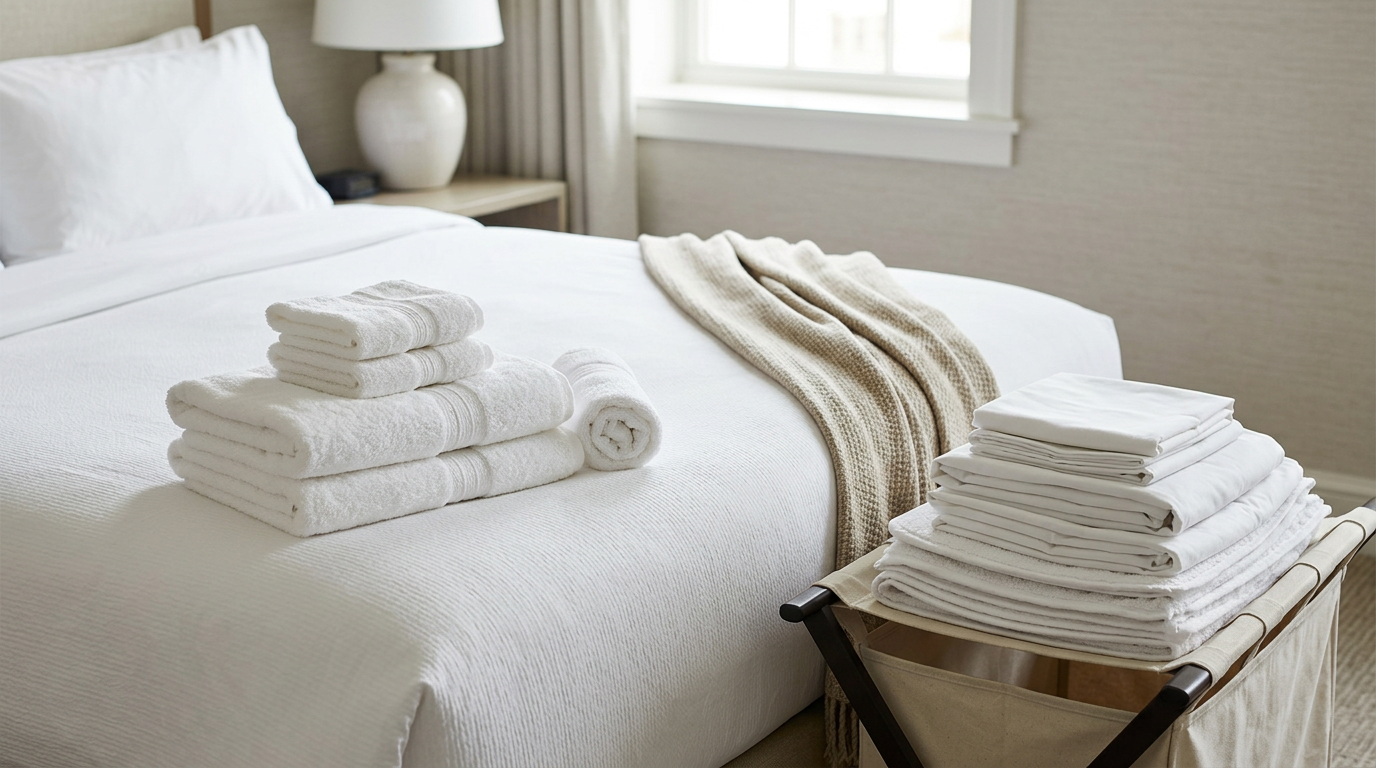
Commercial linen management in a high-volume coastal environment like Myrtle Beach requires far more than residential washers and over-the-counter detergents. To preserve capital investments in sheets, towels, and food-service linens, regional hospitality operators must align their practices with national standards set by the Association for Linen Management (ALM) and the Textile Rental Services Association (TRSA). This technical guide explores how industrial wash chemistry, thermal parameters, and mechanical processing extend fabric life while ensuring complete pathogen eradication. By understanding these professional-grade protocols, Grand Strand property managers and lodging hosts can make informed decisions about their textile assets.
Understanding ALM and TRSA Frameworks in Coastal Environments
National standards established by ALM and TRSA provide the structural blueprint for modern commercial laundry operations. These organizations define the precise parameters for soil classification, wash cycle configurations, and mechanical fluid dynamics to guarantee hygienic cleanliness and material longevity. In coastal South Carolina, where high relative humidity and salty air accelerate organic decomposition and fiber rot, these frameworks are not optional guidelines; they are operational imperatives. Local operators who ignore these standards often experience premature linen yellowing, sour odors, and structural fiber failures.
Implementing these professional frameworks means moving away from subjective cleanliness evaluations toward objective, measurable benchmarks. TRSA's Hygienically Clean certification, for instance, requires regular third-party microbiological testing of finished textiles to ensure they are free from harmful pathogens. For Grand Strand resorts and vacation rental portfolios hosting millions of guests annually, this level of scientific verification protects the brand's reputation and shields guests from cross-contamination risks associated with improperly laundered linens.
Additionally, ALM guidelines focus heavily on the total cost of ownership of textiles. This involves calculating precise linen lifecycle expectations, tracking wash rejection rates, and analyzing the impact of water hardness on tensile strength. When local property managers adopt these national standards, they shift from treating laundry as an unpredictable variable expense to managing it as a predictable, optimized asset class that directly impacts the bottom line.
The Chemistry of Titration: Balancing pH for Coastal Water Profiles
Wash chemistry is a delicate science of balancing water quality, soil loads, and chemical additives. Titration—the process of determining the exact concentration of a chemical solution in a wash bath—is the cornerstone of professional laundry operations. In the Grand Strand, municipal water profiles often exhibit fluctuating levels of calcium carbonate and dissolved minerals. Without precise titration, these minerals bind to detergent molecules, neutralizing their cleaning power and leaving a stiff, gray residue on white sheets and towels.
Professional wash formulas utilize automatic liquid injection systems calibrated to inject specific volumes of alkali, detergent, bleach, and souring agents at exact intervals during the wash cycle. Alkali is introduced first to swell the textile fibers and suspend oily soils, followed by surfactants that encapsulate and emulsify the dirt. If the pH is not carefully raised during these early stages—and then systematically lowered back to a skin-neutral pH of 5.5 to 6.5 during the souring phase—the linen will cause skin irritation for guests and degrade rapidly in the dryer.
Souring agents, which are mild organic acids, are critical in coastal laundries to neutralize any residual alkalinity and chlorine bleach. Residual chlorine, when subjected to the high heat of a commercial ironer or dryer, undergoes a chemical reaction that scorches the cotton fibers, leading to yellowing and catastrophic loss of tensile strength. Regular chemical titration audits, performed by certified laundry technicians, ensure that these chemical ratios remain perfectly balanced regardless of seasonal water fluctuations.
Thermal Disinfection and the Kinetics of Pathogen Eradication
Achieving true sanitation in hospitality linens requires strict adherence to time-temperature relationships during the wash cycle. Thermal disinfection relies on maintaining specific water temperatures for defined durations to denature bacterial and viral proteins. Under national industry guidelines, a minimum wash temperature of 160 degrees Fahrenheit maintained for at least 25 minutes is the standard for high-level disinfection in commercial laundries. This thermal exposure destroys common pathogens, including methicillin-resistant Staphylococcus aureus (MRSA) and norovirus, which can easily spread in high-turnover vacation environments.
While some modern low-temperature detergents utilize active oxygen bleaches to achieve disinfection at lower temperatures, these formulas must be carefully engineered and verified. In coastal environments, where sand, sweat, and sunscreen residues create complex organic barriers on fabrics, relying solely on low-temperature washes can result in incomplete disinfection. Leading operators utilize continuous batch washers that maintain precise thermal zones, ensuring every load of linen receives the exact thermal exposure required for complete microbiological safety.
Furthermore, the cooling phase after thermal processing must be managed gradually to prevent thermal shock to the synthetic components of blended fabrics like polyester-cotton sheets. Rapid cooling can lock in wrinkles, making the ironing process more energy-intensive and damaging to the fibers. By following ALM-recommended cool-down curves, industrial laundries preserve the smooth hand-feel of high-thread-count sheets while ensuring they are completely sterile when they exit the wash wheel.
Mechanical Action and Loading Factors: Preventing Fiber Abrasion
The physical movement of linens within the wash wheel—known as mechanical action—is necessary to dislodge suspended soils, but it must be carefully controlled to prevent excessive wear and tear. Overloading a commercial washer-extractor restricts the fall of the linens, reducing the mechanical drop that forces soapy water through the weave. Conversely, underloading causes excessive friction as fabrics rub against each other and the metal drum, leading to rapid pilling, fraying of hems, and broken threads.
TRSA and ALM standards specify that commercial washers should be loaded to approximately 80% to 85% of their rated weight capacity, depending on the specific soil classification. This optimal loading factor allows for maximum lift and drop of the load, optimizing soil removal while minimizing physical fiber damage. For Myrtle Beach properties using high-density cotton terry towels, maintaining these exact loading ratios is critical to preserving the plush loft and water absorbency that guests expect.
The extraction phase—where the washer spins at high G-forces to remove water before drying—also requires careful calibration. Insufficient extraction leaves excess moisture in the textiles, which dramatically increases drying times, energy consumption, and thermal wear in the dryers. Excessively high extraction G-forces, however, can crush fibers and set deep wrinkles that are difficult to remove. Professional operators utilize programmable logic controllers to adjust spin speeds based on the textile type, balancing moisture retention with fiber protection.
Drying and Ironing Parameters: Managing the Thermal Stress of Finishing
The finishing department is where the visual and tactile quality of hospitality linens is solidified, but it is also where textiles are most vulnerable to thermal degradation. Dryers must be operated with precise temperature probes and moisture-sensing controls. Over-drying is one of the most common causes of premature linen failure in the hospitality industry. When cotton fibers are stripped of their natural, bound moisture, they become brittle, lose elasticity, and are prone to static cling and rapid tearing.
Industrial ironers, used for high-volume flatwork like sheets and pillowcases, utilize high-pressure steam, thermal oil, or gas-heated rolls to dry and smooth damp linens in a single pass. The temperature of these ironers must be matched precisely to the speed of the line and the moisture content of the incoming linens. If the ironer is too hot or the line moves too slowly, the cotton fibers will scorch, resulting in a microscopic breakdown of the cellulose structure that manifests as a loss of brightness and a rougher texture.
Professional finishing protocols demand that linens exit the ironer with just enough residual moisture to quickly dissipate into the ambient air, preventing the fibers from drying out completely. This process, combined with automated folding and stacking machinery, ensures that sheets are crisp, perfectly aligned, and ready for immediate deployment or storage. By controlling these thermal parameters, commercial laundries significantly extend the useful lifespan of expensive high-thread-count textiles.
Linen Rotation and the Critical 3-Par Formula for Fiber Rest
A fundamental concept emphasized by national laundry associations is the absolute necessity of linen rotation, commonly structured around the 3-par inventory formula. One par is in the guest room, one par is in the laundry being processed, and one par is resting in clean storage. Skipping this rotation and rushing sheets from the dryer straight back onto a guest bed is a primary contributor to rapid textile degradation. Cotton fibers require a period of rest after hot washing, drying, and ironing to reabsorb ambient humidity and realign their molecular structure.
Without this rest period, fibers remain in a highly stressed, dehydrated state, making them significantly more vulnerable to friction, tearing, and chemical staining during the next guest stay. In the high-demand summer season in Myrtle Beach, many property managers run dangerous low-par inventories, resulting in linens wearing out in a fraction of their normal lifespan. Investing in a true 3-par system reduces the long-term capital replacement costs of linens by up to 50% by distributing wear evenly and allowing fibers to recover.
Furthermore, a strict rotation protocol allows for proper inventory tracking and quality control. During the resting period in the clean linen closet, items can be inspected for missed stains, tears, or fraying under consistent lighting conditions. This preventive sorting prevents damaged or stained sheets from ever reaching a guest room, maintaining the high visual standards required by premium hospitality brands and protecting online reviews.
Supply Chain Resiliency and Sourcing for Commercial Durability
National supply chain trends have forced a paradigm shift in how hospitality operators source and manage their textile inventories. The rise of global logistics challenges and shifting cotton prices have highlighted the importance of sourcing commercial-grade linens designed specifically to withstand the rigors of industrial processing. Residential-grade linens, while often softer out of the package, lack the high-tensile yarns, reinforced selvedges, and high-density weaves necessary to survive commercial chemistry and high-heat drying.
Leading commercial laundries work closely with institutional textile manufacturers to select products woven with ring-spun yarns and blended with high-performance polyester fibers. These poly-cottons offer the breathability of cotton with the superior strength, wrinkle resistance, and rapid drying characteristics of polyester. When sourcing for Grand Strand vacation rentals, selecting textiles engineered with dual-needle stitched hems and color-coded size threads ensures efficient handling and superior durability over dozens of commercial wash cycles.
Additionally, establishing robust supply relationships allows commercial laundries to maintain consistent inventory levels even during peak occupancy surges. By keeping a buffer of standard-specification sheets and towels in localized supply hubs, operators can quickly replace worn or stained assets without interrupting service or resorting to mismatched retail linens that degrade the guest experience.
Environmental Sustainability: Water Reclaim and Low-Impact Chemistry
Modern industrial laundries are increasingly focused on environmental stewardship, aligning with national green certifications such as the TRSA Clean Green standard. In coastal areas like the Grand Strand, water conservation is highly critical due to the strain that seasonal population spikes place on municipal infrastructure. Leading operations utilize advanced water reclaim systems that capture, filter, and reuse rinse water for the initial flush stages of subsequent wash cycles. This technology can reduce total water consumption by up to 50% to 70% compared to traditional wash wheels.
Beyond water conservation, green chemistry plays a vital role in sustainable operations. Traditional, harsh chlorine bleaches are increasingly replaced with biodegradable, oxygen-based bleaching agents that break down into water and oxygen without releasing harmful chlorinated compounds into the local wastewater system. These modern chemicals are highly effective at lower temperatures, reducing the carbon footprint of the laundry facility by lowering energy requirements for water heating.
Implementing these eco-friendly technologies does not require sacrificing cleanliness or sanitization standards. In fact, advanced filtration and computer-controlled chemical dosing often result in superior soil removal and less chemical residue left on the finished textiles. By partnering with a commercially certified laundry service that prioritizes environmental compliance, Grand Strand property managers can proudly market their commitment to sustainable tourism to eco-conscious travelers.
Key takeaway
Managing hospitality linens at a professional level requires an operational commitment to national ALM and TRSA standards, precise chemical titration, and systematic inventory rotation. For Grand Strand properties, partnering with a commercial laundry service that utilizes these advanced protocols is the most reliable way to protect valuable textile assets, ensure complete microbiological safety, and deliver an immaculate guest experience. Contact A2Z Cleaning & Linen Services at 843.800.2788 to learn how our professional linen protocols can support your hospitality business.
Keep Reading
Linens & Laundry
The Coastal Linen Lifecycle: Preserving Tensile Strength and Brightness in Grand Strand Rentals
ReadLinens & Laundry
The Coastal Percale and Sateen Tensile Strength Preservation Protocol: Mitigating Sand-Friction Shredding, High-Alkaline Wash Rot, and Industrial Calender Scorching in Grand Strand Rental Linens
ReadLinens & Laundry
The Coastal Pillow-Core and Protector Restoration Protocol: Mitigating Humid Yellowing, Mold Spores, and Keratin Accumulation in Grand Strand Vacation Rentals
ReadReady for a spotless property?
Call 843.800.2788 or request a free quote from A2Z Cleaning & Linen Services.