Coastal Living
The Coastal Mini-Split and PTAC Evaporator Coil Decontamination Protocol: Mitigating Mold Spores, Salt-Damp Dust Loading, and Botanical Disinfection in Grand Strand Homes
A deep dive into safely cleaning ductless HVAC units in Myrtle Beach. Learn how to eliminate toxic mold, salt-crusted dust, and bio-sludge using eco-friendly, botanical protocols.
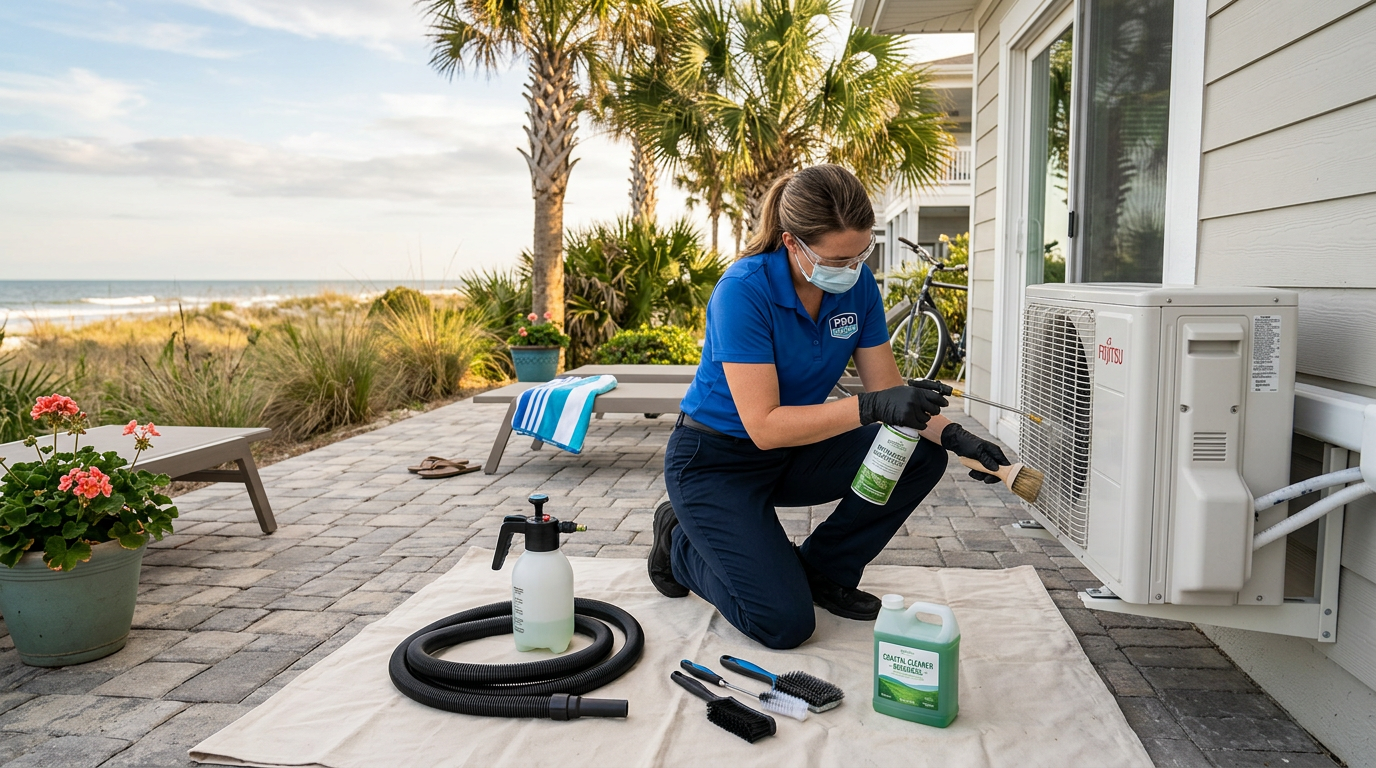
Ductless mini-splits and Packaged Terminal Air Conditioner (PTAC) units have become standard fixtures across Myrtle Beach, conditioning sunrooms, converted garages, historic beach bungalows, and high-rise oceanfront condos. However, their localized, duct-free design means they draw air directly from the immediate living space, filtering out coarse particles while trapping fine sand, salt, and humidity on their internal components. Over time, this mixture creates a damp, nutrient-rich environment where mold and bacteria thrive right in your breathing zone. This protocol details how to restore indoor air quality and equipment efficiency using health-safe, botanical solutions designed specifically for the Grand Strand's intense coastal climate.
The Anatomy of Coastal Ductless Air Systems: Why Mini-Splits and PTACs Are Vulnerable
Unlike centralized systems hidden away in attics or crawlspaces, mini-splits and PTAC units sit directly inside the rooms they service. This proximity makes them highly efficient for zoned cooling, but it also subjects them to immediate household contaminants. In the humid Grand Strand climate, these units run almost continuously for eight months of the year, drawing in humid, salt-laden air, pet dander, cooking oils, and fine coastal dust.
Because these systems rely on compact, tightly spaced aluminum fins on their evaporator coils, the clearance for airflow is incredibly narrow. The moist environment created by active condensation pulls suspended particles out of the air, gluing them directly to the cold metal surfaces. Within weeks of heavy summer operation, a clean coil can become clogged with a sticky, insulating blanket of organic and inorganic debris.
When these small-format systems are neglected, their cooling capacity drops precipitously, forcing them to run longer and consume more energy. More importantly, the localized circulation means that any biological growth on the internal components is immediately dispersed into the room. For homeowners and renters alike, this direct-injection pathway can compromise indoor air quality far faster than a traditional ducted system.
The Micro-Biology of the Evaporator Coil: Mold, Salt-Paste, and Allergen Accumulation
The cooling process naturally extracts moisture from the warm coastal air, causing water to drip down the vertical faces of the evaporator coils. Under ideal conditions, this water flows smoothly into a condensate pan and out of the home. However, when airborne sea salt mixes with fine sand-silt and indoor dust, it forms a sticky, hygroscopic salt-paste that clings to the aluminum fins rather than washing away.
This persistent salt-paste acts as a sponge, holding onto moisture even when the unit cycles off. This damp, dark, and warm interior environment provides the perfect incubation chamber for mold spores like Aspergillus, Penicillium, and Cladosporium. These fungi feed on the organic dander and skin cells trapped in the salt-paste, colonizing the delicate metal fins and plastic housings in a matter of weeks.
As these mold colonies mature, they release microscopic spores and Volatile Organic Compounds (VOCs) into the air stream. Every time the blower fan kicks on, it distributes these biological irritants directly into bedrooms, living rooms, and home offices. For individuals sensitive to allergens, this continuous exposure can trigger persistent respiratory symptoms and sinus congestion.
The Health and Safety Impacts of Neglected Ductless Units on Grand Strand Residents
In closed indoor environments, the quality of the air we breathe has a direct, measurable impact on respiratory health, sleep quality, and physical comfort. When mini-splits or PTAC units harbor mold and bacterial biofilms, the resulting air stream can trigger asthma flare-ups, chronic coughing, and itchy eyes. This is especially true for young children, elderly family members, and those with pre-existing respiratory conditions.
Beyond active allergens, dirty coils emit a signature musty, sour odor often referred to locally as 'dirty sock syndrome.' This smell is not just an aesthetic annoyance; it is a chemical warning sign indicating the presence of microbial VOCs and bacterial decomposition. Masking these odors with synthetic air fresheners only introduces more chemical pollutants into the indoor air, compounding the problem rather than solving it.
Transitioning to a health-first cleaning model ensures that the root cause of these biological odors is physically removed. By stripping away the organic food source and sanitizing the substrates with safe, non-toxic chemistry, we protect the home's occupants. Clean, allergen-free air supports deep breathing, reduces reliance on antihistamines, and restores the fresh, clean atmosphere that a coastal home should possess.
Step-by-Step Evaporator Coil Decontamination: Safe Access and Shroud Removal
Before any cleaning chemistry or water is introduced, safety must be prioritized by isolating the electrical supply. For mini-splits, this involves turning off the dedicated outdoor disconnect switch or the indoor circuit breaker; for PTAC units, the power cord must be completely unplugged from its receptacle. Working on an energized unit presents severe shock hazards and can easily short-circuit the sensitive electronic control boards located near the coil.
Once power is verified as off, the outer plastic shroud must be carefully removed. This process typically requires locating hidden plastic tabs, removing retaining screws, and gently pulling the casing forward without cracking the aged, brittle plastic. Removing the shroud is non-negotiable, as attempting to clean the coils through the narrow louvers of an assembled unit will only pack the dirt deeper into the fins.
With the shroud removed, the delicate aluminum evaporator fins are fully exposed. Because these fins are incredibly thin, even minor physical contact can bend them, restricting airflow and permanently damaging the unit. If any sections of the coil are already bent from past maintenance, a specialized plastic fin comb must be used to gently straighten them before cleaning can begin.
- Isolate all electrical power at the breaker or wall plug and verify with a non-contact voltage tester.
- Gently unclip and remove the washable mesh pre-filters to expose the primary cabinet assembly.
- Extract the retaining screws and carefully release plastic snaps to pull the outer cover away from the wall chassis.
- Protect the exposed control board and wiring harness on the right side of the unit with heavy-duty plastic sheeting.
- Examine the delicate aluminum fins for existing physical damage and straighten bent sections with a matching fin comb.
High-Efficiency Bio-Extraction: The Physics of Low-Pressure Rinsing and Soil Capture
Attempting to wipe or scrub evaporator coils with brushes or cloths is ineffective and often destructive. The dirt and biological growth are packed deep within the physical layers of the aluminum fins, requiring a liquid-based flushing action to extract them. To do this safely indoors, a specialized mini-split cleaning bag, or 'bib kit,' must be suspended beneath the unit to funnel wastewater into a collection bucket.
The cleaning process relies on low-pressure, high-volume rinsing rather than high-pressure blasting. High-pressure sprayers can easily flatten the aluminum fins, trap debris permanently, and splash contaminated water onto surrounding drywall and flooring. A controlled wash at 30 to 50 PSI is the sweet spot, providing enough force to push through the fins while keeping the water safely contained.
As the water passes through the coil, it breaks the surface tension of the sticky salt-paste, flushing the emulsified dirt, mold, and dust downward. This wastewater is highly contaminated with mold spores, bacteria, and chemical residues, making containment critical. A successful flush leaves the aluminum clean, bright, and completely free of the dark grey biofilm that previously choked the airflow.
Selecting Safe and Sustainable Chemistry: Botanical Bio-Disinfectants vs. Harsh Acids
Traditional HVAC coil cleaners rely heavily on highly alkaline sodium hydroxide or acidic hydrofluoric acid formulations. While these aggressive chemicals quickly foam away dirt, they release toxic, choking fumes that linger in indoor air for days. Furthermore, these corrosive agents strip away the protective oxide layer on aluminum fins, accelerating salt-air pitting and causing premature coil failure in coastal environments.
To protect both indoor air quality and mechanical longevity, this protocol utilizes advanced green chemistry. Natural, plant-derived botanical cleaners—specifically those formulated with stabilized thymol (derived from thyme oil) or biodegradable enzymes—break down organic soils without toxic emissions. These green solutions carry an EPA Category IV toxicity rating, meaning they require no warning labels and are completely safe for children, pets, and chemical-sensitive individuals.
These botanical agents work by penetrating the cellular walls of mold, mildew, and bacteria on contact, neutralizing them without corrosive side effects. They leave behind no hazardous residues that could off-gas into the home when the system starts up. Instead, they leave a clean, neutral slate, ensuring the air blowing into your home is as pure as the ocean breeze.
The Blower Wheel and Drain Pan Sanitization Protocol
While the evaporator coils are the most visible component, the cylindrical blower wheel (or 'squirrel cage') and the condensate drain pan are often the primary sources of mold and odor. The blower wheel spins rapidly to pull air across the coils, and its curved blades are prone to collecting a thick layer of static-charged lint and moisture. This creates a rotating ring of mold that continuously sheds spores directly into the room.
To clean the blower wheel properly, it must be rotated slowly while applying a specialized botanical gel cleaner that clings to the blades. After allowing the chemistry to break down the impacted grime, a low-pressure rinse is used to flush the black sludge off the wheel and into the collection bag. This step often releases a surprising volume of debris, instantly restoring the physical balance and whisper-quiet operation of the fan.
Finally, the condensate drain pan—located directly beneath the coils—must be thoroughly cleared. Standing water in this shallow tray regularly mixes with dust to form a thick, gelatinous bio-sludge that clogs the narrow drain line. We clear this line using a specialized drain gun or low-moisture vacuum, then place a slow-dissolving, botanical pan strip inside to prevent future algae and mold growth.
- Slowly rotate the blower wheel, checking each blade for signs of impacted lint and black mold growth.
- Apply a targeted botanical cleaning gel directly to the fan blades to emulsify sticky organic binders.
- Rinse the wheel thoroughly using a low-pressure spray wand, ensuring all rinse water drains into the collection bib.
- Flush the condensate drain pan with warm water and use a suction pump to extract accumulated bio-sludge.
- Insert a non-corrosive, botanical enzyme tablet into the drain pan to continuously suppress mold and algae growth.
Preventive Maintenance and Proactive Filtration Cycles for Coastal Homeowners
Decontaminating your ductless units is an essential step, but maintaining that clean standard requires a consistent, proactive approach. In the Grand Strand's high-humidity summers, the washable plastic mesh filters should be removed and rinsed under warm tap water every two to three weeks. Allowing these filters to clog reduces air volume, increases condensation rates, and accelerates the buildup of dirt on the internal coils.
For homes with pets or high pollen loads, installing secondary, electrostatically charged mini-split filter media strips behind the standard mesh filters can provide an extra layer of protection. These thin strips trap fine particles, smoke, and allergens before they can reach the wet evaporator coils. Because these secondary filters restrict some air movement, they must be monitored closely and replaced monthly to prevent system strain.
Additionally, running the unit's 'dry mode' or 'fan-only' mode for 20 to 30 minutes after a heavy cooling cycle can help dry out the interior cabinet. By evaporating standing moisture on the coils and blower wheel before the unit sits idle, you deny mold spores the moisture they need to germinate. This simple habit, paired with professional deep-cleans once or twice a year, ensures your coastal home remains a healthy haven.
Key takeaway
Maintaining clean evaporator coils in your mini-split and PTAC units is vital for preserving healthy indoor air and system efficiency in our humid coastal environment. By replacing harsh, corrosive chemicals with safe, botanical disinfectants, A2Z Cleaning & Linen Services ensures your Grand Strand home remains comfortable, energy-efficient, and free of airborne mold and allergens. Contact us today at 843.800.2788 to schedule a professional, health-focused deep clean for your ductless climate control systems.
Keep Reading
Coastal Living
The Coastal Sliding Glass Door Track and Weep-Hole Decontamination Protocol: Mitigating Mold Bio-Sludge, Wind-Driven Allergens, and Chemical Runoff in Grand Strand Homes
ReadCoastal Living
The Coastal Window Treatment and Blackout Drapery Sanitization Protocol: Mitigating Humid Mold Spores, Pollen Reservoirs, and VOC-Free Allergen Release in Grand Strand Homes
ReadCoastal Living
The Coastal Rattan and Woven Fiber Furniture Decontamination Protocol: Mitigating Crevice-Dwelling Mold, Allergen Reservoirs, and VOC-Free Botanical Restoration in Grand Strand Homes
ReadReady for a spotless property?
Call 843.800.2788 or request a free quote from A2Z Cleaning & Linen Services.