Linens & Laundry
The Coastal Percale and Sateen Tensile Strength Preservation Protocol: Mitigating Sand-Friction Shredding, High-Alkaline Wash Rot, and Industrial Calender Scorching in Grand Strand Rental Linens
Discover how to protect your luxury rental sheets from sand abrasion, chemical rot, and industrial ironing damage with our professional Grand Strand linen preservation protocol.
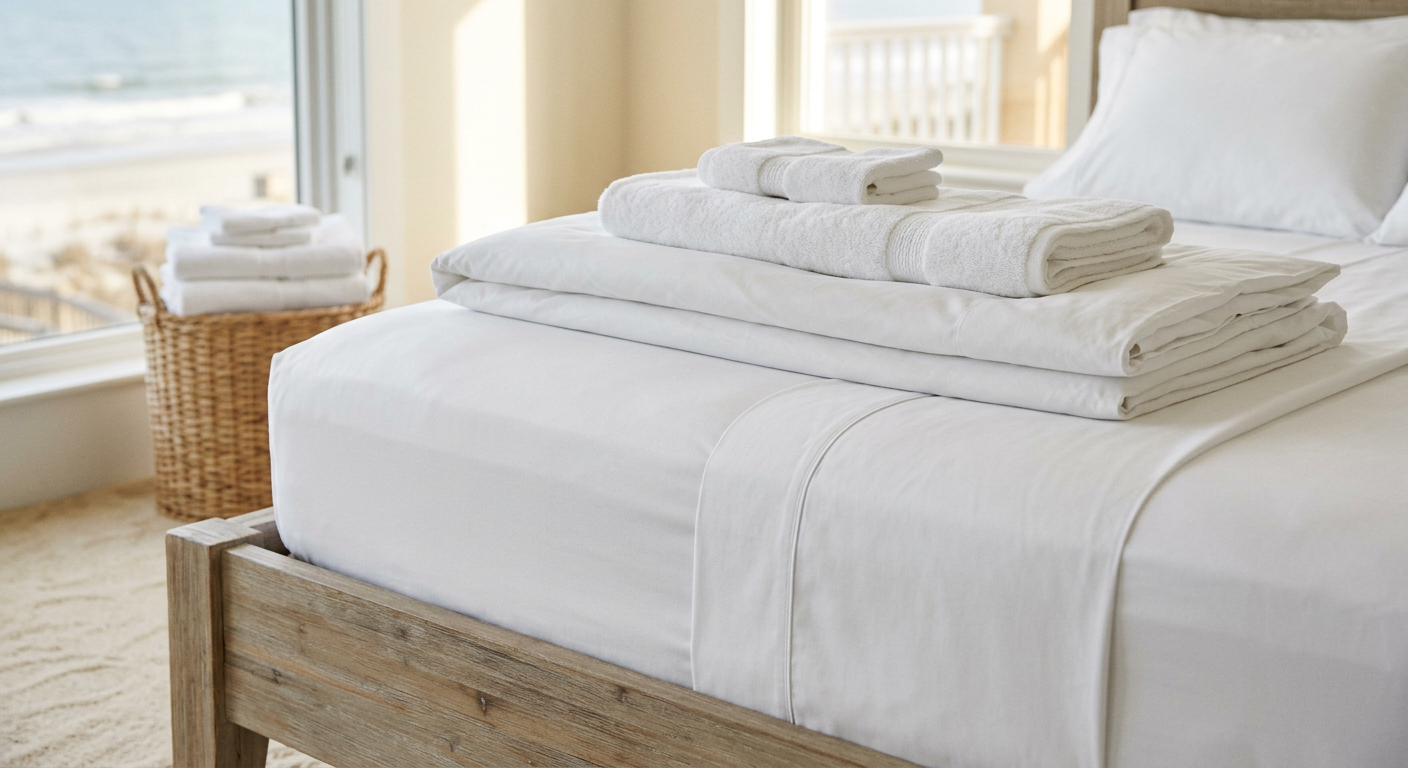
In the high-velocity vacation rental market of the Grand Strand, bed linens are subjected to physical and chemical stresses that far exceed typical residential wear. Between the abrasive action of fine beach sand and the aggressive chemical profiles of commercial laundry processing, high-thread-count percale and sateen sheets can degrade prematurely. This technical protocol outlines the precise thermal, chemical, and mechanical steps necessary to preserve the tensile strength of luxury rental linens. By implementing these specialized standards, property managers and hosts can extend the lifespan of their sheets, maintain five-star guest satisfaction, and lower their overall capital expenditure on linen replacement.
The Micro-Physics of Sand-Friction in High-Thread-Count Weaves
Grand Strand beaches are composed of fine quartz and shell fragments that effortlessly hitchhike into rental properties on guests' skin and clothing. Once in the bed, these microscopic sand grains lodge themselves deep within the interlacing of the sheet's warp and weft yarns. During a guest's stay, the mechanical action of tossing and turning grinds these sharp-edged silica particles against the cotton fibers. This abrasive friction creates micro-tears and frays the individual filaments, significantly reducing the fabric's overall tensile strength before the sheets even reach the laundry facility.
Standard washing processes can fail to dislodge these deeply embedded quartz particles if the wash wheel's mechanical action is insufficient or if the rinse cycles are poorly calibrated. When sand remains trapped in the weave during the high-speed extraction and drying phases, the physical damage is compounded. The high centrifugal force of extraction presses the sand harder into the fibers, acting like miniature sandpaper blades. This leads to premature thinning, microscopic pilling, and eventual tearing along the high-stress areas of the sheet, such as the center seams and foot zones.
To mitigate this mechanical degradation, the laundering workflow must begin with a dedicated dry-shake or pre-vacuuming phase for heavily sanded linens. Following this, the initial flush cycle in the commercial washer must use high water levels and a moderate mechanical drop to float the sand particles out of the fabric matrix. By utilizing gravity and water volume rather than aggressive agitation, the silica is suspended in the bath and safely drained away, preventing it from grinding against the delicate cotton fibers during the main wash and extraction cycles.
The Sateen vs. Percale Vulnerability Profile in High-Turn Coastal Environments
Understanding the structural differences between percale and sateen weaves is critical for selecting the correct laundering parameters. Percale features a classic one-under, one-over plain weave that provides a matte finish and high breathability, making it ideal for hot Myrtle Beach summers. This tight, symmetrical grid offers superior structural stability and resistance to yarn slippage. However, the crisp texture of percale means that any stiffness caused by chemical buildup or mineral deposition is immediately noticeable to guests, requiring meticulous softening and pH balancing.
Sateen utilizes a four-over, one-under satin weave that exposes more thread surface on the face of the fabric, creating a signature silky sheen and draping quality. While highly luxurious, these long float yarns are significantly more vulnerable to snagging, abrasive wear, and chemical erosion. The exposed fibers in a sateen weave absorb stains more readily and are more prone to pilling when subjected to the friction of sand or rough skin. Consequently, sateen sheets require gentler mechanical action, lower wash temperatures, and precise chemical dosing to avoid destroying their lustrous finish.
In high-turn vacation rentals, sateen sheets often exhibit a much shorter lifespan than their percale counterparts if treated with standard industrial wash formulas. The delicate float yarns are easily broken by the aggressive extraction speeds required to process large volumes of laundry quickly. For properties seeking a balance of luxury and durability, percale is generally the more resilient choice for coastal environments. Whichever weave is selected, the laundering protocol must be tailored to the specific physical vulnerabilities of that fabric construction to prevent premature replacement costs.
Commercial Wash Chemistry and the High-Alkaline Fiber Degradation Loop
Commercial laundry formulas frequently rely on high-alkalinity builders, such as sodium hydroxide or sodium metasilicate, to swell cotton fibers and release stubborn organic soils, body oils, and makeup. While effective at removing grime, sustained exposure to high pH levels (above 10.5) chemically degrades cellulose, the primary component of cotton. Over time, this high-alkaline environment weakens the polymer chains within the cotton fibers, leading to a condition known as chemical rot or alkali damage, which manifests as brittleness and a drastic loss in tensile strength.
This chemical degradation is severely accelerated if the alkaline builder is not completely neutralized during the souring phase of the wash cycle. A dedicated laundry sour, typically containing mild silicofluorides or organic acids, must be introduced in the final rinse to bring the fabric's pH down to a skin-compatible level of 5.5 to 6.5. If this step is bypassed or under-dosed, residual alkali remains trapped in the sheets. When these alkaline residues are subjected to the intense heat of dryers or flatwork ironers, they scorch the fibers from the inside out, causing rapid yellowing and structural failure.
To preserve fiber integrity, commercial wash formulas must utilize a buffered alkali system combined with high-performance surfactants. This allows for effective soil suspension at lower pH thresholds, minimizing chemical stress on the cotton matrix. Regular titration testing of the wash and rinse baths is mandatory to ensure that chemical dosing remains within safe parameters. Laundering technicians must verify that the water hardness, alkali concentration, and sour dosage are perfectly balanced to clean effectively without compromising the physical limits of the high-thread-count fabric.
Thermal Stress and Calender Ironing: Preventing High-Speed Heat Scorching
Flatwork calender ironers are the gold standard for producing the crisp, wrinkle-free sheets expected in high-end Grand Strand rentals. These industrial machines utilize steam, gas, or thermal oil to heat large metal cylinders, pressing and drying the linens in a single high-speed pass. However, the combination of extreme heat (often exceeding 325 degrees Fahrenheit) and intense pressure represents a major thermal stress point for cotton fibers. If the linen's moisture content is incorrect, or if the ironer's speed is improperly calibrated, the fabric can suffer catastrophic heat degradation.
For optimal pressing without fiber damage, sheets must enter the calender ironer with a precise residual moisture level of 15% to 20%. This moisture acts as a thermal buffer, absorbing the initial heat energy and converting it to steam, which relaxes the cotton fibers into a smooth state. If sheets are over-dried in a tumble dryer before ironing, they lack this protective moisture barrier. Passing bone-dry cotton across a hot ironer cylinder causes immediate surface scorching, microscopic melting of any synthetic blends, and a severe reduction in the fabric's long-term tensile strength.
Proper machine maintenance is also critical to preventing mechanical and thermal friction damage. Ironer chests must be regularly waxed and cleaned to prevent linen hesitation or wrapping, which exposes the fabric to localized heat for too long. Feed ribbons and pressure rolls must be calibrated to ensure uniform pressure across the entire width of the sheet. By strictly managing input moisture, temperature, and throughput speed, laundry operators can achieve a flawless, hotel-grade finish while protecting the delicate molecular structure of both percale and sateen weaves.
Water Hardness and Iron Mineral Deposition in Grand Strand Wash Cycles
The municipal water supply along the Grand Strand can vary significantly in mineral content, presenting unique challenges for commercial laundry operations. High levels of calcium, magnesium, and dissolved iron are particularly destructive to cotton fabrics. During the wash cycle, these minerals react with alkaline detergents to form insoluble metallic precipitates, commonly referred to as lime soap or scale. This scale deposits onto the microscopic crevices of the cotton fibers, forming a stiff, abrasive coating that dulls the fabric's appearance and ruins its hand-feel.
As these mineral deposits accumulate over repeated wash cycles, they act like internal sandpaper within the yarn structure. Every time the sheet flexes or is ironed, the hard mineral crystals grind against the soft cotton fibers, causing rapid physical degradation and microscopic fiber breakage. Furthermore, dissolved iron in the water supply can cause localized oxidation reactions when exposed to chlorine bleach. This chemical reaction acts as a catalyst, accelerating the bleaching process to such an extreme degree that it literally burns pinholes directly through the fabric.
To combat mineral-induced fiber rot, commercial laundry facilities must utilize industrial water softening systems to reduce hardness to near-zero levels (under 1 grain per gallon). Additionally, wash formulas should incorporate chelating agents or sequestering compounds to bind dissolved iron and other minerals, keeping them in suspension so they can be completely rinsed away. Regular water quality testing is essential to adjust chemical formulas in response to municipal water fluctuations, ensuring that mineral scale never has the opportunity to compromise the durability of the rental inventory.
Destructive Bleach Loading vs. Oxygen-Based Tensile Preservation Workflows
The pressure to deliver pristine, white sheets in the vacation rental industry often leads to the overuse of chlorine bleach. While sodium hypochlorite is an inexpensive and highly effective sanitizer and whitener, it is incredibly destructive to organic cotton fibers. Chlorine bleach works by breaking down the double bonds in organic stain molecules, but it simultaneously attacks the molecular chains of the cotton cellulose. Overuse of chlorine results in rapid fiber thinning, loss of elasticity, and a distinctive chemical odor that guests find highly objectionable.
To preserve tensile strength, laundry facilities must transition from aggressive chlorine bleach programs to oxygen-based bleaching systems, such as hydrogen peroxide or peracetic acid. These compounds oxidize organic soils at lower, safer chemical thresholds, dramatically reducing the rate of fiber degradation. Hydrogen peroxide is particularly effective when run at elevated temperatures (above 140 degrees Fahrenheit) in a mildly alkaline bath, where it releases active oxygen to lift stains without compromising the structural integrity of the cotton. This approach extends the useful life of a sheet by up to 50% compared to chlorine-heavy programs.
When chlorine bleach must be used for severe stain reclamation, it must be carefully dosed, temperature-controlled, and followed by an antichlor rinse. An antichlor agent chemically neutralizes any remaining chlorine, stopping the destructive oxidation process in its tracks before the linen is subjected to the high heat of the dryer or ironer. Failing to neutralize residual chlorine leads to localized acid formation during drying, which quickly eats away at the fabric, causing premature tearing, yellowing, and thread bareness in high-stress zones.
Inventory Par-Level Buffering to Prevent Mechanical Fatigue and Short-Cycle Rot
One of the most overlooked factors in rental linen degradation is the physical fatigue caused by inadequate inventory par levels. In a busy Grand Strand rental market, properties operating on a low par level (such as 1.5 or 2 pars) force their linens into a continuous, rapid-turn loop. Sheets are stripped from a bed, rushed to a laundry facility, washed, dried, ironed, and put back on a bed within a matter of hours. This constant mechanical and thermal stress allows the fabric no time to rest or recover.
At a molecular level, cotton fibers require time to normalize and reabsorb ambient atmospheric moisture after undergoing the extreme heat and compression of commercial laundering. Placing a freshly ironed, completely dehydrated sheet directly back onto a bed or packing it tightly into a mobile delivery bin prevents this natural relaxation process. The fibers remain brittle and highly susceptible to immediate tearing under guest load. Establishing a strict 3-to-4 par level ensures that linens can rest for at least 24 hours between wash cycles, significantly reducing mechanical fatigue.
Furthermore, a healthy par-level buffer allows for gentler wash programs and longer stain-reclamation cycles, as laundry technicians are not pressured to rush loads through aggressive, destructive cycles to meet immediate housekeeping demands. Having adequate inventory on hand means stained linens can be set aside for proper soaking and treatment rather than being subjected to high-chemical, high-heat emergency washes. Investing in a robust inventory par level is ultimately a cost-saving measure that protects the physical integrity of the fabric, stabilizes quality standards, and extends the operational lifespan of the entire linen portfolio.
Key takeaway
Maintaining luxury linen quality in a high-turn coastal environment requires a precise balance of mechanical care, advanced wash chemistry, and adequate inventory rest periods. By shifting away from harsh chlorine-based bleaching and implementing professional thermal and chemical controls, Grand Strand hosts can significantly extend the lifespan of their percale and sateen sheets. For expert commercial-grade laundering and proactive linen management tailored to the local climate, contact A2Z Cleaning & Linen Services at 843.800.2788.
Keep Reading
Linens & Laundry
The Coastal Pillow-Core and Protector Restoration Protocol: Mitigating Humid Yellowing, Mold Spores, and Keratin Accumulation in Grand Strand Vacation Rentals
ReadLinens & Laundry
The Coastal Duvet Insert and Protector Sanitation Protocol: Managing Body-Oil Yellowing, Sand-Grit Intrusion, and Mildew Spores in Grand Strand Vacation Rentals
ReadLinens & Laundry
The Industrial Laundry Standard: Applying ALM and TRSA Protocols to Grand Strand Hospitality Linens
ReadReady for a spotless property?
Call 843.800.2788 or request a free quote from A2Z Cleaning & Linen Services.