Linens & Laundry
The Coastal Pillow-Core and Protector Restoration Protocol: Mitigating Humid Yellowing, Mold Spores, and Keratin Accumulation in Grand Strand Vacation Rentals
Discover professional techniques to eliminate yellowing, moisture, and allergens from vacation rental pillows using advanced commercial laundry protocols.
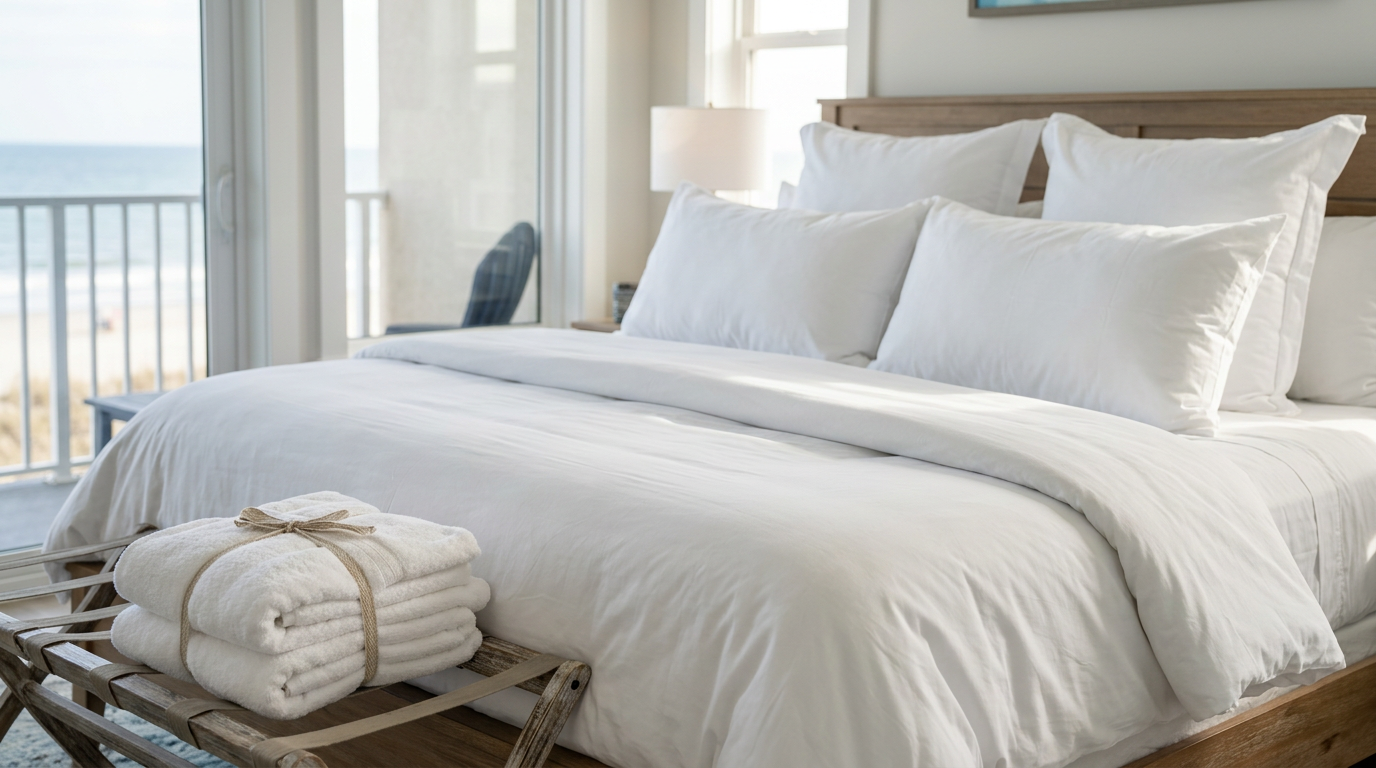
Pillow cores in Grand Strand vacation rentals face an unrelenting onslaught of high humidity, guest perspiration, facial sebum, cosmetic residues, and shed skin cells. Standard domestic laundering frequently neglects the pillow core, leading to rapid yellowing, musty odors, and allergen buildup that triggers immediate guest complaints. Implementing a structured, commercial-grade restoration and protection protocol is essential for extending the life of these critical sleep assets. By utilizing precise wash chemistry, high-extraction drying techniques, and advanced barrier fabrics, property managers can secure pristine reviews and protect their inventory investment.
The Anatomy of Coastal Pillow Degradation (Humidity, Sebum, and Keratin)
In the humid environment of Myrtle Beach and the surrounding Grand Strand, pillows act as physical sponges for atmospheric moisture and human biological soils. High ambient humidity, often climbing above 70 percent during the peak summer rental season, prevents natural moisture evaporation from the bed. When a guest sleeps, they release sweat, saliva, and facial sebum directly onto the pillowcase, which easily migrates through standard cotton threads into the inner pillow core.
Over time, these organic fluids oxidize when exposed to air and warmth, resulting in the characteristic yellow-brown staining that signals neglect to arriving guests. Beyond aesthetics, the buildup of shed skin cells—composed of keratin—creates an ideal feeding ground for microscopic dust mites. The combination of warmth, high relative humidity, and abundant organic food sources turns an unprotected pillow core into an active allergen reservoir within just a few weeks of heavy seasonal use.
When these biological soils are allowed to remain in the pillow fibers, they chemically degrade the synthetic or natural fill. Polyester fibers lose their slick coating and begin to clump, while down feathers lose their natural lofting properties and turn brittle. This structural degradation shortens the operational lifespan of the pillow, forcing premature and expensive inventory replacements that erode rental profit margins.
The Mold and Mildew Hazard in Coastal Pillow Cores
The coastal climate of the Grand Strand introduces a unique biological challenge to hospitality laundering: rapid spore germination. Vacationers frequently return from a day at Cherry Grove or Surfside Beach with damp hair or skin, laying directly on the beds before showering. This introduces highly chlorinated pool water or salty ocean water directly to the pillow fabric, carrying with it microscopic environmental fungi.
Once moisture penetrates the dense core of a down-alternative or feather pillow, it becomes trapped in an dark, oxygen-poor environment. Without rapid extraction and professional-grade drying, common mold species such as Aspergillus and Penicillium can colonize the core fibers in less than forty-eight hours. This colonization produces volatile organic compounds that yield a sour, musty odor—often referred to by guests as the 'old beach house smell'—which cannot be masked by scented sprays.
Standard residential washers and dryers lack the heat capacity and drum volume to properly dry the deep center of a pillow core, leaving a damp middle zone. This hidden moisture pocket allows mold spores to continue reproducing even after the exterior of the pillow feels completely dry to the touch. A professional decontamination protocol must address both surface mold stains and internal spore viability to ensure guest health and safety.
Fabric-Specific Wash Chemistry (Down-Alternative vs. Down and Feather)
Successful restoration of yellowed pillow cores requires tailoring the wash chemistry to the specific type of internal filling material. Down-alternative pillows, typically made from blown polyester gel fibers, are resilient but highly lipophilic, meaning they actively attract and hold onto body oils. To break these chemical bonds, the laundry cycle must utilize non-ionic surfactants that emulsify lipids at water temperatures of 140°F (60°C).
Natural down and feather pillows require a far more delicate chemical balance to prevent destroying the feathers' structural integrity. Harsh high-alkaline detergents strip the natural protective oils (lanolin) from goose and duck feathers, leaving them dry, brittle, and prone to snapping under compression. Natural fills must be laundered using neutral pH detergents (6.5 to 7.5) and lower wash temperatures (around 105°F to 110°F) to preserve loft and prevent structural flattening.
Regardless of the fill type, the wash cycle must include a highly effective rinsing phase. Residual detergent left within the dense center of a pillow core will attract atmospheric dirt and dust once returned to the rental bedroom. Implementing a dual-rinse cycle with an acidic fabric sour in the final rinse neutralizes any remaining alkaline residues, returning the fibers to a skin-neutral pH of 5.5 to 6.0.
The Multi-Stage Stain Extraction Process for Yellowed Cores
To lift stubborn, set-in yellow stains without degrading the delicate ticking fabric, commercial laundry technicians use a multi-stage stain extraction process. The process begins with an enzyme-rich pre-soak phase specifically formulated to target proteins like saliva and sweat. Protease enzymes actively break down the complex protein chains into water-soluble compounds, preparing the yellowed areas for deep extraction.
Chlorine bleach must never be used in this restoration process, as it reacts negatively with proteins, often setting the yellow stains permanently and weakening the synthetic fibers. Instead, technicians utilize an oxygen-based bleaching agent (such as hydrogen peroxide or sodium percarbonate) during the main wash cycle. This oxygenation process safely lifts organic discoloration from both synthetic and natural ticking fabrics without causing chemical fiber degradation.
A final thermal sanitation step is integrated into the wash cycle, maintaining a temperature of 140°F (60°C) for at least fifteen minutes. This precise thermal threshold is critical for denaturing allergens, killing dust mites, and neutralizing active fungal spores. The result is a clean, bright ticking fabric and a deeply sanitized core that meets the highest standards of hospitality hygiene.
High-Extraction Water Removal and the Clumping Mitigation Protocol
The critical turning point in pillow restoration is water extraction, as a water-logged pillow can take hours to dry, increasing the risk of mold growth. Commercial utility washers utilize high-extract spin cycles that exert up to 300 G-force, pulling the majority of free water from the dense center of the pillow. This high mechanical force is carefully balanced to avoid shifting or tearing the internal batting of down-alternative fills.
Once in the dryer, the primary goal is to prevent the fill material from clumping together into dense, wet balls. Technicians introduce clean, high-density vulcanized rubber dryer balls into the commercial dryer drum to physically beat against the pillows as they tumble. This constant physical agitation breaks up wet fiber bundles, allowing hot air to circulate freely through the expanding fill material and restore the original loft.
The drying temperature must be carefully controlled, starting at a medium-high heat (150°F) for synthetic pillows to rapidly drive off moisture, then stepping down to low heat (120°F) for the final conditioning phase. For natural down, an extended low-heat cycle is maintained to prevent scorching the delicate feathers. The dryness of the core is verified using a digital pinless moisture meter, ensuring the internal moisture content is below 5 percent before storage.
The Barrier Strategy: Commercial-Grade Protectors
Even the most advanced laundry protocol is inefficient if the pillow core is left unprotected from the very next guest. A professional-grade zippered pillow protector acts as the primary defense line, preventing sweat, makeup, and sand-grit from reaching the core. However, cheap plastic protectors are unacceptable for Grand Strand rentals, as they rustle noisily and trap body heat, leading to a sweaty and uncomfortable guest experience.
The standard for high-end coastal hospitality is a polyurethane laminate (PUL) backing bonded to a soft knit fabric face. This micro-porous membrane features pore sizes large enough to allow microscopic water vapor molecules (sweat vapor) to escape, but small enough to block liquid water droplets, sebum, and dust mites. This breathable barrier ensures a cool, quiet night's sleep while maintaining absolute fluid resistance.
The mechanical construction of the protector is just as important as the fabric itself. Protectors must feature reinforced, double-stitched seams and a locking zipper with an interior fabric flap to seal off the zipper teeth. During every cleaning turnover, the housekeeping staff must inspect the protector for tears, zipper failures, and staining, laundering the protector at high temperatures and replacing any compromised units immediately.
- Polyurethane laminate (PUL) backing blocks liquid penetration while allowing air exchange.
- Double-stitched seams prevent unraveling during heavy industrial wash cycles.
- Locking zippers with internal fabric flaps create a secure physical barrier.
- Soft knit fabric faces eliminate the crinkling noise associated with cheap vinyl.
- Regular inspection during turnovers ensures zero biological transfer to the core.
Inventory Par Levels and Rotation Schedules for Peak Season
Managing pillow inventory in a high-turnover market like Myrtle Beach requires establishing strict par levels to prevent operational bottlenecks. A minimum three-par system is recommended for premium properties: one set of pillows on the beds, one set clean and rested in the property's linen closet, and one set in the active laundering cycle. This buffer allows for the extended wash and dry times required for deep pillow restoration without delaying turnovers.
Pillows should be systematically rotated on a quarterly schedule, swapping the active set on the beds with the rested set from storage. This rotation prevents uneven wear, distributes the mechanical compression of guest use, and ensures that every pillow core undergoes deep sanitization at least four times a year. Any pillow showing signs of permanent yellowing or structural flattening during rotation is retired from service.
During the peak summer months, when occupancy is back-to-back and humidity is at its highest, property managers should implement a visual and physical pinch-test. If a pillow does not instantly spring back to its original shape when folded in half, the fibers have collapsed from moisture and sebum buildup. These compromised pillows must be flagged by cleaning technicians and immediately routed to the commercial laundry facility for restoration.
Key takeaway
Maintaining pristine, sanitized pillows is a vital component of protecting both your property's reputation and your financial investment in linens. By combining specialized enzyme wash chemistry with high-extraction drying and high-quality breathable protectors, you can eliminate allergens and yellow stains. For expert, family-owned commercial cleaning and linen care along the Grand Strand, contact A2Z Cleaning & Linen Services at 843.800.2788.
Related services
Keep Reading
Linens & Laundry
The Coastal Percale and Sateen Tensile Strength Preservation Protocol: Mitigating Sand-Friction Shredding, High-Alkaline Wash Rot, and Industrial Calender Scorching in Grand Strand Rental Linens
ReadLinens & Laundry
The Balcony-Dried Salt-Lock Phenom: Mitigating Atmospheric Salt and Hard-Water Mineral Graying in Grand Strand Rental Towels
ReadLinens & Laundry
The Industrial Laundry Standard: Applying ALM and TRSA Protocols to Grand Strand Hospitality Linens
ReadReady for a spotless property?
Call 843.800.2788 or request a free quote from A2Z Cleaning & Linen Services.