Coastal Living
The Coastal Sliding Glass Door Track and Weep-Hole Decontamination Protocol: Mitigating Mold Bio-Sludge, Wind-Driven Allergens, and Chemical Runoff in Grand Strand Homes
Discover how to safely clean and clear sliding door tracks and weep holes in Grand Strand homes, improving indoor air quality and preventing water damage without using toxic chemicals.
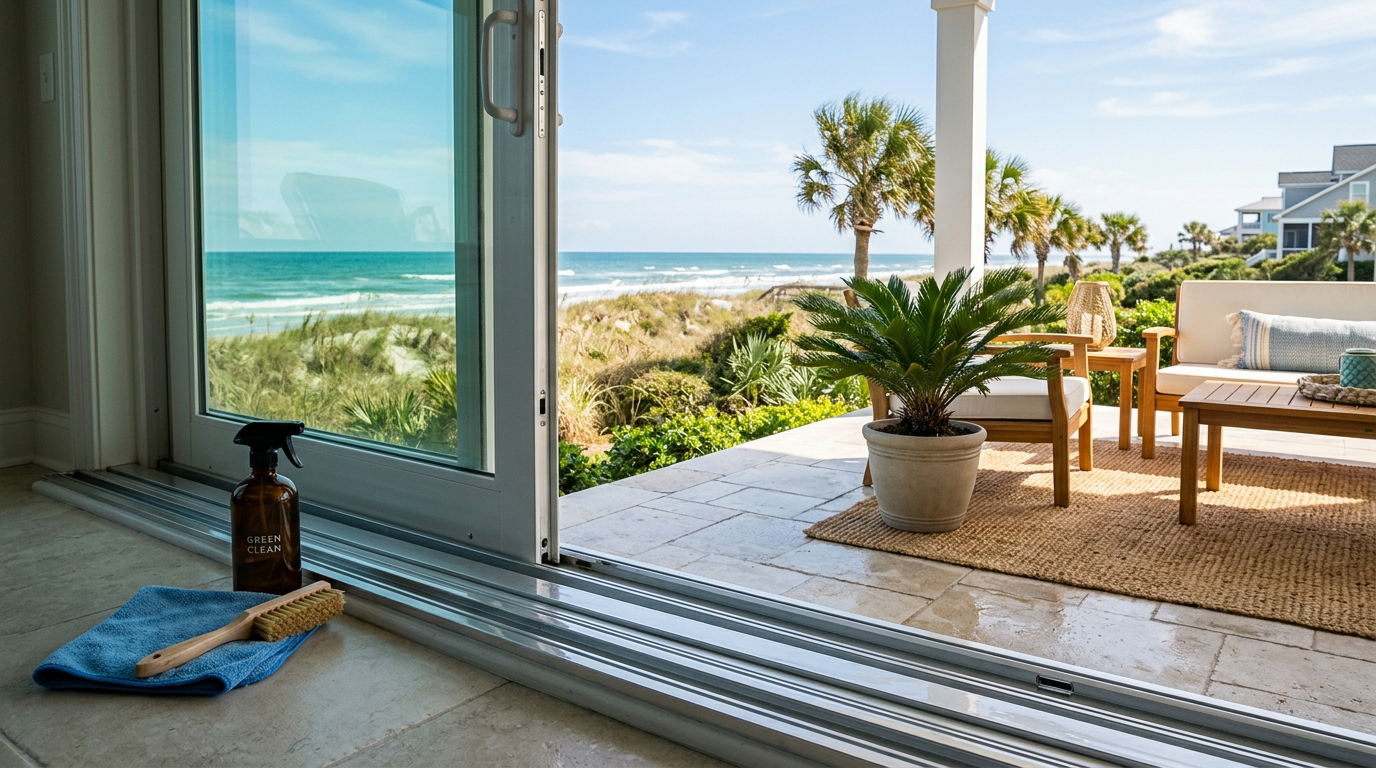
For homeowners and property managers along the Grand Strand, sliding glass doors are the gateway to beautiful ocean views and refreshing sea breezes. However, the horizontal tracks of these doors serve as active collection basins for wind-blown sand, salt spray, pollen, and humidity. When moisture mixes with this organic debris, it clogs the critical drainage weep holes, creating a stagnant black bio-sludge that pollutes indoor air and ruins door hardware. Implementing a green, systematic decontamination protocol is essential for preserving your property's indoor air quality, protecting local coastal ecosystems, and keeping your doors sliding effortlessly.
The Mechanics of Coastal Weep Holes and Indoor Air Quality
Sliding glass doors in Grand Strand properties are the primary barrier against maritime weather, but their horizontal tracks are highly vulnerable. These tracks are engineered with tiny exterior-facing weep holes designed to channel rainwater away from the interior threshold. In our humid coastal environment, these channels act like a gravity basin, collecting everything from wind-blown sea salt and fine quartz sand to airborne pollen and pet dander. When water enters this mix, it does not always drain cleanly; instead, it pools in the low-lying track, initiating a slow, hidden contamination cycle.
As the pool of standing water evaporates in the heavy Myrtle Beach heat, it leaves behind a concentrated crust of salt and organic debris. Over weeks of exposure, this sediment builds up inside the internal baffles of the sliding track. This blockage stops the natural drainage cycle. Once the weep holes are obstructed, water from daily condensation or afternoon downpours remains trapped inside the metal tracks for days, creating a permanent, high-humidity microclimate directly adjacent to your main living space and upholstery.
The threat to indoor air quality becomes apparent when wind pressure differentials occur. High winds off the Atlantic push external air through the outer weep-hole vents, forcing it across the damp, contaminated track debris before it enters the home through the door seals. This creates a direct vector for indoor air pollution. Every time the heavy sliding door is opened or closed, it acts as a bellows, puffing airborne particles, mold spores, and dried salt-pollen dust directly into the indoor breathing zone.
The Biology of Track Bio-Sludge and Allergen Pools
The dark, wet, and nutrient-dense environment of a neglected sliding door track is an ideal breeding ground for biological contaminants. Standard indoor allergens like dust mites and pet hair wash into the tracks, where they decompose. This organic matter, combined with humid coastal air, fuels the growth of mold species such as Aspergillus and Cladosporium. These molds are highly resilient and can colonize the rubber gaskets, vinyl glide strips, and aluminum frames within a matter of weeks, forming a tough, dark biofilm.
This biological accumulation, often referred to as bio-sludge, is not merely an aesthetic issue. It releases volatile organic compounds and active mold spores into the immediate area. For guests or homeowners with asthma, allergies, or compromised respiratory systems, sitting near an oceanfront balcony door can trigger immediate symptoms due to this localized spore concentration. Additionally, the presence of decomposing insects and damp organic matter attracts secondary pests, such as sugar ants and silverfish, who feed on the yeast and mold biofilms.
Eliminating this biological hazard requires more than a casual wipe-down with a paper towel. The biofilm adheres strongly to the porous surfaces of the track gaskets and the textured metal channels. Simple surface cleaning leaves the root structure of the mold intact within the track crevices, leading to rapid recolonization as soon as the next rain shower introduces moisture. True decontamination requires breaking down this organic matrix at a molecular level without damaging the delicate mechanical components of the door system.
The Ecological Hazards of Traditional Chemical Flushes
When faced with stubborn black mold in sliding tracks, many homeowners and property cleaners default to pouring concentrated chlorine bleach or harsh acid-based cleaners directly into the channels. This approach is highly destructive to coastal properties and the local ecosystem. Sliding door tracks drain directly to the exterior of the building. Any chemical poured into these tracks will run off onto your balcony tile, down the exterior building facade, or directly into the sandy coastal soil and local storm drains, posing a direct threat to Grand Strand marine life.
Beyond the ecological damage, harsh chemicals like bleach cause severe physical degradation to the door assembly itself. Chlorine bleach is highly corrosive to aluminum, the primary material used in coastal sliding door frames. It strips away the protective anodized coating, leading to rapid pitting, oxidization, and structural weakening. Furthermore, acidic or caustic cleaners quickly dry out and crack the synthetic rubber weather stripping and neoprene sweep gaskets that keep drafty salt air and rainwater out of your home.
Utilizing eco-friendly, biodegradable solutions is both an environmental necessity and a structural preservation strategy. By choosing EPA-certified green sanitizers and botanical disinfectants, you protect the surrounding landscape while safely neutralizing the mold and bacteria. These specialized green products are formulated to break down into harmless organic compounds upon contact with the air and soil, ensuring that any run-off from your balcony weep holes does not contribute to chemical pollution in our fragile coastal waterways.
The Dry-Soil Extraction Phase (Sand and Salt Evacuation)
The most common mistake made during sliding track cleaning is applying liquid cleaning solutions directly to a dry, dusty track. Sliding door tracks along the Grand Strand are inevitably filled with fine silica sand and crystalline salt. When liquid is introduced to this dry mixture, it creates an abrasive, muddy slurry. This paste acts like liquid sandpaper, finding its way into the brass or nylon roller assemblies under the sliding door panel, where it quickly grinds down bearings and ruins the glide mechanics.
To prevent this mechanical wear, the decontamination protocol must begin with a thorough dry-extraction phase. A HEPA-filtered vacuum equipped with a narrow, rigid crevice tool is required to pull loose sand, dried salt crusts, and dead insects out of the track crevices. During this process, a stiff-bristled detailing brush should be used to agitate the compacted sand in the corners and along the glide rails, lifting the dry debris directly into the vacuum stream before it can settle deeper.
Detailers must pay close attention to the tight corners where the horizontal track meets the vertical side jambs. These joint junctions are notorious collection points for compacted salt crystals that bind to the metal frame. By systematically loosening this dry debris with non-marring plastic picks and high-suction vacuuming, you remove the bulk of the physical particulate. This leaves behind only the adhered biofilm and staining, which can then be safely treated with liquid sanitizing agents without the risk of creating an abrasive grinding paste.
The Botanical Sanitization and Bio-Sludge Digestion Loop
Once the dry particulate is completely evacuated, the remaining organic biofilm must be neutralized and dissolved. This is achieved using a botanical, plant-based disinfectant, such as one formulated with thymol (derived from thyme oil) or active citric acid. These natural disinfectants carry EPA approval for killing mold and bacteria while remaining completely non-toxic to humans, pets, and the local marine environment. They work by penetrating the cellular walls of the mold, rendering the spores inactive without releasing toxic fumes.
For thick, stubborn bio-sludge that has hardened over several seasons, an enzyme-based organic digester is applied. These enzymes specifically target and break down peptide bonds and organic proteins, liquefying the sticky residue that glues the mold and sand to the track surfaces. The botanical solution should be sprayed generously throughout the track channels and allowed to dwell for ten minutes. This dwell time is crucial, as it allows the natural chemistry to detach the stubborn organic biofilm from the metal substrate.
After the appropriate dwell time, the liquefied bio-sludge is agitated using a medium-firm detail brush or a microfiber-wrapped detailing tool. Microfiber is particularly effective here because its split fibers carry a positive charge that naturally attracts and traps the loosened, negatively charged organic particles. This prevents the liquefied sludge from spreading or settling back into the clean track channels, ensuring a clean, residue-free surface that is ready for the deep flushing and drying phase.
Mechanical Weep-Hole Clearance and Flossing
Clearing the visible track is only half the battle; the internal drainage pathways leading to the exterior weep holes must be physically cleared. These hidden chambers often hold compacted plugs of sand, salt, and organic slime that block water flow. To clear these blockages, technicians use a specialized weep-hole flossing technique. This involves inserting a flexible, nylon-coated wire probe or a micro-bottle brush directly into the external weep-hole vents and running it back and forth to break up internal obstructions.
Once the internal debris is mechanically loosened, a low-pressure flush of warm water mixed with a small amount of botanical sanitizer is introduced into the inner track. This water should flow freely through the internal channels and drain out of the exterior weep vents on the outside of the building. If the water pools or drains slowly, it indicates a secondary blockage within the baffle system. The flossing process must be repeated until the rinse water runs clear and drains instantly, confirming that gravity-assisted drainage is fully restored.
In oceanfront high-rises, these weep vents are often equipped with small plastic flap valves designed to prevent wind-driven rain from blowing backward into the track. These flaps can become glued shut by dried salt spray and sand crusts. During the flossing phase, technicians must carefully inspect and clean these delicate flap valves, ensuring they swing freely. A non-functioning or stuck valve will trap water inside the track during heavy rainstorms, leading to indoor flooding and subsequent drywall mold issues.
Lubrication and Glide Path Preservation
Once the tracks are completely clean, sanitized, and dry, proper lubrication is required to ensure smooth operation and protect the door rollers. Many homeowners make the mistake of spraying heavy petroleum-based lubricants, WD-40, or grease into the tracks. These wet, sticky lubricants are highly problematic in coastal environments. They act as magnets for blowing beach sand and airborne salt, quickly binding the debris into a thick, black abrasive paste that destroys the roller bearings and makes the door heavy to slide.
To avoid this, a dry, PTFE-based (Teflon) or dry silicone lubricant must be used. Dry lubricants are applied as a liquid but dry quickly to leave a micro-thin, slick barrier that does not attract sand, dust, or salt crystals. This specialized barrier reduces friction between the metal track and the roller wheels, allowing the door to slide effortlessly with minimal physical effort. Reducing friction also minimizes physical wear on the track's aluminum rails, preventing deep gouges that can harbor moisture and mold.
The dry lubricant should be applied sparingly directly along the top of the glide rail and inside the upper guide tracks. After application, the sliding door panel should be slid back and forth several times to distribute the dry lubricant evenly across the roller faces. Any excess liquid spray should be immediately wiped away with a clean microfiber cloth to prevent it from running into the clean weep holes or staining adjacent flooring surfaces, leaving a clean, protected, and functional threshold.
A Preventative Maintenance Cadence for Grand Strand Properties
Maintaining clean, functioning sliding door tracks in our coastal environment requires a consistent, proactive approach. For oceanfront vacation rentals and residential homes along the Grand Strand, a deep-clean and sanitization of the tracks should be performed at least quarterly. During the peak summer rental season, when foot traffic is high and wet pool towels are frequently carried over the threshold, a monthly inspection of the track channels and weep-holes is recommended to prevent bio-sludge from forming.
Following any major coastal storm, nor'easter, or tropical event, property managers should immediately inspect all sliding door tracks. These storms push massive amounts of salt spray, fine sand, and organic debris directly against the exterior of the building, often completely filling the weep holes and tracks with sediment. Promptly flushing the tracks after a storm prevents this sediment from hardening into a concrete-like barrier that is far more difficult and costly to remove later, safeguarding the property against structural water intrusion.
By integrating this specialized sliding door track protocol into your regular property maintenance routine, you protect both your investment and the health of everyone inside. Clean tracks and clear weep holes prevent water from backing up and damaging expensive subflooring, luxury vinyl planks, and drywall, while also ensuring that the air entering your home remains fresh, clean, and free of toxic mold spores. For professional assistance with coastal property maintenance, contact the experts at A2Z Cleaning & Linen Services at 843.800.2788.
Key takeaway
Keeping sliding door tracks clean and weep holes clear is essential for protecting your coastal home from mold, water intrusion, and poor indoor air quality. By employing dry extraction, botanical sanitizers, and dry-film lubricants, you preserve your door's mechanics while keeping toxic runoff away from our beautiful Grand Strand beaches.
Keep Reading
Coastal Living
The Coastal Window Treatment and Blackout Drapery Sanitization Protocol: Mitigating Humid Mold Spores, Pollen Reservoirs, and VOC-Free Allergen Release in Grand Strand Homes
ReadCoastal Living
The Coastal Rattan and Woven Fiber Furniture Decontamination Protocol: Mitigating Crevice-Dwelling Mold, Allergen Reservoirs, and VOC-Free Botanical Restoration in Grand Strand Homes
ReadCoastal Living
The Coastal Dehumidifier and Condensate Drain Line Maintenance Protocol: Mitigating Bio-Sludge, Spore Reservoirs, and Indoor Air Quality Failures in Grand Strand Homes
ReadReady for a spotless property?
Call 843.800.2788 or request a free quote from A2Z Cleaning & Linen Services.