Coastal Living
The Coastal Sliding Screen and Pet-Door Decontamination Protocol: Mitigating Nose-Print Oils, Pollen-Dander Reservoirs, and Sand-Grime in Grand Strand Homes
Keep your home's entryways clean and clear. Learn how to remove pet nose oils, toddler finger-paint, and salt-sand grime from sliding screens and pet doors using child-safe methods.
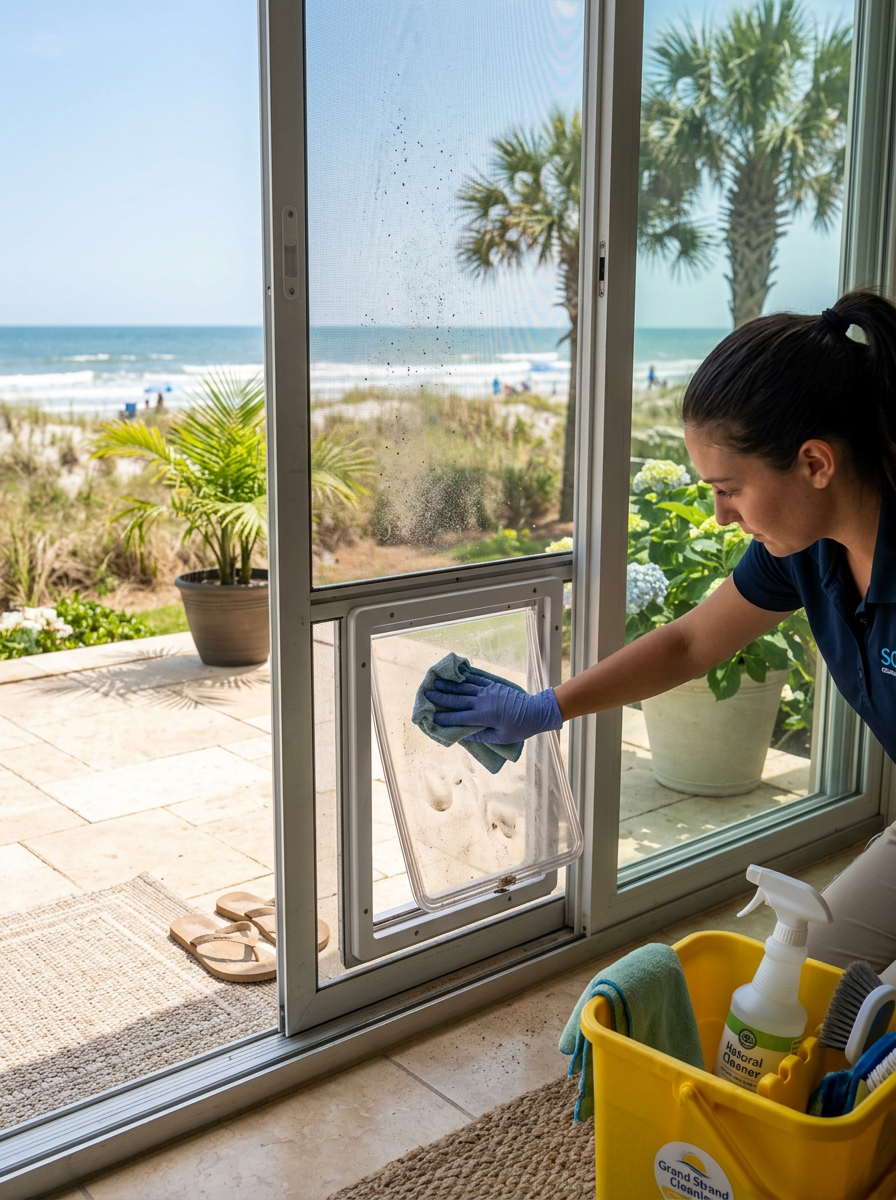
Families on the Grand Strand cherish the seamless transition between indoor comfort and outdoor play. However, sliding glass doors, screen panels, and pet-door inserts quickly become the most heavily soiled zones in a coastal home. They act as environmental nets, capturing airborne sea salt, humid pollen, pet dander, and blowing sand, while simultaneously collecting greasy toddler fingerprints and wet nose smears from family dogs. Managing this high-traffic barrier requires specialized, child-safe chemistry and systematic maintenance to protect indoor air quality and keep your hardware operating smoothly.
The Bio-Aerosol Trap of Coastal Screens
Sliding screen doors on the Grand Strand do much more than keep out insects; they act as a primary defense against outdoor debris. However, our high relative humidity, which regularly exceeds eighty percent, creates a thin moisture film on the fiberglass or aluminum mesh. This sticky moisture layer attracts wind-borne sea salt, fine oak pollen, and loose soil. When pets brush against the screen or children press their faces to it, they add skin flakes, dander, and natural oils to this mixture, turning the screen into a dense, gray-black allergen filter that restricts fresh coastal breezes.
When wind passes through a dirty screen, it dislodges this dried, contaminated crust and carries microscopic allergens directly into your family room. For children with asthma or pets with seasonal allergies, this constant exposure can trigger respiratory distress, sneezing, and watery eyes. The issue is exacerbated during the hot summer months when the air conditioning runs constantly, creating static electricity on interior surfaces that pulls hair and dander toward the entryway. Routine cleaning is not just about keeping the glass clear; it is a critical step in preserving healthy indoor air.
Furthermore, the salt air of Myrtle Beach accelerates the degradation of standard screen materials if organic soils are left to sit. Aluminum screens can oxidize, developing a white, powdery residue that weakens the metal mesh over time. Fiberglass screens, while resistant to rust, become brittle and easily torn when clogged with abrasive sand and acidic pet oils. Establishing a systematic decontamination protocol preserves both the structural integrity of your doors and the respiratory health of your household.
The Chemistry of Pet Nose Prints and Toddler Smears
The lower third of any sliding glass door or pet door in a family home tells a story of curious pets and active children. Pet nose prints are composed of dense, sebaceous lipophilic oils mixed with saliva and nasal secretions. When dry, these biological proteins bond tightly to vinyl, glass, and screen frames. Standard retail glass cleaners often contain ammonia or artificial fragrances that merely smear these lipids across the surface, creating a hazy film that attracts more dust, while leaving behind chemical residues that are unsafe for toddlers who put their hands on the glass.
Toddler fingerprints add another layer of complexity, often consisting of sugary juice residues, sunscreen, and natural skin oils. When these substances combine with the abrasive salt-sand tracked in from our Grand Strand beaches, they form a gritty, scratch-inducing paste. To safely emulsify these organic fats without scratching the glass or off-gassing harmful chemicals in your living room, you must use targeted, plant-derived surfactants that break the bond between the oil and the surface.
Safe, homemade solutions or professional-grade eco-friendly cleansers are highly effective here. A simple mixture of distilled water, plant-based decyl glucoside, and a splash of white vinegar works to dissolve the lipid bonds of nose prints and sticky food residues. Because this formula contains no volatile organic compounds or harsh chemical fumes, it is completely safe for infants crawling nearby and pets who will inevitably lick the glass again within minutes of cleaning.
The Step-by-Step Screen Mesh Wash Protocol
To clean screen mesh effectively without stretching the fabric or popping it out of its spline, you must avoid high-pressure sprayers. Begin by removing the screen door from its tracks and laying it flat on a clean, soft surface outdoors, such as a grassy lawn or clean drop cloth. Use a vacuum cleaner equipped with a soft horsehair dusting brush attachment to gently lift away dry sand, loose pet hair, and surface dust from both sides. This dry vacuuming step is essential to prevent the debris from turning into a muddy slurry when wet.
Next, prepare a cleaning solution using warm water and a few drops of organic, unscented castile soap or a mild, baby-safe dish soap. Using a soft-bristled nylon cleaning brush or a microfiber wash mitt, gently scrub the screen in circular motions, working from the top down. Pay close attention to the corners and edges near the frame, where wind-blown sand and pet hair tend to pack tightly into the spline grooves. Rinse the screen thoroughly with a garden hose set to a gentle shower or spray pattern.
Before reinstalling the screen, it must dry completely to prevent mold and mildew growth. Lean the frame against a clean wall in a shaded, well-ventilated area out of direct sunlight, which can dry plastic splines too quickly and cause them to crack. Wipe down the aluminum frame with a damp microfiber cloth to remove any remaining soap residue. This simple wash restores maximum airflow and ensures that the air circulating into your home is free from accumulated pollen and dander.
- Always dry-vacuum screens first to prevent turning dust into sticky mud.
- Use castile soap or plant-derived detergents instead of harsh bleach.
- Scrub in gentle, overlapping circular motions to protect the delicate mesh.
- Rinse with a low-pressure garden hose shower to prevent screen warping.
- Allow the screens to dry completely in the shade before reinstallation.
Decontaminating Vinyl Pet-Door Flaps and Magnetic Seals
Pet-door inserts are highly practical additions to Grand Strand homes, allowing dogs and cats easy access to the yard. However, the flexible vinyl flaps on these doors are notorious for absorbing body oils and dander as animals brush through them multiple times a day. Over time, these oils oxidize, turning the clear vinyl into a yellowed, cloudy, and stiff material. Furthermore, the magnetic strip seals along the bottom and sides of the flap attract iron-rich coastal sand and black sand particles, which prevents a tight seal and allows drafts and humidity to enter the home.
To clean the vinyl flap safely without causing it to cloud or dry out, avoid harsh chemical solvents, bleach, or alcohol-based cleaners, which break down plasticizers and make the vinyl brittle. Instead, wipe both sides of the flap with a solution of warm water, white vinegar, and a drop of non-toxic dish soap. Use a non-abrasive melamine sponge or a soft microfiber cloth to lift away greasy body oils and outdoor dirt. Gently scrub the magnetic strips to dislodge trapped sand grains that are interfering with the magnetic connection.
After cleaning, inspect the flap for signs of wear, deep scratching, or mold growth. Because these flaps sit in humid, shaded zones near the floor, they are prime candidates for fungal colonization, especially in areas where coastal moisture is constant. Drying the flap thoroughly and wiping it down with a botanical, thyme-based disinfectant ensures that your pets are not rubbing their coats against mold spores every time they step outside.
Track Clearance and Roller Mechanics Restoration
The sliding track is the mechanical foundation of your patio door, yet it is also the ultimate collection point for household debris. Gravity pulls falling pet hair, crumbs, tracked-in beach sand, and blowing lawn clippings directly into this deep channel. When the heavy glass door is slid back and forth over this debris, the rollers grind the sand and hair into a dense, greasy paste that binds the bearings. This friction makes the door heavy to push, damages the brass or steel tracks, and creates a scratching sound that can startle sensitive pets.
To clean the tracks, begin by using a stiff crevice tool or a narrow brush to loosen the packed sand and hair. Vacuum the dry debris thoroughly before introducing any liquid. Next, sprinkle a thin layer of baking soda along the track and spray it with white vinegar. The bubbling reaction will lift the packed grime from the metal surface. Wipe the track clean with a microfiber cloth wrapped around a wooden detail dowel or an old toothbrush, reaching deep into the tight channels.
Once the track is clean and dry, resist the urge to spray it with standard wet lubricants like WD-40. Wet oils act like a magnet for airborne pet hair and blowing sand, creating a sticky paste that will seize your rollers within weeks. Instead, apply a thin coat of dry silicone spray or a PTFE-based dry lubricant specifically formulated for coastal environments. This dry barrier lubricates the metal tracks and rollers without attracting sand or pet dander, ensuring effortless sliding for months.
- Loosen dry debris with a stiff brush before vacuuming.
- Use a baking soda and vinegar reaction to lift stubborn, ground-in sand.
- Clean deep inside track channels with a microfiber-wrapped wooden dowel.
- Avoid wet lubricants that attract pet hair and airborne beach sand.
- Apply a dry silicone or PTFE spray to preserve roller mechanics.
Keeping the Glass Clean in a Busy Household
In a bustling Grand Strand home filled with children and pets, keeping sliding glass doors completely spotless is an ongoing challenge. Rather than waiting for the glass to become entirely obscured, a preventative maintenance routine is the key to managing the workload. Keep a squeegee and a spray bottle of child-safe glass cleaner stored in a nearby cabinet for quick, daily touch-ups. Wiping away fresh nose prints and sticky hand marks takes only seconds and prevents the oils from baking onto the glass under the intense South Carolina sun.
When choosing a glass cleaner, look for plant-derived formulas that use corn- or coconut-based surfactants rather than petrochemicals. These formulas leave zero streaky residue behind and are completely non-toxic, giving you peace of mind when toddlers inevitably press their hands and mouths against the glass. Microfiber glass cloths, which feature a tight, flat weave, are excellent for dry-buffing away light smudges between washings without the need for any chemical sprays, saving you time and reducing environmental waste.
To make the cleaning process even easier, apply a rain-repellent glass treatment designed for automotive or home use to the exterior surface. This treatment creates an invisible hydrophobic barrier that causes rain, ocean spray, and morning dew to bead up and roll away, taking surface dirt and salt with it. This simple preventative measure significantly reduces the frequency of exterior cleanings, allowing you to spend more time enjoying the coastal lifestyle with your family.
Allergy-Friendly Routines for Peak Sand and Pollen Seasons
During peak spring and summer seasons in Myrtle Beach, tree pollen and blowing sand can quickly overwhelm a coastal home's indoor air quality. If family members suffer from seasonal allergies or asthma, establishing a daily threshold routine at the sliding patio door is essential. Place high-performance, washable walk-off mats both inside and outside the door. These mats capture sand, soil, and pollen from paws and feet before they can be tracked onto carpets and hardwood floors, reducing the overall allergen load inside.
Encourage family members to remove their shoes at the door, and keep a damp towel handy to quickly wipe sandy paws and feet as they enter. Vacuum the area immediately surrounding the patio door daily using a high-efficiency particulate air (HEPA) vacuum, which captures ninety-nine percent of microscopic dust particles, dander, and pollen. This prevents walking traffic from kicking up settled allergens and distributing them throughout the rest of your home's living areas.
Maintaining a clean entryway barrier is one of the most effective ways to protect your family's health and comfort, ensuring that your home remains a safe, allergy-free haven from the intense coastal elements throughout the busy summer season. Consistently cleaning these transit zones reduces the dust load on your HVAC system, helping your filters last longer and run more efficiently.
- Position washable walk-off mats on both sides of the sliding door.
- Keep a dedicated paw-wiping towel near the entryway for pets.
- Vacuum threshold carpets daily with a certified HEPA filter vacuum.
- Establish a shoe-free rule inside to keep outdoor allergens at bay.
Professional Decontamination and Restoration Services
While regular weekly maintenance goes a long way toward keeping your entryways clean, Grand Strand homes occasionally require deep, professional-grade decontamination. Over several seasons, pet hair and ocean salt can wind so tightly around roller assemblies that the door becomes nearly impossible to slide, risking permanent track damage. At this point, attempting to force the door can break the glass or bend the frame, turning a simple maintenance issue into an expensive replacement project.
Professional environmental cleaning technicians have the specialized tools, dry-extraction vacuums, and eco-friendly, child-safe bio-cleansers needed to restore your glass, tracks, and screens to pristine condition. They can deep-clean screen mesh without risking damage to delicate fibers and completely remove oxidized salt crust from metal surfaces. For busy property owners and families in Surfside Beach, North Myrtle, and the surrounding areas, scheduling a seasonal deep clean provides a fresh start and peace of mind.
If you are overwhelmed by the endless battle against pet hair, sandy paw prints, and coastal grime, the team at A2Z Cleaning & Linen Services is here to help. Our family-owned company specializes in thorough, detail-oriented cleaning using products and methods that are completely safe for your children and beloved pets. Contact us today at 843.800.2788 to schedule your next home detailing service and enjoy a cleaner, healthier living space.
Key takeaway
Maintaining the sliding doors and screen portals in a coastal home protects your family from sand, pollen, and pet allergens. Using child-safe chemistry, dry-extraction vacuuming, and proper dry lubricants ensures your entryways stay sanitary, functional, and clear. For a thorough deep clean that revitalizes your home, trust the local experts at A2Z Cleaning & Linen Services by calling 843.800.2788.
Keep Reading
Coastal Living
The Coastal Window Treatment and Blackout Drapery Sanitization Protocol: Mitigating Humid Mold Spores, Pollen Reservoirs, and VOC-Free Allergen Release in Grand Strand Homes
ReadCoastal Living
The Coastal Multi-Sectional Decontamination Protocol: Mitigating Pet Sebum, Organic Kid Spills, and Humidity-Trapped Allergen Reservoirs in Grand Strand Homes
ReadCoastal Living
The Under-Sink Cabinet Microclimate: Mitigating Mold Spore Colonization, Condensation Vectoring, and Chemical Off-Gassing in Grand Strand Homes
ReadReady for a spotless property?
Call 843.800.2788 or request a free quote from A2Z Cleaning & Linen Services.