Vacation Rentals
The Coastal Smart-Fridge and Ice Maker Sanitation Protocol: Mitigating Hard-Water Scale, Seafood Odor Migration, and Chute Biofilms in Grand Strand Rental Turnovers
Establish a rigorous refrigerator turnover workflow that prevents ice-maker slime, seafood odor transfer, and dispenser scale to secure five-star guest reviews in Myrtle Beach.
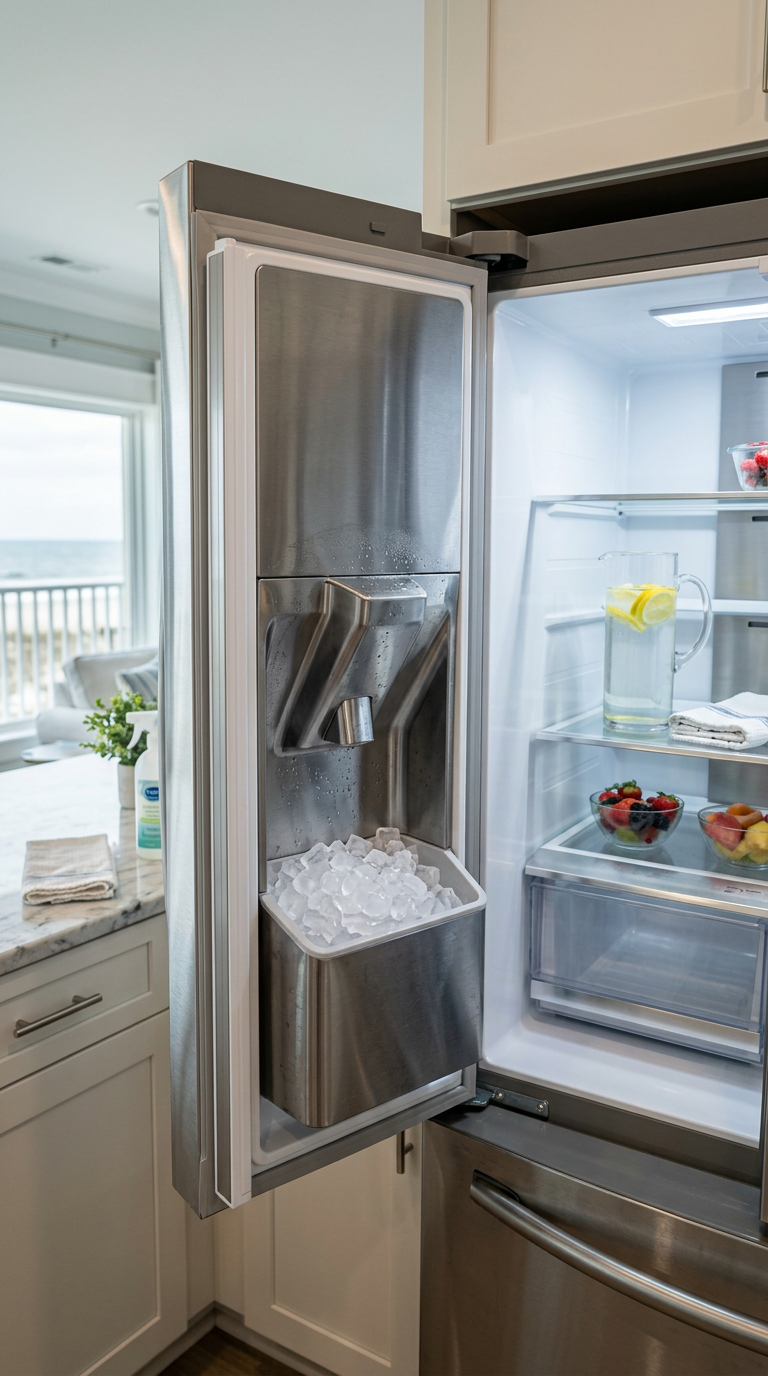
In high-end Grand Strand vacation rentals, guests arrive expecting pristine, high-performing appliances that rival five-star resorts. However, the refrigerator is highly susceptible to humidity-driven biological growth, hard-water scaling, and lingering odors from regional seafood cooking. An unvetted refrigerator dispenser chute or a contaminated ice bin can immediately tank a property’s cleanliness rating on booking platforms. This protocol outlines a repeatable, technically precise sanitation workflow designed to keep your coastal rental's primary appliance running perfectly and smelling fresh.
The High-Humidity Ice Chute Biofilm Vector
Myrtle Beach's high relative humidity levels present a constant challenge for indoor climate control, particularly in high-traffic vacation rentals where entry doors open frequently. When warm, moisture-laden coastal air enters the kitchen, it rises into the cold dispenser chute of the refrigerator every time a guest accesses ice. This sudden temperature drop causes immediate condensation to form along the interior walls of the chute and around the rubber dispensing flap.
This dark, damp transition zone creates an ideal breeding ground for airborne yeast, mold spores, and environmental bacteria. Over a few weeks of busy summer turnovers, a sticky, pinkish-black biofilm can establish itself on the hidden surfaces of the dispenser assembly. This biological accumulation is not merely an aesthetic issue; it directly contaminates the ice and water passing through the chute, exposing guests to active pathogens.
During a fast-paced turnover, standard cleaning crews often wipe only the exterior stainless-steel paddle, leaving the internal chute completely untouched. When a guest pours a drink and notices dark flecks floating in their cup, it triggers an immediate cleanliness complaint and a potential refund request. To prevent these review-killing failures, property managers must implement a specialized, deep-reaching sanitation step targeting the internal mechanisms of the dispenser.
The Chemistry of Coastal Hard-Water Scale in Ice Makers
The municipal water supply across the Grand Strand contains dissolved minerals, including calcium and magnesium, which contribute to moderate to high water hardness. As water cycles through the ice maker's freezing trays, these minerals precipitate out of solution and form a hard, white crust known as scale. This scale accumulates on the delicate evaporator plates, water inlet valves, and plastic ejector arms of the ice machine.
Over time, this mineral scale creates a rough surface texture that prevents ice cubes from releasing cleanly from the mold. The ice maker may struggle to cycle, causing the mechanism to freeze over or produce thin, shattered cubes that melt rapidly. For late-arriving guests who expect a full bin of ice to pack their coolers for a day at the beach, an underperforming or frozen ice maker is a major operational disappointment.
Using harsh, bleach-based household cleaners on these scaling issues is a common mistake that can permanently damage the appliance. Bleach does not dissolve mineral scale and can corrode the internal stainless-steel components of the ice maker, leading to rust. Instead, field technicians must use food-grade citric or phosphoric acid-based descalers to safely dissolve the calcium matrix without leaving chemical residues or damaging plastic parts.
Mitigating Seafood Odor Migration and Cross-Contamination
A hallmark of the Myrtle Beach vacation experience is enjoying local seafood, with many guests steaming fresh shrimp, blue crab, and fish right in their rental kitchens. Leftovers are inevitably stored in the refrigerator, often in hastily wrapped plates or cheap plastic containers. The volatile organic compounds (VOCs) that give seafood its distinct, pungent aroma quickly escape into the closed, circulating air of the refrigerator cabinet.
Because refrigerator air is constantly recirculated through the freezer compartment to maintain temperature, these airborne seafood odors migrate directly to the ice maker. The porous surface of frozen ice cubes acts as an odor sponge, absorbing the volatile compounds over several hours. This results in highly unappealing, fishy-tasting ice that ruins a guest's morning ice coffee or evening beverage, prompting complaints about water quality.
Relying on a standard, passive baking soda box is insufficient to handle the heavy odor loads generated during peak rental season. To combat this, properties require active odor mitigation, including the installation of high-surface-area activated carbon filters within the air circulation path. Additionally, a thorough wash-down of all plastic shelving with an odor-neutralizing, food-safe agent is mandatory during every guest turnover.
The Step-by-Step Dispenser Chute and Paddle Sanitation Workflow
To systematically clean the dispenser assembly without causing electrical malfunctions or accidental water spraying, technicians must follow a structured physical protocol. The process begins by engaging the control panel's lock feature, or temporarily disconnecting the refrigerator's power supply. This safety measure prevents the water valve or ice dispensing motor from cycling while hands and cleaning tools are inside the chute.
Technicians must use a specialized, flexible nylon-bristle brush dipped in a warm, food-safe sanitizing solution to scrub the internal walls of the chute. This brush must reach past the rubber flap gasket to dislodge the hidden biological films and yeast deposits that cling to the upper housing. After brushing, the chute is flushed with clean water using a squeeze bottle, while a dry microfiber cloth captures the run-off at the bottom.
Finally, the exterior paddle, cup lever, and surrounding trim are detailed to remove dried beverage splatters and hard-water spots. The removable drip tray at the base of the dispenser must be extracted, disassembled, and scrubbed to eliminate the stagnant water and mineral rings that collect beneath the plastic grate. This comprehensive approach ensures that every surface touched by the guest's cup is visually perfect and biologically clean.
- Engage the digital control lock or unplug the appliance to disable the dispenser valves.
- Scrub the interior chute walls with a flexible, long-reach nylon brush and food-safe sanitizer.
- Wipe the flexible rubber flap gasket on both sides to remove hidden mold spores.
- Extract and disassemble the bottom drip tray, scrubbing away mineral scales and stagnant water.
- Dry all components with a clean, lint-free microfiber cloth to prevent immediate water spotting.
The Ice Bin Decontamination and Purge Standard
In many vacation rentals, the ice bin is ignored for months at a time, allowing old ice at the bottom to consolidate into a solid, stale block. This stagnant ice can absorb ambient freezer odors and slowly melt and refreeze, trapping dirt, hair, and stray plastic fragments inside the block. A professional turnover requires a full purge and sanitation of the ice bin during deep cleans and scheduled mid-season checks.
The technician must completely empty the ice bin into a sink, taking care not to chip the plastic housing if the ice has bridged together. The bin is then washed in a clean sink using warm water and a fragrance-free, food-safe dish soap. Fragranced soaps must be strictly avoided, as the porous plastic of the bin can retain artificial perfumes and transfer them directly to the next batch of freshly harvested ice.
Before reinserting the bin into the freezer, it must be dried completely with a clean towel to prevent water droplets from freezing instantly and locking the mechanical parts. The metal auger mechanism at the base of the bin, which drives the ice forward into the dispenser chute, should be inspected for signs of rust or food debris that may have fallen from upper freezer shelves during guest use.
Water Filter Calibration and Lifespan Tracking
A refrigerator's internal water filter is the primary defense against chlorine tastes, sediment, and organic contaminants in the local water supply. In a high-occupancy Grand Strand rental, the water dispenser and ice maker are heavily used, exhausting the active carbon within the filter much faster than in a typical residential home. A clogged or expired filter restricts water flow, resulting in hollow ice cubes, slow water delivery, and bad tastes.
Relying solely on the refrigerator’s built-in 'replace filter' indicator light is a risky practice for property managers. Guests frequently reset these lights to clear the warning from the screen, or the light may be ignored by busy cleaning crews who do not carry replacement stock. This leads to filters remaining in service for over a year, long after their filtration media has become completely saturated and ineffective.
Property managers should integrate water filter tracking directly into their Property Management System (PMS) or digital maintenance logs. Filters must be physically marked with the installation date using a permanent marker and replaced every six months, or after a predetermined number of high-occupancy bookings. Maintaining a localized inventory of matching filter models ensures that field technicians can perform immediate swaps during short turnover windows.
Exterior Fingerprint and Seal Care for High-End Finishes
The exterior appearance of a stainless-steel refrigerator sets the tone for the entire kitchen when a guest first enters the property. Sticky finger marks, sunscreen smudges, and salt-air film can make an otherwise clean kitchen look unpolished and neglected. To protect these premium finishes, technicians must clean the doors using specialized, non-abrasive polishes that wipe in the direction of the metal's natural grain.
Equally important are the magnetic rubber door gaskets that seal the refrigerator and freezer doors shut. These deep rubber folds are notorious catch-alls for spilled juices, breadcrumbs, sand, and organic debris. If left uncleaned, the organic buildup will harbor black mold and compromise the integrity of the magnetic seal, allowing cold air to escape and causing the compressor to run constantly.
Cleaners must carefully pull back the folds of the gasket and wipe them down with a mild warm-water and vinegar solution. Harsh chlorine bleach must never be used here, as it dries out the rubber, causing it to crack, split, and lose its magnetic sealing properties. Ensuring a tight thermal seal protects the appliance's cooling efficiency and prevents frost buildup on the freshly sanitized ice maker inside.
- Wipe stainless-steel doors with a dedicated, non-greasy protectant, following the grain direction.
- Inspect and clean the interior folds of the rubber door gaskets using a gentle vinegar solution.
- Verify the integrity of the magnetic seal by checking for cold air leaks or physical damage.
- Remove greasy fingerprints, sunscreen residues, and salt-air film from around door handles.
- Dust and clean the top of the refrigerator housing to eliminate hidden dust reservoirs.
Integrating Refrigerator Inspections into Your Turnover SLA
To guarantee that these sanitation standards are met consistently, property managers must codify the refrigerator and ice maker workflow into their Service Level Agreements (SLAs). Clear instructions should detail exactly how the dispenser chute, drip tray, and ice bin must be serviced during standard turnovers versus deep cleans. This removes ambiguity and establishes a clear quality benchmark for both internal teams and external vendors.
Integrating a photographic verification step into your mobile inspection app is the most effective way to enforce compliance. Cleaners should be required to upload a clear, close-up photo of the empty ice bin and the wiped-down dispenser chute before submitting their turnover report. This real-time audit loop allows supervisors to catch missed spots or mineral buildup before the incoming guest arrives at the property.
Investing in this proactive appliance maintenance protocol pays direct dividends in reduced maintenance calls and improved guest reviews. If you require expert support to manage your rental's turnover standards, A2Z Cleaning & Linen Services provides specialized environmental care across Myrtle Beach and the Grand Strand. Contact our local operations team at 843.800.2788 to elevate your property's presentation.
Key takeaway
Maintaining a sanitized refrigerator dispenser and ice maker is essential for protecting guest health and securing five-star reviews. By implementing a systematic chemical descaling, biofilm removal, and odor-mitigation protocol, Grand Strand property managers can eliminate common appliance failures. A2Z Cleaning & Linen Services stands ready to support your portfolio with professional, locally-grounded turnover solutions.
Keep Reading
Vacation Rentals
The Coastal Coffee Station and Beverage Center Turnover Protocol: Mitigating Hard-Water Scale, Yeast Biofilms, and Sticky Syrups in Grand Strand Vacation Rentals
ReadVacation Rentals
The Coastal Ceiling Fan and Vent Dust-Release Protocol: Mitigating Humid Grey Lint, Static-Cling Dander, and Airflow Failures in Grand Strand Rental Turnovers
ReadVacation Rentals
The Coastal High-Chair and Pack-and-Play Sanitization Protocol: Preventing Organic Biofilms, Sand-Grit Accumulation, and Mold Spores in Grand Strand Family Rentals
ReadReady for a spotless property?
Call 843.800.2788 or request a free quote from A2Z Cleaning & Linen Services.