Linens & Laundry
The Commercial Laundry RFID Microchip and Textile Life-Cycle Asset Management Standard: Mitigating Shrinkage, Loss-to-Trash, and Grade-A Sortation Failures in Grand Strand Hospitality
Discover how RFID textile tracking prevents inventory loss, optimizes wash chemistry, and protects Grand Strand hospitality profits through advanced asset management.
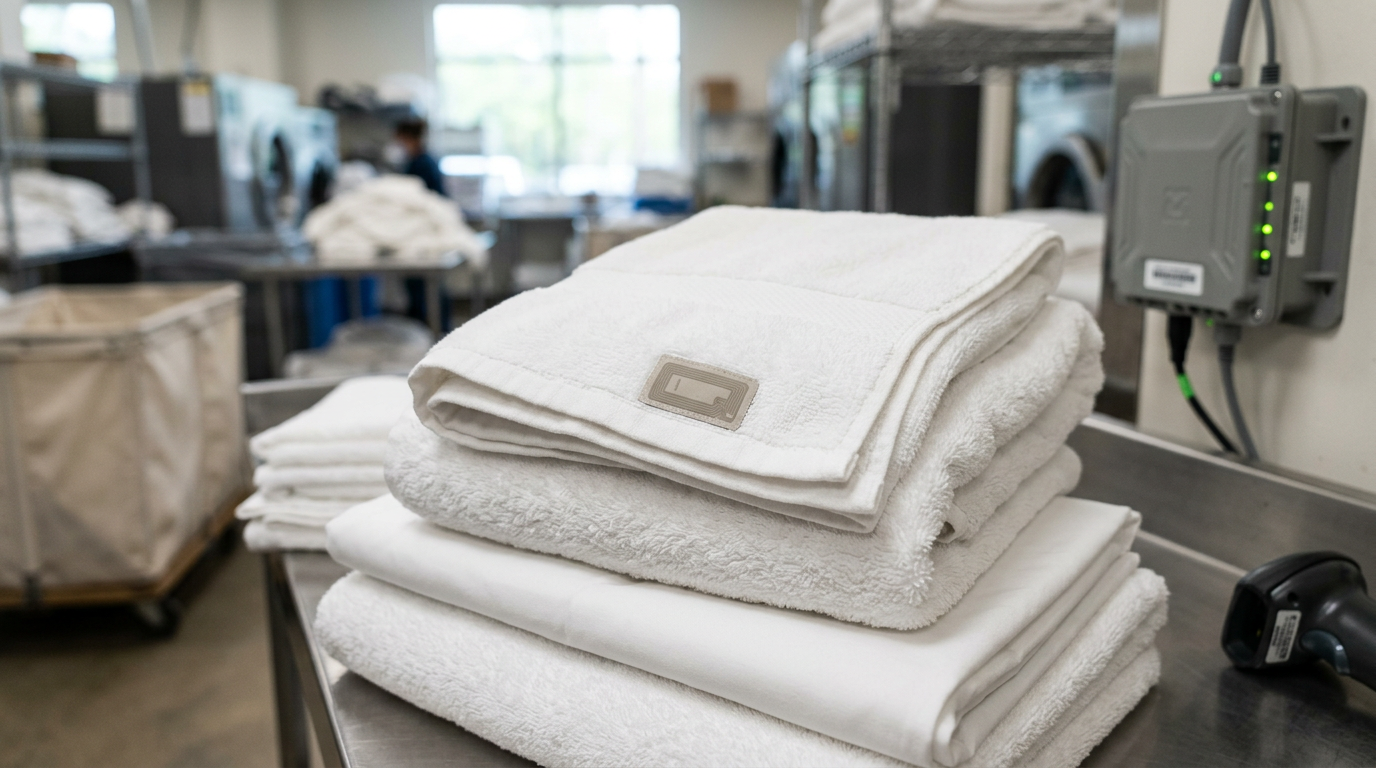
Managing luxury linens along the Grand Strand requires an operation that balances rapid seasonal turnovers with strict asset protection. Traditional manual counting methods are increasingly unable to keep pace with the demands of high-volume vacation rentals and resorts, leading to inventory discrepancies and premature replacement costs. To protect profit margins and guarantee quality consistency, leading hospitality operators are turning to Ultra-High Frequency RFID tracking technology. This technical guide outlines how implementing digital textile asset management safeguards inventories from shrinkage, optimizes wash chemistry, and ensures a premium guest experience.
The National Shift to RFID-Enabled Textile Lifecycle Management
National textile standards are undergoing a digital revolution driven by rising labor costs and climbing linen replacement expenses. Leading commercial laundry operations are moving away from manual count verification, replacing outdated sorting practices with Ultra-High Frequency (UHF) RFID technology. This paradigm shift allows hospitality facilities to scan entire carts of soiled or clean linens in seconds, eliminating manual counting errors. For Grand Strand hospitality operators, this technology offers unprecedented visibility into inventory velocity during peak summer turnover weeks when every piece of linen must be accounted for.
In a standard technical setup, passive UHF RFID chips are permanently vulcanized or sewn into the hems of sheets, towels, and bath mats. Unlike barcode systems that require a direct, optical line of sight, RFID readers emit radio waves that wake up and read hundreds of microchips simultaneously from several feet away. This rapid-capture capability forms the foundation of modern textile asset management, shifting laundry from a variable operational headache to a predictable, tracked asset. The automated data flow integrates seamlessly with commercial washing plants to build a complete digital history of every fabric.
By establishing automated scan points at intake, wash, dry, iron, and dispatch zones, commercial plants can map the exact transit times of their textiles. This closed-loop tracking exposes operational bottlenecks, such as damp linens sitting too long in soiled bins or clean linen being hoarded in remote property closets. The resulting data enables Grand Strand property managers and hotels to optimize their par levels, reducing capital tied up in excess inventory. This level of technical oversight ensures that no linens are lost in transit between properties and the washing facility.
- Eliminates manual counting labor and human error during intake and dispatch cycles.
- Provides real-time visibility into total linen inventory across multiple resort properties.
- Identifies historical transit times to expose operational bottlenecks in the linen loop.
- Enables precise par-level optimization to free up operational capital.
- Supports automated tracking without requiring a direct line of sight for optical scans.
Mitigating the Three Major Profit Leaks: Shrinkage, Theft, and Rag-Out Waste
Linen loss is a quiet drain on hospitality profitability, with average Grand Strand portfolios losing a significant portion of their textile inventory annually to three distinct avenues. The first is direct shrinkage, where linens vanish into guest luggage or are accidentally discarded by cleaning crews along with heavy trash. The second is unauthorized domestic use by staff or guests, which diverts high-grade commercial fabrics into private residences. The third is premature 'rag-out,' where salvageable linens are retired too early due to minor, treatable stains or systematic sorting mistakes.
RFID tracking acts as an electronic gatekeeper against these leaks by assigning a unique digital identity to every single sheet and towel. When a guest or cleaner departs with a microchipped sheet, or when a bath towel is tossed into a trash chute, strategically placed portal readers flag the departure instantly. This precise accountability deters casual theft and ensures that housekeeping teams treat valuable linen assets with the care required to preserve their functional lifespan. The system creates a clear trail of custody from the laundry truck to the individual guest room.
Furthermore, automated sortation keeps stained or slightly damaged sheets out of the general waste stream. Instead of manual sorters making subjective, high-speed decisions on the wash floor, the RFID database tracks the historical wash count and grade of each item. This prevents valuable Grade-A linens from being prematurely demoted to cleaning rags or utility cloths. By identifying linens that simply require specialized stain-treatment protocols rather than discard, Grand Strand operators save thousands of dollars in unnecessary replacement costs.
- Creates a digital chain of custody from the laundry facility to the guest room.
- Deters linen theft and unauthorized domestic use by staff or guests.
- Prevents the accidental disposal of high-grade sheets in trash chutes and bins.
- Eliminates subjective sorting decisions that lead to premature linen retirement.
- Reduces yearly replacement expenditures by keeping salvageable fabrics in service.
The Physics of UHF RFID in Wet, High-Alkaline, and High-Pressure Environments
To function reliably, laundry microchips must survive some of the harshest industrial processing conditions of any industry. These transponders are encased in flexible, medical-grade silicone or high-temperature epoxy resins designed to withstand up to 60 bars of extraction press pressure. They must also endure prolonged exposure to high-alkaline wash chemistry with pH levels reaching 11.5, as well as high-temperature drying cycles exceeding 180 degrees Fahrenheit. The physical engineering of these chips allows them to maintain digital integrity despite thousands of wash hours.
The physical stress continues in the finishing department, where linens pass through heavy industrial calenders and ironers. These ironers apply intense direct heat up to 350 degrees Fahrenheit and heavy compression roll pressure to eliminate wrinkles and sanitize the fabric. High-quality RFID tags, certified under global ISO standards, are specifically engineered to survive up to 200 wash cycles under these punishing mechanical and chemical conditions without losing their readable memory. This durability ensures that the lifetime of the tag matches or exceeds the natural lifespan of the cotton fibers.
Additionally, wash-cycle chemistry presents a persistent corrosion risk to internal microchip antennas. For this reason, leading manufacturers use laser-welded copper or silver loop antennas sealed within impervious polymer barriers. This level of material engineering ensures that despite hundreds of submersions in chemical wash wheels containing oxidizing agents, optical brighteners, and chlorine or oxygen bleaches, the chip remains fully readable. The rugged construction guarantees that data is never lost due to hardware degradation during the wash cycle.
- Withstands up to 60 bars of mechanical pressure during industrial extraction cycles.
- Resists chemical breakdown in high-alkaline washes reaching pH levels of 11.5.
- Endures direct finishing contact with industrial calender ironers at 350 degrees Fahrenheit.
- Features laser-welded copper or silver loop antennas to prevent internal corrosion.
- Guarantees up to 200 wash cycles of continuous, error-free digital readability.
Implementing RFID Scan Gates and Soil-to-Clean Discrepancy Audits
Translating RFID technology into a functioning defense system requires the installation of physical scan gates at strategic choke points. The first gate should be positioned at the soiled linen intake dock, where incoming laundry carts from Grand Strand resorts are rolled through an enclosed antenna portal. This portal reads the unique signature of every dirty sheet and towel, logging them into the tracking software before they ever touch the wash floor. This initial scan establishes the baseline count for incoming wash batches.
A second gate is located at the clean linen dispatch dock, registering textiles as they depart the facility in clean, shrink-wrapped bundles. By comparing the clean dispatch data directly against the soiled intake data, the system automatically performs a real-time soil-to-clean discrepancy audit. If a hospitality customer sends in 500 bath towels but only receives 480 back, the software instantly identifies the 20-unit deficit. This rapid verification pinpoints exactly where the linen was lost, allowing for immediate corrective action.
Handheld RFID scanners complement these stationary gates, allowing supervisors to conduct rapid, physical inventory audits in linen closets or delivery trucks. A supervisor can simply wave the handheld reader near a shelf, and within seconds, the device compiles an accurate count of all sheets, pillowcases, and pool towels on hand. This eliminates the labor-intensive process of unfolding and manually counting stacks, drastically cutting auditing labor hours. The portability of handheld scanners brings advanced auditing capabilities directly to the field.
- Logs incoming soiled linen automatically at the intake dock to set a baseline count.
- Performs real-time soil-to-clean discrepancy audits to catch losses immediately.
- Streamlines clean linen dispatch tracking for accurate delivery verification.
- Enables rapid physical inventory audits in closets using handheld scanners.
- Eliminates the need for manual, piece-by-piece linen counting by housekeeping staff.
Grade-A vs. Grade-B Sortation Chemistry and Wear-Index Thresholds
Maintaining a high-end guest experience along the Grand Strand requires strict sorting of linens into distinct quality grades based on wear and aesthetic appearance. Grade-A linens represent brand-new or pristine textiles reserved for luxury bookings, master suites, and premier vacation properties. Grade-B linens, which may show minor cosmetic wear or have undergone a set number of wash cycles, are diverted to secondary properties or high-turnover rentals. This differentiation ensures that guest expectations always align with the quality of the linens provided.
Traditionally, sorting these grades relied on subjective visual inspections under poor lighting, leading to inconsistent quality and guest complaints. RFID technology replaces subjectivity with objective 'wear-index' thresholds based on historical data. The system automatically tracks how many times each sheet has traveled through the wash process. Once a sheet crosses a preset limit, such as 80 washes, the database flags it for automatic demotion to Grade-B or retirement, removing the guesswork from quality control.
This historical wear data also dictates specialized wash chemistry adjustments for older, more fragile fibers. Linens flagged as approaching their maximum wash-life receive gentler, lower-alkalinity formulas to preserve their remaining tensile strength and prevent tearing. Conversely, newer Grade-A linens can be treated with targeted stain-release formulas designed to strip out difficult sunscreens and body oils. This customized chemical application extends the overall lifespan of the entire linen pool while keeping quality standards high.
- Automates quality sorting by tracking the exact wash history of every single linen.
- Enforces objective wear-index thresholds to retire sheets before guests notice wear.
- Adjusts wash chemistry dynamically to protect fragile, high-cycle cotton fibers.
- Targets tough sunscreen and body oil stains on newer Grade-A fabrics safely.
- Reduces guest complaints regarding thin, rough, or faded resort bedding.
Integrating RFID with Property Management Systems for Rental Guest Allocation
The true power of RFID linen tracking is unlocked when the laundry database integrates directly with vacation rental Property Management Systems (PMS). This digital bridge allows property managers to link specific linen sets directly to guest booking records. When a housekeeping team prepares a high-end oceanfront condo, the clean linen bags assigned to that reservation are scanned upon entry, registering them as 'active' in that specific unit. This creates an unassailable record of what was provided.
When the guest checks out and the soiled sheets are gathered, the departure clean team scans them again before they leave the property. If the checkout scan reveals that a king-sized sheet or premium beach towel is missing from the assigned bundle, the PMS can flag the account for immediate review. This automated verification allows property managers to recover the replacement costs of missing items before the guest's security deposit is released. This level of tracking turns linen management into a self-protecting financial system.
This integration also streamlines seasonal logistics by coordinating wash volumes with real-time occupancy forecasts. By analyzing PMS checkout schedules, the commercial laundry can predict precisely which types of linens will arrive at the wash floor on any given day. This foresight allows management to optimize wash-tunnel scheduling, chemical dosing, and staffing levels. The result is a highly efficient operational workflow that ensures peak-season weekend turnovers run smoothly without running out of critical linen supplies.
- Links specific linen inventory directly to guest reservation profiles in the PMS.
- Flags missing sheets or towels automatically upon checkout to recover replacement costs.
- Protects property owners from bearing the financial burden of lost resort linens.
- Predicts incoming wash volumes by syncing with real-time booking schedules.
- Optimizes laundry staffing and chemical setups ahead of busy check-in days.
Financial Modeling of RFID Implementations for Grand Strand Portfolios
While the initial capital expenditure of purchasing RFID chips, scan gates, and software licenses can seem significant, the return on investment is highly predictable. For a typical Grand Strand hospitality portfolio managing several hundred keys, annual linen loss and premature replacement can easily cost tens of thousands of dollars. Implementing RFID asset management typically reduces these replacement costs by 20% to 35% in the first year alone by stopping theft, loss, and unrecorded discard.
Labor savings provide a secondary, major boost to the financial model. Housekeeping departments and commercial laundry plants spend countless hours manually sorting, counting, and tracking linen packages. RFID automation reduces this labor requirement by up to 80% at scan points, allowing employees to be redeployed to high-value cleaning and staging tasks. The reduction in manual counting errors also slashes administrative time spent reconciling billing disputes between property managers and laundry vendors.
Finally, the long-term data gathered by the system enables highly accurate purchasing strategies. Rather than guessing how many new sheets to buy for the upcoming tourism season, operators can analyze exact usage and degradation curves. This empirical data ensures that purchasing capital is spent only on the specific items showing high wear or loss rates. This maximizes cash flow and keeps linen reserves at optimal par levels year-round, eliminating both shortages and wasteful over-purchasing.
- Delivers a rapid return on investment by reducing linen replacement costs by 20% to 35%.
- Slashes manual linen counting labor requirements by up to 80% at scan points.
- Reduces administrative overhead by providing indisputable inventory transit data.
- Guides precise purchasing decisions based on empirical fabric degradation curves.
- Eliminates both costly linen shortages and wasteful over-purchasing during peak seasons.
Key takeaway
Embracing RFID textile asset management shifts linen operations from a variable loss-leader to a controlled, data-driven system. By integrating microchip tracking with your commercial laundry workflow, you protect your inventory from shrinkage, optimize textile life, and deliver consistent quality to every guest. For professional linen management and laundry services along the Grand Strand, contact A2Z Cleaning & Linen Services at 843.800.2788.
Keep Reading

Linens & Laundry
The Coastal Hotel-Grade Triple-Sheeting Sanitization and Assembly Protocol: Mitigating Comforter Bio-Burden, Sandy Sebum, and Turn-Time Pressures in Myrtle Beach Rentals
ReadLinens & Laundry
The Coastal Terry Towel Absorbency and Softness Restoration Protocol: Mitigating Fabric Softener Build-Up, Hard-Water Crust, and Mildew Odor in Grand Strand Laundries
ReadLinens & Laundry
The TRSA Hygienically Clean Hospitality Standard: Implementing Industrial Wash Chemistry, Bio-Burden Testing, and Soil-to-Clean Separation in Myrtle Beach Commercial Laundries
ReadReady for a spotless property?
Call 843.800.2788 or request a free quote from A2Z Cleaning & Linen Services.