Commercial & Hospitality
The Commercial Night-Shift Custodial Technician: Structuring Technical Interview Rubrics, Cross-Contamination Vetting, and Night-Differential Pay Scales for Grand Strand Facilities
Discover how to recruit, vet, and retain top-tier night-shift commercial cleaning professionals in the Grand Strand, featuring technical interview guides and local wage standards.
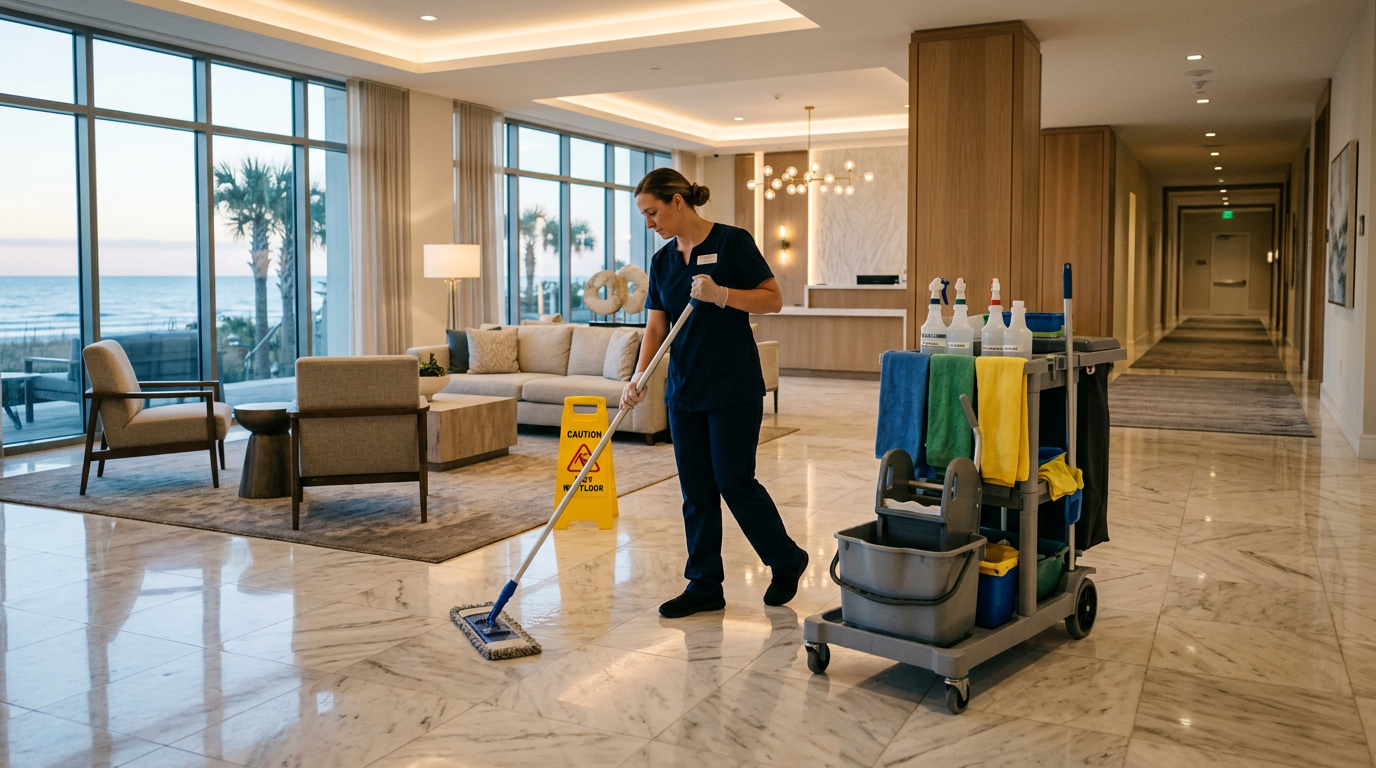
Operating a commercial facility on the Grand Strand requires a meticulous and reliable environmental services team, particularly during the critical overnight window. Finding and retaining custodial professionals who can work independently while maintaining clinical-grade sanitization standards is a constant challenge for local property managers and business owners. This guide details the technical vetting strategies, interview rubrics, and competitive compensation models needed to build a high-performing night-shift team. By establishing professional career pathways and clear performance metrics, Grand Strand businesses can protect their facilities and maintain immaculate indoor environments year-round.
Defining the Elite Night-Shift Custodial Technician
A commercial night-shift custodial technician represents the frontline of public health in Myrtle Beach facilities. Operating after hours when office buildings, medical practices, and high-occupancy hospitality centers are empty, these professionals must possess a unique blend of technical expertise and reliable self-governance. Unlike day-shift crews who handle immediate spot-cleaning, night technicians must execute methodical sanitization protocols across expansive square footage. Their focus goes beyond visible dust to address microscopic bio-burden, ensuring that employees and clients step into a clinically clean and safe environment every morning.
An elite technician is defined by their adherence to structured cleaning systems rather than random routines. In coastal South Carolina, where high relative humidity accelerates the growth of mold and mildew on indoor surfaces, a night-shift professional must understand how indoor climates interact with building materials. They are responsible for managing airflow, monitoring condensate lines, and applying commercial-grade chemical agents correctly. This requires physical stamina, technical aptitude, and a deep understanding of facility safety protocols.
Self-governance is perhaps the most critical soft skill for overnight staff. Because night-shift technicians operate with minimal direct supervision, they must possess personal accountability and attention to detail. This includes the ability to accurately document completed tasks, troubleshoot equipment malfunctions, and report facility anomalies like water leaks or security breaches. When hiring for these positions, commercial operations must look for candidates who view custodial work as a skilled trade rather than a low-barrier transactional job.
- Demonstrated ability to work independently with verifiable overnight experience.
- Deep understanding of how high humidity impacts indoor air quality and surface moisture.
- Strong safety record regarding chemical handling and personal protective equipment.
- Commitment to precise operational documentation and shift hand-off protocols.
- Proactive problem-solving skills when encountering unexpected facility maintenance issues.
The High-Security and Cross-Contamination Vetting Rubric
Vetting candidates for overnight commercial positions requires a structured interview rubric that goes beyond generic questions. In high-stakes environments like medical offices, banks, and legal suites across the Grand Strand, security and sanitization are paramount. Interviewers must assess a candidate's understanding of zone-cleaning methodologies and cross-contamination mitigation. This involves testing their knowledge of color-coded microfiber systems and the proper sequencing of cleaning tasks within sensitive spaces.
During the interview process, candidates should be presented with realistic scenarios to evaluate their critical thinking. For example, a supervisor might ask how a candidate handles a chemical spill or what steps they take if they discover an unkeyed exterior door during their shift. Their responses reveal whether they follow established OSHA guidelines or rely on unsafe shortcuts. This systematic vetting ensures that only those with a strong safety culture and technical competence join the field team.
Furthermore, background checks and secure credentialing are non-negotiable for night-shift roles. Because these technicians have unrestricted access to commercial properties, client trust hinges on rigorous vetting. This process should include comprehensive criminal history checks, drug screening, and verification of previous employment. Combining behavioral interview questions with strict security screenings allows commercial cleaning operations to build highly reliable, professional teams that protect both the client's physical assets and their confidential data.
- What is your protocol for preventing cross-contamination between a public restroom and a breakroom?
- How do you handle an active security alarm or a door left unsecured by daytime staff?
- Describe a time you noticed a facility maintenance hazard and how you reported it.
- Explain your step-by-step process for safely cleaning up a biohazard or bodily fluid spill.
- How do you manage your workflow to ensure all checklist items are completed before your shift ends?
Practical Pathogen-Control and Chemical-Safety Audits
A resume cannot fully demonstrate a technician's practical competency; a physical skill audit is essential. Before placing a new hire in a commercial facility, they must undergo a hands-on assessment in a controlled environment. This audit evaluates their familiarity with Safety Data Sheets, their ability to calculate chemical dilution ratios, and their understanding of disinfectant dwell times. Proper dilution is critical, as over-concentrated chemicals can damage expensive commercial flooring and create respiratory hazards.
The practical audit must also test the candidate's physical mechanics and ergonomic safety. Using heavy commercial vacuums, operating rotary floor machines, and lifting trash receptacles require proper posture to prevent repetitive strain injuries. Technicians are observed on their posture, their selection of personal protective equipment, and their organization of cleaning carts. Correct technique protects the technician from injury while maximizing cleaning efficiency and consistency.
Finally, the skill audit should measure their proficiency with advanced disinfection technologies, such as electrostatic sprayers and high-filtration HEPA vacuums. Candidates must demonstrate they can safely operate, clean, and store this equipment. In our coastal environment, fine sand and salt spray quickly degrade poorly maintained machinery. Vetting a technician's respect for their equipment is just as important as evaluating their actual cleaning technique.
- Verifying correct selection and usage of personal protective equipment for specific chemicals.
- Calculating and mixing precise chemical-to-water ratios using commercial dispensing systems.
- Demonstrating correct microfiber folding techniques to maximize clean cleaning surfaces.
- Explaining the difference between cleaning, sanitizing, and disinfecting based on contact times.
- Properly breaking down and sanitizing a commercial backpack vacuum after use.
Training and Professional Certification Pathways
To elevate custodial work into a recognized, professional career, structured training and certification pathways are vital. Top-performing commercial cleaning teams in Myrtle Beach invest in standardized education models. These programs should align with recognized industry standards, such as the ISSA's Cleaning Industry Management Standard. By offering clear training pathways, businesses improve service quality while showing technicians a path toward professional advancement.
Initial onboarding should focus on foundational modules, including OSHA Hazard Communication standards, bloodborne pathogen safety, and basic microbiology. Technicians must understand why they perform certain tasks, not just how. For example, learning how bacteria and viruses thrive on high-touch surfaces like light switches, door handles, and elevator buttons reinforces the importance of meticulous dwell times. This theoretical knowledge transforms routine cleaning into a proactive public health practice.
As technicians progress, they should have opportunities to earn specialized certifications. Advanced courses in hard-floor restoration, carpet care, and restorative stone maintenance allow team members to build valuable technical skills. These credentials should be tied to internal promotions and wage increases. When a company invests in its employees' professional growth, it builds a loyal, highly skilled workforce that delivers superior results for commercial clients.
- OSHA 10-Hour General Industry Certification covering workplace safety and hazard identification.
- GBAC Trained Technician credentials focusing on advanced disinfection and outbreak response.
- IICRC Carpet Cleaning Technician certification for advanced textile and fabric care.
- Specialized hard-floor maintenance training for luxury vinyl plank and terrazzo surfaces.
- Supervisor and leadership development modules for team-lead promotion pathways.
Building a Reliability Framework: Night-Shift Operations
A reliable night-shift operation requires clear operational systems that bridge the gap between field technicians and daytime management. Because direct oversight is limited overnight, we rely on digital logging, geofenced mobile check-ins, and real-time reporting tools. These technologies provide transparency for our clients and protect our technicians by documenting their exact hours and completed tasks. Clear, digital proof of performance builds strong trust between our cleaning crew and the property manager.
Operational reliability also depends on structured supply chain management at each commercial site. Night technicians must never find themselves without the proper chemicals, clean microfiber cloths, or equipment bags needed for their shift. Implementing a decentralized supply inventory system, where stock levels are tracked digitally, prevents emergency supply runs. Every technician should start their shift with a fully stocked, organized cleaning cart, allowing them to focus entirely on their work.
Finally, open communication lines are essential for night-shift success. Establishing a clear emergency escalation protocol ensures that if a technician encounters a security issue, water leak, or power failure, they can instantly reach a manager. Morning debrief reports should automatically sync with daytime supervisors, detailing completed work, outstanding tasks, and noted maintenance issues. This seamless feedback loop ensures that commercial properties remain secure, functional, and pristine.
- Geofenced mobile check-ins to verify technician arrival and departure times.
- Real-time digital checklists that require photo verification of completed high-priority zones.
- Automated inventory alerts to prevent shortages of essential chemicals and paper products.
- Direct emergency escalation channels to connect overnight staff with on-call management.
- Detailed morning shift reports sent to clients to maintain complete operational transparency.
Grand Strand Pay Standards and Night-Differential Incentives
To attract and retain top-tier talent in the highly competitive Grand Strand market, businesses must offer competitive compensation and clear incentives. The seasonal nature of our local economy often leads to high labor turnover, making year-round stability a powerful recruitment tool. Offering stable, year-round employment paired with a strong starting wage sets a high benchmark for the industry. This approach attracts committed professionals who see custodial work as a career rather than a temporary job.
Night-shift roles require a significant lifestyle adjustment, which should be recognized with a night-differential pay incentive. Adding a premium to the standard daytime hourly rate rewards technicians for working demanding overnight hours. This shift differential helps attract highly focused, self-motivated individuals who are comfortable working independently. It also reduces turnover, which is crucial for maintaining consistent, high-quality service at client facilities.
Beyond base pay, a robust benefits package is essential for long-term retention. Providing health insurance options, paid time off, and retirement matching shows team members they are valued. Incentives for performance, safety milestones, and client praise further motivate technicians to exceed expectations. Investing in our team's financial and personal well-being is the most effective way to build a stable, dedicated commercial cleaning crew.
- Competitive hourly base rates that reflect the skilled nature of commercial cleaning.
- A dedicated night-shift pay premium to reward technicians for working overnight hours.
- Guaranteed year-round, full-time hours to counter local seasonal economic drops.
- Comprehensive benefits packages, including paid time off, health options, and retirement plans.
- Performance bonuses tied to client satisfaction scores, safety records, and perfect attendance.
Career Progression and Technical Specialization Tracks
Building a reliable team requires providing a clear path for professional growth. When technicians see opportunities to advance their careers, they are far more likely to stay and perform at a high level. Our career progression ladder transitions seasonal entry-level workers into year-round specialists and supervisory leaders. By offering structured training and promotion tracks, we build a pipeline of future managers who thoroughly understand our company standards.
Our career ladder features specialized technical tracks, such as Floor-Care Specialist or Restorative Stone Technician. These roles require advanced training and the ability to operate complex machinery, such as floor scrubbers, extractors, and burnishers. Because these specialized services require high technical skill, they come with higher wage brackets. This allows our team members to increase their earning potential while expanding our range of commercial services.
For those with natural leadership skills, our Supervisor and Team Captain track provides training in operational logistics, quality assurance, and client relations. Transitioning experienced field technicians into management roles ensures our standards remain high as we scale. Investing in our employees' professional growth builds a highly motivated, skilled team that consistently delivers exceptional results for our commercial clients.
- Structured career paths that guide entry-level technicians toward specialized technical roles.
- Significant wage increases tied to earning advanced industry certifications.
- Leadership development programs that prepare field technicians for supervisory positions.
- Cross-training opportunities in hard-floor care, carpet extraction, and pressure washing.
- Regular performance reviews focused on goal setting and personal professional growth.
Vetting Commercial Providers: Questions for Grand Strand Managers
For Grand Strand business owners and property managers, selecting the right commercial cleaning partner is a critical decision. The safety, security, and cleanliness of your facility depend on the quality of the cleaning crew. Property managers should ask potential service providers detailed questions about their hiring, training, and vetting standards. A professional cleaning partner will gladly share their protocols and prove they invest in their team's safety and professional growth.
Inquire about their background check procedures, insurance coverage, and employee retention rates. High turnover in a cleaning provider often leads to inconsistent service and security concerns at your facility. A provider that pays competitive wages and offers structured training will have a stable, experienced team that knows your building's unique layout and needs. This consistency ensures reliable, high-quality results shift after shift.
Additionally, ask how the provider verifies and measures cleaning quality. A reputable company uses objective metrics, such as ATP sanitation testing and digital quality audits, to ensure your facility is clean and safe. By choosing a partner with high standards, you protect your property investment and provide a clean, healthy space for your employees and clients. At A2Z Cleaning & Linen Services, we hold ourselves to these high standards to keep Grand Strand businesses running smoothly.
- What vetting, background checks, and drug screenings do your employees undergo?
- Are your technicians classified as W-2 employees or independent contractors?
- How do you train your night-shift staff on chemical safety and cross-contamination?
- What tools do you use to monitor technician performance and verify quality?
- How do you handle staffing and scheduling to ensure reliable service year-round?
Key takeaway
Building a premier commercial cleaning team requires combining rigorous vetting, professional training, and competitive compensation. By investing in our night-shift technicians, A2Z Cleaning & Linen Services ensures that Myrtle Beach businesses receive reliable, clinical-grade sanitization. For professional, consistent commercial cleaning you can trust, contact our Grand Strand team today at 843.800.2788.
Keep Reading
Commercial & Hospitality
The Grand Strand Commercial Disinfection Specialist Career Pathway: Class-A Office Standards, Biohazard Mitigation Certifications, and Local Retention Models
ReadCommercial & Hospitality
The ISSA CIMS-GB Commercial Custodial Standard: Transitioning Grand Strand Facilities to High-Performance, Low-Emission Sustainable Cleaning Systems
ReadCommercial & Hospitality
The OSHA Bloodborne Pathogen Standard for Coastal Hospitality and Commercial Facilities: Implementing Exposure Control Plans, EPA List Q Disinfectants, and Post-Incident Workflows in Myrtle Beach
ReadReady for a spotless property?
Call 843.800.2788 or request a free quote from A2Z Cleaning & Linen Services.