Coastal Living
The Cost of Cleaning Luxury Outdoor Kitchens: Salt-Grease Chemical Interactions, Stone Masonry Safety, and Vetting Grand Strand Specialists
Discover the costs, chemistry, and safety protocols required to maintain and clean Grand Strand outdoor kitchens without damaging high-end stone and stainless steel.
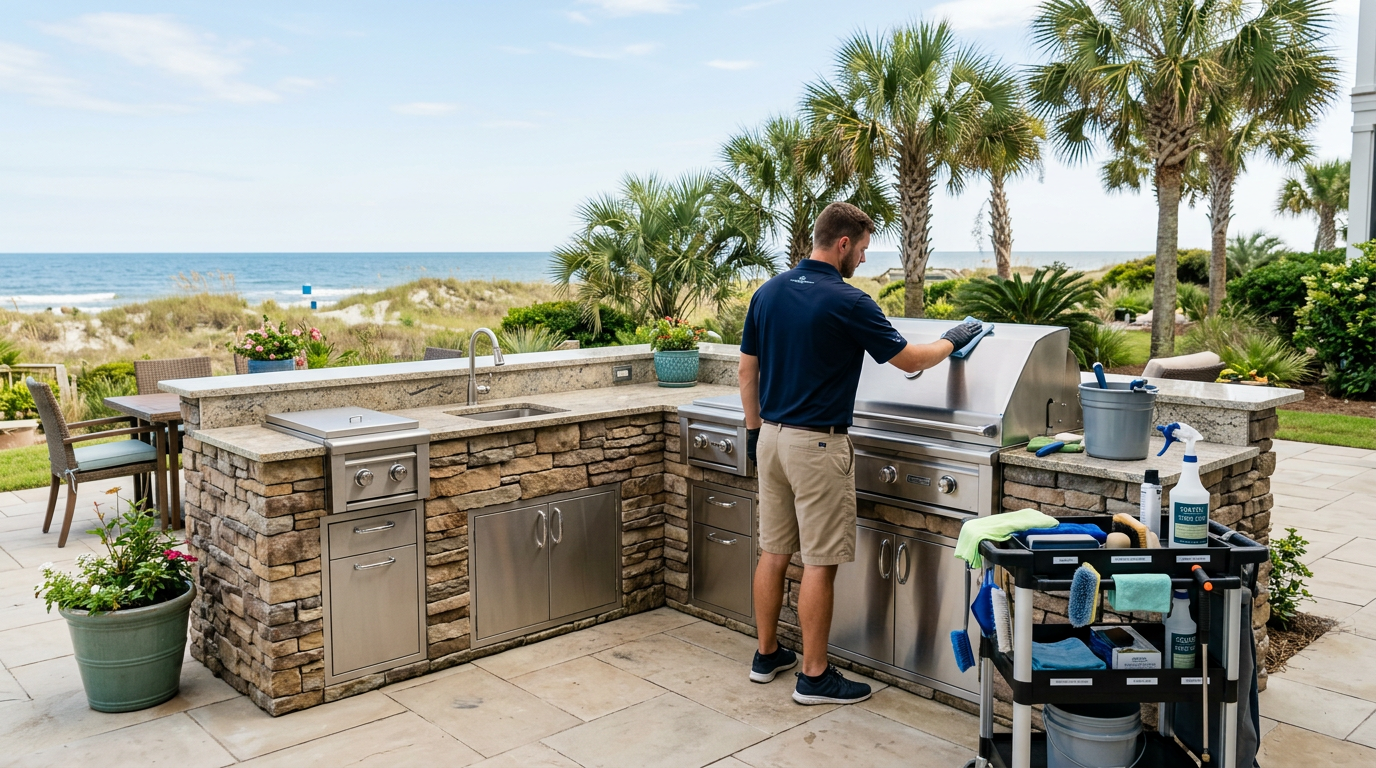
Homeowners along the Grand Strand invest heavily in luxury outdoor kitchens to enjoy our beautiful year-round coastal climate. However, the combination of airborne ocean salt, high-heat cooking grease, and intense humidity creates a destructive chemical film that standard household cleaners cannot safely remove. Cleaning these high-end installations requires specialized knowledge of metallurgy, masonry safety, and environmental runoff. This guide details the costs, chemistry, and safety protocols required to maintain your outdoor culinary space without damaging your investment.
The Destructive Chemistry of Salt and High-Heat Grease
In our coastal environment, outdoor cooking surfaces face a unique chemical threat. Airborne sodium chloride from the Atlantic Ocean constantly deposits onto outdoor cabinetry and countertops. When you light your grill, vaporized animal fats and cooking oils escape into the air and mix with this salt layer. The combination forms a sticky, highly acidic, and corrosive polymer film that binds tightly to surfaces. This film does not simply sit on the surface; it actively attracts moisture from our high humidity, accelerating the oxidation of metal and the degradation of stone sealants.
High heat from grilling dramatically accelerates this destructive chemical reaction. When stainless steel is heated during cooking, its microscopic pores expand. If salt-saturated grease is baked onto the surface, it penetrates deep into these pores. As the metal cools, the contaminants are trapped within the metal matrix. This leads to a phenomenon known as tea-staining—a localized, unsightly brown corrosion that ruins the finish of built-in grills, refrigerators, and access doors. Once tea-staining begins, standard wiping will not restore the metal; it requires professional chemical extraction.
Porous countertops like granite, quartzite, and travertine face an equally severe threat from organic acids. Drippings from citrus marinades, tomato-based sauces, and alcohol break down the stone’s protective sealers on contact. Once the sealer is compromised, the humid salt air carries moisture deep into the stone's interior pores. As the sun heats the stone, this moisture evaporates, leaving behind salt crystals that expand and create internal pressure. Over time, this process causes spalling, where the surface of your expensive stone begins to flake, pit, and crumble.
The DIY Pitfalls: Why High Pressure and Aggressive Acids Ruin Masonry
Many Grand Strand homeowners attempt to clean their summer kitchens using a standard residential pressure washer and store-bought muriatic acid. This approach almost always leads to expensive, irreversible damage. High pressure—anything exceeding 1,500 PSI on natural stone or joints—easily gouges soft travertine, erodes grout lines, and strips away protective sealants. Once the grout is compromised, water penetrates behind the stone veneer, leading to structural rot, mold growth, and eventually, the complete failure of the masonry wall.
Using aggressive, off-the-shelf acidic cleaners is another common mistake. Acidic solutions will instantly etch polished stone countertops like marble, travertine, and even some granites, permanently dulling their finish and leaving white, chalky spots. Furthermore, acid runoff can corrode the stainless steel frames of built-in appliances and drawer glides. The chemical reaction can dissolve the protective chromium oxide layer of the steel, turning a simple cleaning attempt into a costly replacement project for your built-in appliances.
Abrasive tools like wire brushes, steel wool, or harsh scrubbing pads should never be used on outdoor kitchen surfaces. While they may successfully strip away baked-on carbon and grease, they leave microscopic scratches on both stainless steel and stone. These tiny scratches ruin the polished look of your kitchen and act as perfect micro-pockets where salt, moisture, and mold spores can settle. This accelerates rust and biological growth, making the kitchen significantly harder to clean in the future.
Product Safety and Environmental Runoff in Grand Strand Ecosystems
Cleaning an outdoor kitchen requires careful chemical selection because of where the wastewater drains. Unlike indoor plumbing, which routes wastewater to water treatment facilities, outdoor runoff typically flows directly into lawns, pool filtration systems, or local storm drains. In Grand Strand communities, these storm drains often empty directly into sensitive salt marshes, residential canals, or the ocean. Using chlorinated solvents, phosphates, or highly alkaline degreasers can devastate local landscaping and harm delicate aquatic ecosystems.
Professional exterior cleaning protocols require the use of biodegradable, low-VOC degreasers and pH-neutral stone cleaners. These specialty formulas emulsify grease and lift carbon deposits without relying on harsh toxins. Furthermore, professionals use water reclamation techniques or containment barriers to prevent contaminated rinse water from pooling in your grass or entering sandy coastal soils. This level of environmental care protects your turf, your landscaping plants, and the broader Grand Strand water table.
Family and pet safety is another critical consideration when selecting cleaning products. Residues from harsh industrial degreasers can linger on outdoor countertops where food is prepared, or on patio stones where children and pets walk barefoot. Using food-safe sanitizers to finish the job ensures that no chemical irritants remain. A thorough, clean-water rinse using purified water prevents mineral spots and guarantees that your outdoor entertainment space remains completely safe for your family and pets.
The Professional Cleaning and Restoration Protocol
A professional outdoor kitchen cleaning begins with a detailed inspection of all materials. Technicians must identify the specific grade of stainless steel—usually 304 or 316 marine-grade—and the porosity of the stone countertops. Before any water is introduced, sensitive components such as built-in rotisserie motors, outdoor TV mounts, LED lighting controllers, and gas line regulators are carefully isolated and wrapped in water-resistant protective barriers to prevent electrical shorts or component damage.
The cleaning process utilizes low-pressure, high-temperature steam rather than high-pressure cold water. Specialized equipment heats water to over 200 degrees Fahrenheit, which naturally melts baked-on animal fats and grease without the need for abrasive scrubbing or destructive pressure. This hot water extraction method lifts dirt and carbon from the microscopic pores of both metal and stone, thoroughly sanitizing the surfaces while preserving the integrity of grout joints, sealants, and appliance gaskets.
After deep cleaning and drying, the restoration phase begins. Natural stone countertops are treated with a premium, breathable impregnating sealer that repels both water-based salt moisture and oil-based cooking stains. Unlike cheap surface sealers, these professional-grade products do not trap moisture inside the stone, preventing spalling. Finally, all stainless steel surfaces are treated with a specialized marine-grade corrosion inhibitor that bonds to the metal, creating a microscopic shield against salt air.
- Isolation and waterproofing of all electrical outlets, rotisseries, and built-in electronics.
- Thermal grease emulsification using low-pressure steam (under 1,000 PSI) at 200 degrees Fahrenheit.
- Deep extraction of grease, soot, and carbon from stone pores using pH-neutral, biodegradable solutions.
- Application of a premium, breathable impregnating sealer to protect stone against future oil and water stains.
- Application of a marine-grade stainless steel protectant to shield metal from salt-air tea-staining.
Breaking Down the Costs: What Homeowners Should Expect to Pay
The cost of professional outdoor kitchen cleaning along the Grand Strand varies based on the size of the kitchen, the types of materials, and the level of grease and salt buildup. For a standard 8-to-10-foot outdoor kitchen island featuring a built-in grill, a small prep sink, and a mini-fridge, homeowners should expect a professional deep clean, sanitization, and sealing to cost between $400 and $800. This price reflects the detailed hand-work and specialized equipment required.
For larger estate setups—such as those found in Grande Dunes, Prince Creek, or DeBordieu—the cost can range from $1,200 to $2,500. These larger installations often feature extensive natural stone masonry, outdoor fireplaces, pizza ovens, multiple refrigeration units, and large natural stone pool decks. The higher cost accounts for the additional labor, the volume of premium impregnating sealers required, and the extensive detail work needed to restore multiple built-in appliances.
While these professional rates are higher than standard house cleaning, they represent a fraction of the cost of replacing damaged outdoor assets. Replacing a high-end built-in grill insert can easily cost $3,000 to $6,000, while replacing ruined quartzite or travertine countertops can exceed $8,000. Investing in professional deep cleaning and sealing once or twice a year acts as a critical insurance policy that extends the lifespan of your outdoor kitchen by decades.
Critical Questions to Ask an Outdoor Cleaning Specialist
When hiring a cleaning service for your luxury outdoor kitchen in the Myrtle Beach area, you must verify that they have specific experience with high-end exterior finishes. General pressure-washing companies often lack the training, soft-wash equipment, and delicate chemistry required to handle sensitive appliances and luxury stones safely. Asking targeted questions before hiring can save you from costly property damage and poor results.
Always confirm that the company carries comprehensive liability insurance that explicitly covers outdoor appliances and natural stone restoration. A standard residential cleaning policy may exclude damage caused by chemical applications on exterior masonry or high-end metal appliances. Ensuring the company is fully insured and their technicians are certified in low-pressure, thermal cleaning methods provides peace of mind and guarantees a professional standard of work.
Inquire about the exact chemicals and sealers they plan to use. A professional company will readily name their products, explain their safety profiles, and provide safety data sheets upon request. They should use pH-neutral stone cleaners and high-grade, breathable impregnating sealers rather than cheap, film-forming topical sealers that trap moisture, turn yellow under our intense Carolina sun, and peel in our high humidity.
- Do you use hot-water steam or cold-water high pressure to clean built-in grills and appliances?
- What specific type of stone sealer do you use, and is it breathable and UV-resistant?
- How do you protect built-in outdoor electronics and gas lines during the cleaning process?
- Are your cleaning solutions biodegradable and safe for nearby lawns, pools, and coastal waterways?
- Can you provide local references or photos of similar luxury outdoor kitchen cleanings you have performed?
Proactive Maintenance: Protecting Your Investment Between Deep Cleans
To maximize the lifespan of your outdoor kitchen between professional cleanings, establishing simple maintenance habits is essential. After each cooking session, wipe down all stainless steel surfaces with a clean microfiber cloth and a dedicated, non-abrasive stainless steel cleaner. This simple step removes acidic food residues, salt spray, and grease before they have a chance to bond to the metal or bake on during your next cookout.
Keeping your outdoor kitchen covered when it is not in use is one of the most effective ways to protect it. Invest in a high-quality, breathable, weather-resistant cover that fits your island securely. A proper cover shields the metal and stone from direct UV rays, pollen, bird droppings, and the constant onslaught of humid, salt-laden wind. Always ensure the kitchen is completely dry before covering it to avoid trapping moisture, which can lead to rapid mold growth.
Address spills on stone countertops immediately. Natural stones like travertine, granite, and slate are porous, meaning liquids like red wine, lemon juice, or cooking oil will quickly soak in and leave permanent stains or etch marks. Keep a bottle of pH-neutral stone cleaner handy for quick cleanups. If you notice water no longer beads on your stone countertops, it is a clear sign that the protective sealer has worn off and a professional deep clean and reseal is needed.
Key takeaway
Maintaining a luxury outdoor kitchen on the Grand Strand requires a careful balance of heat-activated degreasing, salt extraction, and stone-safe chemistry. By choosing professional thermal cleaning and high-performance sealing over high-pressure DIY methods, you protect your valuable investment from coastal corrosion. For expert care, contact A2Z Cleaning & Linen Services at 843.800.2788 to schedule your outdoor kitchen restoration.
Keep Reading
Coastal Living
The Coastal Sliding Glass Door Track and Weep-Hole Decontamination Protocol: Mitigating Mold Bio-Sludge, Wind-Driven Allergens, and Chemical Runoff in Grand Strand Homes
ReadCoastal Living
The Cost of Restoring Coastal Outdoor Shower Enclosures: Managing Algae Biofilms, Salt-Water Scale, and Material-Safe Chemistry in Grand Strand Homes
ReadCoastal Living
The Cost of Restoring Coastal Porch Beadboard and Soffits: Algae Chemistry, Substrate Safety, and Professional Vetting for Grand Strand Homeowners
ReadReady for a spotless property?
Call 843.800.2788 or request a free quote from A2Z Cleaning & Linen Services.