Coastal Living
The Cost of Coastal Kitchen Deep Cleans: Managing Salt-Grease Film, Cabinet Preservation, and Safe Chemistry in Grand Strand Homes
Discover the real costs, safe cleaning chemistries, and crucial questions to ask when hiring professionals to tackle the unique salt-grease buildup in Myrtle Beach kitchens.
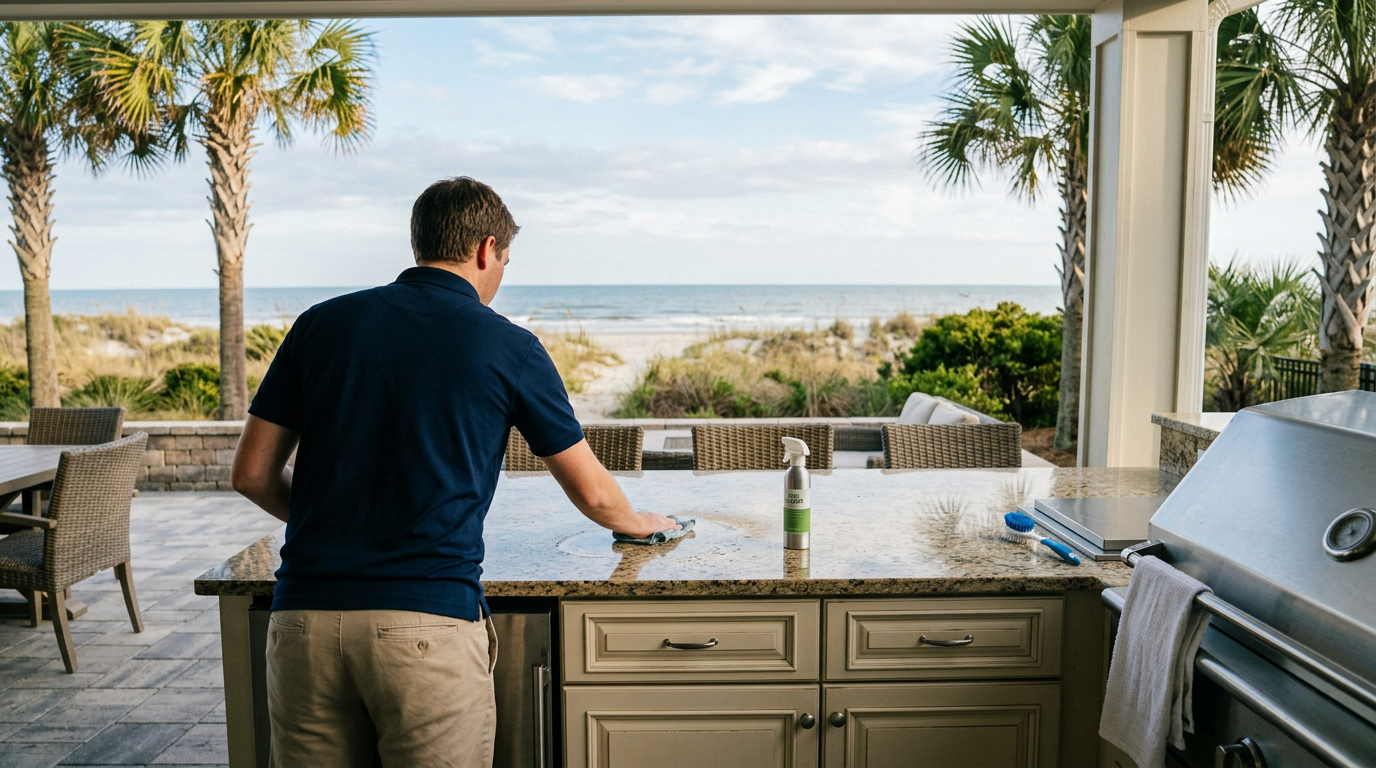
In our humid Grand Strand climate, kitchens face an environmental challenge that inland homes never encounter: the formation of a sticky, stubborn salt-grease film. This hybrid residue coats cabinets, dulls stone countertops, and corrodes expensive metal hardware if left unchecked. Understanding the costs, product safety standards, and structural differences between a DIY attempt and a professional deep clean is essential for protecting your home investment. This guide breaks down exactly what a coastal kitchen restoration involves, how much you should expect to pay, and how to safely vet local cleaning teams.
Understanding the Coastal Salt-Grease Hybrid Film
Kitchens in Myrtle Beach, Surfside Beach, and Murrells Inlet face a unique atmospheric issue. The high salt content in our coastal air enters the home through open doors, windows, and HVAC systems, mixing directly with airborne cooking oils. When volatile organic cooking greases settle onto surfaces, the airborne salt acts as a binding agent, creating a thick, tacky film. Unlike dry dust or standard grease found in inland properties, this salt-grease hybrid is highly resistant to standard household dusting and light wiping, requiring specific chemical disruption to break down safely.
Over time, this hybrid layer behaves like a magnet for airborne pet dander, lint, and micro-particles of sand tracked in from the beach. When moisture from our summer humidity peaks, it re-hydrates this film, allowing bacteria and fungal spores to colonize the surface. This creates not just an aesthetic issue on your upper cabinets and range hoods, but a hygiene hazard right where you prepare meals. Cleaning this residue requires breaking the chemical bond without stripping away the protective finishes of your underlying wood, laminate, or paint.
If left untreated, the salt-grease film undergoes chemical changes when exposed to light and heat, slowly oxidizing and yellowing white-painted cabinets and eroding the protective topcoats of wood finishes. It also reacts with metal drawer pulls, hinges, and appliance trim, accelerating the oxidation of stainless steel and brass. For Grand Strand homeowners, kitchen deep cleaning is not merely a cosmetic chore; it is a critical preventative maintenance protocol designed to protect thousands of dollars in high-end cabinetry and kitchen hardware from permanent structural deterioration.
The DIY Pitfalls of Kitchen Deep Cleaning
When confronted with sticky coastal grime, many homeowners reach for aggressive DIY cleaning solutions, often resulting in permanent surface damage. The most common mistake is using abrasive scouring pads, such as green fiber scrubbers or steel wool, on stainless steel and painted cabinet doors. These abrasives create microscopic scratches that destroy the factory sealant, leaving the metal highly vulnerable to rapid salt-air rusting and permanently dulling painted wood surfaces, making them even more prone to trapping future oil deposits.
Another frequent error is the misuse of highly acidic or highly alkaline home remedies, such as undiluted vinegar or caustic oven cleaners, on delicate coastal surfaces. While vinegar is often touted as a natural cure-all, its high acidity can etch natural stone countertops like marble and granite, stripping away their sealants in seconds. On the other end of the spectrum, heavy-duty alkaline degreasers can chemically react with painted cabinetry, causing the paint to bubble, soften, or peel away, transforming a simple cleaning task into an expensive refinishing job.
Lastly, excess moisture is a silent destroyer of kitchen cabinetry in high-humidity zones. Homeowners using steam mops on wooden kickplates or drenching cabinet doors with wet soapy sponges often cause the wood substrate to swell and warp. Once water penetrates the seams of engineered wood or MDF cabinets under our humid Grand Strand conditions, the damage is irreversible. Professional cleaning avoids these moisture traps by utilizing highly targeted, low-moisture chemistry applied with precise, controlled wiping techniques.
Professional Extraction and Safe Chemistry Protocols
Professional coastal kitchen cleaning relies on surfactant-based chemistry rather than brute force or harsh abrasives. Surfactants work by lowering the surface tension of water, allowing the cleaning solution to slip beneath the salt-grease film, encapsulating the oily residues so they can be easily wiped away without scrubbing. Experienced professionals select neutral or mildly alkaline, eco-friendly formulas that safely emulsify fats, oils, and salt crusts without interacting negatively with delicate painted wood or clear lacquer finishes.
To achieve a true restoration, professionals use specialized tools designed to lift, rather than smear, grease. High-gsm (grams per square meter) microfiber cloths are deployed because their microscopic split fibers mechanically grab and trap oil particles rather than moving them across the surface. Detail brushes, safe scrub-pads, and specialized low-moisture extraction tools are used on intricate crown molding, cabinet joints, and vent hood baffles where grease accumulates, ensuring that no sticky residue remains to attract sand or dust in the future.
Product safety is paramount on food contact surfaces. Professional technicians are trained to utilize formulas that leave zero toxic chemical residues behind on countertops, prep islands, and cabinet knobs. Every deep clean involves a neutralizing final rinse step, ensuring that surfaces are food-safe and chemically inert. This balance of targeted grease-dissolving power and mild, residue-free finishing is what separates a professional coastal restoration from standard residential cleaning practices.
The True Costs of Coastal Kitchen Deep Cleans
When budgeting for a professional kitchen deep clean along the Grand Strand, homeowners will encounter two main pricing structures: hourly rates and flat-rate service packages. Hourly cleaning rates in our region typically range from $45 to $75 per hour, per technician. A thorough, deep kitchen restoration—which includes detailing cabinet interiors, degreasing range hoods, cleaning light fixtures, and sanitizing all surfaces—typically requires 4 to 8 man-hours, placing the average labor cost between $180 and $600 depending on the kitchen's condition.
Flat-rate packages are often preferred for larger properties or vacation rentals, as they provide predictable pricing. For a standard-sized coastal kitchen, a professional deep restoration flat rate generally ranges from $350 to $850. The ultimate cost is influenced by several specific factors: the total linear footage of cabinetry, the height of the ceilings (which determines if ladder work is required to clean cabinet tops), the complexity of the range hood venting system, and the overall level of grease accumulation on the surfaces.
Be wary of exceptionally low bids, such as offers to deep clean a kitchen for under $150. These rock-bottom prices almost always indicate that the provider lacks proper commercial liability insurance, relies on cheap, caustic chemicals that can ruin your surfaces, or cuts corners by failing to clean high-zone grease traps. Investing in a qualified, fully insured local specialist protects your home from property damage and ensures that the job is executed safely, legally, and to commercial standards.
Essential Questions to Ask a Grand Strand Cleaning Company
Before hiring a company to restore your kitchen, it is critical to verify their operational credentials to protect your property and peace of mind. A legitimate company serving the Myrtle Beach area should readily provide proof of commercial liability insurance, worker's compensation insurance, and local business licensing. These documents protect you from personal financial liability in the event that a technician is injured on your property or if expensive cabinetry or appliances are accidentally damaged during the cleaning process.
Inquire specifically about their staff screening and employment model. Ask if the technicians who will enter your home are W-2 employees who have passed background checks, or if they are third-party independent contractors. W-2 employees receive standardized training in coastal chemical safety, product dilution controls, and delicate surface care, ensuring a consistent level of quality. Subcontracted labor often lacks oversight and standardized training, increasing the risk of chemical damage to your high-end finishes.
Finally, ask about their specific product safety and surface protocols. A professional team should be able to explain the exact chemistry they plan to use on your granite, quartz, or painted cabinet surfaces. They should possess Safety Data Sheets (SDS) for all chemicals carried in their vehicles, showcasing their commitment to OSHA standards and product safety. If a company cannot explain how they protect your cabinet finishes or cannot name the products they use, they should not be trusted with your kitchen.
- Do you carry active commercial liability and worker's compensation insurance?
- Are your cleaning technicians background-checked W-2 employees or subcontractors?
- What specific, non-abrasive products do you use to clean painted cabinetry and stone?
- Can you provide a detailed checklist of what is included in your kitchen deep clean?
- What is your protocol if a surface or appliance finish is damaged during cleaning?
Product Safety, Pets, and Coastal Runoff Concerns
Product safety in the kitchen extends beyond the food prep areas; it directly impacts the air your family breathes and the health of your pets. Many mass-market degreasers contain volatile organic compounds (VOCs) and harsh synthetic fragrances that linger in indoor spaces. In coastal homes, which are often closed tightly against summer humidity, these chemical fumes concentrate in the air, potentially triggering respiratory irritation. Selecting a professional service that utilizes low-VOC, fragrance-free, or green-certified cleaning chemistry ensures healthy indoor air quality.
Pet safety is another vital consideration when selecting cleaning products. Dogs and cats frequently contact low-lying kitchen surfaces, such as kickplates, trash pull-outs, and lower cabinet doors. If these areas are cleaned with caustic, residue-heavy chemicals, pets can ingest these toxins when grooming their paws or licking dropped food off the floor. Professional cleaners use non-toxic, pet-safe sanitizers and rinse agents that leave zero harmful residues behind, keeping your four-legged family members completely safe from chemical exposure.
Living on the Grand Strand means our local environment is deeply connected to our drainage systems. The harsh, chlorinated, and heavy phosphate-based chemicals used by amateur cleaners eventually wash down the drain and can impact our fragile local marshlands, estuaries, and ocean water. By opting for biodegradable, environmentally conscious cleaning chemistries, both homeowners and professional cleaning services help protect Myrtle Beach's beautiful natural ecosystem while still achieving an immaculate, clinically clean indoor living space.
Preserving Coastal Cabinetry and High-End Hardware
Coastal kitchen cabinetry requires targeted maintenance to prevent the humid, salty air from destroying hardware. Cabinet hinges and drawer glides are particularly susceptible to rust and binding due to salt-air exposure. During a professional deep clean, technicians detail these metal components, removing the salt-grease buildup that traps moisture against the metal. Cleaning these moving parts properly ensures that drawers glide smoothly and doors shut flush, preventing structural misalignment over time.
Painted wood finishes require exceptionally gentle handling in our humid climate. High humidity softens paint slightly, making it more vulnerable to scratching and chemical peeling. Professional cleaning protocols call for hand-wiping these delicate surfaces with damp microfiber cloths and immediate dry-buffing to prevent water from resting in the corners or panel seams. This meticulous care prevents the paint from peeling, cracking, or lifting along the grain joints, extending the lifespan of your custom kitchen finishes.
High-zone detailing is another area where professionals excel. The top surfaces of upper cabinets, crown molding, and ceiling fan blades in kitchens collect a thick layer of sticky grease that acts as a breeding ground for mold in humid months. Professionals systematically clean these high zones, vacuuming away loose sand and dust using HEPA-filtration vacuums before applying safe emulsifying agents to dissolve the grease. Keeping these hidden areas clean drastically improves overall indoor air quality and eliminates stale kitchen odors.
The Ideal Maintenance Plan: Balancing DIY and Professional Cleans
Maintaining a clean, safe, and beautiful coastal kitchen requires a smart combination of routine DIY upkeep and scheduled professional deep cleanings. For weekly maintenance, homeowners should avoid harsh spray cleaners and instead use a mild, pH-neutral dish soap diluted in warm water, paired with a high-quality microfiber cloth. This simple routine safely removes daily cooking splatters and fresh salt dust without stripping away wax, sealants, or cabinet finishes, keeping grease from bonding.
For homes along the Grand Strand, scheduling a professional kitchen deep clean twice a year—typically ahead of the busy summer season and again in the late autumn—is the ideal cadence. This schedule ensures that winter condensation and summer humidity cycles do not allow the salt-grease film to permanently bond to your expensive cabinetry. A bi-annual schedule also allows professionals to inspect and deep-clean hard-to-reach areas, like appliance vents, refrigerator coils, and cabinet tops, before grease buildup can cause mechanical or structural issues.
When choosing a long-term cleaning partner in the Myrtle Beach area, look for a team that understands the unique science of coastal cleaning. At A2Z Cleaning & Linen Services, we specialize in high-detail residential and rental restorations designed to withstand the harsh Grand Strand environment. Our trained technicians use safe, highly effective chemistries and meticulous techniques to protect and preserve your home's most valuable surfaces. Contact us at 843.800.2788 to schedule your comprehensive kitchen deep clean.
Key takeaway
Protecting your coastal kitchen from the destructive effects of salt-grease film requires safe chemistry, specialized tools, and a gentle touch. By understanding the true costs of professional deep cleaning and vetting local providers for proper licensing, insurance, and chemical safety, you can preserve your cabinetry and stone surfaces for years to come. For expert, locally-tailored kitchen restorations and deep cleaning across the Grand Strand, trust the family-owned team at A2Z Cleaning & Linen Services by calling 843.800.2788.
Keep Reading
Coastal Living
The Cost of Restoring Coastal Plantation Shutters: Sun-Baked Salt, Tension Mechanics, and Safe Chemistry for Grand Strand Homeowners
ReadCoastal Living
The Cost of Cleaning Luxury Outdoor Kitchens: Salt-Grease Chemical Interactions, Stone Masonry Safety, and Vetting Grand Strand Specialists
ReadCoastal Living
The Cost of Coastal Upholstery and Mattress Restoration: Fabric Safety, Dry Times, and Vetting Grand Strand Professionals
ReadReady for a spotless property?
Call 843.800.2788 or request a free quote from A2Z Cleaning & Linen Services.