Coastal Living
The Cost of Coastal Upholstery and Mattress Restoration: Fabric Safety, Dry Times, and Vetting Grand Strand Professionals
Discover the real costs of restoring salt-exposed, high-use upholstery and mattresses in Myrtle Beach, including DIY risks, chemical safety, and how to interview local pros.
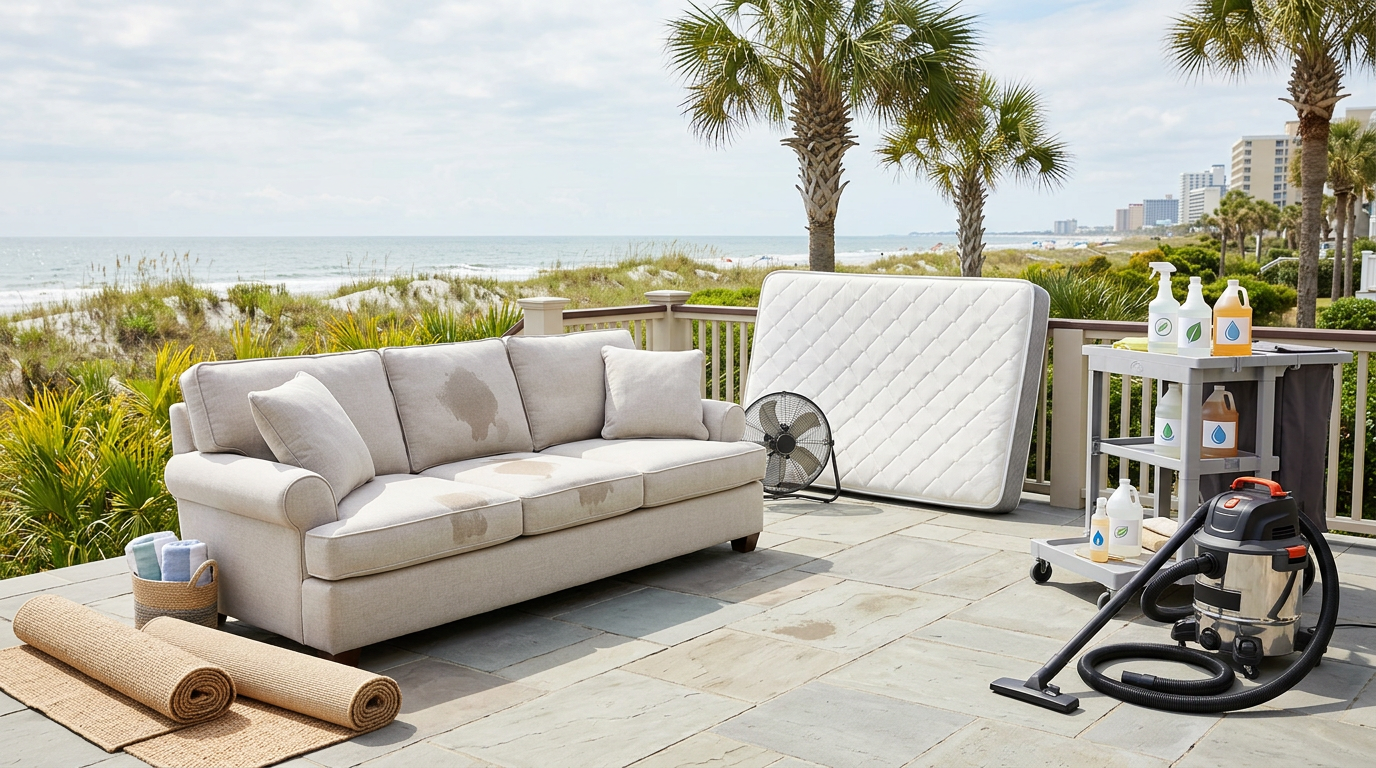
Living along the Grand Strand brings unparalleled beauty, but the combination of humid salt air, fine beach sand, and high summer occupancy puts immense strain on home furnishings. Upholstery and mattresses act as giant filters, trapping microscopic ocean salts, sweat, sunscreen, and dampness deep within their fibers. Standard household vacuuming cannot pull these deeply embedded contaminants out, leading to premature fabric rot and unpleasant, musty odors. Understanding the true costs, safety protocols, and professional methods of soft-goods restoration is essential for protecting your indoor air quality and extending the life of your valuable interior investments.
The Coastal Degradation Factor: Sand, Salt, and Humidity in Soft Fibers
In Myrtle Beach homes, upholstery and mattresses face environmental hazards unknown to inland properties. Microscopic beach sand is highly abrasive, with sharp, jagged edges that act like tiny saws. When family members or rental guests sit on a sofa, their body weight grinds these sand particles against the delicate fibers of cotton, linen, or synthetic upholstery. Over time, this constant friction cuts the yarn at a microscopic level, leading to premature thinning, pilling, and tearing of your furniture fabric.
Salt air compounding is another invisible threat to your coastal home. Airborne sea salt is naturally hygroscopic, meaning it continuously attracts and holds moisture from our humid Grand Strand air. When salt deposits settle into sofas and mattresses, they keep the interior fibers slightly damp, even when your air conditioning is running. This chronic micro-moisture creates an ideal breeding ground for dust mites, mildew, and musty odors that linger deep inside the cushioning foam.
Damp swimwear and sunscreen application add a final layer of chemical stress to home furnishings. Sunscreen contains oils and active chemical ingredients like avobenzone, which bond tightly to upholstery fibers and leave yellow or orange stains. When chlorine or saltwater from wet bathing suits saturates a mattress or sofa cushion, it breaks down the structural integrity of polyurethane foam, causing cushions to sag and lose their supportive shape long before their time.
The True Costs of Upholstery and Mattress Cleaning in the Grand Strand
When budgeting for professional deep cleaning, homeowners should understand how reputable Grand Strand companies structure their pricing. For standard upholstery, pricing is typically calculated per linear foot or by the specific piece of furniture. A standard three-seat sofa generally ranges from $120 to $180, while large sectionals can run between $220 and $380, depending on the fabric type and the complexity of the cushions.
Mattress sanitization and cleaning are usually priced by bed size. A queen mattress deep clean typically costs between $110 and $150, while a king mattress ranges from $140 to $180, with double-sided cleaning adding a modest premium. Beware of ultra-low flat rates advertised under $50; these are often bait-and-switch schemes or indicate a lack of proper commercial-grade extraction equipment and liability insurance.
Specialty stain removal, such as pet urine neutralization, heavy salt-film extraction, or sunscreen oil remediation, may incur moderate additional fees. These specialized treatments require target-specific chemical pre-sprays and extended extraction times to draw contaminants completely out of deep foam layers. Investing in these professional treatments is highly cost-effective compared to the thousands of dollars required to prematurely replace high-quality furniture and mattresses.
DIY vs. Professional Extraction: The Risks of Over-Wetting and Mold
The temptation to rent a portable grocery store shampooer or use a consumer-grade spot cleaner is high for many homeowners. However, these consumer-grade machines lack the vacuum power and heating capabilities required for safe upholstery cleaning. They rely on weak, low-CFM (cubic feet per minute) motors that spray excessive water deep into the cushions but lack the suction strength to pull that moisture back out, leaving the furniture waterlogged.
In our humid Grand Strand climate, over-wetting is a direct recipe for mold and mildew growth. If a mattress or sofa cushion remains wet for longer than 24 hours, fungal spores naturally present in the air will begin to colonize the damp foam core. Once mold takes root inside a mattress or sofa cushion, it cannot be safely cleaned or vacuumed out; the entire piece of furniture must be discarded due to severe health and respiratory risks.
Professional technicians use high-performance truck-mounted extraction systems that heat the water to precise temperatures and provide massive lift. This combination emulsifies body oils, salt, and dirt instantly while extracting 90% of the applied water back into the waste tank. As a result, fabrics are left only slightly damp to the touch and dry completely within a few hours, eliminating any risk of internal mold development.
Critical Questions to Ask a Grand Strand Furniture Cleaner
Before hiring any company to clean your soft furnishings, it is crucial to vet them thoroughly to protect your property and ensure quality results. Start by asking if their technicians are formally trained in fiber identification. Delicate fibers like cotton, linen, rayon, and wool require completely different cleaning temperatures and chemistry compared to synthetic polyesters and microfibers; using the wrong product can permanently shrink, bleed, or ruin your fabric.
Next, inquire about their specific drying equipment and procedures. A professional outfit does not simply pack up their hoses and leave your cushions soaking wet on the furniture frames. They should use high-velocity air movers to initiate the drying process before they leave, and they should provide clear instructions on how to manage your indoor climate to ensure rapid, safe drying over the following hours.
Finally, always verify that the company carries comprehensive liability insurance and workers' compensation. Accidents can happen, and a high-powered hot water extraction machine operated by an uninsured operator could damage your flooring, baseboards, or delicate fabrics. Asking for proof of active insurance coverage protects you from financial liability and ensures you are working with a legitimate, professional Grand Strand business.
- Are your technicians certified in upholstery and fabric cleaning?
- What specific drying equipment do you utilize during the service?
- Can you provide proof of active liability and workers' compensation insurance?
- Do you perform a fiber burn test or chemical colorfastness test before cleaning?
- Are your cleaning products safe for homes with children, allergies, and pets?
Understanding the Drying Timeline: Managing Coastal Humidity Post-Clean
Drying times are heavily influenced by the relative humidity levels inside your coastal home. On a hot, humid summer day in Myrtle Beach, the air is already saturated with moisture, which slows down the natural evaporation process. Even after professional-grade extraction, a mattress or sofa requires proper air movement and climate control to release the remaining dampness into the air efficiently.
To achieve optimal dry times, professional technicians will position your cushions in a 'tent' or 'V' shape off the furniture frame. This increases the surface area exposed to air circulation and prevents water from pooling in the seams. They will also deploy high-velocity, low-profile air movers that sweep dry air across the wet surfaces, drastically accelerating evaporation while they complete the cleaning process.
As a homeowner, you can assist this process by keeping your air conditioning set between 68 and 72 degrees Fahrenheit and running all overhead ceiling fans on high. Do not open your windows to 'air out' the room, as this will only let in humid, salt-laden coastal air, stalling the drying process and increasing the risk of musty odors. Let the AC unit act as a natural dehumidifier for the first twelve hours.
Protecting Your Investment: Post-Clean Maintenance and Sealants
Once your upholstery is thoroughly cleaned and sanitized, applying a high-quality fabric protector is highly recommended. These specialized sealants form an invisible, hydrophobic barrier around each individual fiber. This barrier prevents liquid spills, body oils, and sunscreen from immediately soaking into the fabric, giving you precious time to blot up the spill before it creates a permanent stain.
Routine maintenance between professional deep cleans is essential for preserving your furniture's appearance. We recommend vacuuming all upholstered surfaces at least once a week using a vacuum equipped with a HEPA filter and a clean upholstery attachment. Be sure to remove cushions and vacuum deep into the crevices where abrasive beach sand, pet hair, and dust mites tend to accumulate.
For mattresses, utilizing a fully zippered, waterproof, and breathable mattress protector is the single best way to shield your investment from sweat, spills, and allergens. When you pair routine home maintenance with a professional deep clean every twelve to eighteen months, you protect your indoor air quality and ensure your coastal furnishings remain beautiful, comfortable, and clean for years to come.
Key takeaway
Maintaining clean upholstery and mattresses along the Grand Strand requires specialized knowledge of sand, salt, and humidity management. Avoid the severe risks of DIY over-wetting by trusting certified professionals who prioritize fiber safety and fast drying. To protect your home investments and ensure a deeply sanitized living space, contact A2Z Cleaning & Linen Services today at 843.800.2788.
Keep Reading
Coastal Living
The Cost of Restoring Coastal Tile and Grout: Managing Oceanfront Alkaline Crusts, Humidity-Driven Mildew, and Penetrating Sealers in Grand Strand Homes
ReadCoastal Living
The Cost of Restoring Coastal Plantation Shutters: Sun-Baked Salt, Tension Mechanics, and Safe Chemistry for Grand Strand Homeowners
ReadCoastal Living
The Cost of Cleaning Luxury Outdoor Kitchens: Salt-Grease Chemical Interactions, Stone Masonry Safety, and Vetting Grand Strand Specialists
ReadReady for a spotless property?
Call 843.800.2788 or request a free quote from A2Z Cleaning & Linen Services.