Coastal Living
The Cost of Restoring Coastal Luxury Vinyl Plank Flooring: Mitigating Micro-Sand Abrasion, Salt-Film Haze, and Chemical Sealer Damage in Grand Strand Homes
Discover the true costs of restoring coastal Luxury Vinyl Plank flooring, the hidden damage of DIY cleaners, and what to ask Myrtle Beach professionals to protect your floors.
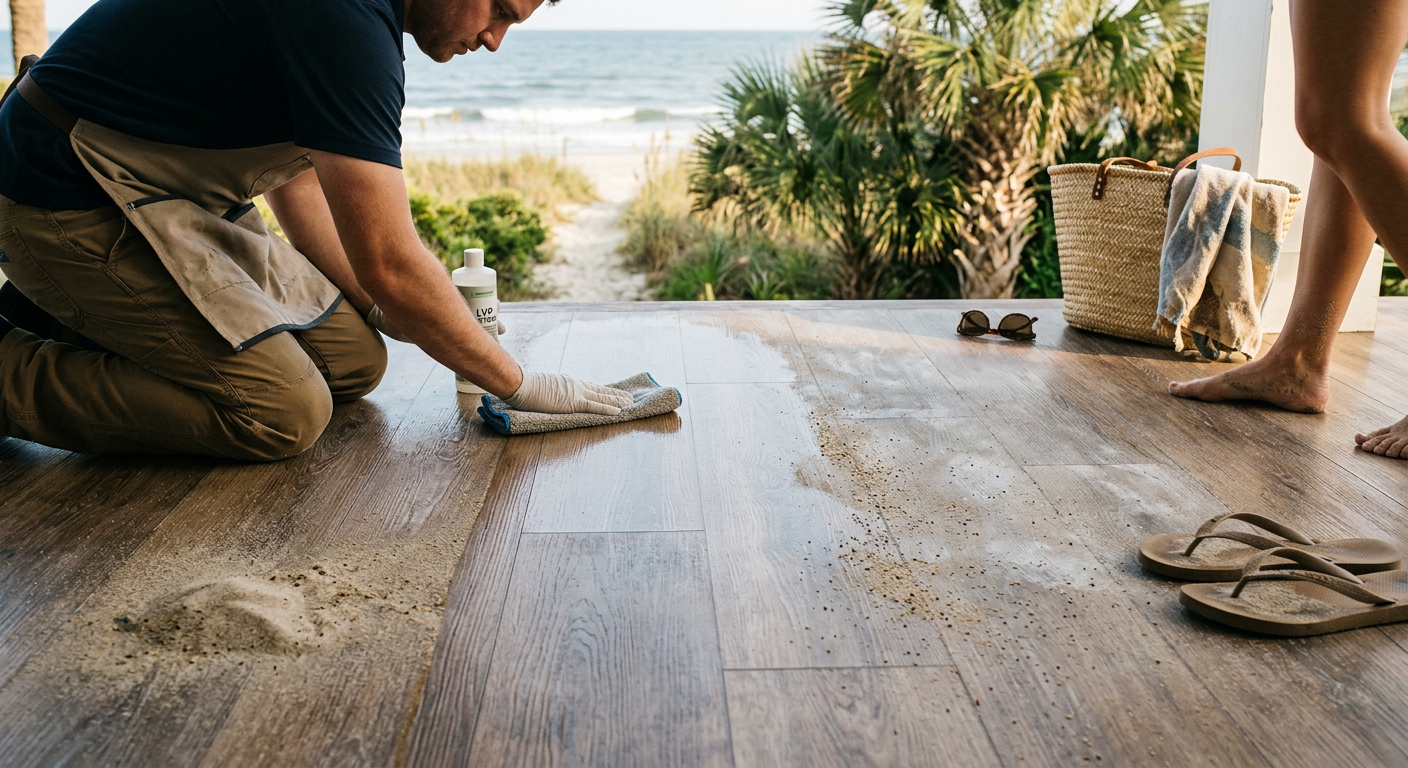
Luxury Vinyl Plank flooring has become the modern standard for homes and vacation rentals across the Grand Strand, prized for its water resistance and durability. However, the relentless combination of fine quartz sand, humid salt air, and heavy foot traffic challenges the narrative that these floors are completely indestructible. Over time, micro-abrasive sand particles grind away the wear layer, while improper cleaning agents leave behind a dull, sticky haze that traps allergens and ruins the floor's appearance. Restoring this critical home asset requires specialized knowledge of coastal elements, safe chemical chemistry, and precise extraction techniques.
The Coastal LVP Paradox: Why Waterproof Does Not Mean Sand-Proof
Many Grand Strand homeowners select Luxury Vinyl Plank flooring under the impression that it requires virtually zero maintenance beyond a quick sweep and damp mop. While LVP is exceptionally resilient against the moisture and humidity typical of oceanfront living, its polyurethane wear layer is highly vulnerable to physical abrasion. Our local beaches are composed of fine quartz sand, which easily hitches a ride on bare feet, pet paws, and beach gear, entering the home and settling into the deep texture of the planks.
Under the weight of daily foot traffic, these tiny sand grains act exactly like sandpaper, microscopic grit by microscopic grit. As family members and guests walk across the floor, they grind this silica sand into the protective wear layer, creating thousands of microscopic scratches. These tiny abrasions scatter light rather than reflecting it, which is the primary reason why high-traffic pathways in coastal living rooms, kitchens, and entryways lose their original luster and begin to look permanently dusty or worn.
Once this wear layer is compromised, the floor becomes porous, allowing dirt, airborne grease, and salt particles to lodge deep within the micro-scratches. Regular vacuuming and sweeping can no longer reach this embedded grime, turning a simple maintenance task into a frustrating, endless chore. Understanding that LVP is susceptible to physical abrasion is the first step in shifting from basic cleaning to a comprehensive preservation and restoration strategy.
Identifying the Damage: Micro-Abrasion, Salt-Haze, and Plasticizer Migration
Before addressing restoration, a coastal homeowner must learn to identify the three distinct types of damage that plague local LVP floors. The first is micro-abrasion, visible as dull paths in high-traffic zones that do not improve after standard mopping. If you run your hand across these areas, they will feel noticeably rougher than the protected areas under furniture or inside closets, signaling that the top protective factory coating has been worn away.
The second issue is salt-film haze, a chemical challenge unique to the Grand Strand environment. High indoor humidity levels cause salt-laden air to condense on cool flooring surfaces, leaving behind a microscopic saline residue. This salty film is highly hygroscopic, meaning it continuously attracts moisture from the air, creating a sticky, static-charged surface that acts like a magnet for airborne dust, pet dander, and fine sand, resulting in a persistent, cloudy film.
The third and often overlooked issue is plasticizer migration, which occurs when rubber-backed rugs, bath mats, or cheap furniture coasters react chemically with the vinyl compounds in the flooring. This chemical reaction leaves behind stubborn, dark yellow or orange stains that cannot be scrubbed away. Recognizing these specific issues prevents homeowners from using the wrong treatment methods, which can easily exacerbate the damage and void product warranties.
The DIY Pitfalls: Why Off-the-Shelf Shine Restorers and Steam Mops Ruin LVP
When faced with a dulling LVP floor, many homeowners instinctively turn to supermarket floor polishes, quick-shine formulas, or steam mops. However, these off-the-shelf quick fixes are the leading causes of permanent flooring damage in coastal climates. Most retail 'shine restorers' contain cheap acrylic polymers that lay down a soft, sticky layer over the floor, temporarily filling in micro-scratches but trapping dirty residues, sand, and salt underneath.
Within weeks, this artificial acrylic layer begins to scratch, yellow, and peel, requiring a harsh chemical stripping process to remove. Furthermore, the extreme heat and pressurized moisture generated by residential steam mops are highly destructive to LVP. The steam penetrates the tight seams between the vinyl planks, melting the underlying adhesives and causing the vinyl layers to delaminate, warp, or buckle at the edges, leading to costly structural failures.
Similarly, using harsh household chemicals like vinegar, bleach, or ammonia degrades the polyurethane wear layer over time. Vinegar is highly acidic and strips the factory finish, while bleach and high-pH detergents dry out the vinyl, making it brittle and prone to cracking under foot pressure. Safe coastal maintenance requires pH-neutral cleaning chemistry and low-moisture mechanical extraction, avoiding high heat and heavy chemical residues entirely.
The Professional Restoration Process: Deep Extraction and Protective Topcoats
A professional LVP restoration is far more advanced than a standard mop-and-bucket clean, focusing on deep dirt extraction and physical surface sealing. The process begins with a high-powered, low-moisture cylindrical brush scrubber that spins at high speeds to dig fine sand and embedded salt out of the grain of the planks. Unlike standard rotary pads, which can fling grit and cause circular scratch patterns, cylindrical brushes lift the soil vertically into a containment tank.
Next, a specialized, pH-neutral soil suspension agent is applied to emulsify grease, body oils, and salt residues without leaving a film. Once the planks are completely clean and dry, technicians inspect the floor for wear-layer damage. If the factory wear layer has been compromised, a specialized, water-based polyurethane protective sealer designed specifically for resilient luxury vinyl flooring is carefully applied.
This protective topcoat fills in the micro-scratches, restores a uniform matte or satin finish, and recreates a smooth, easily cleanable surface barrier. The sealer must be cured according to strict manufacturer specifications, protecting the floor from future sand abrasion and preventing salt haze from binding to the vinyl. This technical process extends the lifespan of the flooring by years, delaying or entirely avoiding the need for an expensive replacement.
Evaluating the Costs: DIY Cleaners vs. Professional Restoration and Replacement
When calculating the financial impact of LVP floor maintenance, homeowners must weigh the upfront costs of professional services against the long-term expenses of DIY failures and early floor replacements. Standard DIY attempts, including purchasing mop systems, specialized vacuums, and retail cleaners, generally cost between $100 and $300 annually, but do nothing to address actual wear-layer degradation or embedded sand grit.
Professional deep extraction, sanitization, and protective wear-layer restoration typically range from $1.50 to $3.50 per square foot, depending on the level of dirt build-up, room configurations, and the need for specialized topcoat sealers. For a 1,200-square-foot coastal cottage or condo, this represents an investment of approximately $1,800 to $4,200. This process completely revives the floor and reinforces it against the beach environment.
In contrast, completely replacing damaged, warped, or delaminated LVP flooring is a major capital expense. High-quality coastal-grade LVP materials, combined with professional demolition, subfloor prep, moisture-barrier installation, and plank laying, easily cost between $6.00 and $12.00 per square foot. Replacing the floors in that same 1,200-square-foot home can easily exceed $10,000, making professional restoration an incredibly cost-effective alternative.
- DIY Maintenance: $100 to $300 annually for basic tools and consumer-grade chemicals.
- Professional Deep Extraction and Neutralization: $1.50 to $2.25 per square foot.
- Professional Wear-Layer Polyurethane Restoration: $2.50 to $3.50 per square foot (includes deep cleaning and protective topcoat application).
- Full LVP Replacement: $6.00 to $12.00 per square foot (includes labor, material, subfloor preparation, and trim work).
Crucial Questions to Ask a Grand Strand Floor Restoration Specialist
Not all cleaning companies understand the unique challenges of maintaining resilient flooring in a coastal environment. When hiring a contractor to service your Grand Strand home, you must ask specific, technical questions to ensure they will not damage your investment. Avoid companies that treat vinyl flooring the same way they treat ceramic tile, as high-pressure tile cleaning tools can easily force water into LVP seams, ruining the subfloor.
Always ask if their technicians are trained in resilient floor care and what specific machinery they use. A reputable company will use low-moisture cylindrical brush scrubbers or orbital floor machines equipped with soft, micro-scrubbing pads. They should also be able to explain the pH levels of the chemicals they intend to use, demonstrating an understanding of why high-alkaline or high-acid products should never touch a vinyl floor.
Finally, inquire about their insurance coverage and any warranties offered on their protective coatings. A professional restoration team should confidently stand behind their work and provide clear, written instructions on how to maintain the newly sealed floor. If a contractor suggests using steam or high-pressure pressure washers indoors, thank them for their time and continue your search for a qualified coastal specialist.
- Do your technicians use low-moisture cylindrical brush extraction machines or traditional rotary floor pads?
- Are the cleaning solutions you use certified pH-neutral and safe for manufacturer LVP wear-layer warranties?
- How do you prevent water from penetrating the seams of the planks during the deep cleaning process?
- What type of protective sealer do you apply to worn wear layers, and what is its curing time before foot traffic can resume?
Product Safety and Eco-Friendly Coastal Cleaning Chemistry
Product safety is a primary concern for Grand Strand families, pet owners, and vacation rental hosts. Many standard commercial floor cleaners contain volatile organic compounds (VOCs), phthalates, and harsh synthetic fragrances that linger in indoor air, causing respiratory irritation. In a tightly sealed, air-conditioned beach home, these chemical vapors can quickly build up, creating an uncomfortable environment for guests and residents alike.
Furthermore, because our coastal storm water drains directly into local marshes, inlets, and the Atlantic Ocean, the environmental impact of cleaning chemicals must not be ignored. Highly alkaline strip agents and synthetic solvents can damage delicate local ecosystems if disposed of improperly. Choosing a service provider that prioritizes biodegradable, low-VOC, and phosphate-free formulas protects both your indoor air quality and our precious marine life.
Safe, modern restoration chemistry relies on natural enzyme-based soil lifters and neutral-pH water-based polyurethanes. These products provide professional-grade cleaning and sealing power without releasing toxic fumes or leaving behind harmful chemical residues that children and pets might ingest from the floor. At A2Z Cleaning & Linen Services, we strictly utilize family-safe, marine-conscious products to ensure your home remains healthy, fresh, and beautiful.
Proactive Coastal LVP Maintenance: Long-Term Protection Protocols
Once your LVP flooring has been professionally restored, implementing a daily preservation protocol is essential to maintain its beauty and prolong the life of the protective seal. The most effective line of defense against sand abrasion is a strategic walk-off mat system. Place heavy-duty, synthetic grass or rubber-backed scraper mats outside all exterior entrances, paired with soft, microfiber capture rugs immediately inside the doorways.
For daily cleaning, ditch traditional string mops and dirty water buckets, which simply redistribute sand and salty residue across the floor. Instead, utilize a dry microfiber dust mop to collect loose sand particles daily, lifting them away without dragging them across the floor. When damp mopping is necessary, use a flat-frame microfiber mop system lightly misted with a certified pH-neutral LVP cleaner, avoiding saturating the seams.
When vacuuming, always turn off the brush roll or beater bar, as the stiff nylon bristles are designed for carpets and will scratch the delicate wear layer of vinyl planks. Ensure your vacuum features soft rubber wheels, as hard plastic wheels can trap sand underneath and leave deep scratches as you move across the room. By practicing these simple, proactive habits, you can keep your floors pristine between professional maintenance visits.
Key takeaway
Preserving the beauty and durability of your coastal LVP floors requires a dedicated strategy to combat micro-sand abrasion and salt-film build-up. By avoiding damaging DIY mistakes and investing in professional, low-moisture restoration, you protect your home's value and avoid premature floor replacement costs. To schedule a professional floor evaluation for your Grand Strand property, contact A2Z Cleaning & Linen Services today at 843.800.2788.
Keep Reading
Coastal Living
The Cost of Restoring Coastal Plantation Shutters: Managing Salt-Damp Warping, Sand-Grit Louver Friction, and Material-Safe Chemistry in Grand Strand Homes
ReadCoastal Living
The Cost of Restoring Coastal Tile and Grout: Managing Oceanfront Alkaline Crusts, Humidity-Driven Mildew, and Penetrating Sealers in Grand Strand Homes
ReadCoastal Living
The Cost of Coastal Upholstery and Mattress Restoration: Fabric Safety, Dry Times, and Vetting Grand Strand Professionals
ReadReady for a spotless property?
Call 843.800.2788 or request a free quote from A2Z Cleaning & Linen Services.