Coastal Living
The Cost of Restoring Coastal Engineered Quartz Countertops: Mitigating Resin Yellowing, Chemical Etching, and Hard-Water Mineral Haze in Grand Strand Homes
Discover the true costs of restoring engineered quartz countertops damaged by coastal sun, salt, and improper cleaners, and learn safe, professional care strategies.
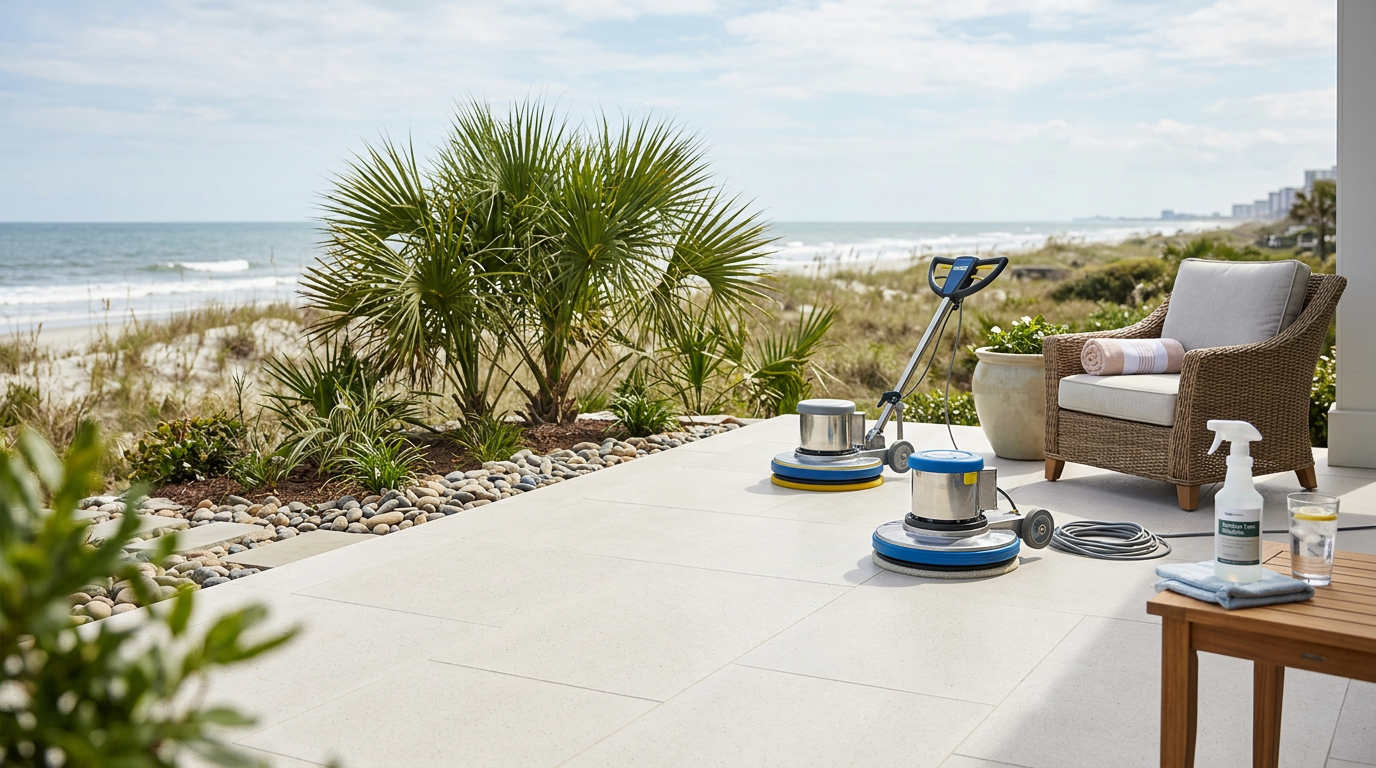
Engineered quartz has long been marketed as a virtually indestructible countertop material, making it a highly popular choice for modern kitchens and bathrooms across the Grand Strand. However, our unique coastal environment—characterized by intense ultraviolet exposure, salt-laden humidity, and hard municipal water—presents distinct challenges that can quickly degrade these high-end surfaces. When engineered stone is subjected to improper cleaning chemicals or harsh coastal elements, the polymer resins that bind the quartz particles together can yellow, etch, or develop a stubborn, cloudy mineral haze. Understanding the science behind quartz degradation, the true costs of professional restoration, and the exact steps to preserve your investment is essential for every Grand Strand homeowner.
The Vulnerability of Coastal Quartz: Resin, UV Rays, and Salt-Air Humidity
To understand why engineered quartz degrades in coastal environments, one must first understand its composition. Unlike solid natural stone slabs, engineered quartz is a composite material typically made of roughly ninety percent crushed natural quartz bound together with ten percent acrylic or polyester resins and pigments. While the quartz itself is highly durable, the polymer resins that hold it together are highly sensitive to environmental factors. In oceanfront properties and sunlit Grand Strand homes, intense UV radiation passing through large glass windows heats these resins, triggering a chemical process called photo-degradation that gradually turns white or light-gray countertops a dull, yellow hue.
Furthermore, our coastal atmosphere is saturated with microscopic salt-air particles. When windows are opened to enjoy the ocean breeze, this salty air settles on kitchen and bathroom surfaces, attracting ambient humidity. As the moisture evaporates under indoor air conditioning or direct sunlight, it leaves behind microscopic sodium chloride crystals. If these abrasive crystals are not neutralized and removed with the correct techniques, they act as tiny magnifying lenses that concentrate solar heat onto the resin binders, accelerating the discoloration and breakdown of the countertop's protective factory finish.
Hard water from local Grand Strand aquifers compounded by salt-air condensation creates a secondary threat: a persistent mineral crust. When tap water splashes onto the quartz surface near sinks and is left to air-dry, calcium and magnesium ions bind tightly to the polymer resin. This creates a cloudy, rough texture that cannot be simply wiped away. Homeowners often mistake this hard-water buildup for dirt or grease, leading them to use aggressive, incorrect cleaning methods that ultimately lock in the damage and ruin the polished stone aesthetic.
The Chemistry of Damage: How Common Cleaners Etch and Dull the Surface
When faced with stubborn salt crusts, hard-water stains, or food residues, many homeowners reach for standard household cleaning agents. Unfortunately, the chemical composition of many retail cleaners is highly destructive to the resin binders in engineered quartz. High-pH alkaline chemicals, such as concentrated chlorine bleach (which has a pH of around twelve to thirteen), chemically attack the polyester or acrylic resins. Over time, regular exposure to bleach strips away the ultra-smooth factory polish, leaving the quartz surface dull, porous, and highly susceptible to permanent staining from common ingredients like red wine, coffee, or tomato sauce.
Conversely, highly acidic cleaners are equally damaging to engineered stone. Popular DIY cleaning solutions involving white vinegar (acetic acid with a pH of around two to three) or lemon juice can slowly dissolve the polymer matrix over months of repeated use. While natural quartz crystals are acid-resistant, the surrounding resin binders are not. Once the acid weakens these binders, microscopic pockets open up across the countertop surface, creating a hazy, etched appearance that catches the light and reveals a patchy, uneven gloss level.
Abrasive cleaning powders, cream cleansers, and heavy-duty scouring pads pose an immediate physical threat to quartz countertops. Because the resin binders are significantly softer than the quartz mineral itself, these abrasive agents create microscopic scratches across the surface. These micro-scratches destroy the light-reflecting properties of the stone, turning a high-gloss finish into a dull, matte eyesore. Once these microscopic scratches are carved into the resin, they act as tiny traps for dirt, oils, and bacteria, making the countertop increasingly difficult to keep sanitary.
DIY Maintenance: Safe, pH-Neutral Protocols for Daily Coastal Care
Protecting your engineered quartz countertops from coastal elements does not require expensive, highly complex chemicals; instead, it demands consistent, gentle, and chemically appropriate care. The gold standard for daily quartz maintenance is a simple, pH-neutral solution. Homeowners can safely clean their countertops using a few drops of mild, dye-free dish soap mixed with warm, clean water, or a specialized stone cleaner explicitly labeled as safe for engineered quartz. This mild mixture effectively emulsifies kitchen grease and lifts salt deposits without altering or degrading the sensitive polymer resins.
The application method is just as critical as the cleaning solution itself. Always use clean, high-quality microfiber cloths rather than paper towels or standard cotton rags. Microfiber is uniquely structured to grab and lift microscopic salt crystals and sand particles off the stone, rather than dragging them across the surface and causing micro-abrasions. For stubborn, dried-on food spills, avoid the temptation to scrape the surface with metal knives or abrasive scrub sponges. Instead, saturate a microfiber cloth with warm, soapy water, lay it over the spill for five to ten minutes to soften the residue, and then gently wipe it away.
To combat the accumulation of hard-water minerals around sinks, get into the habit of drying the countertop immediately after use. Keeping a dedicated dry microfiber cloth near the sink allows family members and guests to quickly wipe away standing water before the minerals can precipitate and bind to the resin. If minor mineral haze does begin to form, a specialized, non-abrasive quartz-safe descaler can be used sparingly, provided it is immediately rinsed thoroughly with clean water and buffed completely dry to ensure no chemical residue is left behind to react with sunlight.
- Use only pH-neutral liquid soaps or specialized quartz-safe daily cleaners.
- Always clean with premium microfiber cloths to lift salt and sand without scratching.
- Never use bleach, ammonia, vinegar, oven cleaners, or highly acidic formulas.
- Saturate and soften dried residues rather than scraping with sharp or abrasive tools.
- Dry sink surrounds immediately to prevent local municipal minerals from binding to the resin.
The True Cost of Professional Restoration vs. Replacement
When engineered quartz suffers from severe UV yellowing, chemical etching, or extensive mineral haze, daily cleaning methods will no longer suffice. At this stage, homeowners must choose between professional surface restoration and total countertop replacement. Understanding the financial reality of both options is key to making an informed decision. In the Grand Strand area, completely replacing kitchen countertops—including material costs for new slabs, template creation, fabrication, old countertop demolition, plumbing reconnection, and installation—typically ranges from $4,000 to $9,500, depending on the kitchen size and the specific quartz brand selected.
In contrast, professional quartz restoration is a highly specialized process that costs a fraction of total replacement, provided the structural integrity of the slabs remains intact. For minor chemical etching, surface stain removal, and the extraction of widespread hard-water mineral haze, professional stone technicians generally charge between $450 and $1,200. This service typically includes deep chemical decontamination, mechanical honing, and precision polishing to bring back the stone's original luster without the dust, mess, and disruption of a major kitchen demolition.
For severe cases of resin yellowing from UV exposure or deep chemical burns caused by improper commercial cleaning products, the restoration process becomes more labor-intensive. Technicians must use specialized diamond abrasive pads to carefully shave away a micro-layer of the damaged resin before progressively rebuilding the factory shine. This advanced restoration service can run from $1,200 to $2,500. While more expensive than a basic surface polish, it still saves homeowners thousands of dollars and avoids landfill waste, making it a highly cost-effective and environmentally conscious choice.
Professional Restoration Methods: Honing, Polishing, and UV Stabilizers
Professional restoration of engineered quartz is a precise science that differs significantly from natural stone restoration. Because quartz contains polymer resins, traditional dry-polishing techniques cannot be used. Dry-polishing generates high friction heat, which will instantly melt or burn the resin binders, leaving permanent, dark scorch marks. Professional technicians utilize specialized, low-RPM wet-polishing machines equipped with continuous water-feed systems. This water acts as a lubricant and coolant, keeping the countertop temperature low while the abrasives work on the surface.
The process begins with diamond-impregnated honing pads. If the countertop has deep scratches, acid etches, or severe mineral scale, the technician will start with a lower-grit diamond pad (typically 200 to 400 grit) to gently grind down the damaged top layer of resin. They then systematically step up through progressively finer grits—800, 1500, and up to 3000 grit—to smooth out the stone and erase the micro-scratches left by the previous steps. This progressive honing process slowly rebuilds the smooth, light-reflective surface of the engineered stone.
Once the honing is complete, a specialized, non-hazardous quartz polishing compound is applied using a soft buffing pad. This compound works chemically and physically with the resin to restore the original high-gloss or satin factory finish. To protect the newly restored surface from the harsh Grand Strand sun, advanced restoration protocols often conclude with the application of a topical, breathable UV-inhibiting shield. This specialized treatment bonds to the polymer resins, helping to filter out damaging ultraviolet rays and significantly slowing down the yellowing process in sun-drenched coastal rooms.
What to Ask a Grand Strand Cleaning Company Before They Touch Your Quartz
If you rely on a professional residential cleaning service or vacation rental turnover company in the Myrtle Beach area, it is imperative to vet their knowledge regarding engineered stone care. Many cleaning crews are trained to use multi-surface disinfectants or heavy-duty degreasers to speed up their cleaning processes. However, these quick-fix chemicals are often highly alkaline or contain harsh solvents that can ruin your quartz countertops over time. Before hiring a company or letting a crew enter your home, ask them specifically about their stone care training and protocols.
Inquire about the exact chemicals they carry in their cleaning caddies. A reputable, professional service will gladly provide a list of their preferred products or agree to use your household's approved, pH-neutral quartz cleaners. Ask if their technicians are trained in color-coded microfiber systems. Color-coding ensures that the microfiber cloths used to scrub bathrooms or clean sandy floors are never cross-contaminated and used on your delicate kitchen quartz, which could transfer abrasive salt, sand, and harsh acidic or bleach-based residues onto your kitchen surfaces.
Finally, ensure the cleaning company is fully licensed, bonded, and carries comprehensive liability insurance. Ask if their policy covers accidental property damage specifically related to surface restoration or chemical damage. A professional company that understands the value and sensitivity of high-end coastal materials will have no hesitation in providing proof of coverage and detailing their technician training standards. For premier care, contacting a specialized team like A2Z Cleaning & Linen Services at 843.800.2788 ensures your coastal surfaces are maintained using industry-standard, surface-safe protocols.
- Do your cleaning technicians receive specific training on engineered stone and quartz care?
- What is the exact pH of the daily cleaner your team will use on my kitchen countertops?
- Do you use a color-coded microfiber system to prevent cross-contamination and abrasive scratching?
- Can you provide a list of the specific cleaning chemicals your team plans to use in my home?
- Is your company fully insured to cover the accidental chemical etching or damage of stone surfaces?
Key takeaway
Maintaining the beauty and longevity of engineered quartz countertops in the Grand Strand requires a dedicated departure from harsh, generic cleaning products in favor of gentle, pH-neutral, and UV-conscious care. While coastal elements like salt-air and hard water pose continuous threats to the sensitive polymer resins, consistent daily dry-wiping and professional restoration when needed can save homeowners thousands of dollars compared to countertop replacement. For expert guidance or to schedule a professional, surface-safe cleaning for your coastal home, reach out to A2Z Cleaning & Linen Services at 843.800.2788.
Keep Reading
Coastal Living
Defeating the Salt-Air Film: How to Protect Grand Strand Home Interiors
ReadCoastal Living
The Coastal Kids' Toy Bin and Beach-to-Playroom Asset Decontamination Protocol: Mitigating Humid Saliva Biofilms, Pet-Dander Adhesion, and Sand-Friction Scratches in Grand Strand Homes
ReadCoastal Living
The Grand Strand Family Beach-Dog Entryway and Paw-Wiping Station Protocol: Mitigating Salt-Yeast Odors, Wet-Fur Dander, and Sand-Silt Tracking
ReadReady for a spotless property?
Call 843.800.2788 or request a free quote from A2Z Cleaning & Linen Services.