Coastal Living
The Cost of Restoring Coastal Glass Shower Enclosures: Heavy Mineral Scale, Etching Prevention, and Professional Vetting for Grand Strand Homeowners
Discover the costs, chemistry, and safety protocols of restoring hard-water damaged shower glass in Myrtle Beach, including key vetting questions for local homeowners.
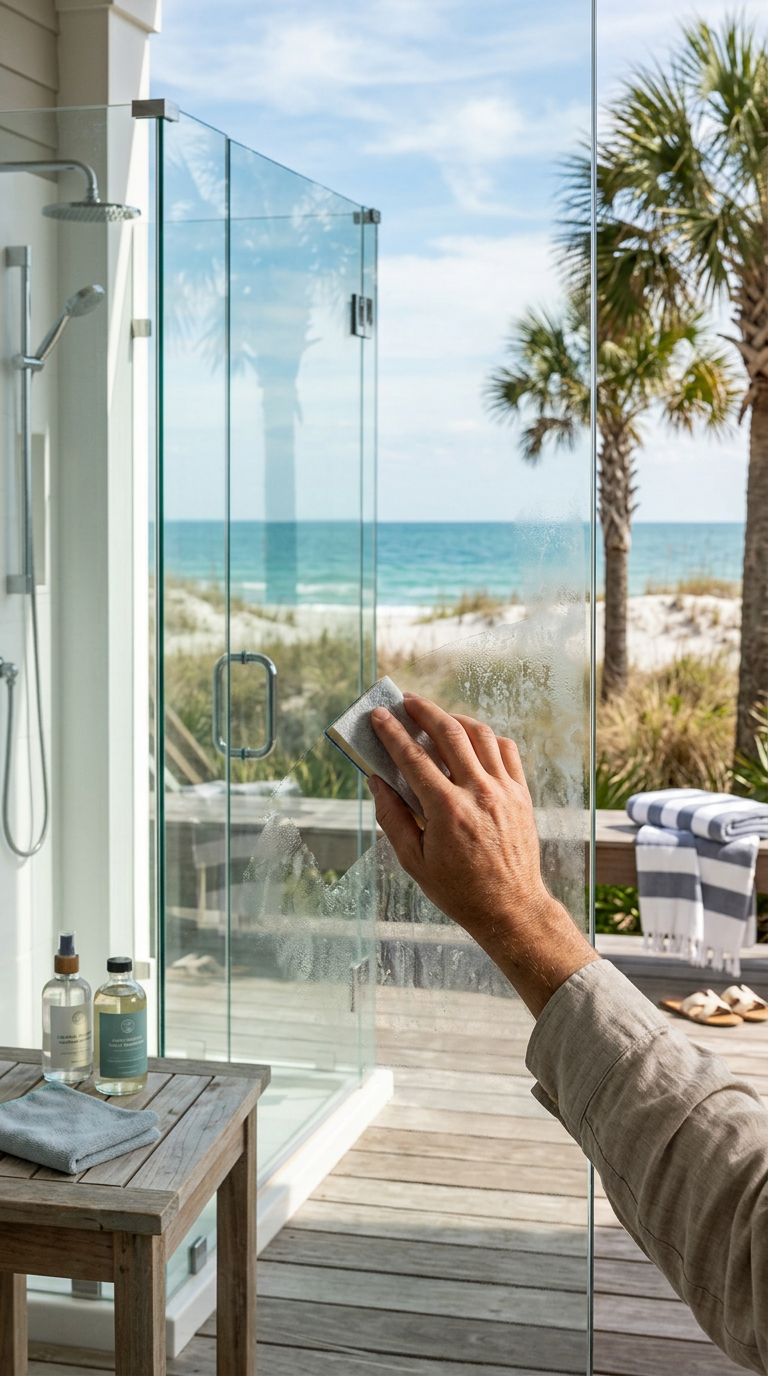
In coastal South Carolina, we pride ourselves on pristine ocean views, but we often overlook the stubborn mineral haze developing on our bathroom glass. Myrtle Beach and the broader Grand Strand feature municipal and private water systems that carry high concentrations of dissolved minerals, specifically calcium carbonate and magnesium. Combined with the high indoor humidity of our subtropical climate, these minerals bake onto frameless glass shower enclosures, creating an unsightly white film that standard cleaners cannot remove. This guide from A2Z Cleaning & Linen Services (843.800.2788) explains the chemistry of this scale, the realistic boundaries of DIY cleaning, professional restoration costs, and how to safely vet a local service provider.
The Chemistry of Coastal Hard Water and Glass Etching
Water throughout Horry and Georgetown counties often carries high levels of dissolved minerals that remain on bathroom surfaces long after the moisture evaporates. When a shower runs, mist settles on the glass, and as the high coastal humidity slowly dries, it leaves behind microscopic deposits of calcium and magnesium. Over time, these mineral deposits build up layer by layer, forming a tenacious alkaline crust.
The real danger to your shower glass is not just the cosmetic eyesore; it is the chemical process known as glass etching. Glass is not completely smooth; under a microscope, it is full of tiny pits and valleys. When alkaline minerals sit in these valleys, they slowly react with the silica in the glass, causing chemical leaching that permanently alters the glass structure.
Once this chemical reaction progresses past a certain point, the glass is no longer just dirty; it is physically damaged. This is known as Stage Two corrosion, characterized by a dull, pearlescent haze that does not change appearance even when wet. Understanding this distinction is critical for Grand Strand homeowners, as simple cleaning solutions cannot reverse physical structural damage to glass.
DIY vs. Professional Restoration: Where is the Boundary Line?
For light, daily mineral accumulation—often called Stage One scale—homeowners can successfully manage restoration using mild household acids. Distilled white vinegar (acetic acid) or fresh lemon juice can break down the weak ionic bonds of young calcium deposits. When paired with a non-scratch scrub pad specifically rated for glass, these DIY methods are highly effective and safe.
However, once the scale has baked on through months of hot, humid showers, typical retail products often fall short. Heavy-duty store-bought cleaners frequently contain harsh abrasives or strong acids that can permanently scratch glass if applied with too much pressure. If your glass remains cloudy even after a thorough scrub with vinegar and baking soda, you have crossed into professional territory.
Professional technicians do not rely on brute force; they utilize mechanical polishing systems equipped with variable-speed rotary polishers and specialized rare-earth compounds like cerium oxide. These compounds chemically react with the glass surface at a microscopic level, gently shaving off damaged silica layers and restoring optical clarity. Attempting this level of mechanical polishing without proper training can result in permanent swirl marks or shattered panes.
Understanding Professional Cost Structures in the Grand Strand
When budgeting for glass shower restoration in the Myrtle Beach area, homeowners should expect pricing to scale based on the severity of the mineral damage and the size of the enclosure. A standard restoration project for a typical three-sided frameless glass shower with moderate scale accumulation generally ranges from $250 to $450. This cost covers chemical mineral extraction, deep mechanical polishing, and the application of a baseline protective sealer.
If the glass has progressed to severe Stage Two etching, the restoration process becomes significantly more labor-intensive, often requiring multiple rounds of compounding. In these advanced cases, restoration costs can range from $500 to $800. While this may seem high, it is a fraction of the cost of replacing custom frameless glass, which routinely runs between $1,500 and $3,500 in our local coastal market.
Homeowners should be wary of extremely low-cost bids, such as those under $100. Cheap services often bypass the necessary mechanical polishing steps, instead applying temporary silicone-based cover-ups that wash away after a few showers, exposing the unresolved cloudiness beneath. True restoration requires technical precision, professional-grade equipment, and dedicated labor hours that local professional rates reflect.
- Light Scale Treatment ($150 - $250): Best for light cloudiness; includes chemical mineral extraction and baseline sealant application.
- Moderate Scale Restoration ($250 - $450): Recommended for noticeable mineral build-up; includes chemical extraction, light rotary polishing, and high-grade sealant.
- Heavy Stage Two Restoration ($500 - $800): Necessary for deeply etched glass; includes multi-stage mechanical rotary compounding and long-term hydrophobic nano-coating.
- Complete Replacement Comparison ($1,500 - $3,500+): The average cost of purchasing and installing a brand-new custom frameless glass enclosure on the Grand Strand.
Key Questions to Ask a Professional Restorer
Before hiring a company to restore your coastal shower glass, it is essential to vet their technical expertise and operational protocols. A professional team should be able to explain their restoration method in clear, non-evasive terms, detailing whether they rely on chemical extraction, mechanical polishing, or a hybrid of both. Ask them specifically if they can guarantee the removal of Stage One scale and how they evaluate Stage Two etching.
Additionally, you must confirm that the company carries comprehensive liability insurance and specialized care coverage. Glass restoration involves high-torque machinery operating near delicate tile, expensive plumbing fixtures, and fragile glass panels. A reputable Grand Strand provider will readily provide proof of insurance and explain their protocols for protecting your bathroom's surrounding materials during the restoration process.
Finally, ask about the longevity of the protective sealers they apply post-restoration. A high-quality professional restoration should always conclude with the application of a hydrophobic protective barrier to prevent immediate re-scaling. Ask the provider what specific product they use, how long the coating is expected to last under local water conditions, and what maintenance steps you must follow to keep the warranty intact.
- Are your technicians trained in mechanical rotary glass polishing, or do they rely solely on chemical acids?
- Do you carry specific liability and property damage insurance that covers glass scratch restoration and surrounding stone surfaces?
- How do you protect my adjacent bathroom materials, such as natural marble, travertine tile, and delicate metal fixtures?
- What type of protective sealer do you apply after restoration, and what is its realistic lifespan under local water conditions?
Chemical and Product Safety: Avoiding Acid Damage to Surrounding Stone and Metals
The chemistry required to dissolve stubborn calcium carbonate is inherently aggressive, typically requiring low-pH acidic solutions. While these acids are highly effective at breaking down mineral scale on glass, they pose a severe threat to other common bathroom surfaces. If overspray or runoff contacts natural stone tile like marble, travertine, or limestone, it will immediately etch the calcium-rich stone, leaving permanent dull spots.
Metal fixtures are equally vulnerable to chemical damage during glass cleaning. Modern bathroom hardware, including oil-rubbed bronze, brushed nickel, and matte black fixtures, often features delicate anodized or powder-coated finishes. Strong acids or harsh alkaline runoffs can chemically strip these finishes, causing unsightly discoloration, pitting, or peeling that cannot be polished out.
Safe restoration protocols require meticulous masking and containment. Professional technicians take the time to tape off all metal hinges, handles, and adjacent tile grout lines using chemical-resistant tapes and plastic sheeting. When performing DIY maintenance, always apply cleaners directly to your cleaning cloth or sponge rather than spraying them onto the glass to prevent airborne droplets from settling on vulnerable surrounding materials.
- Protect natural stone: Cover all surrounding marble, granite, slate, and travertine with heavy plastic sheeting and low-tack painter's tape.
- Shield delicate metals: Mask anodized aluminum, matte black, and brass hardware to prevent chemical pitting and peeling from acidic overspray.
- Ensure ventilation: Run the bathroom exhaust fan and open nearby windows to safely clear chemical fumes and aerosolized moisture.
- Apply cleaner indirectly: Spray acidic solutions directly onto a microfiber sponge rather than misting the glass to avoid airborne drift.
Hydrophobic Barriers: Post-Restoration Preventative Maintenance
Once your shower glass is successfully restored to its original optical clarity, the immediate priority is protecting that vulnerable surface from future mineral attacks. This is achieved through the application of a hydrophobic (water-repelling) barrier. These coatings fill the microscopic valleys of the glass, creating an ultra-smooth, high-surface-tension plane that forces water to bead up and slide off rather than pool and dry.
There is a wide spectrum of hydrophobic coatings available, ranging from consumer-grade spray-ons to professional-grade nano-ceramic coatings. Consumer products are affordable and easy to apply but typically degrade within a few weeks, requiring frequent reapplication. Professional-grade covalent-bonding coatings, however, chemically fuse with the silica in the glass, providing robust protection that can last from three to five years with minimal maintenance.
Investing in a professional hydrophobic coating post-restoration dramatically reduces your weekly cleaning labor. Instead of scrubbing at hardened mineral crusts, you only need to wipe away loose surface water. These coatings do not make the glass self-cleaning, but they prevent minerals from chemically bonding with the glass, keeping future scale entirely on the surface where it can be wiped away with ease.
Structuring a Daily Maintenance Protocol to Avoid Re-Scaling
Maintaining pristine shower glass in our humid Grand Strand climate does not require hours of labor; it requires consistency. The single most effective tool in your maintenance arsenal is a high-quality silicone-blade squeegee. By taking thirty seconds after every shower to pull water droplets off the glass, you physically remove the dissolved minerals before they have a chance to evaporate and bond to the surface.
Following your squeegee run, a quick wipe down of the glass edges and corners with a clean, dry microfiber cloth will prevent water from pooling near the metal tracks or silicone seals. This prevents the dark mold and mildew growth that thrives in the high-humidity microclimates of coastal bathrooms. Store your squeegee and microfiber cloth inside the shower enclosure to keep the routine convenient and seamless.
Finally, integrate a mild, pH-neutral daily shower spray once or twice a week. These gentle formulations work to break down soap scum and body oils before they can form a sticky matrix that traps mineral scale. By combining a reliable squeegee routine with a protective hydrophobic coating, you can permanently break the cycle of scale accumulation and preserve your beautiful coastal views for years to come.
- Daily Squeegee: Spend thirty seconds after every shower pulling water off the glass from top to bottom.
- Microfiber Corner Wipe: Run a dry microfiber cloth along the metal tracks, hinges, and silicone seals to prevent mold and pooling.
- Weekly pH-Neutral Spray: Use a gentle, eco-friendly shower spray to dissolve body oils and soap scum before they trap new minerals.
- Monthly Water Bead Test: Spray water on the glass; if it sheets instead of forming tight, round beads, your protective coating needs a refresh.
Key takeaway
Restoring coastal glass shower enclosures requires an understanding of the mineral chemistry unique to the Grand Strand. By knowing when to transition from DIY cleaning to professional mechanical polishing, and by asking the right vetting questions regarding stone safety and liability, homeowners can successfully protect their investments. To schedule a professional assessment of your shower glass, contact A2Z Cleaning & Linen Services at 843.800.2788.
Keep Reading
Coastal Living
The Cost of Restoring Coastal HVAC Supply Grilles and Register Surrounds: Mitigating Condensation Rust, Mildew Spores, and Paint Peeling in Grand Strand Homes
ReadCoastal Living
The Cost of Restoring Coastal Natural-Fiber Rugs: Jute, Sisal, and Seagrass Cleaning Chemistry and Professional Vetting for Grand Strand Homeowners
ReadCoastal Living
The Cost of Restoring Coastal Plantation Shutters: Sun-Baked Salt, Tension Mechanics, and Safe Chemistry for Grand Strand Homeowners
ReadReady for a spotless property?
Call 843.800.2788 or request a free quote from A2Z Cleaning & Linen Services.