Coastal Living
The Cost of Restoring Coastal HVAC Supply Grilles and Register Surrounds: Mitigating Condensation Rust, Mildew Spores, and Paint Peeling in Grand Strand Homes
Discover the costs, chemical safety standards, and step-by-step restoration protocols for sweating, rusted HVAC registers in the high-humidity Grand Strand climate.
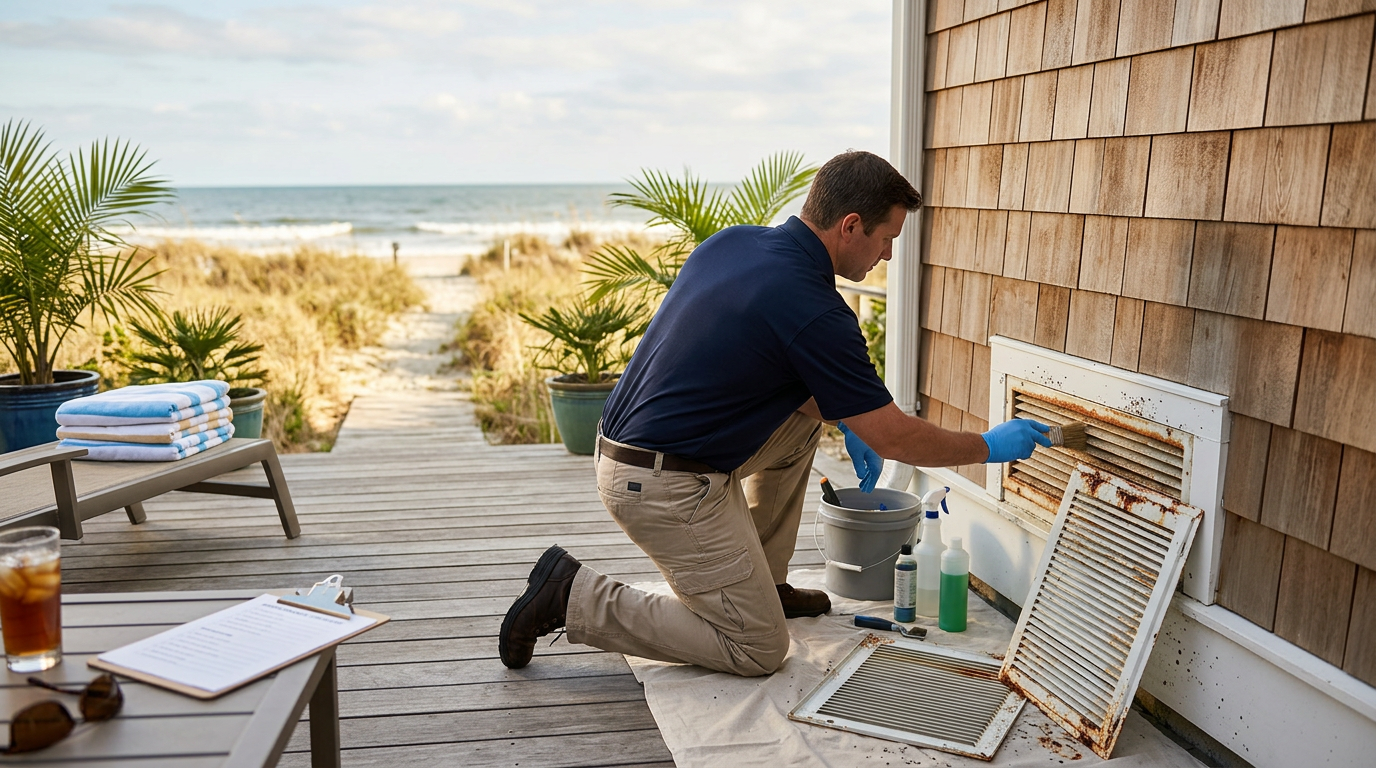
In the high-humidity environment of Myrtle Beach and the surrounding Grand Strand, residential HVAC systems work under intense mechanical stress for most of the year. When chilled air passing through metal supply ducts collides with warm, humid indoor air, condensation inevitably forms on the exterior surfaces of metal supply grilles and register surrounds. Over time, this constant dampness leads to pitting rust, unsightly bubbling paint, and localized mold colonization on the surrounding drywall. This guide breaks down the true costs of restoration, provides a clear DIY-versus-professional decision framework, and explains the chemistry required to clean these delicate systems safely.
The Anatomy of Coastal Vent Sweat: Why Grand Strand Grilles Fail
The primary driver of HVAC register degradation in coastal homes is a physical phenomenon known as sweating, which occurs when the surface temperature of the metal register drops below the dew point of the surrounding room air. In the Grand Strand, outdoor relative humidity frequently hovers above eighty percent, and even minor air leaks around windows or doors can elevate indoor humidity levels. When warm, moisture-laden air contacts the ice-cold steel of an active supply vent, water droplets instantly precipitate on the louvers, creating a persistent micro-environment of standing water.
This moisture is highly destructive because of the airborne salt aerosols characteristic of our coastal strip. Sodium chloride particles carried by ocean breezes easily infiltrate indoor spaces through open doors and fresh air intakes, settling directly into the condensation on your HVAC vents. This salty water forms an aggressive electrolyte solution that accelerates the galvanic corrosion of steel grilles, bypassing cheap factory paint coatings and eating into the underlying iron to produce expanding orange rust.
Furthermore, this damp, salt-dusted metal surface acts as a highly effective trap for household dust, pet dander, and microscopic organic debris. Because dust contains cellulose and skin cells, it provides an abundant food source for mold and mildew spores. Within days of continuous condensation, these spores germinate, colonizing the dust layers on the register louvers and spreading outward to the porous paper backing of the adjacent ceiling or wall drywall.
DIY vs. Professional Restoration: Assessing the Damage Threshold
Determining whether to tackle rusted and moldy HVAC grilles yourself or hire a professional service comes down to a realistic assessment of the depth of the damage. If your registers exhibit only light, superficial orange speckling and dusty buildup that wipes away easily with a damp cloth, this is a highly manageable DIY project. Homeowners can safely remove the grille plates, wash them outdoors, apply a rust-blocking primer, and reinstall them with basic household tools.
However, when rust has progressed to deep pitting, metal scaling, or flaking, the structural integrity of the louvers is compromised. Attempting to scrub heavily scaled metal often snaps the delicate directional louvers, making manual restoration impossible. Additionally, if you observe black or green powdery rings spreading onto the drywall surrounding the register, the mold has likely penetrated the gypsum core of the wallboard, requiring professional containment and structural remediation.
The physical risks of improper DIY removal must also be considered. If a rusted register has become bonded to the ceiling paint, pulling on it without carefully scoring the perimeter can tear large chunks of drywall paper away, escalating a simple cleaning job into a costly plaster repair. Professionals use specialized precision cutting tools, HEPA-filtered vacuum containment systems, and gentle release agents to decouple stuck vents without causing structural damage.
- DIY-appropriate: Superficial dust, light cosmetic rust speckling, and intact paint coatings.
- Professional-required: Deep metal pitting, bubbling drywall paint, visible mold rings, or sagging ceiling plaster.
- Critical risk: Spreading airborne mold spores throughout the active ductwork during aggressive dry scrubbing.
- Containment check: Professionals isolate the work zone to prevent rust flakes and spores from dropping onto furniture.
The Danger of Common Chemical Mistakes: Why Bleach and Acid Cleaners Fail
When confronted with ugly black mold and rust stains on ceiling vents, many homeowners instinctively reach for chlorine bleach or harsh acid-based rust removers. This is a critical chemical error that often destroys the metal components and worsens indoor air quality. Chlorine bleach is highly corrosive to metals because the active sodium hypochlorite compound aggressively oxidizes galvanized steel and aluminum, initiating a rapid rust cycle that is far more destructive than the original moisture damage.
Furthermore, bleach is an inefficient mold killer on porous materials like the drywall surrounding your registers. Because bleach has a high surface tension, its water content penetrates the drywall paper to feed the mold roots, while the active chlorine remains on the surface, evaporating rapidly and releasing toxic chloramine gases into your breathing zone. Acidic cleaners, on the other hand, can strip away the zinc galvanization layer on steel grilles, leaving the bare iron completely defenseless against coastal salt air.
Safe restoration chemistry relies on pH-neutral surfactants and botanical disinfectants that physically loosen organic grime without attacking the underlying metal. Chelating agents, which bind to metal oxides and dissolve rust at a molecular level without acidic degradation, should be used for rust removal. For sanitization, thymol-based botanical disinfectants provide EPA-certified spore-killing power without introducing volatile organic compounds (VOCs) or corrosive residues into your home's forced-air stream.
Step-by-Step DIY Restoration Protocol for Mild Cases
If your registers are suitable for DIY restoration, begin by turning off your HVAC system entirely to prevent loose dust and debris from being drawn into the return ducts or blown into the living space. Put on a high-filtration mask (such as an N95 respirator) and safety glasses. Lay a heavy drop cloth directly beneath the vent to catch any falling rust scales or dust clods, and carefully score the outer painted edge of the grille with a utility knife to break any paint seal with the wall.
Slowly back out the mounting screws, holding the grille firmly so it does not fall and damage flooring. Once removed, submerge the metal grille in a warm bath of water mixed with a mild, grease-cutting dish soap. Use a medium-stiff nylon brush to scrub away dust, grease, and loose rust flakes, avoiding wire brushes which can scratch the remaining intact powder coating. Rinse the register thoroughly with clean water and dry it immediately with a lint-free towel to prevent flash rusting.
To address remaining rust spots, apply a paste of baking soda and water or a specialized, non-acidic rust converter directly to the oxidized areas. Let it sit for twenty minutes before scrubbing gently with a non-scratch abrasive pad. Once the metal is completely clean and dry, apply a thin coat of rust-inhibiting metal primer, followed by two light coats of satin-finish spray paint designed for metal. Allow the paint to cure fully for twenty-four hours before screwing the register back into place.
Understanding the Real Costs of Professional Restoration and Replacement
When hiring a professional service to restore or replace sweating registers along the Grand Strand, pricing varies significantly based on height, accessibility, and the extent of material decay. A straightforward professional deep cleaning, disinfection, and re-sealing of a standard-sized HVAC register typically ranges from forty-five to ninety-five dollars per unit. This service generally includes removing the grille, sanitizing the interior duct boot, applying botanical anti-microbial treatments, and re-mounting.
If the drywall surrounding the register has suffered mold damage and requires structural restoration, the costs escalate. Homeowners should expect to pay between one hundred fifty and four hundred dollars per register location for professional drywall cut-outs, mold remediation, plaster patching, and color-matched painting. This price reflects the multiple visits required to allow plaster joint compound and paint coats to dry completely under humid coastal conditions.
In cases of severe corrosion, physical replacement of the register is often more cost-effective than labor-intensive metal refinishing. Standard stamped-steel grilles are inexpensive, costing between fifteen and thirty dollars for the part alone. However, replacing them with commercial-grade, rust-proof powder-coated aluminum or polymer grilles—which are highly recommended for oceanfront properties—will cost between forty and eighty-five dollars per register in material costs, plus labor.
- Standard cleaning & sanitizing: $45 to $95 per register.
- Drywall repair & paint patching: $150 to $400 per damaged location.
- Stamped-steel replacement part: $15 to $30 (high rust vulnerability).
- Rust-proof polymer or aluminum replacement: $40 to $85 (recommended for coastal longevity).
Critical Questions to Ask a Professional Cleaning Service
Before hiring a local cleaning or restoration company to address your HVAC registers, it is vital to screen them to ensure they follow safe, industry-standard practices. Many standard house-cleaning services will simply wipe the exterior of a rusty vent with a damp rag, which cosmeticizes the problem while leaving mold spores active inside the duct joint. Ask the provider specifically if they remove the registers from the wall or ceiling to clean both sides, as true decontamination cannot occur while the grille remains mounted.
Inquire about their dust and allergen containment protocols. A reputable professional firm will use HEPA-filtered extraction vacuums placed directly at the register mouth during removal to capture falling rust flakes, dust mites, and fungal spores before they drift into your indoor air. They should also be able to provide the Safety Data Sheets (SDS) for any chemical rust convertors, biocides, or paints they plan to apply inside your living space, confirming they are low-VOC and safe for forced-air systems.
Finally, ask if their technicians are trained to inspect the connection between the drywall and the underlying metal duct boot. This connection is the single most common failure point for condensation. If the gap between the metal boot and the drywall is not sealed, hot, humid attic or wall-cavity air will draw into the room right around the register frame, causing continuous sweating regardless of how clean the metal is kept.
Long-Term Prevention: Breaking the Moisture-Rust Cycle
Restoring your HVAC grilles to pristine condition is only a temporary fix if you do not address the underlying moisture mechanics that cause condensation in the first place. The most effective long-term preventative measure is sealing the gap between the sheetrock and the metal duct boot. Using a high-quality silicone caulk or professional foil-faced mastic tape, seal this perimeter completely to prevent humid, unconditioned air from escaping the ceiling cavity and contacting the cold register.
Controlling indoor relative humidity is equally critical. In the Grand Strand, keeping indoor humidity below fifty-five percent is the gold standard for preventing both metal condensation and mold germination. This can be achieved by running a dedicated, whole-house dehumidifier integrated into your central HVAC system, ensuring your AC fan mode is set to 'Auto' rather than 'On' (which can re-evaporate moisture off the wet AC coils back into the house), and utilizing exhaust fans while showering or cooking.
Consider upgrading your registers from standard painted steel to high-density polymer or marine-grade aluminum grilles during your next home maintenance cycle. While these materials have a higher upfront cost, they are completely impervious to salt-air oxidation and moisture degradation. By eliminating the threat of rust, you simplify your ongoing cleaning routine to a basic annual wipe-down with mild, botanical soap, protecting both your property value and indoor air quality.
Key takeaway
Rusted HVAC grilles and moldy surrounds are warning signs of humidity imbalances and poor air sealing in Grand Strand homes. By choosing safe, non-corrosive cleaning chemistry and sealing the gaps behind your vents, you can prevent structural damage and preserve healthy indoor air. For expert assistance with deep cleaning and specialized home maintenance, contact A2Z Cleaning & Linen Services at 843.800.2788.
Keep Reading
Coastal Living
The Coastal Sliding Glass Door Track and Weep-Hole Decontamination Protocol: Mitigating Mold Bio-Sludge, Wind-Driven Allergens, and Chemical Runoff in Grand Strand Homes
ReadCoastal Living
The Coastal Rattan and Woven Fiber Furniture Decontamination Protocol: Mitigating Crevice-Dwelling Mold, Allergen Reservoirs, and VOC-Free Botanical Restoration in Grand Strand Homes
ReadCoastal Living
The Cost of Restoring Coastal Glass Shower Enclosures: Heavy Mineral Scale, Etching Prevention, and Professional Vetting for Grand Strand Homeowners
ReadReady for a spotless property?
Call 843.800.2788 or request a free quote from A2Z Cleaning & Linen Services.