Coastal Living
The Cost of Restoring Coastal Grasscloth Wallcoverings: Humidity-Driven Mold, Dye Bleeding, and Vetting Myrtle Beach Specialists
Learn the true costs, DIY risks, and professional chemistry secrets of restoring delicate grasscloth wallpapers damaged by Grand Strand humidity, salt air, and mold.
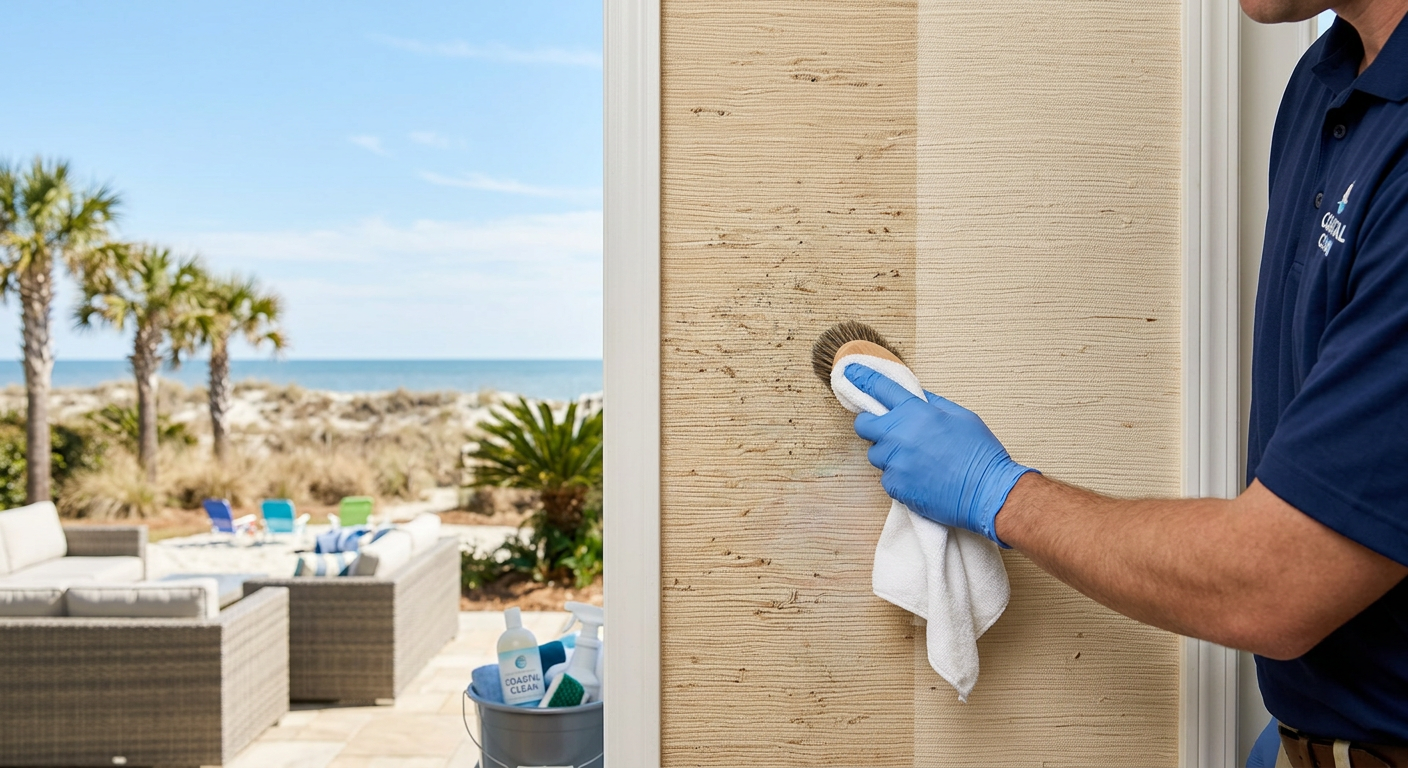
Natural grasscloth wallpapers bring an organic, coastal elegance to Grand Strand homes, but our humid maritime environment presents unique preservation challenges. Homeowners in Myrtle Beach often watch in frustration as high humidity, salt air, and airborne dust degrade these delicate hand-woven plant fibers. Unlike vinyl or synthetic wallcoverings, grasscloth cannot tolerate standard wet-cleaning methods, leading to costly damage when tackled without specialized knowledge. Understanding the balance between DIY preservation and professional restoration is key to protecting this high-value interior investment.
The Vulnerability of Grasscloth in Grand Strand Climates
Grasscloth is crafted from natural materials like sisal, jute, hemp, or sea grass, hand-woven and adhered to a paper backing with water-soluble adhesives. In coastal South Carolina, our relentless high humidity means these porous plant fibers behave like sponges, continuously absorbing ambient moisture from the air. This moisture retention softens the underlying starches and dyes, making the wallcovering highly vulnerable to structural warping and adhesive failure.
Windblown sea salt is another silent threat to coastal wallcoverings. Salt particles drift through open windows and HVAC systems, settling deep within the textured weaves of the grasscloth. Because salt is highly hygroscopic, it perpetually pulls moisture out of the air and holds it against the fibers. Over time, this creates localized damp zones that rot the organic materials and cause the delicate backing paper to delaminate from the drywall.
Myrtle Beach homes are highly susceptible to mold spores, which feed voraciously on the organic cellulose found in grasscloth. Once humidity levels inside a home climb above fifty-five percent, mold spores colonize the dark crevices between the woven fibers. Because the wallpaper backing contains organic starches, it provides an ideal food source, resulting in deep-seated, dark mildew spotting that cannot simply be wiped away without ruining the fragile face fibers.
The Chemistry of Damage: Why DIY Methods Frequently Ruin Natural Wallpapers
Most high-end grasscloth wallcoverings are colored with vegetable-based or highly water-sensitive dyes that lack synthetic fixatives. The moment a homeowner applies a damp sponge, a wet micro-fiber cloth, or standard wall cleaners, these dyes dissolve and migrate. This creates permanent, unsightly bleeding streaks and dark water rings across the panel. Once a dye run occurs, restoring the original uniform color is virtually impossible, resulting in a costly panel replacement.
The mechanical action of scrubbing is another major point of failure during DIY cleaning attempts. Natural fibers like hemp and jute become incredibly fragile when exposed to moisture or friction. Using abrasive pads, stiff brushes, or even aggressive rubbing with a soft towel will fray the woven strands, causing them to shred, pill, or separate from the backing. This permanently alters the texture, leaving bald spots and fuzzy patches that ruin the wallpaper’s clean, organic look.
Using acidic household solutions like vinegar or alkaline mixtures containing baking soda and dish soap causes severe chemical reactions in natural fibers. Acids can weaken the cellulose chain, causing the fibers to become brittle and snap under tension, while alkaline cleaners can strip natural oils, leading to rapid discoloration and premature browning. Spraying these mixtures onto grasscloth permanently alters the pH of the natural material, accelerating decay and sealing in musty odors.
Professional Restoration vs. DIY Dusting: Where to Draw the Line
Homeowners can safely manage basic dust accumulation on grasscloth through a rigorous, dry-only maintenance routine. The absolute limit of safe DIY care is light vacuuming using a clean, soft-bristled brush attachment. Run the vacuum on its lowest suction setting, gently gliding the brush vertically along the direction of the weave to pull out dry sand, dust, and pet dander. Touching the wallpaper with any liquid, steam, or damp cloth should be strictly avoided to prevent dye migration.
Professional intervention is required the moment you notice dark spotting, musty smells, localized staining, or water marks. Professional technicians utilize specialized dry-cleaning sponges made of vulcanized natural rubber, which pull embedded soils out of the textured weaves without using moisture. Additionally, if the wallpaper shows signs of mold colonization, professionals can apply low-moisture dry-fogging or dry-solvent sanitizers that kill spores while preserving the structural integrity of the delicate plant fibers and paper backing.
When grasscloth seams begin to lift or edges peel back due to humidity, homeowners should resist the urge to use standard household glues or tape. DIY adhesives often bleed through the porous paper, leaving dark, glossy stains that permanently ruin the face of the wallpaper. A professional restoration specialist uses specialized starch-based, low-moisture adhesives designed specifically for natural wallcoverings. They carefully inject the paste beneath the lifting seam and roll it flat with specialized tools to ensure a seamless repair.
- Safe DIY: Dry vacuuming with a soft brush attachment on low suction.
- Safe DIY: Gently lifting loose surface dust with a dry, static feather duster.
- Pro Required: Removal of dark mold, mildew spotting, and water stains.
- Pro Required: Re-adhering lifting seams and fixing edge curls.
- Pro Required: Applying specialized dry-solvent extraction solutions for oil or soot.
The True Cost Breakdown of Professional Grasscloth Care
Professional grasscloth restoration and deep cleaning in the Myrtle Beach area are typically priced on a square-footage basis or as a flat project rate, depending on the severity of the soot, mold, or soil buildup. Simple dry-solvent cleaning and extraction services generally range from three to six dollars per square foot. If the project requires complex mold remediation, fiber stabilization, or seam repair, the cost can increase to eight to twelve dollars per square foot due to the specialized chemistry and labor involved.
While professional care represents a real investment, it is highly economical compared to the astronomical costs of replacing high-end grasscloth. Purchasing quality natural wallpaper typically costs eighty to two hundred dollars per roll, and professional installation in the Grand Strand runs thirty to fifty dollars per yard. When you factor in the demolition of the old wallpaper, wall prep, and purchasing new materials, replacing a single accent wall can easily exceed several thousand dollars. Professional cleaning preserves your existing investment for a fraction of that cost.
Most reputable cleaning companies in the Grand Strand maintain a minimum trip or service fee, typically ranging from one hundred and fifty to three hundred dollars. This minimum fee covers the technician’s travel time, custom chemical prep, and specialized equipment setup. Homeowners looking to maximize their value often bundle grasscloth cleaning with other high-end interior services, such as natural fiber rug care or drapery cleaning, to ensure they exceed the minimum service threshold while protecting all their delicate household assets.
Essential Questions to Ask a Myrtle Beach Cleaning Company
When vetting a local cleaning service, your first question must target their specific experience with natural grasscloth. Ask the service provider: 'Do you use wet-extraction methods, or do you have a dedicated dry-cleaning protocol for organic wallcoverings?' If the company mentions using steam, hot-water extraction, or water-based detergents on grasscloth, politely decline their services. A qualified company will immediately discuss dry-solvent extraction, dry sponges, and low-moisture color-fast testing.
Always ask if the technicians conduct a dye stability and fiber strength test in an inconspicuous area, such as behind a door or near the baseboard, before starting the full restoration process. This step is non-negotiable for preserving custom dyed grasscloth. Furthermore, verify that the company carries comprehensive care-custody-control liability insurance. This specific insurance rider protects you if a technician accidentally damages high-value wallcoverings during the cleaning process, providing peace of mind for your valuable interior.
Inquire about the team’s training regarding Grand Strand-specific environmental issues like salt-air damage and coastal humidity. A knowledgeable service provider, like the experts at A2Z Cleaning & Linen Services, will understand how local humidity cycles affect adhesive bonds. They should be able to explain exactly how they will protect your adjacent trim, flooring, and crown molding during the dry-cleaning process, demonstrating a level of care and precision that standard residential cleaners simply cannot replicate.
- Do you have a written dry-cleaning protocol specifically for natural fibers?
- Will you perform a localized dye-fastness test before cleaning?
- Do you carry care-custody-control insurance covering high-end wallcoverings?
- What specific EPA-registered products do you use for coastal mold remediation?
- Do you offer seam repair and adhesive stabilization for lifting edges?
Product Safety and Chemistry in the Coastal Home
The chemicals used in professional grasscloth cleaning are highly specialized to ensure both fabric safety and indoor air quality. Professionals utilize dry-cleaning solvents, such as odorless mineral spirits or isoparaffinic hydrocarbons, which dissolve oils and bind with soot without swelling the natural wood or plant fibers. These solvents evaporate rapidly, leaving zero moisture residue behind. This quick evaporation is crucial in coastal zones because it prevents the fibers from absorbing ambient humidity during the drying phase.
Dry-cleaning sponges are another staple of professional wallcovering restoration. These sponges are manufactured from natural vulcanized rubber without any added liquid chemicals, soaps, or water. When wiped across the grasscloth, the cellular structure of the rubber acts as a dry eraser, lifting and trapping dry soot, sand dust, and mold spores within the sponge's pores. This mechanical action is completely dry and chemical-free, making it incredibly safe for sensitive family members, children, and pets.
When dealing with mold on grasscloth, product safety is paramount. High-strength chlorine bleach or harsh biocides should never be used, as they will degrade the natural fibers and release toxic vapors into your home. Instead, professional restorers use EPA-registered, low-toxicity botanical disinfectants derived from natural ingredients like thymol. When applied through a micro-fogging system, these botanicals neutralize active mold spores on a molecular level without leaving behind harmful chemical residues or damaging the organic wallpaper fibers.
Preventive Maintenance Protocols to Extend Grasscloth Longevity
The most critical step in preserving your grasscloth wallpaper is controlling your home’s indoor microclimate. Grand Strand homeowners should maintain indoor relative humidity consistently below fifty percent. Running your central HVAC system continuously on the 'auto' setting rather than 'fan on' helps pull moisture out of the air. For homes close to the oceanfront, investing in a dedicated, whole-house dehumidifier is highly recommended to protect your wallcoverings from the damp air that creeps in during our humid summer months.
Proper airflow and sun protection are equally vital for maintaining natural fibers. Direct sunlight can bake grasscloth, drying out the natural plant oils and causing the fibers to shrink, fade, and crack. Installing UV-blocking window films or utilizing light-filtering cellular shades during peak sunshine hours will dramatically extend the lifespan of your wallpaper. Additionally, ensure that ceiling fans and HVAC vents do not blow air directly onto the grasscloth walls, as this can force airborne dust deep into the weaves.
Finally, partner with a trusted local specialist for routine assessments. Having a professional inspect your high-value wallcoverings every twelve to eighteen months ensures that minor issues, such as lifting seams or early mold colonization, are addressed before they require full-scale restoration. The team at A2Z Cleaning & Linen Services, reachable at 843.800.2788, can provide tailored advice and delicate maintenance cleaning to keep your coastal home’s grasscloth looking pristine, vibrant, and beautiful for years to come.
Key takeaway
Delicate grasscloth wallpaper requires specialized dry-cleaning chemistry and climate controls to survive the harsh Grand Strand humidity. Attempting to clean these organic fibers with water-based methods can result in permanent dye bleeding and structural rot. Contact A2Z Cleaning & Linen Services at 843.800.2788 to schedule a professional, low-moisture inspection and preserve your home's coastal elegance.
Keep Reading
Coastal Living
The Carolina Room and Eze-Breeze Restoration: Costs, Vinyl Safety, and Professional Clean-Outs for Grand Strand Homeowners
ReadCoastal Living
Coastal Family Chaos: Managing Sand, Pet Dander, and Humidity-Driven Odors in Grand Strand Homes
ReadCoastal Living
The Coastal Kids' Toy Bin and Beach-to-Playroom Asset Decontamination Protocol: Mitigating Humid Saliva Biofilms, Pet-Dander Adhesion, and Sand-Friction Scratches in Grand Strand Homes
ReadReady for a spotless property?
Call 843.800.2788 or request a free quote from A2Z Cleaning & Linen Services.