Coastal Living
The Cost of Restoring Coastal Outdoor Cushions and Sunbrella Fabrics: Salt-Air Mold, Acrylic Fiber Protection, and Vetting Myrtle Beach Specialists
Discover the true costs of restoring high-end outdoor cushions in Myrtle Beach. Learn safe cleaning chemistry, DIY pitfalls, and how to protect your patio investments.
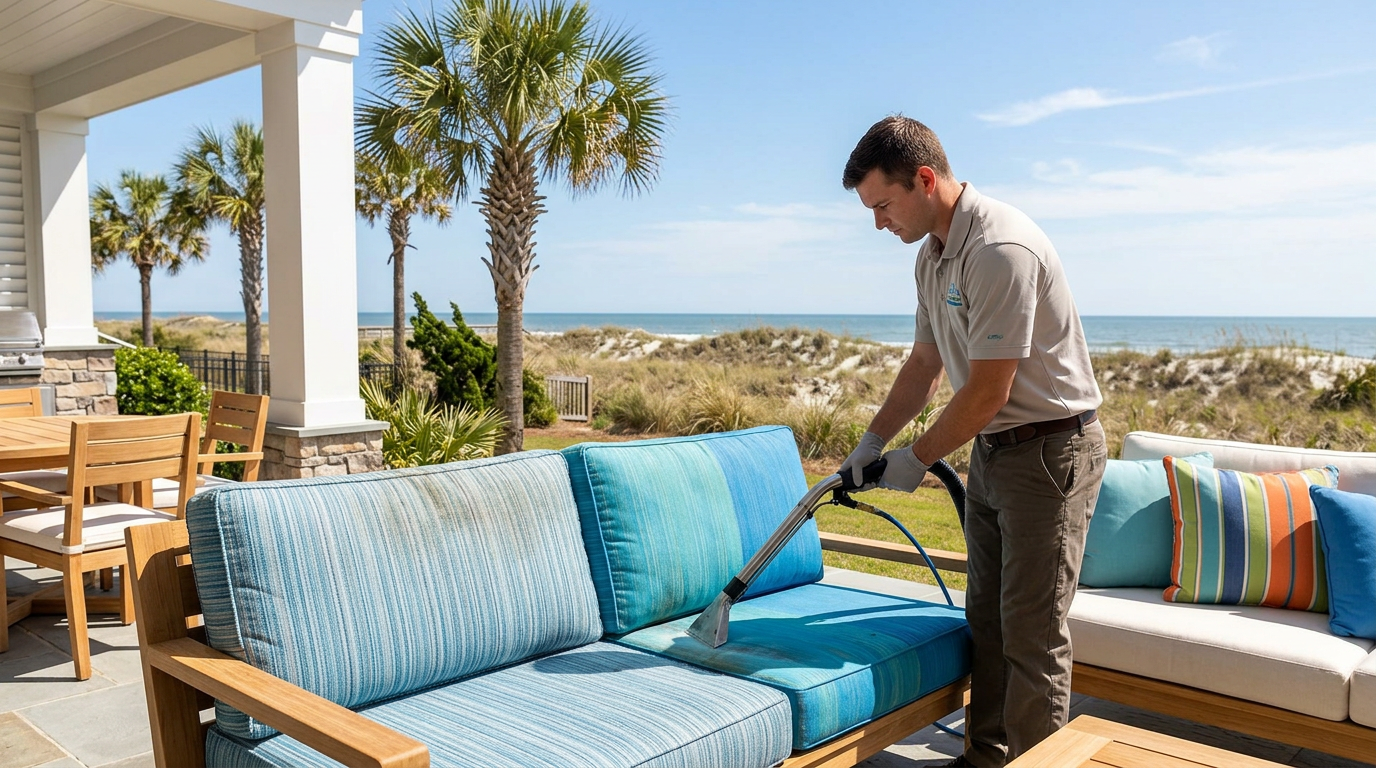
In our humid Grand Strand environment, outdoor living spaces are central to the coastal lifestyle, but they subject expensive patio furniture to a harsh atmospheric toll. Solution-dyed acrylics like Sunbrella and Tempotest are engineered to endure heavy sun, yet they quickly fall victim to dark mildew spotting, yellow salt rings, and stubborn organic odors. Many Myrtle Beach homeowners accidentally ruin these premium fabrics by using destructive high-pressure washing or incorrect bleach concentrations that strip away protective factory coatings. Understanding the science of coastal fabric restoration, realistic professional pricing, and safe chemical protocols will help you preserve your outdoor investments for years to come.
The Coastal Threat Matrix: How Salt-Air and Humidity Bond Mold to Acrylic Fibers
While high-performance outdoor fabrics are naturally resistant to rot and mildew, the fibers themselves are not immune to the accumulation of organic debris. In coastal South Carolina, wind-blown sea salt, pine dander, oak pollen, and Saharan dust settle deep into the woven pockets of your cushions. When ocean salt deposits wedge into these fibers, they act as natural humectants, pulling moisture directly out of our heavy, humid Grand Strand air and keeping the fabric damp long after the morning dew should have evaporated.
This persistent dampness creates a highly active microclimate right on your sofa or chaise lounge, allowing airborne mold and mildew spores to colonize the trapped organic debris. The fungal growth does not actually feed on the synthetic acrylic threads; instead, it feeds on the layer of salt, skin oils, sunscreen residues, and environmental dust coating those threads. Over time, these fungal networks secrete dark metabolic byproducts that bind tightly to the fibers, leaving unsightly black and gray spots that regular rain showers cannot wash away.
Furthermore, when salt crystals dry within the weave, they expand and act like microscopic abrasives. Every time someone sits on a salt-crusted cushion, the friction grinds these sharp crystals against the acrylic filaments, weakening the structural integrity of the fabric and causing premature fraying. Left unmanaged, this combined cycle of salt-trapped moisture, fungal colonization, and physical fiber abrasion can turn thousands of dollars of premium outdoor furniture into faded, sour-smelling trash in just a few seasons.
The Damage of Improper DIY: Why Pressure Washers and Household Bleach Ruin Outdoor Fabrics
When faced with black mold spots on expensive outdoor cushions, many homeowners instinctively grab a residential pressure washer and a bottle of household bleach. This combination is one of the fastest ways to permanently damage premium outdoor textiles. High-pressure water streams, even when set to seemingly low pressure, easily exceed the tensile strength of decorative acrylic stitching, tearing open seams, fraying piping, and delaminating the thin water-resistant backing underneath the fabric cover.
The physical force of a pressure washer also drives moisture deep into the polyurethane foam core or polyester fiberfill of the cushion. Because these thick inner cores are not designed to dry quickly when saturated with high-pressure water, they trap moisture inside, turning the cushion interior into a rotting compost pile of hidden mold. Long after the outer fabric appears dry, the inner core remains wet, continuously off-gassing mold spores and sour odors every time you sit down.
Using straight or highly concentrated chlorine bleach is equally destructive. While bleach is effective at killing surface mold, it strips away the fluoropolymer stain-and-water-repellent finish applied during manufacturing, leaving the fabric vulnerable to rapid re-soiling. Excessive chlorine exposure also chemically degrades polyester sewing threads, causing the seams of your cushions to dissolve and split open within a few weeks of exposure to the hot Myrtle Beach sun.
DIY vs. Professional Restoration: Assessing the Limits of Home Cleaning
Light, routine maintenance is entirely within the scope of a homeowner’s weekend chores. If your cushions only have fresh dust, pollen, or light surface dirt, a simple solution of mild dish soap, like Dawn, and lukewarm water applied with a soft-bristle brush will yield excellent results. Gently scrubbing the fabric, letting the soap sit for fifteen minutes to break down surface oils, and thoroughly rinsing with a low-pressure garden hose is highly effective for keeping brand-new cushions looking fresh.
However, when mold has penetrated below the surface or when stubborn yellow sun-tan lotion bands have baked into the fibers, home methods fall short. Deep restoration requires low-pressure hot-water extraction, typically kept under 120 degrees Fahrenheit to prevent the synthetic fibers from shrinking or warping. Professional setups utilize specialized vacuum extraction to pull dirty water and chemical residues completely out of the inner foam core, ensuring the cushion dries thoroughly from the inside out within hours.
Additionally, professional restoration includes the crucial step of replenishing the fabric's protective barrier. Once deep cleaning agents strip away embedded dirt and weathered oils, the original water-repellent finish is often compromised. Professionals are equipped to apply industrial-grade fluoropolymer treatments uniformly across the dry fabric, restoring its hydrophobic properties so that future rainwater bead up and roll off, carrying surface dust away with it.
The Chemistry of Safe Restoration: Non-Degrading Surfactants and Fluoropolymer Re-treatment
Safe restoration relies on targeted chemistry rather than raw physical force. Professional fabric technicians utilize pH-neutral, biodegradable surfactants designed to emulsify oily sunscreen residues, greasy food spills, and atmospheric soot without stripping the fabric's dyed core. When dealing with heavy mold infestations, oxygen-based bleaches (sodium percarbonate) or highly controlled, buffered sodium hypochlorite solutions are carefully blended with surfactant packages to kill fungal spores while maintaining the colorfastness of the acrylic weave.
During this cleaning process, the goal is to break the chemical bond between the organic soil and the fabric without damaging the underlying synthetic polymer. After the cleaning agents have emulsified the contaminants, a thorough, low-pressure extraction rinse is performed to remove all soap residues, which, if left behind, would act as a magnet for new dirt and salt. This rinsing stage is complete only when the extraction run-off water is completely clear and free of suds.
Once the cushions are completely dry, a crucial final step is the application of a high-grade fluoropolymer protectant, such as 303 Fabric Guard. This treatment must be applied in a uniform mist to dry fabric, allowing it to cure in a dust-free environment. This protective layer bonds to the individual fibers, recreating a powerful barrier that repels water, resists oil-based stains, blocks UV degradation, and prevents wind-blown salt from lodging deep inside the fabric weave.
The Cost Breakdown: What Grand Strand Homeowners Can Expect to Pay
The cost of professional outdoor cushion restoration in the Myrtle Beach area depends on the size, thickness, soil level, and construction of the pieces. On average, a standard deep-seat chair cushion set, which includes one seat bottom and one backrest, ranges from $45 to $75 per set. Larger, thicker cushions, such as those found on chaise lounges or custom daybeds, typically run between $75 and $120 per cushion due to the depth of the foam core and the volume of water extraction required.
For matching outdoor accessories, market umbrellas and cantilevered umbrellas generally cost between $120 and $250 to deep clean and re-waterproof. The variance in umbrella pricing reflects the complexity of cleaning the fabric while it is tensioned over the frame, as well as managing the mechanical pulley and crank assemblies. Homeowners should note that high-quality fabric protectant application is sometimes priced as an add-on, averaging $15 to $30 per cushion, but it is an essential investment to ensure the clean lasts.
While these prices may seem higher than buying cheap replacement cushions from a big-box store, they are highly cost-effective when compared to replacing high-end, custom-made Sunbrella or Tempotest cushions, which easily cost $300 to $600 per seat. Investing in professional restoration every two to three years extends the lifespan of these premium setups indefinitely, keeping your outdoor living space looking immaculate and saving you thousands of dollars in premature replacement costs.
- Standard deep-seat chair cushion sets: $45 to $75 per set
- Large chaise lounge and daybed cushions: $75 to $120 per piece
- Market and cantilevered patio umbrellas: $120 to $250 based on size
- Professional fluoropolymer fabric protectant re-treatment: $15 to $30 per piece
- Average turnaround time for off-site deep-cleaning and drying: 3 to 5 business days
Vetting Myrtle Beach Cleaning Specialists: Key Questions for Homeowners to Ask
Not all cleaning companies are trained to handle high-performance outdoor textiles, and hiring an inexperienced provider can lead to ruined fabrics and voided warranties. Before hiring a specialist to clean your patio investments, it is critical to ask about their specific methods. Ask if they use high-pressure washing on cushions; any company that answers yes should be avoided, as pressure washing damages acrylic seams and backing material.
Next, inquire about their drying process. A professional outfit should explain their extraction methods and outline how they ensure the inner foam cores are completely dry before returning them to your home. If cushions are left damp inside, mold will quickly return, creating a worse problem than before. Ensure they have a dedicated, climate-controlled dry room or utilize high-velocity air movers to complete the drying process safely.
Finally, confirm that they apply a manufacturer-approved fabric protectant after the cleaning process. Many low-cost operations skip this step entirely to keep their bids low, leaving your freshly cleaned cushions highly susceptible to immediate staining and rapid mold re-colonization. A reputable company, like A2Z Cleaning & Linen Services, will always discuss fabric protection options openly and use high-grade, compatible products to restore the hydrophobic barrier.
Environmental and Pet Safety: Managing Runoff and Chemical Exposure in Outdoor Spaces
When cleaning outdoor cushions on-site, chemical runoff is a significant concern for Grand Strand properties, particularly those situated near salt marshes, residential canals, or local stormwater systems. Standard household cleaning chemicals and high-dose bleach can wash into your lawn, killing sensitive coastal grasses, damaging flower beds, and polluting local waterways. Professional restoration specialists utilize biodegradable surfactants and containment protocols to ensure no harmful residues escape into the environment.
Pet safety is another vital consideration. Many off-the-shelf mildew removers contain harsh, long-lasting chemical residues that can irritate a pet's paws, skin, and respiratory system if they lay on the damp cushions. Safe restoration practices dictate that all cleaning agents must be completely extracted and rinsed clean from the fabric, leaving behind zero active chemical residues once the drying process is complete.
The application of fabric protectants also requires careful handling. These products must be applied in a controlled environment and allowed to cure completely before humans or pets come into contact with the cushions. Once cured, modern fluoropolymer protectants are completely inert and safe for family use, providing a highly durable shield that keeps both environmental contaminants and everyday spills from penetrating the fibers.
Proactive Maintenance: Extending the Lifespan of Your Restored Outdoor Cushions
Once your outdoor cushions have been professionally restored and protected, implementing a simple, proactive maintenance routine will significantly extend the time required between professional deep cleanings. The single most effective habit is hosing down your cushions with fresh, low-pressure tap water every two weeks. This simple rinse flushes out wind-blown salt crystals and pollen before they can lodge deep inside the weave and begin attracting atmospheric moisture.
If a spill occurs, address it immediately by blotting the liquid with a clean, dry microfiber cloth rather than rubbing it into the fabric. Rubbing forces the liquid deeper into the weave and can damage the protective coating. For sticky spots or sunscreen spills, spot-clean immediately with a mixture of mild dish soap and warm water, rinsing thoroughly afterward to prevent soapy residue from drying on the surface and attracting dirt.
Lastly, proper storage during severe weather and off-season months is key to keeping your cushions pristine. If you know a major coastal storm is approaching, or when leaving your Grand Strand home vacant for the winter, store your dry cushions in a well-ventilated garage, closet, or heavy-duty deck box. Never store cushions when they are wet or damp, as sealing moisture inside a dark storage container will guarantee a severe mold outbreak by spring.
Key takeaway
Preserving the beauty and comfort of your coastal outdoor living space requires specialized, low-pressure chemistry that respects high-performance fibers. Avoiding destructive high-pressure washing and choosing professional, fabric-safe extraction will save you thousands of dollars in replacement costs. For expert assistance in restoring your patio cushions to like-new condition, call A2Z Cleaning & Linen Services at 843.800.2788.
Keep Reading
Coastal Living
The Coastal Window Treatment and Blackout Drapery Sanitization Protocol: Mitigating Humid Mold Spores, Pollen Reservoirs, and VOC-Free Allergen Release in Grand Strand Homes
ReadCoastal Living
The Coastal Multi-Sectional Decontamination Protocol: Mitigating Pet Sebum, Organic Kid Spills, and Humidity-Trapped Allergen Reservoirs in Grand Strand Homes
ReadCoastal Living
The Coastal Sliding Screen and Pet-Door Decontamination Protocol: Mitigating Nose-Print Oils, Pollen-Dander Reservoirs, and Sand-Grime in Grand Strand Homes
ReadReady for a spotless property?
Call 843.800.2788 or request a free quote from A2Z Cleaning & Linen Services.