Coastal Living
The Cost of Restoring Coastal Porch Beadboard and Soffits: Algae Chemistry, Substrate Safety, and Professional Vetting for Grand Strand Homeowners
Discover the costs, risks, and proper soft-wash chemistries required to safely restore delicate coastal porch beadboard and soffits in the Grand Strand.
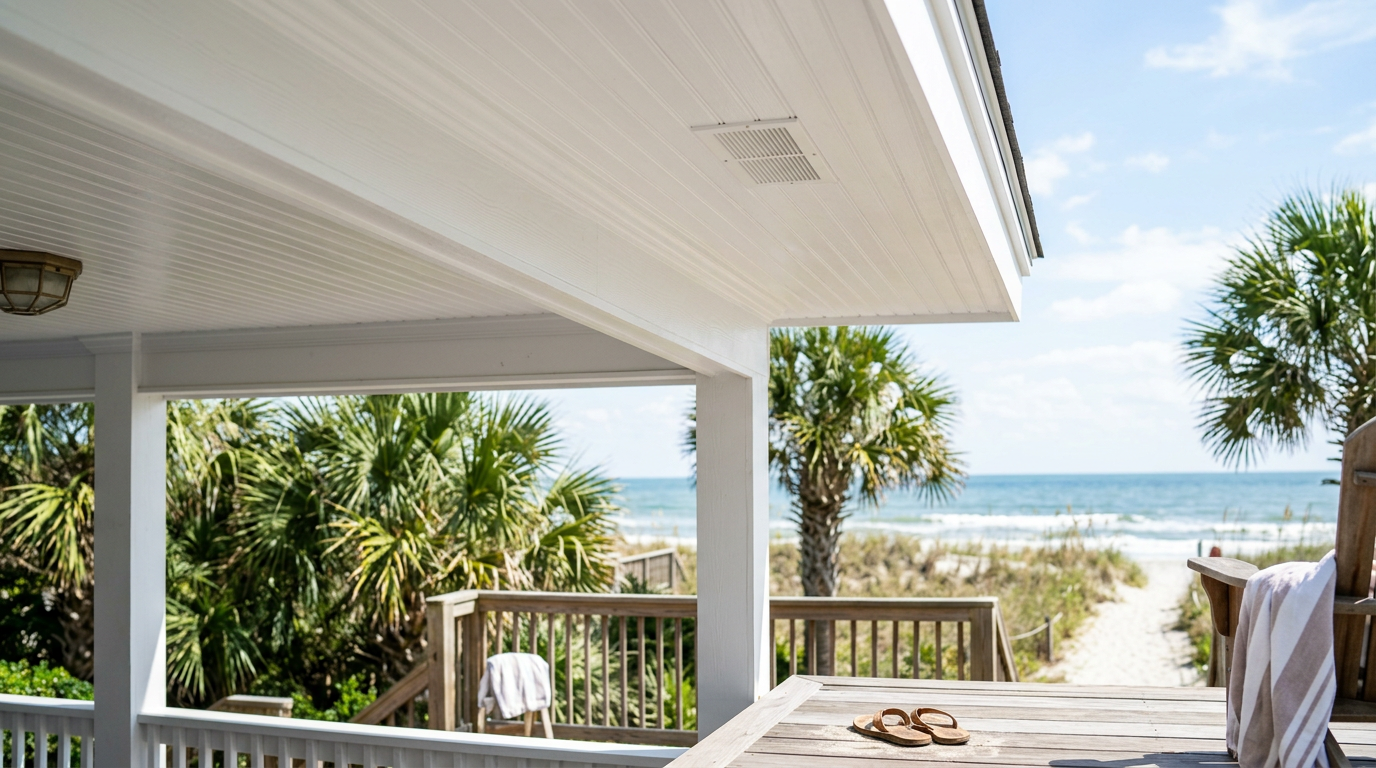
Deep, covered porches are a hallmark of Southern coastal living along the Grand Strand, offering a cool escape from the South Carolina heat. However, the underside of these porches—specifically the beadboard ceilings and ventilated soffits—serves as an active trap for salt-crust, humidity, and invasive green algae. Cleaning these delicate overhead structures requires a careful balance of specialized chemistry and low-pressure techniques to avoid permanent water damage or structural rot. This guide provides Myrtle Beach homeowners with a clear understanding of restoration costs, DIY pitfalls, proper product safety, and how to select a qualified professional.
Understanding the Coastal Porch Microclimate: Why Grand Strand Beadboard and Soffits Degrade
Deep porches are a signature of Grand Strand homes, providing essential shade from the intense South Carolina sun. However, these beautiful architectural features act as traps for heavy coastal air. High humidity combined with salt-laden ocean breezes creates a sticky, invisible microclimate on the underside of porch ceilings. This microscopic film acts as an active adhesive for wind-blown sand, seasonal pollen, and local fungal spores, quickly turning a bright porch into a dingy, darkened space.
Unlike exterior walls that receive direct rinsing from heavy summer rainstorms, sheltered beadboard and soffits are protected from natural wash cycles. Over time, the accumulated salt crust continuously draws moisture directly from our humid coastal air, never fully drying out. This persistent state of dampness allows green algae, mold, and mildew to thrive within the tight grooves of tongue-and-groove pine or hollow vinyl panels, leading to deep discoloration and surface degradation.
In addition to organic growths, local insects find these high, protected porch zones ideal for nesting. Spiders construct extensive webs that trap blowing coastal dust, while dirt daubers and paper wasps construct stubborn mud and fiber nests in the soffit gaps. The resulting accumulation is not just an aesthetic issue; it actively degrades paints, stains, and vinyl materials if left untreated by qualified coastal cleaning specialists.
Chemistry Matters: Safe Algae and Salt Neutralizers for Coastal Homes
Cleaning delicate coastal porch ceilings requires specialized chemical formulations rather than sheer force. Many homeowners mistakenly reach for highly concentrated household bleach, which corrodes metal fasteners, strips wood grain, and kills the expensive landscaping surrounding the porch. Professional coastal restoration relies on biodegradable surfactants, salt-neutralizing agents, and carefully measured algaecides designed to dissolve organic bonds without compromising the integrity of your porch materials or the local Grand Strand environment.
Specialized foaming agents are blended with mild algaecides to allow the cleaning chemistry to cling to the underside of the ceiling. Without these foaming agents, liquid cleaners would instantly drip off, failing to achieve the contact dwell time necessary to neutralize mold spores and loosen salt crusts. This clinging action gently lifts the grime, allowing technicians to rinse the surface clean without resorting to abrasive scrubbing that can scratch paint and vinyl.
Salt-neutralizer chemistry is a vital component of this process, breaking the electrostatic bond that locks salt crystals to the painted substrate. Before any chemistry is applied, professional teams thoroughly saturate all surrounding lawns, shrubs, and ornamental plants with fresh water. This pre-soaking ensures that the plants' root systems are fully hydrated, preventing them from absorbing any diluted run-off that drains from the porch roof during the rinsing process.
Cost Breakdown: What to Expect for Professional Porch Restoration
The cost of professional porch beadboard and soffit restoration along the Grand Strand depends on several factors, including height, material, and accessibility. On average, homeowners can expect a professional project to range from $400 to $1,200. High-vaulted ceilings, multi-story historical porches, and complex architectural layouts requiring specialized scaffolding or lift equipment will naturally fall on the higher end of this investment spectrum.
Material composition also plays a role in determining the final cost. Non-porous vinyl and modern PVC beadboard are generally less labor-intensive to clean and require less intensive chemistry, making them more economical. In contrast, historical tongue-and-groove heart pine, cedar, or cypress requires meticulous hand-detailing, specialty wood-restoration chemicals, and careful drying protocols to ensure the wood does not warp, split, or lose its structural integrity during the cleaning process.
When evaluating this cost, homeowners must consider the long-term savings of preservation. Neglected beadboard rapidly decays, necessitating complete material replacement and professional repainting, which can easily cost thousands of dollars. An annual or bi-annual professional soft-wash keeps your paint intact, prevents wood rot, and maintains your home's curb appeal for a fraction of the cost of premature renovations in our harsh coastal environment.
- Porch Ceiling Material: Vinyl and PVC are the most cost-effective to restore, while stained hardwood requires premium care.
- Ceiling Height: Standard single-story porches cost less than double-decker or vaulted ceilings requiring specialized scaffolding.
- Accumulation Severity: Deeply embedded black mold and heavy wasp infestations require longer chemical dwell times and extra labor.
- Landscape Density: Homes with dense, delicate ornamental gardens around the porch require extra plant protection measures.
- Electrical Integration: Complex lighting layouts, ceiling fans, and security cameras require careful sealing, which increases prep time.
Essential Questions to Ask a Coastal Specialty Cleaner
Not all exterior cleaning companies in the Myrtle Beach area are equipped to handle delicate overhead structures. To protect your home, you must vet potential service providers thoroughly before hiring. Ask direct questions about their equipment, chemical safety, and insurance coverage. A qualified company will gladly provide detailed answers and explain how their processes protect both your property and the surrounding coastal environment from damage.
Specifically, ask if they utilize a dedicated low-pressure soft-wash system or if they rely on standard high-pressure machines. You should also confirm how they handle electrical fixtures, such as porch fans, recessed lighting, and outdoor speakers, which must be protected from water exposure during the cleaning. A reputable company will walk you through their physical protection steps, demonstrating their attention to detail and commitment to keeping your home safe.
Finally, verify their insurance policies to ensure they carry active general liability and workers' compensation insurance that specifically covers high-access exterior cleaning. Working on ladders and scaffolding presents real physical risks; hiring an uninsured operator leaves you vulnerable to immense financial liability should an injury occur on your property. Always request a certificate of insurance sent directly from their insurance agency before allowing work to begin.
- Do you use a soft-wash system operating under 150 PSI for delicate beadboard ceilings?
- What specific chemistry do you use, and is it biodegradable and safe for my family, pets, and landscaping?
- How do you protect our porch ceiling fans, recessed lights, and electrical outlets from water damage?
- Can you provide a certificate of general liability and workers' compensation insurance before starting work?
- What is your protocol for protecting surrounding plants and lawns from run-off during the cleaning process?
The Step-by-Step Professional Soft-Wash Protocol
A professional beadboard restoration follows a systematic protocol designed to maximize safety and clean thoroughly. First, the technician conducts a thorough pre-inspection, looking for loose boards, peeling paint, and active insect nests. They then seal all exterior electrical outlets, light fixtures, and ceiling fan motors with professional-grade plastic and tape to prevent any moisture from entering the wiring systems.
Next, the team performs a dry brush down of the entire ceiling using specialized extendable microfibers and soft brushes. This step removes loose dust, cobwebs, and insect nests before moisture is introduced, preventing the debris from turning into a stubborn paste that can stain the wood or vinyl. Once the dry debris is cleared, the team thoroughly pre-wets all surrounding plants and windows with clean water.
The customized cleaning foam is then applied using low-pressure nozzles. This foam dwells on the ceiling, breaking down the salt crust and neutralizing mold spores at their roots. After the appropriate dwell time, the technician rinses the surface using a high-volume, low-pressure fresh water wash, completing the process with a final rinse of the siding, windows, and surrounding plants to ensure absolutely no chemical residue remains.
Long-Term Maintenance: Keeping Your Porch Pristine Between Cleanings
Maintaining your porch beadboard and soffits between professional cleanings helps extend the life of the treatment and preserves your home's appearance. Homeowners can use an extendable duster once a month to gently remove fresh spider webs, pollen, and dust before they can bond with the salt air. This simple step prevents the rapid accumulation of organic grime and keeps the ceiling looking bright and clean between scheduled services.
Running your outdoor-rated ceiling fans on humid Grand Strand days can also make a significant difference. Constant air circulation helps dry out any condensation that settles on the ceiling, making it much harder for mold and algae spores to colonize the surface. Additionally, ensure your home's gutters are cleaned regularly, as overflowing gutters can spill dirty water directly onto your porch soffits and beadboard.
For most Grand Strand homes, scheduling a professional soft-wash once a year—ideally in the spring after the heavy pollen season—is sufficient to keep salt and mold at bay. However, oceanfront homes facing direct salt spray may require a bi-annual schedule. Keeping up with regular maintenance protects your paint, preserves your wood, and saves you money by avoiding costly structural repairs down the road.
Key takeaway
Restoring coastal porch beadboard and soffits requires a deep understanding of salt chemistry and low-pressure soft-wash techniques. Homeowners can protect their investment and avoid structural water damage by partnering with a specialized, fully insured team. For expert, family-owned coastal cleaning services in the Myrtle Beach area, contact A2Z Cleaning & Linen Services at 843.800.2788.
Keep Reading
Coastal Living
The Coastal Sliding Glass Door Track and Weep-Hole Decontamination Protocol: Mitigating Mold Bio-Sludge, Wind-Driven Allergens, and Chemical Runoff in Grand Strand Homes
ReadCoastal Living
The Cost of Restoring Coastal Outdoor Shower Enclosures: Managing Algae Biofilms, Salt-Water Scale, and Material-Safe Chemistry in Grand Strand Homes
ReadCoastal Living
The Cost of Restoring Coastal Sliding Glass Door Tracks: Sand-Grime Extraction, Lubrication Chemistry, and Vetting Myrtle Beach Professionals
ReadReady for a spotless property?
Call 843.800.2788 or request a free quote from A2Z Cleaning & Linen Services.