Coastal Living
The Cost of Restoring Coastal Woven Wood and Bamboo Shades: Mitigating Salt-Damp Mildew, Fiber Fraying, and Tension-Cord Failures in Grand Strand Homes
Discover the costs, risks, and safe restoration methods for coastal woven wood and bamboo shades facing the harsh salt air, humidity, and mold of the Myrtle Beach shoreline.
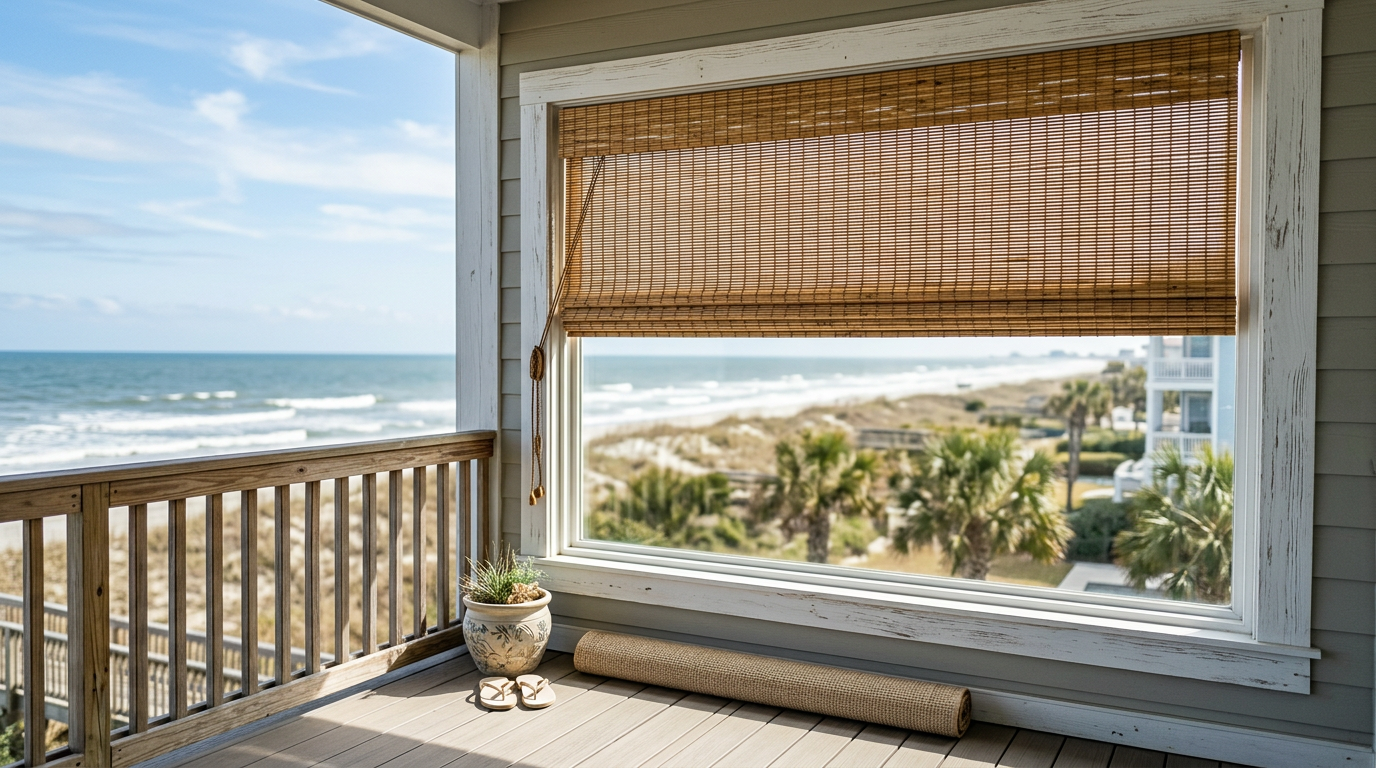
Woven wood and bamboo shades bring a beautiful, organic warmth to Grand Strand homes, perfectly matching the relaxed coastal aesthetic of Pawleys Island and Myrtle Beach properties. However, because these window treatments are crafted from highly porous, natural fibers like jute, reed, bamboo, and sea grass, they face a constant assault from our high-humidity coastal climate. Over time, salt-damp air deposits fine crystalline layers onto the fibers, attracting airborne moisture and fostering stubborn mold colonies that ruin their appearance. Understanding the costs, cleaning limitations, and safety parameters of restoring these delicate interior fixtures is essential for protecting your investment and maintaining a healthy indoor environment.
The Vulnerability of Woven Woods in the Grand Strand Environment
Natural woven wood window coverings are highly hygroscopic, meaning they actively absorb and release moisture in response to relative humidity levels. In Grand Strand coastal zones, where outdoor humidity frequently surges past 80% during the summer months, these organic materials remain perpetually damp if indoor climates are not perfectly controlled. This moisture absorption causes the natural fibers to swell and soften, making them highly vulnerable to structural degradation, warping, and fiber fraying.
To make matters worse, wind-driven salt spray carries fine sodium chloride particles directly through window screens and sliding glass doors. When these microscopic salt crystals land on the woven wood panels, they settle deep within the intricate weaves of reed and bamboo. Because salt is naturally deliquescent, it continuously pulls water vapor out of the indoor air, keeping the shade fibers damp even when indoor air conditioning is running. This creates a prime breeding ground for mold spores that feed on the natural lignin of the wood.
Over time, the combined forces of UV exposure from intense Carolina coastal sun and constant moisture fluctuations break down the natural oils in the bamboo and grass fibers. This process, known as sun-rot, leaves the wood brittle, prone to splintering, and highly susceptible to deep gray or black discoloration. Once the fibers reach this state of advanced degradation, simple dusting is no longer sufficient, and specialized intervention is required to stabilize the material.
Identifying the Damage: Mildew, Sun-Rot, and Tension-Cord Failures
Recognizing the early warning signs of degradation on your woven wood shades can save you thousands of dollars in premature replacement costs. The most common indicator of environmental distress is the appearance of tiny gray, green, or black specks along the bottom hem of the shades. This is where condensation pooling on cold window sills frequently transfers moisture to the hanging fibers, initiating localized mold colonies (typically Aspergillus or Cladosporium) that quickly spread upward.
Another critical area of concern is the vertical warp threads and horizontal wefts that hold the woven wood panels together. When fine coastal sand-grit blows into a home, it settles within the tight weaves of the shades. Every time you raise or lower the window covering, these sharp silica particles act as micro-abrasives, grinding against the delicate structural threads. This friction slowly shreds the binding threads, causing the horizontal reeds or bamboo slats to slip out of alignment and sag unevenly.
The mechanical lift systems and tension cords also suffer in coastal environments. The brass or steel pulley wheels housed within the wooden headrail are highly susceptible to salt-crust corrosion. As salt air oxidizes these metal parts, they develop a rough, high-friction surface that slowly saws through the woven polyester pull cords. If you notice your shades becoming increasingly difficult to lift, or if they produce a grinding sound during operation, salt-air crystallization is actively destroying your hardware.
The Financial Reality: Professional Restoration Costs vs. Replacement
High-quality custom woven wood and bamboo shades are a premium home investment, typically ranging from $350 to over $900 per window, depending on the dimensions, backing options, and motorized control systems. When a whole house of window treatments begins to show signs of salt-air wear and mold spotting, replacement costs can quickly spiral into the thousands. This makes professional restoration an incredibly cost-effective alternative for preserving these valuable household assets.
On average, professional deep-cleaning, salt decontamination, and fiber stabilization for woven wood shades run between $75 and $150 per shade. The exact cost depends on the width of the treatment, the type of natural fibers involved, and whether the shades feature delicate privacy liners or edge bindings that require separate care. This means a homeowner can fully restore a whole room of custom woven shades for a fraction of what it would cost to purchase just one or two brand-new replacements.
When calculating these costs, it is important to factor in the long-term value of professional textile stabilization. A certified technician does not just wipe away surface dirt; they extract embedded salt crystals and apply specialized, fiber-safe protectants that shield the organic material from future moisture absorption. By investing in timely professional restoration, Grand Strand homeowners can easily extend the functional lifespan of their custom window treatments by five to ten years.
DIY Mitigation: What Homeowners Can Safely Attempt
While deep restoration should be left to specialists, homeowners can perform basic weekly maintenance to keep salt and dust at bay. The safest and most effective DIY method is dry vacuuming using a high-efficiency particulate air (HEPA) vacuum equipped with a soft, natural-bristle dusting brush attachment. Gently sweep the brush horizontally along the slats, working from the top down, to lift away loose sand-grit and dust before it can settle deep into the weave.
It is critical to understand that water is the absolute enemy of natural fibers during DIY cleaning. Never spray woven wood or bamboo shades with a garden hose, pressure washer, or heavy mist of household spray cleaners. Flooding the fibers with water triggers immediate swelling, warping, and tannin bleeding—a process where natural wood sugars migrate to the surface as it dries, leaving unsightly dark brown water rings that are virtually impossible to remove.
If you encounter a localized organic spot, such as a splash of food or insect deposit, spot-clean it with extreme caution. Dampen a clean, white microfiber cloth with a highly diluted solution of warm water and a drop of pH-neutral dish soap. Wring the cloth out until it is barely damp, gently blot the spot without rubbing or scrubbing, and immediately dry the area using a clean towel or a hair dryer set to the cool-air setting to prevent water spots.
- Always vacuum both the front and back of the shade to remove salt deposits near the glass.
- Avoid using commercial feather dusters, which merely stir up grit and push it deeper into the weaves.
- Never use bleach or chlorine-based cleaners, as they strip the natural wood color and degrade fibers.
- Ensure windows are completely dry and closed during high-humidity or rainy coastal days.
- Use a dry, soft-bristle toothbrush to gently dislodge stubborn sand from the woven crevices.
Professional Restoration Techniques: Ultrasonic and Low-Moisture Extraction
Professional cleaning companies utilize advanced, highly controlled equipment specifically designed to clean delicate, non-washable textiles. One of the most effective methods for off-site restoration is ultrasonic cleaning. The shades are carefully taken down and submerged in a specialized tank filled with a warm, pH-neutral cleaning solution. High-frequency sound waves create millions of microscopic bubbles that implode against the fibers, gently blasting away embedded salt, mold spores, and grime without any abrasive scrubbing.
For custom woven shades that cannot be easily removed or have fragile light-filtering backings, professionals employ specialized on-site, low-moisture dry-extraction machinery. This system applies a highly atomized, solvent-free cleaning agent that encapsulates dirt and salt crystals on contact. The machine then immediately extracts the encapsulated soil using a high-velocity, low-moisture vacuum head, leaving the natural fibers clean and practically dry to the touch.
The final step in any professional restoration process is controlled thermal drying. Technicians use commercial air movers and dehumidification chambers to rapidly draw out any trace moisture from the hollow cores of the bamboo and reeds. This rapid-drying protocol prevents the swelling, bowing, or color bleeding that so frequently ruins DIY cleaning attempts, ensuring the shades retain their original shape, color, and structural integrity.
Critical Questions to Ask a Professional Cleaning Company
Not all cleaning companies are equipped or trained to handle the delicate complexities of natural woven wood shades. Before hiring a service provider in the Myrtle Beach area, it is vital to ask detailed questions about their specific cleaning protocols, training, and chemical safety. A qualified company should be able to explain exactly how they mitigate the risk of fiber shrinkage, color bleeding, and structural warping on organic materials.
Start by asking if their technicians hold certifications in specialty textile or upholstery cleaning from recognized organizations like the IICRC (Institute of Inspection, Cleaning and Restoration Certification). Inquire about their specific experience with high-value woven wood shades, and ask whether they perform their cleaning services on-site or in a dedicated, climate-controlled facility. A reputable professional will walk you through their inspection process and provide clear expectations regarding mold stain removal.
Additionally, ask about the warranty or damage guarantee they provide for custom window treatments. Because woven woods can easily shrink or warp if subjected to improper moisture levels, a professional firm must carry specialized bailee's insurance, which specifically covers client property while in their care. Avoiding companies that treat woven woods the same as plastic or synthetic blinds will protect you from costly property damage.
- Do your technicians have specific training and certifications for cleaning delicate natural fibers?
- What specific cleaning method (ultrasonic, low-moisture, or dry solvent) do you recommend for my woven shades?
- Do you guarantee against fiber shrinkage, color bleeding, or structural warping?
- Are your cleaning solutions safe for use around children and pets, and do they leave chemical residues?
- How do you handle salt-air oxidation and cleaning of the mechanical headrail components?
Chemical and Material Safety: Protecting Your Family and Pets
Many homeowners mistakenly reach for harsh chemicals like chlorine bleach or aggressive mildewcides when trying to tackle mold on their woven shades. This is a dangerous mistake for both the window treatments and your household health. Chlorine bleach is highly corrosive; it breaks down the natural cellulose fibers of bamboo and jute, rendering them brittle and chalky. Furthermore, bleach does not prevent mold from returning; it merely removes the surface color while leaving the root system alive.
From a health standpoint, applying harsh chemical sprays to window shades is highly problematic. Because window treatments hang directly over heating and cooling registers, air is constantly blowing across the fibers and circulating throughout your living spaces. Spraying toxic chemicals or volatile organic compounds (VOCs) onto the shades ensures these harmful fumes are distributed straight into your family's breathing zone, which can trigger allergies, asthma, and respiratory irritation.
Professional restoration relies on EPA-registered botanical sanitizers and neutral-pH surfactants that are entirely safe for children, pets, and chemically sensitive individuals. These specialized formulas utilize natural active ingredients, such as thyme oil, to neutralize mold spores at their source without leaving toxic chemical residues or releasing harmful VOCs. This ensures your home's air quality remains clean, fresh, and perfectly safe for everyone.
Preventive Maintenance: Shielding Your Shades from the Salt Air
Once your woven wood shades have been professionally restored to their original beauty, implementing a few preventive maintenance habits will protect them from future salt-air degradation. The single most important step you can take is maintaining tight control over your home's indoor relative humidity. Keeping your indoor humidity consistently below 50% to 55% using your HVAC system or a dedicated whole-home dehumidifier completely halts the germination of mold spores on organic fibers.
On windy, humid days when salt spray is high, resist the temptation to leave windows or sliding doors open. The salty Grand Strand air will quickly coat the shades, restarting the moisture-attracting cycle. Additionally, ensure that your window frames and sills are regularly cleaned and wiped dry. Eliminating any condensation buildup on the glass or sills prevents moisture from wicking into the bottom hem of the hanging shades, keeping them safe from localized rot.
Finally, apply a micro-thin layer of dry-film lubricant (such as dry silicone or Teflon spray) to the metal pulleys in the headrail once a year. Never use wet lubricants like WD-40, which attract dust and sand like a magnet, creating a sticky abrasive paste. A dry lubricant keeps the lifting cords sliding smoothly over the metal pulleys, preventing friction wear and extending the life of your shade's mechanical lifting components.
Key takeaway
Restoring your coastal woven wood and bamboo shades preserves their natural beauty while protecting your financial investment from the harsh Grand Strand environment. By partnering with the certified professionals at A2Z Cleaning & Linen Services, you can safely eliminate salt, dust, and mold without risking damage to these delicate organic textiles. Call us today at 843.800.2788 to schedule an inspection and keep your home's interior beautiful, safe, and healthy.
Keep Reading

Coastal Living
The Coastal Sliding Glass Door Track and Weep-Hole Decontamination Protocol: Mitigating Mold Bio-Sludge, Wind-Driven Allergens, and Chemical Runoff in Grand Strand Homes
ReadCoastal Living
The Cost of Restoring Coastal HDPE and Polywood Outdoor Furniture: Mitigating Deep-Grain Mold Biofilms, Sunscreen Yellowing, and Material-Safe Chemistry in Grand Strand Homes
ReadCoastal Living
The Cost of Restoring Coastal Natural-Fiber Rugs: Mitigating Humidity-Driven Rot, Sand-Grit Fiber Shredding, and Water-Staining in Grand Strand Homes
ReadReady for a spotless property?
Call 843.800.2788 or request a free quote from A2Z Cleaning & Linen Services.