Coastal Living
The Cost of Restoring Coastal Sisal, Jute, and Seagrass Area Rugs: Mitigating Humid Fiber Rot, Salt-Grit Binding, and Material-Safe Extraction in Grand Strand Homes
Learn how to protect your home's natural fiber rugs from coastal humidity and sand. Discover restoration costs, DIY limits, and professional dry-extraction methods.
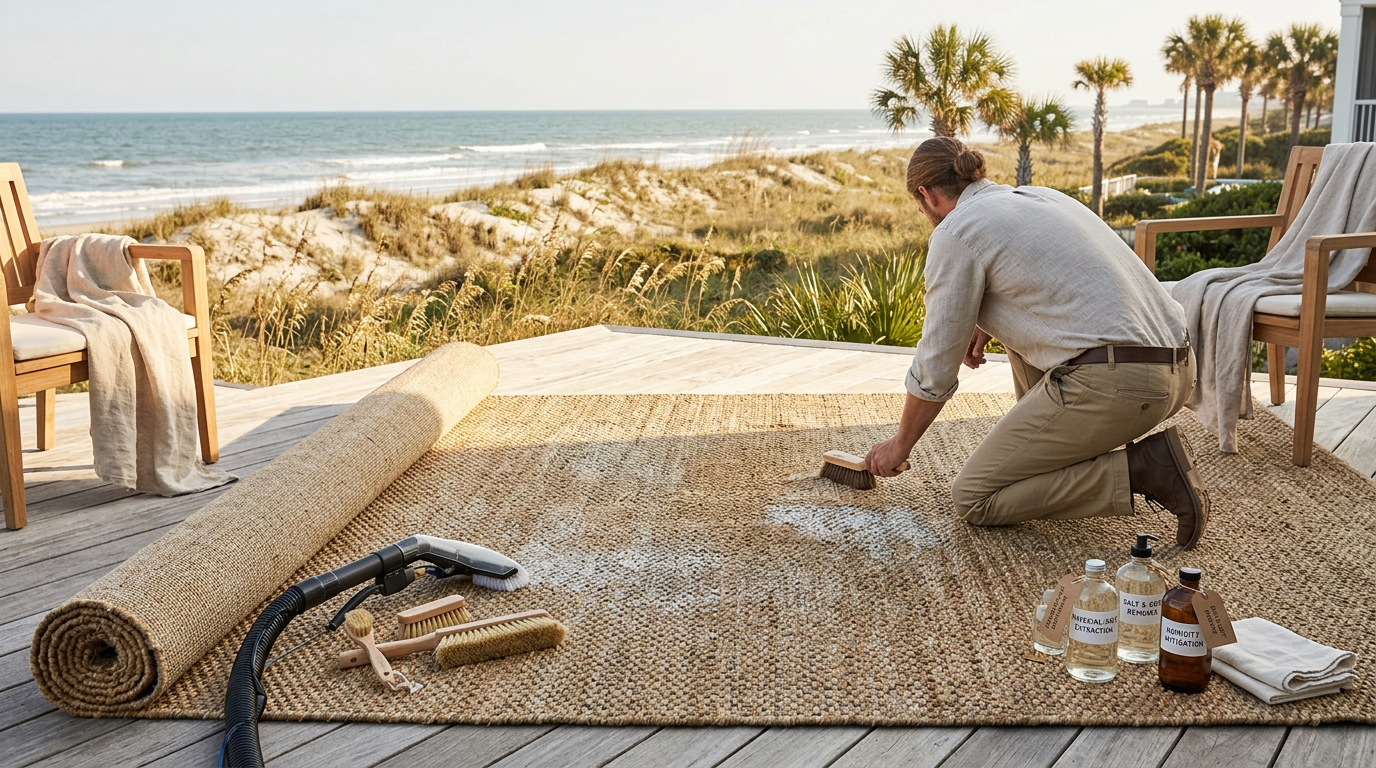
Natural fiber area rugs made of sisal, jute, and seagrass are beautiful additions to Grand Strand homes, bringing an organic texture that perfectly complements our coastal aesthetic. However, the unique climate of Myrtle Beach, marked by high humidity and salt-laden air, presents a constant threat to these delicate plant-based materials. Without proper care, these expensive design assets can quickly fall victim to dry rot, mold, and fiber warping. This guide explores the practical costs of professional restoration, safe maintenance practices, and how to protect your investment from the coastal elements.
The Vulnerability of Natural Plant Fibers to Coastal Humidity and Salt Air
Natural plant fiber rugs made from sisal, jute, and seagrass are beloved in Grand Strand homes for their organic textures and beachside aesthetic. However, these cellulose-based materials are inherently hygroscopic, meaning they constantly absorb and release moisture from our humid coastal air. In Myrtle Beach, where indoor humidity levels can fluctuate dramatically, these fibers act like natural sponges. This constant cycling causes the fibers to expand and contract, which gradually loosens the tight weaves and weakens the structural backing of the rug over time.
When high humidity mixes with salt spray carried by our sea breezes, it creates a highly destructive environment for natural fibers. Salt is a desiccant that traps moisture deep within the rug's core, preventing it from drying completely. This chronic dampness triggers localized mold and mildew growth, which digests the organic plant proteins. Homeowners often first notice a stubborn musty odor, followed by dark, blotchy discoloration that is nearly impossible to remove once it sets into the cell walls.
The physical breakdown of dry-rotting fibers shows up as excessive shedding and fine, brown dust accumulating beneath the rug. Many homeowners assume this dust is simply dirt from outside, but it is actually the disintegrated structural support of their expensive decor. Once dry rot compromises the warp and weft of the weave, the rug becomes brittle, loses its elasticity, and will easily tear or warp under normal foot traffic, requiring premature disposal.
The Damage Mechanism of Sand-Grit and Salt-Crystalline Friction
Living near the Grand Strand means tracking sand indoors is an unavoidable reality. The sharp, microscopic quartz edges of beach sand settle deep into the crevices of woven rugs. Every time someone walks across the rug, these abrasive granules act like tiny saws, grinding against the natural fibers. This mechanical friction slices the delicate strands, leading to fuzzy, frayed patches on the rug's surface and a rapid loss of its original structural luster.
Salt crystals compound this mechanical damage by locking onto the torn fiber ends. Unlike soft dust particles, salt crystals are rigid and sharp, exacerbating the abrasive wear underfoot. Furthermore, salt attracts microscopic airborne grease from cooking and outdoor air, forming a sticky binder that glues the sand to the fibers. This creates a dark, compacted layer of grit that cannot be extracted with standard household cleaning tools.
Standard home upright vacuums are generally designed with high-impact beater bars that can easily snag and unravel the loops of woven rugs. Conversely, using a vacuum with the brush roller turned off lacks the suction power needed to pull heavy, packed sand out from the deep pockets of a dense sisal or jute weave. This leaves the abrasive grit locked in place, continuing its silent destruction of the rug's foundation.
DIY Maintenance Limits and High-Risk Home Remedies
The single most critical rule of natural fiber rug care is to keep them dry. Wet-cleaning methods, such as utilizing a rental steam cleaner or a household carpet shampooer, are catastrophic for sisal and jute. Saturating these fibers causes them to shrink unevenly, creating unsightly ripples that will never lay flat again. Furthermore, water dissolves the natural lignins inside the plant stalks, resulting in brown, blotchy stains known as cellulosic browning.
Trying to fix stains with acidic DIY cleaners like white vinegar, lemon juice, or harsh alkaline baking soda pastes will chemically burn natural fibers. Plant fibers are highly sensitive to extreme pH levels, which break down their cellular integrity and leave behind permanent, bleached spots. Many commercial stain removers also contain optical brighteners or bleaching agents that strip the natural, earthy color of the fibers, leaving behind an unsightly white patch.
Safe daily maintenance is limited to immediate dry action and gentle techniques. When spills occur, blot them instantly with clean, dry cotton towels without rubbing, as rubbing pushes the liquid deeper into the porous fibers. You can safely vacuum natural fiber rugs twice a week using a suction-only attachment, moving parallel to the weaves rather than across them, to minimize fiber pulling while picking up loose surface grit.
- Blot spills instantly with a clean, dry white cotton cloth without rubbing.
- Vacuum twice weekly with a suction-only attachment to avoid fraying fibers.
- Rotate the rug 180 degrees every six months to balance sunlight and foot wear.
- Never use steam cleaners or wet carpet shampoo machines on natural plant fibers.
- Avoid applying vinegar, baking soda, or harsh alkaline spot treatments.
Professional Restoration Methods: Dry-Extraction and Moisture-Controlled Care
Professional restoration of coastal natural fiber rugs relies on specialized dry-extraction technology rather than liquid water. Professionals use advanced absorbent cleaning compounds—often made of cellulose or polymer micro-sponges—pre-moistened with a minimal amount of specialized, quick-evaporating solvent. This compound is spread evenly over the rug, where it attracts and absorbs both oily soils and dissolved salt residues like a magnet, without swelling the delicate fibers.
Technicians use counter-rotating brush machines designed specifically for delicate textiles. These machines feature soft, variable-speed bristles that gently agitate the dry compound deep into the weave without snagging the loops. The brushes loosen compacted sand and lift the dirty cleaning compound to the surface. Finally, a high-filtration vacuum system extracts the soiled compound, leaving the fibers completely clean, dry, and structurally sound.
For rugs showing severe salt-damp or mildew contamination, professionals utilize moisture-controlled climate chambers. These dedicated drying environments feature high-velocity air movers and industrial dehumidifiers that maintain low relative humidity. This setup ensures that any targeted spot treatments dry in a matter of minutes, completely preventing the risk of cellulosic browning, fiber shrinkage, or mold regrowth during the restoration process.
What to Ask a Grand Strand Cleaning Company Before Hiring
When hiring a local Grand Strand cleaning service, homeowners must carefully vet their technical expertise with plant-based textiles. A reputable company should readily explain their specific dry-cleaning protocols for sisal, jute, and seagrass. If a technician suggests a standard steam extraction or hot water pressure washing for these materials, it is a major red flag that indicates they lack the specialized training required to protect your valuable assets.
Ask prospective companies about their certifications, specifically if their team holds designations from the Institute of Inspection, Cleaning and Restoration Certification (IICRC) in rug or upholstery cleaning. Inquire about the exact chemicals they plan to use and whether they carry liability insurance that specifically covers natural fiber shrinkage or dye migration. A professional firm will always conduct a pre-inspection of the rug's backing and weave before quoting.
You should also ask if the company provides in-plant cleaning rather than on-site cleaning for heavily soiled rugs. While light maintenance can be performed in your home, deeply embedded sand-grit removal is best handled in a controlled facility. Here, specialized dusting machines can gently vibrate millions of sand grains out of the backing before dry solvents are applied, ensuring a level of deep cleaning that is impossible to achieve in a living room.
- Do you use a dry-extraction compound or a wet steam method for natural fibers?
- Are your technicians certified by the IICRC in rug cleaning?
- Do you provide off-site, in-plant dusting for heavily compacted sand?
- What is your policy or guarantee regarding fiber shrinkage and color bleeding?
- Can you provide a written, line-item estimate before starting the cleaning process?
The True Cost of Restoration vs. Replacement
The cost of professional dry-extraction cleaning for natural fiber rugs typically ranges from $3.00 to $6.00 per square foot, depending on the severity of the sand-grit compaction and salt-damp damage. For an 8x10 designer sisal rug, this equates to an investment of roughly $240 to $480. While this is higher than standard wall-to-wall carpet cleaning, the specialized chemistry and intensive labor involved are necessary to preserve the delicate plant fibers.
Compare this cleaning cost to the price of replacing a high-quality coastal designer area rug. A premium, custom-bound jute or seagrass rug of the same size easily costs between $800 and $2,500, excluding the time and expense of shipping, delivery, and disposal of the ruined rug. Replacing a rug due to improper DIY cleaning or neglect is a highly inefficient and expensive option for coastal homeowners.
Investing in professional restoration every twelve to eighteen months significantly extends the lifespan of these coastal centerpieces. By removing the abrasive sand-grit and neutralizing salt dampness before fiber rot sets in, you can easily double or triple the rug's usable life. This regular maintenance schedule saves you thousands of dollars in replacement costs while ensuring your home maintains its pristine, high-end coastal aesthetic.
Selecting Safe, Non-Toxic Protectors and Spot-Treatments
Protecting your restored rug from future spills and salt-air damage requires the application of a specialized, breathable protector. Homeowners should avoid cheap, silicone-based retail sprays. Silicone coatings form a stiff, non-breathable barrier that traps moisture inside the fibers, accelerating rot. Furthermore, silicone attracts oily residues from cooking and foot traffic and will quickly yellow when exposed to the intense UV sunlight common in Grand Strand sunrooms.
Professionals apply specialized fluorochemical protectors designed specifically for cellulosic materials. These advanced coatings bond to individual plant fibers on a molecular level without clogging the natural pores of the weave. This allows the rug to breathe and release moisture, while providing excellent resistance against water-based spills, oily soils, and salt-grit adhesion. Liquids sit on top of the weave, giving you ample time to blot them away safely.
For homes with pets or children, safety is paramount. Ensure the cleaning company uses safe, non-toxic, and botanical sanitizers. These plant-derived formulas effectively neutralize odor-causing bacteria and mold spores without leaving behind hazardous synthetic residues or artificial perfumes. Choosing a company like A2Z Cleaning & Linen Services ensures that your home's indoor air quality remains clean and safe for your entire family.
Key takeaway
Preserving coastal natural fiber rugs requires avoiding water, managing abrasive sand, and investing in professional dry-extraction cleaning. By understanding the limits of DIY remedies and asking the right technical questions, Grand Strand homeowners can protect these beautiful assets for years to come. For expert assistance with your home's specialty cleaning needs, contact A2Z Cleaning & Linen Services at 843.800.2788.
Keep Reading
Coastal Living
The Cost of Restoring Coastal Exterior Light Fixtures and Lanterns: Mitigating Salt-Air Oxidation, Glass Etching, and Safe Electrical Upkeep in Grand Strand Homes
ReadCoastal Living
The Cost of Restoring Coastal Natural Stone Tile and Grout: Mitigating Salt-Air Etching, Sand-Grit Erosion, and Acidic DIY Damage in Grand Strand Homes
ReadCoastal Living
The Coastal Family Bath and Pet-Wash Station Decontamination Protocol: Mitigating Humid Mildew, Sand-Clay Cling, Pet-Wash Hair Clogs, and Child-Safe Disinfection in Grand Strand Homes
ReadReady for a spotless property?
Call 843.800.2788 or request a free quote from A2Z Cleaning & Linen Services.