Coastal Living
The Cost of Restoring Coastal Tile and Grout: Managing Oceanfront Alkaline Crusts, Humidity-Driven Mildew, and Penetrating Sealers in Grand Strand Homes
Discover the real costs, chemical safety standards, and specialized techniques required to restore and protect high-humidity tile and grout systems in the Myrtle Beach region.
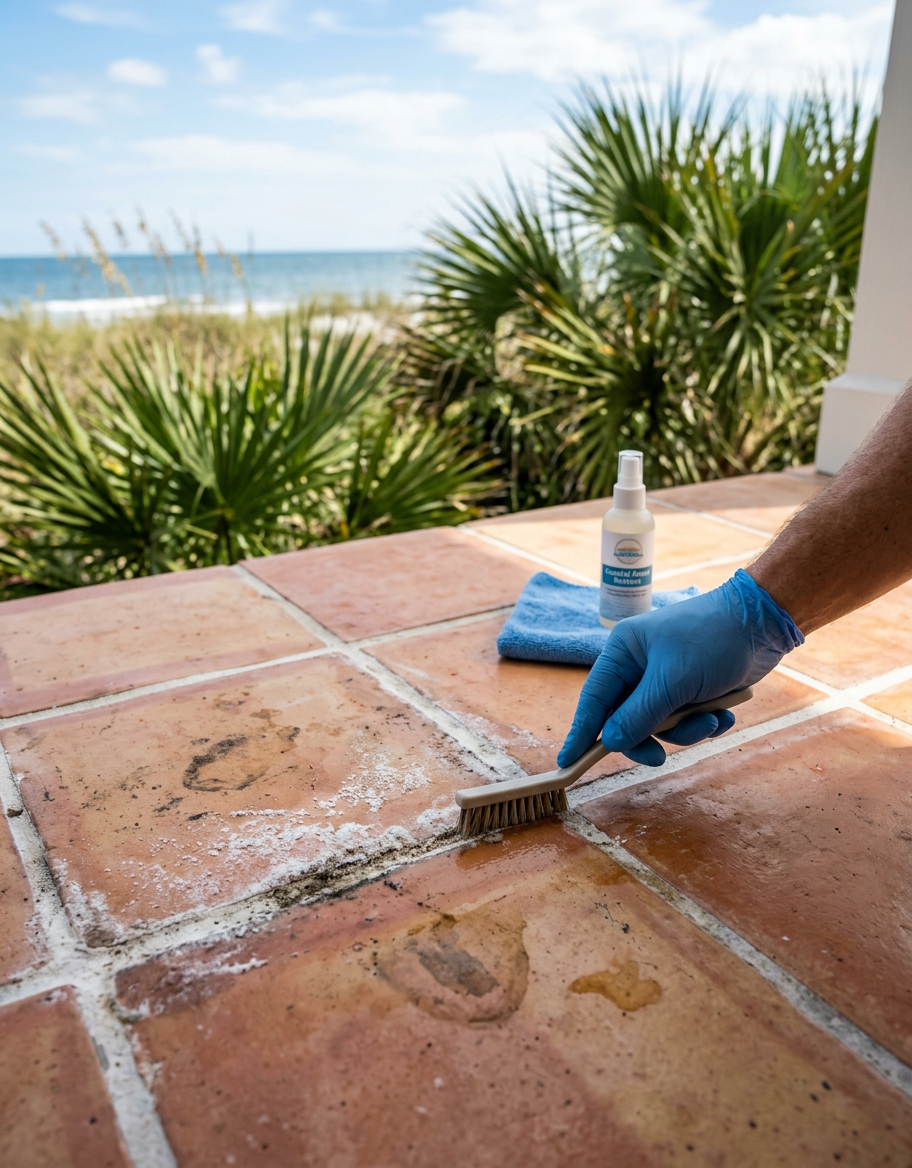
Tile surfaces in Myrtle Beach and across the Grand Strand are subject to environmental pressures that inland properties rarely encounter. The combination of sustained indoor humidity, abrasive beach sand, and alkaline mineral deposits from local water systems creates a relentless cycle of grout degradation. Regular mopping often worsens the issue by trapping dirty water, biological contaminants, and fine salt crystals within porous grout lines. This consumer guide breaks down the true financial costs of professional restoration, highlights the safety hazards of DIY cleaning methods, and outlines the essential questions you must ask before hiring a local specialist.
The Coastal Tile and Grout Dilemma: Why Ocean Air and High Humidity Accelerate Decay
In our coastal climate, grout acts like an open-cell sponge, actively absorbing ambient moisture from the air. When indoor relative humidity climbs above 55 percent, these porous cementitious lines become prime breeding grounds for microscopic fungi and bacteria. The classic pink stains commonly seen in Grand Strand bathrooms are not actually mold, but colonies of Serratia marcescens, a moisture-loving bacterium that thrives on soap residue and body oils. Without specialized extraction, these biological films penetrate deep beneath the grout surface, making topical scrubbing highly ineffective.
Furthermore, airborne salt particles carried by the ocean breeze settle onto floor surfaces and dissolve during cleaning. As the water evaporates, these dissolved salts recrystallize inside the microscopic voids of the grout, a destructive process known as subflorescence. Over time, the expanding salt crystals exert internal pressure on the grout matrix, causing it to crumble, crack, and turn powdery. This physical decay is accelerated in entryways and main living areas where beach traffic is highest.
The third element of the coastal tile challenge is fine-grained quartz sand. Unlike soft inland dirt, coastal sand consists of sharp, abrasive mineral fragments. When walked upon, these hard grains act like coarse sandpaper, grinding down the factory-applied protective glazes on ceramic or porcelain tiles. This abrasive action also strips away thin topical sealers on grout lines, leaving the raw cement underneath completely exposed to staining, dirty mop water, and chemical discoloration.
The Cost Breakdown of Professional Coastal Tile and Grout Restoration
In the Grand Strand region, professional tile and grout restoration costs typically range from $1.50 to $3.50 per square foot. The wide price range reflects several variables, including tile size, layout complexity, and the degree of soil and mold penetration. Smaller tiles, such as subway tiles or mosaic sheets, require significantly more labor because they contain a much higher ratio of grout lines per square foot. Consequently, a small master bathroom or utility room often costs more per square foot to restore than a wide-open, large-format living room floor.
Most reputable local service providers charge a minimum trip fee ranging from $150 to $250. This minimum cover charge accounts for the fuel, setup time, and heavy-duty commercial equipment staging required for even the smallest residential projects. If your tile requires advanced procedures, such as grout color-sealing or physical grout removal and re-grouting, expect prices to adjust. Color-sealing, which applies a durable, pigment-matched epoxy coating over the restored grout, generally adds $1.00 to $2.00 per square foot but offers superior long-term resistance to coastal moisture.
When planning your budget, it is important to distinguish between a basic hot-water extraction wash and a true restoration process. A simple wash merely lifts surface grime, whereas a comprehensive restoration includes targeted alkaline pre-treatments, high-temperature orbital agitation, pressurized rinsing, detailed hand-scrubbing of corners, and the application of a high-grade penetrating sealer. Investing in the full restoration process prevents rapid resoiling, saving homeowners hundreds of dollars in recurring cleaning fees over the life of the floor.
DIY vs. Professional Restoration: The Hazards of Rented Equipment and Acid Cleaners
Many Grand Strand homeowners attempt to restore their tile floors using rented machinery from local hardware or grocery stores. These rental units typically lack the vacuum power and heating capabilities required to lift deep-set coastal contaminants. While a commercial truck-mounted system heats water to a sanitizing 220 degrees Fahrenheit and extracts it with high-lift vacuum lift pressure, retail rentals often operate on standard household power circuits, struggling to reach temperatures high enough to melt embedded body oils and sunscreen residues.
The lack of strong extraction on rented equipment leads to a common cleaning failure: slurry redeposition. As the rental machine moves across the floor, it liquifies surface dirt but leaves behind a thin, highly concentrated layer of dirty water. This slurry naturally pools in the lowest points of the floor, which are the grout lines. Once the water evaporates, the dirt, biological matter, and cleaning detergents dry directly back into the porous grout, leaving the floor looking darker and more discolored than before the cleaning began.
Furthermore, DIY attempts often rely on aggressive, over-the-counter acid cleaners. These harsh store-bought chemicals present severe risks to both the user and the home's infrastructure. Acidic vapors can permanently tarnish nearby stainless steel appliances, chrome plumbing fixtures, and metal transition strips. More critically, if used on natural stone tiles like travertine, marble, or slate, acids cause immediate, irreversible chemical etching, dulling the stone and requiring expensive diamond-abrasive polishing to repair.
- Truck-mounted extractors lift contaminants completely, while rental vacuums leave dirty water to settle back into grout pores.
- Professional systems reach sanitizing temperatures above 200 degrees to kill mold spores, whereas household rentals run cold.
- Aggressive DIY scrubbing often damages weakened, sand-abraded grout lines, leading to cracks and water intrusion.
- Rented machines lack the specialized low-clearance detail tools needed to clean tight spaces around toilets and baseboards.
The Chemistry of Coastal Grout Safety: Acid-Free vs. Acid-Etching Cleaners
Understanding cleaning chemistry is crucial when dealing with coastal tile systems. Many homeowners assume that strong acids are necessary to dissolve white salt crusts and hard-water scale. While acids do dissolve alkaline minerals, they do so by chemically eating away a micro-layer of the cement binders holding your grout together. Repeated acid cleanings permanently weaken the grout, making it increasingly soft, chalky, and highly susceptible to water intrusion and structural failure.
To protect your home's structural integrity, professional technicians prioritize high-pH, acid-free alkaline pre-sprays. These specialized formulas are designed to emulsify organic proteins, skin oils, and coastal grease without reacting with the cementitious grout base. Alkaline cleaners safely break the bond between the soil and the tile surface, allowing the dirt to be suspended in water and vacuumed away safely. This process preserves the physical height and density of the grout lines, preventing deep valleys where sand and water can collect.
In cases where severe hard-water scale or efflorescence requires an acidic treatment, professionals use highly buffered, organic-acid formulas rather than harsh mineral acids like muriatic or phosphoric acid. These buffered acids are carefully metered and immediately neutralized with an alkaline rinse once the scale is dissolved. For daily home maintenance, homeowners should always use neutral-pH cleaners (pH 7.0) to ensure they do not strip away the newly applied protective sealers or damage delicate stone surfaces.
Protecting Your Family and Pets: Low-VOC Penetrating Sealers vs. Topical Topcoats
Once tile and grout are thoroughly clean, they must be sealed to prevent immediate recontamination. However, not all sealers are created equal, especially in a humid coastal environment. Homeowners must avoid cheap, topical sealers that sit on top of the tile and grout. Under our intense Southern sun and high indoor humidity, these topical plastic or acrylic coatings frequently trap moisture underneath, causing them to turn cloudy, peel, and flake. Removing a failed topical sealer requires chemical stripping, which adds significant expense to future maintenance.
Instead, high-performance restorations utilize fluorochemical penetrating (impregnating) sealers. These advanced products slip deep into the microscopic pores of the grout and tile, lining them with a hydrophobic and oleophobic barrier. Because they do not form a solid film on top, penetrating sealers allow the grout to remain breathable, letting internal moisture escape without clouding or peeling. This breathability is essential in coastal homes built on concrete slabs, where subfloor moisture is constantly migrating upward.
Product safety is another critical consideration, particularly for families and pets who spend time barefoot on tile floors. Premium service providers utilize water-based, low-VOC (volatile organic compound) sealers that emit virtually no toxic fumes during application or curing. These modern formulas provide the same oil and water resistance as old-school solvent-based sealers without exposing your household to harsh chemical off-gassing, keeping your indoor air quality safe and clean.
Critical Questions to Ask Before Hiring a Grand Strand Tile Specialist
Vetting a cleaning service provider is essential to safeguard your flooring investment. Start by asking exactly what equipment and water pressure they plan to use. A commercial technician should utilize an adjustable-pressure pump system, keeping tile cleaning pressures between 800 and 1,200 PSI (pounds per square inch). Any pressure higher than 1,200 PSI can easily blow aged, sandy grout right out of its joints, leading to costly repair bills and water damage beneath the tile floor.
Next, inquire about their water containment and extraction system. You want to ensure they are using a closed-loop extraction tool (often called a spinner tool) that applies pressurized hot water and vacuums it up simultaneously. Open spraying or basic wet-vacuuming will saturate your drywall baseboards and direct water behind cabinets, sparking rapid mold growth in our humid climate. A closed-loop system ensures that moisture is strictly controlled and immediately removed from the home environment.
Finally, always ask for proof of general liability insurance and workman's compensation. If a technician accidentally chips a rare natural stone tile, cracks a glass transition plate, or floods an adjacent hardwood floor, you must be certain their insurance will cover the damage. For trusted, professional assistance with your tile and grout challenges in Myrtle Beach and the surrounding Grand Strand, contact A2Z Cleaning & Linen Services at 843.800.2788 to speak with a coastal flooring preservation expert.
- What specific water pressure (PSI) will be used on my tile and grout?
- Is the sealer water-based, low-VOC, and safe for children and pets?
- Do you perform a chemical compatibility test on natural stone before applying pre-sprays?
- Are your technicians fully insured, and do they use closed-loop water extraction tools?
- Does your written estimate include both deep cleaning and the application of a penetrating sealer?
Long-Term Coastal Maintenance: Keeping Grout Pristine Between Professional Cleans
Maintaining your restored tile and grout requires a shift away from traditional cleaning habits. The most important rule of coastal tile care is to ditch the cotton string mop. String mops act like squeegees, pulling dirt off the flat tile surfaces and depositing it directly into the recessed grout lines. Instead, use a dual-chamber bucket system with flat microfiber mop pads. Microfiber has a positive static charge that attracts and holds dirt, preventing it from settling back into the grout pores.
Dry soil management is equally vital in the Grand Strand. Abrasive beach sand must be vacuumed up frequently using a vacuum cleaner with the brush roll turned off, or a soft canister brush tool. Leaving sand on the floor allows foot traffic to scratch the protective sealer, opening the door for moisture and stains to penetrate. Aim to dry-vacuum high-traffic entryways and kitchens at least twice a week to preserve the integrity of the grout's protective seal.
Lastly, manage indoor moisture levels to prevent mold and bacteria from re-establishing themselves. Run bathroom exhaust fans for at least 20 minutes after taking a shower, and ensure your home's HVAC system or a dedicated dehumidifier keeps the indoor relative humidity below 55 percent. By controlling humidity and keeping abrasive sand off the floor, you can easily double the lifespan of your professional tile and grout restoration, ensuring your coastal home remains clean and welcoming.
Key takeaway
Restoring coastal tile and grout requires balancing hot-water extraction with specialized acid-free chemistry to protect delicate cement binders from salt and sand wear. Investing in high-performance, low-VOC penetrating sealers protects your family's health while ensuring your floors can withstand the Grand Strand's unique climate. For professional care, contact A2Z Cleaning & Linen Services at 843.800.2788 to schedule a comprehensive tile and grout consultation.
Keep Reading
Coastal Living
The Cost of Coastal Upholstery and Mattress Restoration: Fabric Safety, Dry Times, and Vetting Grand Strand Professionals
ReadCoastal Living
The Coastal Kids' Toy Bin and Beach-to-Playroom Asset Decontamination Protocol: Mitigating Humid Saliva Biofilms, Pet-Dander Adhesion, and Sand-Friction Scratches in Grand Strand Homes
ReadCoastal Living
The Grand Strand Family Beach-Dog Entryway and Paw-Wiping Station Protocol: Mitigating Salt-Yeast Odors, Wet-Fur Dander, and Sand-Silt Tracking
ReadReady for a spotless property?
Call 843.800.2788 or request a free quote from A2Z Cleaning & Linen Services.