Commercial & Hospitality
The Grand Strand Healthcare and Medical Clinic Environmental Services (EVS) Housekeeping Specialist Career Pathway: Infection Control Chemistry, Cross-Contamination Mitigation, and High-Retention Compensation Models
Discover the career path of Healthcare EVS Specialists on the Grand Strand. Learn about infection control chemistry, certification programs, hiring practices, and year-round compensation trends.
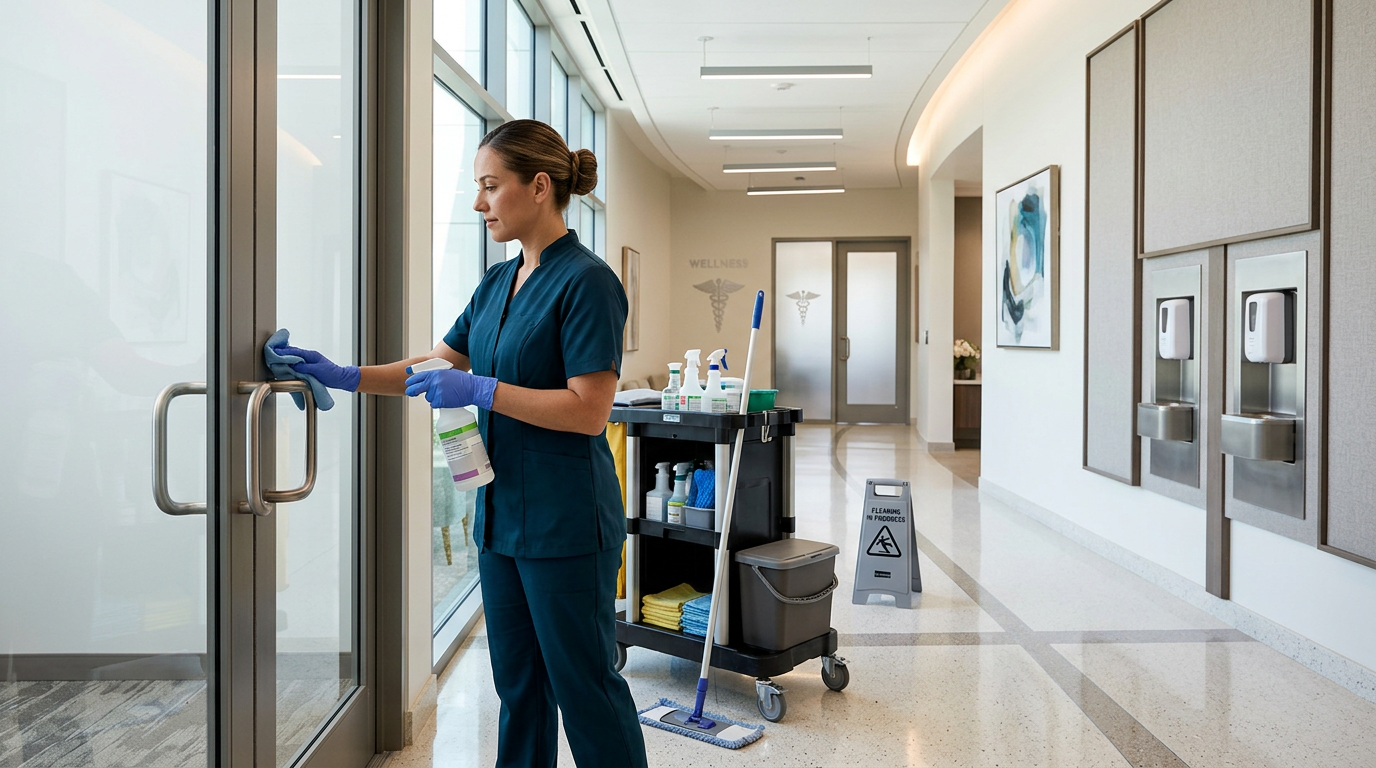
As the Grand Strand's year-round population expands, the local healthcare infrastructure along the US-17 and Route 501 corridors has grown rapidly to meet the demand. This medical expansion has created a highly specialized, non-seasonal career track for professional cleaners: the Environmental Services (EVS) Housekeeping Specialist. Unlike general janitorial roles, EVS professionals in outpatient clinics, dialysis centers, urgent cares, and dental offices operate under strict clinical protocols where cleaning directly impacts patient outcomes. Understanding this technical pathway is essential for facility managers seeking to recruit top talent and for dedicated cleaning professionals looking to build a stable, rewarding career in coastal South Carolina.
The Crucial Role of EVS in Grand Strand Clinical Environments
In a medical or clinical setting, environmental services must be viewed as a specialized division of infection prevention rather than a standard custodial chore. In Horry and Georgetown counties, our unique coastal climate introduces high relative indoor humidity, fine sand particles, and airborne salt spray, all of which can bind with organic soils and form stubborn films on high-touch clinical surfaces. EVS specialists are trained to disrupt these films systematically, ensuring that patient care areas remain clinically sterile and compliant with Joint Commission (TJC) and Centers for Disease Control and Prevention (CDC) standards.
Clinical environments require a meticulous attention to detail that extends far beyond aesthetics. A surface that looks visually clean can still harbor pathogens such as Norovirus, MRSA, or Clostridioides difficile (C. diff) spores, which can survive on dry surfaces for weeks if not properly disinfected. EVS professionals utilize scientific validation, such as Adenosine Triphosphate (ATP) bioluminescence testing, to verify that surfaces are biologically clean, transforming the housekeeping role into a quantifiable science.
Furthermore, our local medical clinics serve a diverse and often vulnerable demographic, including retirees, tourists, and pediatric patients. EVS specialists must work with an acute awareness of cross-contamination pathways, particularly in waiting rooms, triage stations, and exam rooms. By maintaining these spaces to strict clinical standards, EVS professionals play a direct role in reducing healthcare-associated infections (HAIs) and supporting the community's overall wellness.
- Direct alignment with CDC, OSHA, and Joint Commission infection control standards.
- Integration of ATP bioluminescence monitoring to provide objective, science-based cleanliness scores.
- Specialized management of high-touch clinical surfaces to prevent cross-contamination.
- Targeted sanitization protocols designed specifically for highly vulnerable patient demographics.
- Mitigation of unique coastal environmental factors like sand drift, humidity, and salt-air residues.
Technical Training, Professional Certifications, and Educational Pathways
Transitioning into a professional EVS role requires structured, ongoing education rather than basic on-the-job orientation. The gold standard for professional development in this sector is the Certified Healthcare Environmental Services Technician (CHEST) credential, offered by the Association for the Health Care Environment (AHE) of the American Hospital Association. This program covers critical modules, including disinfection chemistry, waste handling (including biohazard and pharmaceutical waste), and interpersonal communication in patient-care settings.
Local technicians can also pursue specialized training in bloodborne pathogen management under OSHA standard 1910.1030. This training prepares workers to handle, clean, and dispose of infectious materials safely, ensuring they protect themselves, clinical staff, and future patients. Understanding the proper use of Personal Protective Equipment (PPE)—from nitrile gloves to respirators—is a core competency that must be mastered before a technician ever enters a sterile environment.
In addition to national certifications, EVS specialists must undergo rigorous hands-on training regarding the equipment used in modern clinical sanitation. This includes the correct operation of electrostatic sprayers, HEPA-filtered vacuum systems that prevent allergen and spore dispersion, and high-performance microfiber cleaning programs. Professional development programs that offer structured, tiered certificates help build a sense of pride and career progression within the cleaning team.
- CHEST (Certified Healthcare Environmental Services Technician) certification for clinical environments.
- CSCT (Certified Surgical Cleaning Technician) credentialing for operating and sterile-processing rooms.
- Comprehensive OSHA Bloodborne Pathogen Standard 1910.1030 compliance training.
- Advanced proficiency training in electrostatic disinfection equipment and true HEPA-filtration systems.
- Structured CEU (Continuing Education Unit) pathways to keep pace with evolving epidemiological guidelines.
The Science of Infection Control Chemistry and Substrate Safety
A primary marker of a skilled EVS specialist is a deep, working knowledge of disinfection chemistry. Disinfectants are not interchangeable; different pathogens require specific chemical formulations, categorized by EPA registration lists. For instance, List N disinfectants are required to kill SARS-CoV-2, while specialized sporicidal agents are necessary for tackling C. diff spores. EVS specialists must be able to identify these requirements instantly by reading product labels and Safety Data Sheets (SDS).
Crucially, EVS technicians must respect the 'dwell time' or 'wet contact time' of each chemical. This is the exact duration a surface must remain visibly wet with the disinfectant to achieve the log reduction of pathogens promised on the label. In our warm, humid Grand Strand climate, HVAC systems run constantly, which can cause disinfectants to dry prematurely. Technicians must understand how to manage chemical application to ensure the proper dwell time is achieved without damaging delicate medical substrates.
Substrate compatibility is another area where professional expertise is vital. Harsh chemicals can quickly degrade medical-grade vinyl, acrylic shields, non-porous laminates, and stainless-steel fixtures, leading to cracking, pitting, and color fading. Cracked surfaces are highly problematic because they create microscopic harborages where pathogens can hide from future disinfection cycles. An EVS specialist knows how to balance maximum efficacy with material preservation.
- Precise application of EPA List N disinfectants and specialized sporicidal chemistries.
- Strict adherence to chemical dwell times to guarantee reliable pathogen eradication.
- Meticulous management of chemical evaporation rates in high-airflow, humid coastal environments.
- Protection of expensive medical-grade vinyls, laminates, and stainless-steel finishes from chemical damage.
- Implementation of a color-coded microfiber system to prevent cross-contamination between rooms.
The EVS Interview Process: Key Behavioral and Technical Questions
Hiring managers on the Grand Strand must look beyond general cleaning experience when interviewing EVS candidates. The ideal candidate possesses a mix of technical curiosity, strict adherence to rules, and a calm, methodical demeanor. During the interview, behavioral questions should focus on the candidate's response to unexpected biohazard situations, their willingness to follow rigid checklists, and their attention to safety protocols when under time pressure.
Technical screening during the interview should assess the candidate's familiarity with chemical safety. Candidates should be asked to explain what an SDS sheet is, where to locate it, and how they determine the dwell time of a new chemical product. This immediate feedback helps filter out candidates who rely on speed and intuition over science-based, standardized cleaning methods.
Furthermore, communication skills are vital in clinical settings. EVS specialists often work alongside nurses, physicians, and administrative staff, and they must navigate busy patient-care environments with respect and discretion. Asking situational questions about how a candidate handles a high-stress interaction with clinic staff or a patient's family member will reveal their professionalism and alignment with the healthcare facility's care standards.
- Assess candidates' knowledge of OSHA standards, SDS sheets, and proper PPE selection.
- Use situational questions to evaluate integrity and rule adherence when working unsupervised.
- Test understanding of cross-contamination pathways and the role of color-coded tools.
- Evaluate communication style and professionalism in busy, multi-disciplinary healthcare spaces.
- Determine the candidate's adaptability to evolving clinical schedules and emergency room turn calls.
Building a High-Retention, Mission-Driven EVS Team
Building a reliable, high-performance EVS team requires shifting the company culture from seeing cleaning as 'manual labor' to recognizing it as an essential medical specialty. When team members understand that their work directly protects lives and prevents disease outbreaks, their engagement and retention rates improve significantly. Celebrating milestones, sharing clean-audit success metrics, and publicly acknowledging EVS contributions during hospital or clinic staff meetings fosters this vital sense of mission.
Retention is also driven by clear, consistent, and safe standard operating procedures (SOPs). EVS technicians thrive in environments where expectations are clear and tools are reliable. Providing high-quality ergonomic equipment, reliable personal protective gear, and well-organized EVS carts reduces physical fatigue and demonstrates that the management team respects their safety and physical well-being.
Finally, implementing a structured peer-mentoring program helps onboard new hires smoothly and builds leadership capacity within the existing team. Pairing a new technician with an experienced, certified EVS specialist ensures that technical standards are taught consistently and safety protocols are maintained. This mentorship program creates natural pathways for advancement, which is key to long-term employee retention.
- Connect daily tasks to patient outcomes to foster a sense of purpose and professional pride.
- Provide ergonomic cleaning tools and premium PPE to protect staff health and reduce fatigue.
- Implement clear, visual, and highly organized standard operating procedures (SOPs) for every shift.
- Establish peer-mentoring programs to improve onboarding and build internal leadership.
- Acknowledge excellent ATP testing scores and clinical compliance achievements publicly.
Career Progression Pathways within Clinical Environmental Services
A major benefit of entering the EVS sector is the clear, upward career trajectory it offers. An entry-level technician can map out a multi-tiered pathway that leads to long-term financial security and professional development. With experience, technical mastery, and advanced certifications, a dedicated EVS specialist can easily transition into a Lead Technician role, overseeing daily operations and shift compliance.
Beyond the Lead position, opportunities exist to step into Quality Assurance and Compliance roles. These specialists focus on auditing facility cleanliness, conducting ATP testing, training new hires on chemical safety, and ensuring compliance with regulatory inspections. This analytical, teaching-focused role is ideal for professionals who are passionate about data, safety, and operational excellence.
For those with long-term leadership goals, the pathway leads to EVS Supervisor, Manager, and ultimately, Director of Environmental Services. In these administrative roles, professionals oversee large teams, manage budgets, select chemical vendors, and coordinate directly with clinical leadership and hospital boards. This progression shows that EVS is not just a cleaning job, but a professional career path with significant growth potential along the Grand Strand.
- Transition from Entry-Level Specialist to Lead Technician with shift supervision duties.
- Advance into Quality Assurance and Trainer roles, focusing on auditing and compliance.
- Step up to EVS Supervisor or Manager positions with direct administrative responsibilities.
- Reach Director of Environmental Services roles, overseeing multi-facility clinical operations.
- Bridge EVS experience into hospital infection prevention or occupational health careers.
Key takeaway
The Environmental Services (EVS) career pathway offers Grand Strand cleaning professionals a rewarding, year-round, and highly technical alternative to seasonal hospitality roles. By focusing on scientific training, certification, and infection control chemistry, EVS specialists protect public health in our growing local medical facilities. Building and retaining a high-caliber clinical team requires competitive, structured compensation, clear advancement paths, and a deep respect for the life-saving nature of professional sanitation.
Keep Reading

Commercial & Hospitality
The Grand Strand Medical and Outpatient Facility Environmental Services (EVS) Specialist Career Pathway: Technical Infection-Control Certifications, Behavioral Interview Standards, and High-Retention Compensation Models
ReadCommercial & Hospitality
The OSHA Bloodborne Pathogen Standard for Coastal Hospitality and Commercial Facilities: Implementing Exposure Control Plans, EPA List Q Disinfectants, and Post-Incident Workflows in Myrtle Beach
ReadCommercial & Hospitality
The ATP Bioluminescence Testing Standard for Coastal Commercial Facilities: Quantitative Disinfection Validation, National Hygiene Benchmarks, and Crew Training Protocols in Myrtle Beach
ReadReady for a spotless property?
Call 843.800.2788 or request a free quote from A2Z Cleaning & Linen Services.