Coastal Living
The Grand Strand Playroom and Toy Decontamination Protocol: Neutralizing Pet Saliva, Sand-Grime, and Allergen Bio-Films with Child-Safe Chemistry
Learn how to safely sanitize playrooms, toys, and high-traffic family zones in Myrtle Beach's humid climate without using harsh chemicals that threaten kids and pets.
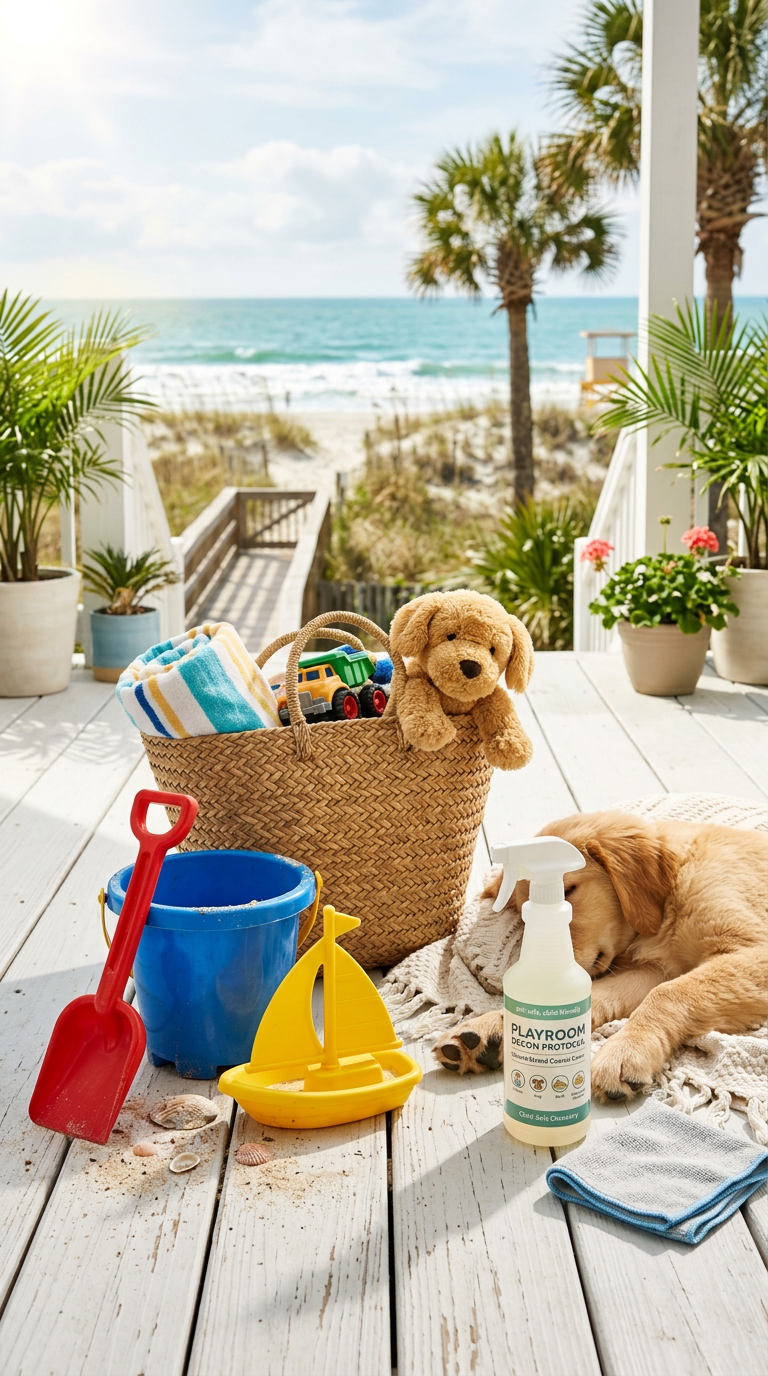
In busy Grand Strand households, the playroom is the ultimate intersection of family life, where toddlers crawl, children build, and family pets lounge. However, the combination of coastal humidity, fine beach sand, pet dander, and saliva creates a unique environmental challenge on toy surfaces and play mats. Over time, these factors bind together to form resilient, microscopic bio-films that harbor bacteria and allergens. Maintaining a pristine, hygienic play space requires a specialized decontamination protocol that prioritizes child-safe, pet-friendly chemistry over harsh industrial disinfectants.
The Anatomy of a Coastal Playroom Bio-Film
In the humid environment of Myrtle Beach, indoor relative humidity levels often climb, providing a prime breeding ground for microscopic irritants. When children play with their toys after a day at the beach, they inevitably introduce fine silica sand and sweat to plastic and wooden surfaces. When you add pet dander and saliva from curious dogs or cats into the mix, a stubborn, sticky layer known as a bio-film begins to form on these high-touch playthings.
Standard dry dusting or hasty wipe-downs with commercial wet wipes are often insufficient for breaking down these organic bio-films. In fact, many off-the-shelf cleaning products leave behind sticky chemical residues that actually attract more dust, pet hair, and sand-grime over time. This creates a compounding cycle where the toy surface remains visually dingy and chemically compromised, keeping allergens in close contact with sensitive young skin.
Furthermore, the coastal climate accelerates the growth of dust mites and mold spores within plush fabrics and soft playroom surfaces. When pets lay on plush rugs or kids drop soft toys onto damp, sandy entryways, these fibers lock in moisture and organic matter. Addressing this hidden grime requires a systematic approach that breaks down the organic binders of the bio-film without exposing your children and pets to aggressive chemical vapors.
- High humidity bonds fine beach sand to residual pet dander and saliva.
- Commercial chemical residues often act as adhesives for airborne dust and hair.
- Dust mites and mold spores thrive in soft, moisture-trapping playroom textiles.
- Standard cleaning wipes frequently fail to disrupt established biological films.
The Chemistry of Child-and-Pet-Safe Sanitization
To safely sanitize a playroom, you must carefully select cleaning agents that are highly effective against pathogens but completely non-toxic to developing systems. Harsh chemicals like chlorine bleach, synthetic fragrances, and quaternary ammonium compounds (quats) should be avoided in low-zone play areas. These substances can off-gas into the room or leave toxic residues on surfaces that children routinely put in their mouths or pets lick.
Instead, rely on safer, EPA-approved botanical and mineral-based alternatives. Diluted hydrogen peroxide (3% concentration) is an exceptional, scent-free disinfectant that breaks down into simple water and oxygen, leaving zero hazardous residues behind. For removing mineral-heavy sand-grime and hard water spots on plastic toys, food-grade citric acid or distilled white vinegar offers natural descaling power without irritating sensitive airways.
When dealing with electronic toys or delicate gaming controllers, isopropyl alcohol (70% or higher) is the ideal sanitizing agent. It evaporates rapidly, killing surface bacteria without leaving moisture behind to damage internal circuitry. By matching the correct, non-toxic chemistry to the specific toy material, you ensure a deep, sanitizing clean that respects the health of your kids and pets.
- Avoid chlorine bleach and synthetic fragrances to prevent respiratory irritation.
- Utilize 3% hydrogen peroxide for a residue-free, highly effective disinfectant.
- Apply food-grade citric acid to dissolve coastal mineral grime and sand deposits.
- Use 70% isopropyl alcohol for rapid evaporation on high-touch electronic toys.
Decontaminating Hard Plastics, Building Blocks, and Storage Bins
Plastic building blocks, action figures, and storage bins are notorious for collecting a mixture of sticky finger residue, pet hair, and ground-in beach sand. Cleaning these items individually can be incredibly tedious, which is why a bulk-soaking method is highly recommended. Begin by gathering all solid plastic toys and placing them into a clean utility sink, a large plastic tub, or even a zippered mesh laundry bag.
Fill the container with warm water and a few tablespoons of natural, fragrance-free Castile soap. Allow the toys to soak for fifteen to twenty minutes to loosen the dried saliva, static-clung pet hair, and stubborn sand-grime. Use a soft-bristled brush to gently scrub intricate crevices, such as the studs on building blocks, where dirt and hair love to lodge themselves.
After a thorough rinse with clean water, submerge the toys in a sanitizing bath of diluted hydrogen peroxide or spray them down thoroughly with a citric acid solution. It is crucial to let the toys air-dry completely on clean towels before returning them to their bins. Any residual moisture trapped inside hollow plastic toys can quickly lead to internal mold growth, which is a major respiratory hazard in our humid Grand Strand climate.
- Soak plastic toys in warm water and Castile soap to release stuck-on grime.
- Scrub studs and crevices with a soft brush to dislodge hidden sand and pet hair.
- Sanitize with a food-grade citric acid spray or hydrogen peroxide rinse.
- Air-dry completely on clean towels to prevent internal mold development.
Revitalizing Plush Toys and Fabric Play Mats
Plush toys and fabric play mats act like soft filters, absorbing airborne allergens, pet dander, sweat, and mold spores. Because kids hug these items closely, keeping them free of deep-seated biological soils is vital for preventing allergy flare-ups. Most plush toys can be safely laundered in a washing machine, provided you take a few simple precautions to protect their delicate seams and fillings.
Place the plush items inside a pillowcase or a mesh laundry bag to prevent friction damage during the wash cycle. Use a hypoallergenic, dye-free, and fragrance-free laundry detergent, and add half a cup of baking soda to the wash to naturally neutralize pet odors. Select a gentle cycle with warm water to help sanitize the fabrics, followed by a double rinse to remove every trace of detergent.
For non-washable plush toys, a dry-cleaning method using baking soda is highly effective. Place the toy in a clean paper bag, sprinkle in a generous amount of baking soda, and shake the bag vigorously for a minute. Let it sit for thirty minutes to absorb surface oils and odors, then remove the toy and thoroughly vacuum it with a HEPA-filter vacuum cleaner equipped with an upholstery attachment.
- Launder plush toys inside a protective mesh bag on a gentle cycle.
- Use allergen-free, fragrance-free detergents combined with odor-neutralizing baking soda.
- Perform a double rinse to ensure no chemical or soap residues remain in the fibers.
- Use the baking-soda-and-vacuum method for delicate, non-washable soft toys.
Sanitizing Foam Play Mats and Large Activity Gyms
Interlocking ethylene-vinyl acetate (EVA) foam play mats are excellent for cushioning falls, but they are highly susceptible to static electricity. This static charge acts like a magnet, pulling pet hair, dander, and fine sand deep into the interlocking seams. Over time, these seams can trap moisture from spills or humid air, creating a hidden layer of mold and bacteria directly against your subfloor.
To clean these mats properly, they must be completely disassembled at least once a month. Sweep or vacuum both sides of the foam tiles to remove loose sand and hair before applying any liquid cleaner. Once the dry debris is gone, wipe down each tile with a microfiber cloth dampened in a solution of warm water, a drop of dish soap, and a splash of white vinegar.
Avoid saturating the foam, as excess liquid can compromise the material or seep into the seams during reassembly. Once the tiles are clean, sanitize them with a light mist of hydrogen peroxide and let them dry completely. Wipe down the subfloor beneath the mats to eliminate any trapped sand or moisture before piecing the puzzle tiles back together.
- Disassemble interlocking foam mats monthly to clean trapped debris in seams.
- Vacuum both sides of the foam tiles to eliminate static-clung sand and hair.
- Wipe with a damp microfiber cloth using a mild vinegar and soap solution.
- Clean and dry the underlying subfloor before reassembling the play mat.
Managing Pet Hair and Sand Migration in Low-Zone Corners
In a busy family home, pet hair and outdoor sand don't stay confined to the entryway; they migrate rapidly into playroom corners and along baseboards. Because children spend the majority of their play time directly on the floor, this 'low-zone' environment must be managed aggressively. Standard sweeping often flings lightweight pet dander and dust back into the air, where it settles onto toys and is inhaled by playing children.
To control this migration, utilize a HEPA-filter vacuum cleaner at least three times a week on all playroom flooring. Work slowly, paying special attention to the perimeter of the room, corners, and the spaces behind heavy toy chests where dust bunnies accumulate. Using a vacuum with a sealed system ensures that microscopic allergens are permanently trapped rather than exhausted back into your living space.
For hard flooring, follow vacuuming with a damp micro-mopping routine using water and a botanical floor cleaner. This captures the micro-dust and fine sand particles that vacuums can sometimes miss. By establishing clean transition zones, such as placing washable utility mats at the playroom entrance, you can catch a significant portion of outdoor sand and pet debris before it ever reaches the main play area.
- Use a sealed HEPA vacuum to capture fine allergens without airborne blowback.
- Target playroom corners, baseboards, and behind furniture where hair accumulates.
- Follow vacuuming with a damp micro-mop to lock in remaining micro-particles.
- Place washable transition mats at the playroom entrance to intercept incoming sand.
Air Quality and Humidity Control in the Play Space
Maintaining clean toys and floors is only half the battle; the air circulating through your playroom plays a massive role in family wellness. High coastal humidity can cause mold spores to colonize soft surfaces rapidly, exacerbating childhood asthma and allergies. To prevent this, keep your home’s relative humidity below 50% using your air conditioning system or a dedicated dehumidifier.
Additionally, ensure your HVAC air filters are rated MERV 11 or higher, and change them every thirty to forty-five days during peak summer and beach seasons. Ceiling fans, which are constantly running in Myrtle Beach homes, should be wiped down weekly using a damp microfiber cloth to prevent them from slinging collected dust and pet dander across the playroom floor.
If your playroom features window treatments like blinds or curtains, vacuum them regularly with a brush attachment to remove airborne salt dust and dander. Keeping the air clean and dry prevents allergens from settling onto freshly sanitized toys, reducing the frequency of deep-cleaning cycles and providing a safer breathing environment for your children and pets.
- Keep indoor relative humidity below 50% to arrest mold and dust mite growth.
- Upgrade HVAC filters to MERV 11 or higher and replace them frequently.
- Wipe down ceiling fan blades weekly to stop the dispersion of dust and dander.
- Vacuum window treatments to eliminate accumulated coastal salt dust and pet dander.
Establishing a Sustainable Weekly Decontamination Routine
While a deep-clean is incredibly satisfying, busy Grand Strand parents need a practical, sustainable schedule to keep up with daily playtime chaos. Instead of trying to clean everything at once, break the decontamination protocol into manageable daily, weekly, and monthly tasks. This keeps allergen levels consistently low without causing cleaning burnout during a hectic week.
Incorporate a quick five-minute evening sweep or vacuum of the playroom floor to remove the day's sand and pet hair before it gets ground into carpet fibers. Keep a spray bottle of child-safe, diluted hydrogen peroxide and a clean microfiber cloth handy for wiping down high-touch toys that have been exposed to drool or outdoor dirt during the day.
For deep extractions of carpets, large area rugs, and upholstered playroom furniture, consider partnering with a professional cleaning service. At A2Z Cleaning & Linen Services, our specialized hot-water extraction methods and child-safe, pet-friendly products can remove deeply embedded sand, dander, and allergens from your family's favorite spaces. Call us at 843.800.2788 to schedule a professional, deep environmental cleaning for your Myrtle Beach home.
- Perform a daily five-minute vacuum to prevent sand from grinding into carpet fibers.
- Keep a spray bottle of non-toxic sanitizer handy for quick, spot-cleaning of toys.
- Rotate toy washing by cleaning one category (like blocks) each weekend.
- Schedule professional steam extraction for deep-seated playroom carpet allergens.
Key takeaway
By implementing a systematic decontamination protocol using child-safe, pet-friendly chemistry, you can successfully combat the unique combination of Grand Strand sand, humidity, and pet allergens. Keeping your family's playroom clean and safe doesn't require harsh industrial chemicals—only consistent, targeted habits and the right non-toxic products. For deep, professional sanitization of your home's soft surfaces and high-traffic family zones, trust the local experts at A2Z Cleaning & Linen Services by calling 843.800.2788.
Keep Reading
Coastal Living
The Coastal Multi-Sectional Decontamination Protocol: Mitigating Pet Sebum, Organic Kid Spills, and Humidity-Trapped Allergen Reservoirs in Grand Strand Homes
ReadCoastal Living
The Coastal Window Treatment and Blackout Drapery Sanitization Protocol: Mitigating Humid Mold Spores, Pollen Reservoirs, and VOC-Free Allergen Release in Grand Strand Homes
ReadCoastal Living
The Coastal Carpet and Rug De-Sanding and Pet Allergen Extraction Protocol: Balancing Child-Safe Botanicals, Electrostatic Release, and Humidity-Activated Odor Neutralizers in Grand Strand Family Homes
ReadReady for a spotless property?
Call 843.800.2788 or request a free quote from A2Z Cleaning & Linen Services.