Coastal Living
The Kid-and-Pet Bedding Decontamination Protocol: Managing Sand-Grit, Pet Dander, and Humidity-Trapped Odors in Grand Strand Family Bedrooms
A practical guide for Myrtle Beach families to eliminate sand-grit, pet dander, and damp odors from kids' bedding using safe, non-toxic, and highly effective coastal laundry methods.
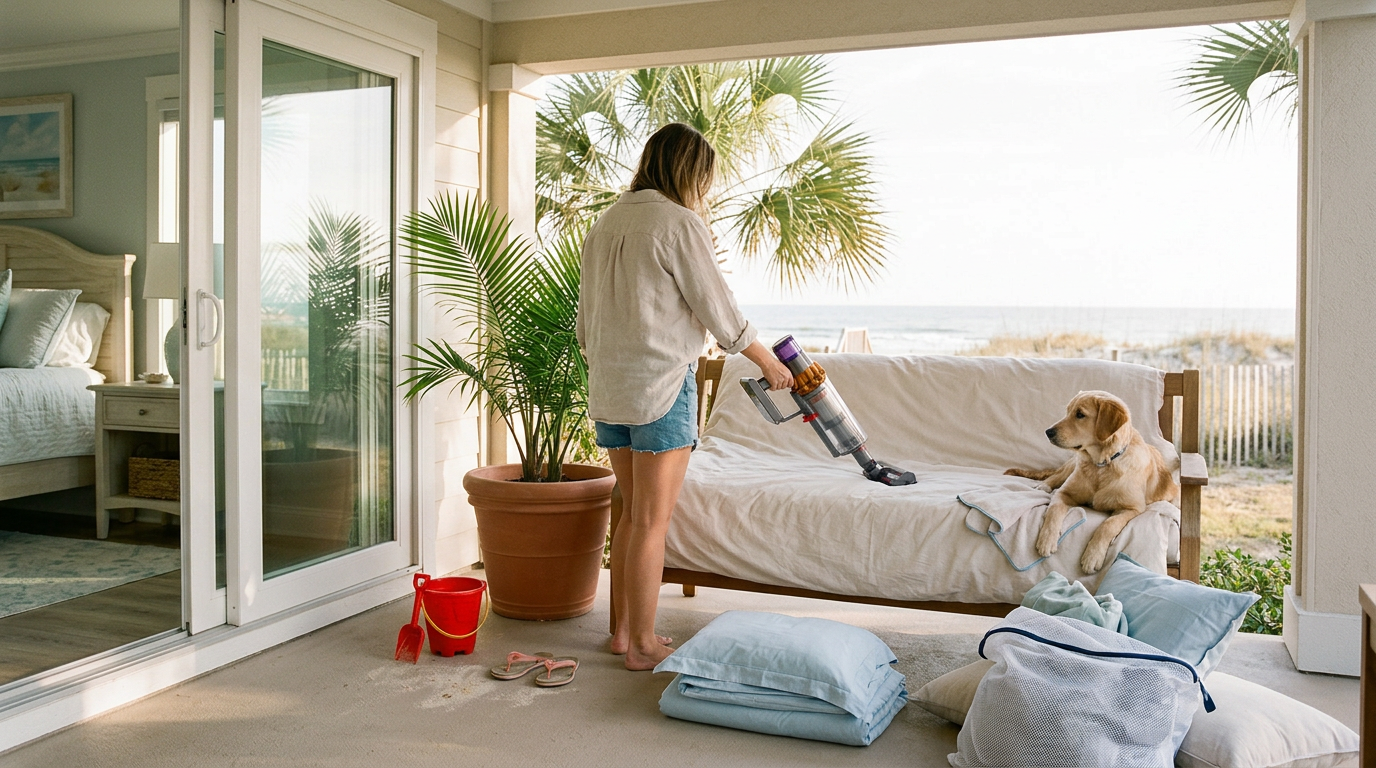
Living along the Grand Strand brings unmatched opportunities for outdoor family fun, but it also introduces unique challenges to your indoor living spaces. When kids and pets share bedrooms, the combination of tracked-in beach sand, pet dander, and high coastal humidity creates an allergen-heavy environment right where your family sleeps. Standard washing routines often fail to fully extract these embedded elements, leaving sheets feeling gritty and smelling musty. Implementing a targeted, child-safe bedding decontamination protocol is essential for preserving your linens and protecting your family's respiratory health.
The Anatomy of Coastal Bedding Contamination
Living along the Grand Strand means accepting that a little bit of the beach will always find its way indoors. However, when children and family pets share beds, the combination of fine beach sand, pet dander, and our region's intense humidity creates a unique challenge. The salt-loaded air acts as a natural humectant, drawing moisture into mattress fibers and sheets. This damp environment causes pet dander, hair, and dust mite allergens to bind tightly to woven cottons, forming a stubborn matrix of microscopic irritants that can trigger childhood asthma and allergies.
Standard household washing routines often fall short because they fail to address the sticky nature of humidity-trapped organic residues. When pet saliva and sweat dry in a high-humidity environment, they lock allergen proteins deep within the weave of children's bedding. Over time, these trapped proteins break down and emit a sour, musty odor that regular scented detergents merely mask rather than eliminate.
To protect your family's health and preserve the lifespan of your expensive bedding investments, you need an approach tailored to our coastal climate. This protocol focuses on breaking the physical bonds of sand and dander, utilizing child-safe chemistry that sanitizes without introducing synthetic chemicals into your children's sleep environment.
The Physical Extraction of Sand-Grit from Mattresses and Fibers
One of the most common mistakes Myrtle Beach parents make is throwing sandy sheets straight into the washing machine. Wet sand expands and embeds itself further into wet cotton fibers, acting like tiny sandpaper blades that slowly slice the threads during the wash cycle. Furthermore, sand accumulation can quickly destroy household washing machine pumps and drain lines. Before any water touches the bedding, you must perform a dry extraction process to remove the physical grit.
Start by stripping the bed and taking the sandy linens outside for a vigorous shake. For the mattress itself and the non-washable protective covers, use a vacuum equipped with a certified HEPA filter and an upholstery brush attachment. Vacuum the mattress surface using slow, overlapping vertical and horizontal passes, paying special attention to the seams, tufts, and crevices where sand and pet dander naturally settle.
The mechanical agitation of the vacuum's brush roll is essential here; it coaxes the heavy sand grains up from the deep quilted layers of the mattress. By removing the dry grit and loose pet dander first, you prevent these particles from turning into a muddy, abrasive paste once wet, protecting both your washing machine and the integrity of your fabric fibers.
The Child-Safe Wash Formula for Salt, Sweat, and Pet Dander
When it comes to children's laundry, especially bedding that comes into direct contact with young skin for eight to ten hours a night, minimizing synthetic chemical exposure is paramount. Traditional laundry detergents often contain optical brighteners, synthetic fragrances, and artificial dyes that linger in fabric fibers and irritate sensitive skin. To effectively break down tough pet proteins, saliva, and sweat, we must rely on simple, safe, and highly targeted active ingredients.
A high-quality, enzyme-based, fragrance-free detergent is the foundation of this protocol. Look for plant-derived formulas containing proteases and amylases, which specifically target and digest organic proteins like pet dander and saliva. To boost the sanitizing power without resorting to harsh chlorine bleach—which weakens cotton fibers and can off-gas respiratory irritants—add a half-cup of sodium percarbonate (oxygen bleach) to the wash cycle.
Run the washing machine on a warm water cycle, keeping the temperature between 130 and 140 degrees Fahrenheit. This temperature range is highly effective at neutralizing dust mites and loosening oily pet dander without damaging the elasticity of fitted sheets. Avoid cold cycles for allergen removal, as cold water lacks the energy required to dissolve stubborn sebum and pet oils from the fabric weave.
- Enzyme-based detergent: Targets and breaks down organic proteins from pet saliva and dander.
- Sodium percarbonate: Whitens and sanitizes safely without chlorine off-gassing.
- Distilled white vinegar: Added to the rinse cycle to dissolve soap residues and naturally soften fibers.
- Warm water cycle: Dissolves skin oils and neutralizes dust mites without damaging linen weaves.
Managing Bed-Sharing Pet Hair in High-Humidity Climates
In the dry winter months, static electricity makes pet hair cling to sheets; in our humid Grand Strand summers, moisture adhesion does the same. Pet hair absorbs atmospheric moisture, causing it to drape and wrap itself around cotton threads. To release this physical grip, you must pre-treat the bedding in the dryer before the wash cycle even begins, or utilize specialized drying techniques afterward.
Running dry, pet-hair-laden sheets through a 10-minute, no-heat fluff cycle with a clean, damp microfiber cloth can work wonders. The damp cloth creates a mild humidity imbalance that coaxes the hair to release from the bedding and migrate straight into the dryer's lint trap. Be sure to empty your lint trap immediately after this pre-wash step to maintain optimal airflow and prevent fire hazards.
When drying the washed bedding, bypass commercial dryer sheets entirely, as they coat fibers with a thin layer of animal-fat-derived compounds that actually trap future odors and sand. Instead, use three to four clean, natural wool dryer balls. As these balls bounce through the load, they naturally separate the sheets, improve hot air circulation, beat out remaining pet hair, and soften the fabric without leaving chemical residues behind.
Sanitizing Mattress Protectors and Toppers Safely
Waterproof mattress protectors are the unsung heroes of busy households with kids and pets, shielding expensive mattresses from nighttime accidents, spilled juice, and muddy paws. However, many protectors feature a polyurethane laminate backing that is highly sensitive to extreme temperatures and harsh chemicals. If washed incorrectly, this barrier can crack, melt, or peel, rendering the protector useless and leaving your mattress vulnerable to mold and mildew.
To wash these protectors safely, always zip them up if they are encasement-style to prevent the delicate backing from snagging on the washing machine agitator. Wash them on a gentle cycle using warm water and your mild plant-based detergent. Never use chlorine bleach or liquid fabric softeners, as these chemicals chemically degrade the polyurethane membrane, causing it to lose its waterproofing capabilities over time.
Tumble dry the protectors on the lowest heat setting possible, or hang them to dry on a breezy porch away from direct afternoon sunlight. High dryer heat is the number-one killer of waterproof backings, causing the laminate to warp and stick to itself. Taking this extra bit of care ensures your mattress remains fully protected against the damp, salty humidity that can quickly ruin unprotected core foam.
Addressing Odors at the Source: Safe Deodorizing Methods
Masking a doggy smell or sweat odor with artificial lavender or pine sprays only compounds the indoor air quality issues in your home. These synthetic perfumes react with the humid air and can create airborne irritants that trigger coughs and wheezing in children. True odor eradication requires neutralizing the acid-based or alkaline-based scent molecules at the molecular level using safe, household ingredients.
For non-washable items like mattresses, pillows, and heavy comforters, sodium bicarbonate (baking soda) is an invaluable tool. Generously sift baking soda across the entire surface of the bed and let it sit for at least two hours. Baking soda acts as a dry acid-base neutralizer, drawing out moisture and absorbing organic odors from deep within the fibers, which you can then vacuum away with your HEPA-filter machine.
For localized spot treatment of pet accidents or musty odors on fabrics, a simple spray solution of half distilled water and half isopropyl alcohol (70%) works beautifully. Spritz the fabric lightly; as the alcohol evaporates in our coastal air, it binds to odor-causing bacteria and dries them out without leaving behind any sticky residues that could attract new sand or dirt.
Establishing a Weekly Low-Allergen Rotation Protocol
Keeping up with the demands of a busy coastal household requires a structured, realistic routine that fits around school schedules and beach trips. Trying to wash every family member's bedding on a single Saturday morning often leads to laundry room bottlenecks, damp sheets being rushed onto beds, and skipped cleaning steps. Instead, split the tasks throughout the week to make the workload highly manageable.
We recommend keeping three complete sets of high-quality sheets for every bed in your home. This 'three-par' system ensures you always have one clean set on the bed, one dirty set in the hamper, and one pristine set ready in the linen closet. This rotation relieves the pressure of having to wash, dry, and replace a single set of sheets within a tight four-hour window on busy days.
Establish a rolling schedule: rotate children's bedding on Tuesday afternoons, and address pet beds and heavy blankets on Thursdays. This staggered approach ensures your family always sleeps on clean, allergen-free surfaces, and it gives you ample time to dry-extract sand and wash items at the proper temperatures without rushing through these crucial steps.
- Monday: Shake out and HEPA-vacuum bedroom rugs and the exterior of pet beds.
- Tuesday: Strip children's bed sheets and wash using the enzyme and oxygen-bleach formula.
- Thursday: Wash pet bed slipcovers, heavy throw blankets, and plush washable toys.
- Friday: Perform a quick dry-extraction vacuuming of all mattresses and protective encasements.
Professional Deep Laundering and Extraction: When to Call A2Z
Even with the most disciplined household routines, the combined forces of coastal humidity, beach sand, and deep pet dander can slowly overwhelm standard residential laundry equipment. Over several months, fine sand settles into the lower chambers of mattresses, and pet oils build up in heavy duvets that home washing machines simply aren't large enough to wash properly. This is when professional environmental cleaning and linen restoration become essential.
At A2Z Cleaning & Linen Services, we specialize in helping Grand Strand families hit the reset button on their home's indoor air quality and textile cleanliness. Our professional crews use commercial-grade extraction systems and highly specialized, child-safe laundry formulas that penetrate deep into fabrics to lift embedded sand, neutralize stubborn allergens, and erase damp odors without leaving toxic residues.
If your family is struggling to keep up with the endless cycle of beach sand and pet hair, let us take the burden off your shoulders. We can deep-clean your home's mattresses, restore heavily soiled duvets, and set your household up for long-term comfort and health. Contact A2Z Cleaning & Linen Services today at 843.800.2788 to schedule a deep clean and enjoy a healthier, fresher coastal home.
Key takeaway
Maintaining a clean, allergy-friendly bedroom environment for children and pets in the Grand Strand requires physical sand-extraction and targeted, child-safe laundry chemistry. By replacing harsh synthetic chemicals with natural enzymes, oxygen bleach, and proper dry-vacuuming techniques, you protect both fabric integrity and family health. For deep-cleaning needs and commercial-grade textile restoration, trust the experts at A2Z Cleaning & Linen Services by calling 843.800.2788.
Keep Reading
Coastal Living
The Coastal Carpet and Rug De-Sanding and Pet Allergen Extraction Protocol: Balancing Child-Safe Botanicals, Electrostatic Release, and Humidity-Activated Odor Neutralizers in Grand Strand Family Homes
ReadCoastal Living
The Coastal Family Hamper and Mudroom Laundry Loop: Mitigating Yeast, Sand-Wear, and Mildew in High-Humidity Grand Strand Homes
ReadCoastal Living
The Coastal Family Gear Audit: Child-Safe Sanitization for Strollers, Car Seats, and Pet Carriers in Myrtle Beach
ReadReady for a spotless property?
Call 843.800.2788 or request a free quote from A2Z Cleaning & Linen Services.