Coastal Living
The Multi-Species Coastal Living Room: Child-Safe, Pet-Friendly Protocols for Managing Sand, Dander, and Humidity in Grand Strand Homes
Discover practical, non-toxic cleaning methods to manage pet hair, abrasive beach sand, and humidity-trapped dander while protecting your kids and pets.
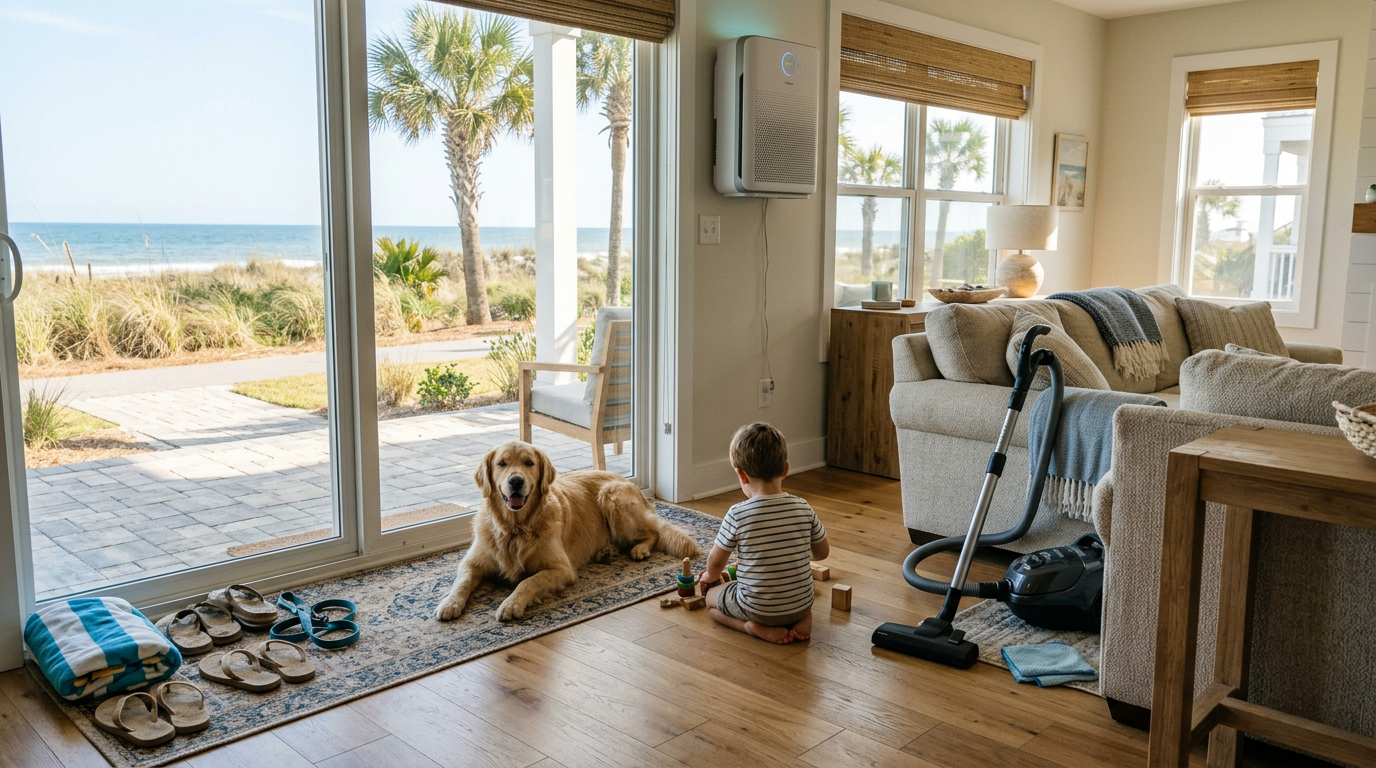
Living on the Grand Strand means dealing with a unique environment where salt-laden air, high humidity, fine beach sand, and local oak pollen constantly enter our homes. For families with young children and pets, this mixture creates a challenging cycle of indoor allergens, stubborn floor residues, and deep-seated odors. Standard cleaning methods often fall short or rely on heavy, chemical-laden agents that pose safety risks to crawling toddlers and low-level pets. This guide provides practical, non-toxic, and highly effective protocols designed specifically for coastal homes to keep your living spaces clean, safe, and fresh.
The Coastal Multi-Species Challenge: Why Grand Strand Homes Trapping Dander and Sand Need Specialized Care
Myrtle Beach's climate presents a distinct challenge for household maintenance, particularly when you share your living space with children and pets. The combination of high relative humidity and fine-grain silica sand creates an adhesive environment where pet dander, outdoor pollen, and hair cling tightly to floors, baseboards, and upholstery. Unlike dry climates where dust can be easily swept or vacuumed away, coastal humidity binds these organic particles to surfaces, creating stubborn layers of grime. This low-zone accumulation is where your toddlers crawl and your pets rest, making it a critical focus area for proactive hygiene.
When pets run through local maritime forests or play along the shore, they bring back microscopic mold spores, salt crystals, and fine sand embedded deep within their fur. Children, too, transition constantly between backyard grass, sandy decks, and indoor carpets, dragging these outdoor elements inside. Once indoors, these particulates settle into the lower breathing zones of your home, exacerbating childhood allergies and pet dander sensitivities. Addressing this issue requires more than superficial dusting; it demands a systematic approach that neutralizes the physical and chemical bonds keeping these allergens trapped inside.
Furthermore, many off-the-shelf cleaning products marketed for heavy pet odors and stains rely on harsh synthetic fragrances and volatile organic compounds (VOCs). In tightly sealed, air-conditioned coastal homes, these airborne chemicals accumulate, posing respiratory risks to developing young lungs and sensitive animal airways. To protect your family's health, it is essential to replace these aggressive chemical agents with smart, targeted cleaning protocols. Understanding how coastal elements interact with household textiles allows us to design safe, highly effective routines that keep indoor spaces genuinely clean.
- High indoor humidity (often exceeding 60% in summer) binds allergens to low-zone surfaces.
- Fine beach sand acts like an abrasive sandpaper, wearing down carpet fibers and trapping pet dander deep within the backing.
- Pollen from Grand Strand live oaks and pine trees hitches rides on pet coats and children's clothing.
- Low-zone breathing environments are highly concentrated with settled dust, pet dander, and chemical residues.
The Physics of Wet Sand and Pet Hair: How Coastal Humidity Binds Grime to Soft Surfaces
To effectively manage a busy coastal household, one must understand how moisture changes the behavior of debris. Dry sand behaves predictably, sliding off smooth surfaces and sitting loosely on top of carpet fibers. However, once that sand is exposed to the humid, salt-kissed air of the Grand Strand or combined with damp pet paws, it develops cohesive properties that make it stick to upholstery and deep pile rugs. This damp sand acts like a magnet for shed pet hair and dander, weaving these fibers together into dense, hard-to-vacuum mats.
Additionally, pet hair itself is covered in natural oils that attract and hold onto fine dust and salt crystals. When these oiled fibers settle into carpets and upholstery under high-humidity conditions, they undergo a curing-like process, adhering to the textile fibers. Standard vacuuming often only shears off the top layer of hair, leaving the embedded dander, sand, and oils deep within the fabric backing. This buried organic matter quickly degrades, feeding dust mites and generating that persistent, musty wet dog odor that characterizes many coastal homes during the humid summer months.
Breaking this bond requires a two-step approach: reducing the moisture content of the surface fibers and mechanically disrupting the physical interlocking of the sand and hair. Without addressing both factors, vacuuming remains inefficient, and damp mopping can actually worsen the situation by pushing the dissolved sand-dander slurry deeper into grout lines and wood grain. By implementing dry extraction techniques first, followed by controlled, low-moisture sanitization, you can safely release these bound soils without damaging your home's finishes or exposing your family to chemical vapors.
Deconstructing Child-Safe and Pet-Safe Chemistry: Avoiding Greenwashed Toxins
Selecting cleaning agents for a home with children and pets requires a critical eye, as many products labeled natural or green still contain ingredients that can irritate sensitive skin and respiratory systems. For instance, many natural cleaners rely heavily on essential oils like tea tree, pine, citrus, and eucalyptus for scent and antibacterial properties. While these ingredients sound safe and wholesome, many of them are highly toxic to dogs and cats when absorbed through the paws or ingested during self-grooming, and they can trigger asthma flare-ups in young children.
Truly safe coastal home cleaning relies on simple, fragrance-free, biodegradable surfactants and mineral-based agents. Sodium bicarbonate (baking soda), hydrogen peroxide, and distilled white vinegar are exceptionally effective when used correctly, but they must be applied in the right sequences and dilutions to prevent damage to coastal home materials like hardwood, travertine, or delicate upholstery. For example, a diluted hydrogen peroxide solution serves as an excellent, child-safe oxygen bleach that breaks down organic stains and odors without leaving behind the toxic chlorinated byproducts associated with standard household bleach.
When evaluating commercial cleaners, look for third-party certifications such as the EPA's Safer Choice label or the Green Seal. These certifications verify that the product's ingredients have been rigorously screened for human health and environmental safety, ensuring they contain no known carcinogens, reproductive toxins, or respiratory sensitizers. Emphasizing these clean formulations in your daily routine protects your toddlers as they play on the floor and ensures your pets are not tracking harmful chemical residues onto their paws and licking them off later.
- Avoid essential oils like tea tree, eucalyptus, citrus, and pine, which are toxic to household pets.
- Replace chlorinated bleach with stable hydrogen peroxide solutions for safe, non-toxic sanitizing.
- Look for Safer Choice or Green Seal certifications rather than relying on vague all-natural marketing claims.
- Avoid synthetic fragrances, which are a primary source of indoor volatile organic compounds (VOCs) and childhood allergy triggers.
Deep Extraction Protocols for Area Rugs and Low-Zone Play Areas
Area rugs and play mats are the primary landing pads for kids and pets, making them the most concentrated reservoirs of dander, sand, and hair in your home. To keep these low-zone spaces clean and safe, a high-efficiency particulate air (HEPA) vacuum is your most powerful tool. Standard vacuum filters often allow microscopic pet dander and pollen to pass straight through, exhausting them back into your breathing air; a true HEPA filter captures 99.97% of particles down to 0.3 microns, trapping these microscopic allergens permanently inside the machine.
For deep-set pet hair that resists vacuum suction, employ a specialized rubber squeegee or a pet hair rake before vacuuming. Dragging a rubber blade across your carpets and upholstery creates static electricity, pulling deeply embedded hairs to the surface and clumping them together for easy removal. This mechanical extraction step prevents your vacuum's brush roll from becoming tangled and losing suction, ensuring that the machine can pull up the fine beach sand resting at the base of the carpet fibers.
Once the dry sand and hair are removed, perform a low-moisture surface extraction using a child-safe surfactant solution. Excessive moisture in carpets can lead to mold and mildew growth within 24 to 48 hours, especially under humid coastal conditions. By using a light mist of water mixed with a small amount of liquid castile soap, followed immediately by a dry microfiber blotting pass, you can lift sticky residues and light staining without saturating the carpet backing, ensuring the play area dries quickly and safely.
Managing the Entryway Pipeline: Designing a Paw-and-Foot Transition Zone
The most effective way to keep your Myrtle Beach home clean is to stop sand, dander, and outdoor allergens at the door. Creating a dedicated transition zone in your entryway or mudroom is essential for intercepting outdoor elements before they reach your main living areas. This transition zone should feature a multi-layered matting system, durable seating for shoe removal, and a designated cleaning station for your pets' paws, helping to establish a seamless daily routine that keeps the outdoors where it belongs.
Start with an abrasive outdoor scraper mat to dislodge heavy sand and mud from shoes, followed by an indoor moisture-absorbing microfiber rug that traps fine dust, pollen, and water. For your pets, keep a shallow tray filled with a damp, low-pile microfiber towel near the door. Training your dogs to step onto this damp mat as they enter allows you to wipe down their paws quickly, removing salt crust, sand, and outdoor allergens before they can track them across your clean hardwood or tile floors.
To make this system highly functional, keep a basket of clean, dry microfiber cloths, a spray bottle of diluted, pet-safe Castile soap, and a designated bin for dirty towels right by the entrance. This simple setup allows you to clean sandy feet and muddy paws in seconds, preventing the abrasive beach sand from acting like sandpaper on your floor finishes and keeping outdoor allergens from colonizing your home's central carpets and upholstery.
- Utilize a dual-mat system: a coarse-fiber scraper mat outside and a dense microfiber mat inside.
- Keep a designated pet paw-wiping station with damp, low-pile towels to catch salt and sand.
- Enforce a strict no-shoes-indoors policy, providing a comfortable bench and shoe storage at the door.
- Wash entryway rugs weekly to prevent them from becoming saturated with sand and outdoor pollen.
Odor Neutralization Without Synthetic Fragrances: Solving the Wet Dog Coastal Dampness
Humid air carries odors much more effectively than dry air, which is why Grand Strand homes are particularly susceptible to musty pet and child-related smells. When moisture in the air mixes with pet dander and organic spills, it accelerates the decay of these proteins, producing volatile sulfur compounds that lead to persistent, stale odors. Standard air fresheners do not eliminate these odors; they merely mask them with heavy chemical scents, which can trigger asthma and chemical sensitivities in both children and pets.
To truly neutralize odors, you must address the source using non-toxic, odor-absorbing materials. Baking soda remains one of the safest and most effective dry odor absorbers available. Sifting a generous layer of sodium bicarbonate over dry carpets, pet beds, and fabric sofas, letting it sit for at least thirty minutes, and then vacuuming it up will chemically neutralize acidic and basic odor molecules. This physical extraction process removes both the odor compounds and the fine organic particles that feed odor-causing bacteria.
For washable fabrics and hard surfaces, distilled white vinegar serves as an outstanding, safe odor-fighting agent. As the vinegar evaporates, its acetic acid binds to odor molecules, neutralizing them and carrying them away into the air without leaving any harmful residues behind. For stubborn pet odors on hard floors, an enzymatic cleaner designed specifically for pet accidents is highly recommended; these bio-enzymatic formulas break down the complex organic proteins in urine and saliva, eliminating the odor completely rather than masking it.
Allergy-Reduction Laundry Routines for Kids' Bedding and Pet Linens
Bedding, blankets, and pet linens are significant contributors to indoor allergen levels, acting as dust-mite factories and dander magnets. Because children and pets spend a third or more of their day in direct contact with these fabrics, establishing a high-performance, hypoallergenic laundry routine is essential for managing indoor allergies. This routine should focus on thermal sanitization and the complete removal of irritating detergent residues that can inflame sensitive skin and airways.
Wash all children’s bedding and pet blankets weekly in hot water (at least 130 degrees Fahrenheit) to kill dust mites and dissolve accumulated body oils and pet dander. Use a fragrance-free, dye-free liquid detergent formulated for sensitive skin, and run an extra rinse cycle to ensure all soap residues are completely flushed from the fabric fibers. Residual detergent in clothing and bedding is a common cause of contact dermatitis in young children and can cause dry, itchy skin in family pets.
To soften fabrics naturally without relying on chemical-laden dryer sheets, use 100% organic wool dryer balls. Dryer sheets contain synthetic fragrances and chemical coating agents that transfer onto fabrics, reducing their absorbency and releasing volatile organic compounds into your home's air during the drying cycle. Wool dryer balls gently separate the laundry, improving hot air circulation, reducing drying times, and naturally softening fabrics without introducing any synthetic additives or respiratory irritants.
- Wash kids' bedding and pet blankets weekly in water that is at least 130°F to eliminate dust mites.
- Use liquid, fragrance-free, dye-free laundry detergents to protect sensitive skin and airways.
- Add an extra rinse cycle to ensure complete removal of irritating soap and detergent residues.
- Replace chemical dryer sheets with organic wool dryer balls to soften fabrics naturally and safely.
Establishing a Sustainable Weekly Rhythm for Busy Grand Strand Families
Managing a busy, multi-species coastal household can feel overwhelming, but breaking your cleaning routines down into a simple, structured weekly rhythm makes the task highly manageable. Rather than attempting to clean your entire home in one exhausting weekend session, focus on small, consistent daily maintenance tasks supplemented by targeted weekly deep cleans. This consistent approach keeps sand, dander, and allergens from accumulating, maintaining a healthy, comfortable environment for your children and pets year-round.
Dedicate just ten minutes each evening to high-traffic areas, focusing on a quick dry sweep or vacuum of the entryway, wiping down your pet's paw station, and clearing any immediate clutter. This daily habit prevents sand from migrating from your doors into carpets and bedrooms, significantly reducing the time and effort required for your weekly deep clean. It also ensures that any spills or accidents are addressed immediately before they can stain or feed odor-causing bacteria under humid conditions.
At the end of the week, allocate time for a more thorough cleaning of soft surfaces, including HEPA-vacuuming all rugs, washing pet and child linens, and damp-mopping hard floors with a mild, child-safe surfactant. If your busy schedule leaves you with little time to manage these deep-cleaning tasks, partnering with a professional cleaning service like A2Z Cleaning & Linen Services can provide the deep extraction and sanitization your coastal home needs to stay healthy, safe, and beautifully maintained.
Key takeaway
Maintaining a clean, allergy-friendly coastal home is entirely achievable with the right combination of child-safe chemistry, consistent routines, and physical barrier methods. By keeping beach sand and pet dander at bay, you protect both your family's health and your home's long-term value. For expert help keeping your Grand Strand home in pristine, family-safe condition, contact A2Z Cleaning & Linen Services at 843.800.2788.
Keep Reading
Coastal Living
Sanitizing Coastal Soft Surfaces: Child-Safe Pet Bed, Toy, and Play Area Maintenance in High-Humidity Myrtle Beach Homes
ReadCoastal Living
The Coastal Sliding Glass Door Track and Weep-Hole Decontamination Protocol: Mitigating Mold Bio-Sludge, Wind-Driven Allergens, and Chemical Runoff in Grand Strand Homes
ReadCoastal Living
The Coastal Window Treatment and Blackout Drapery Sanitization Protocol: Mitigating Humid Mold Spores, Pollen Reservoirs, and VOC-Free Allergen Release in Grand Strand Homes
ReadReady for a spotless property?
Call 843.800.2788 or request a free quote from A2Z Cleaning & Linen Services.