Vacation Rentals
The Oceanfront Balcony Audit: Managing Salt-Crusted Glass, Wind-Blown Railings, and Outdoor Furniture Turnovers in Grand Strand High-Rises
Discover how to manage the unique cleaning challenges of oceanfront balconies during rapid turnovers to protect your vacation rental's guest reviews.
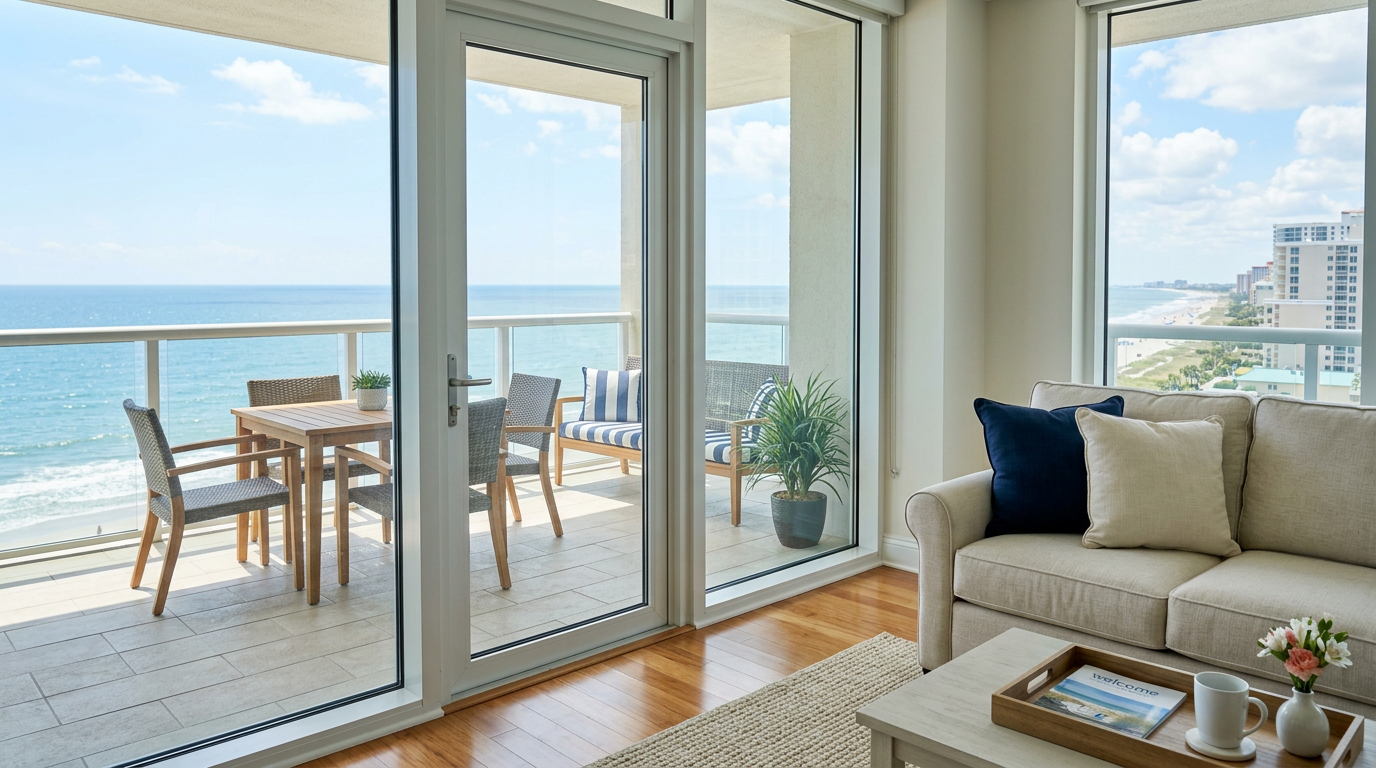
An oceanfront balcony is often the primary selling point for vacation rentals along the Grand Strand, serving as the setting for morning coffees and evening ocean views. However, because these outdoor spaces are directly exposed to shifting winds, salt spray, and nesting sea birds, they are also the most vulnerable areas of your property. If a guest opens the sliding glass door only to find a salt-filmed view, sticky railings, or bird droppings on the outdoor furniture, their perception of the interior cleanliness drops instantly. Managing this critical outdoor transition during a tight four-hour changeover window requires a highly specialized cleaning protocol.
The Salt-Blindness Phenomenon on Sliding Glass Doors
The airborne salt of the Atlantic Coast constantly deposits a fine, alkaline haze on sliding glass doors, a condition known as salt-blindness. When this mineral film mixes with high humidity and morning dew, it bakes onto the glass under the intense South Carolina sun, creating a stubborn, cloudy barrier that blocks the ocean view. Standard household glass cleaners are insufficient for this buildup; they simply smear the sodium chloride crystals, leaving greasy streaks that become highly visible when the afternoon sun hits the glass.
To break down this mineral crust during a rapid turnover, cleaners must use a specialized, non-abrasive descaling agent or a vinegar-based surfactant solution. This solution neutralizes the alkaline salt, allowing it to be squeegeed off cleanly without scratching the tempered glass. The tracks of these sliding doors must also be thoroughly vacuumed with a crevice tool to remove packed sand, which otherwise grinds down the roller mechanisms and makes the heavy glass doors difficult for guests to slide open.
Cleaners must also inspect the exterior handles and locksets, which are prone to sticky salt residue and early pitting corrosion. Wiping these high-touch metal surfaces with a microfiber cloth damp with a light silicone-based protectant prevents the hardware from binding and keeps it feeling smooth to the touch. This simple step ensures that the guest's physical transition from the air-conditioned living room to the salty balcony air is clean, safe, and effortless.
- Squeegee glass from top to bottom using a neutralized vinegar or professional salt-release solution.
- Vacuum door tracks with high-suction crevice attachments to prevent roller wear.
- Apply a silicone-based protectant to exterior hardware to repel salt crust.
- Inspect sliding rollers for friction and clear out trapped sand grains.
High-Wind Dusting and Surface Sanitization Protocols
Dusting an outdoor space in Myrtle Beach is fundamentally different from cleaning an indoor room due to the near-constant ocean breeze. A standard feather duster or dry rag will simply launch dust, pollen, and salt particles back into the air, where the wind will redeposit them onto the glass or into neighboring condo units. Instead, turnover cleaners must employ wet-dusting techniques using damp, high-density microfiber cloths that capture and lock in the fine maritime dust.
Every surface must be wiped down systematically, starting from the highest light fixtures and ceiling fans down to the table legs and chair stretchers. Plastic, metal, and wicker outdoor furniture collect a sticky layer of ocean humidity and airborne sand that acts like sandpaper if left untreated. Wiping down these surfaces with a mild, pH-neutral detergent breaks up the sticky binder without degrading the UV-resistant coatings on the outdoor furniture.
Particular attention must be paid to the undersides of tables and the recesses of chairs where children might grab or tuck their hands. Grand Strand humidity encourages mold spores to settle in these shaded crevices, which can cause unpleasant odors and trigger allergies for sensitive guests. A quick, thorough wipe-down of these hidden zones ensures the entire outdoor living area is hygienically clean and safe for barefoot, sunscreen-slathered families.
Rust Prevention and Railing Maintenance
The powder-coated aluminum or wrought-iron railings common to Grand Strand high-rises are constantly under chemical attack from salt-laden air. Over time, tiny chips in the coating expose the underlying metal to moisture, leading to bubbling and rust. During a fast-paced turnover, cleaners must look for these compromised areas, as rubbing against a rusted railing can ruin a guest's expensive white beachwear, leading to immediate complaints and refund requests.
Railings should be wiped down with a damp cloth to remove the abrasive salt film that acts as a catalyst for oxidation. If rust spots are detected, they should be documented in the property management portal so maintenance can spot-treat them before they expand. Ensuring the top rail is completely free of sticky sunscreen residues left by previous guests is critical, as these oils can chemically degrade the protective paint layers over time.
It is also vital to check the structural fasteners and bracket mounts where the railings anchor into the concrete balcony slab. While structural integrity is ultimately an HOA concern, turnover cleaners serve as the first line of defense, noting any orange staining or loose bolts that could present a safety hazard. Keeping these railings pristine protects your property's aesthetic value and safeguards your guests as they lean out to enjoy the view.
The Drainage and Wash-Down Logistics of Condo Balconies
Cleaning a balcony floor requires strict adherence to local HOA regulations, which almost universally prohibit washing water, sand, and debris directly off the edge of the balcony. Doing so floods the units below, staining their windows, soaking their outdoor cushions, and creating immediate friction with neighboring owners. Instead, high-rise turnover cleaning requires a controlled containment strategy that manages water runoff carefully.
The floor must first be thoroughly dry-swept or vacuumed with a shop vac to collect loose sand, hair, and windblown debris before any liquid touches the surface. Once the loose dry soil is removed, a damp mopping system with a highly absorbent microfiber flat mop or a spin mop is used to clean the concrete or tile surface. By controlling the amount of moisture applied to the floor, cleaners can lift sticky residues and salt without creating runoff that drips down the building's facade.
For stubborn stains like spilled drinks, melted ice cream, or dropped sunscreen, spot-treatment with a deck brush and a small amount of residue-free degreaser is necessary. The soiled liquid should be immediately absorbed using dry towels rather than pushed toward the balcony drains, which are often narrow and easily clogged by wet sand. This disciplined approach keeps your property in compliance with condo association rules while delivering a floor clean enough for bare feet.
Outdoor Fabric and Cushion Management
Outdoor cushions are designed to withstand the elements, but the combination of Myrtle Beach's high humidity and frequent summer downpours can turn them into damp, musty sponges if not managed correctly. During a turnover, cushions must be checked for wetness; guests frequently sit on them in wet bathing suits, leaving moisture deep within the foam core. If a cushion feels damp, it must be propped vertically in the sun or brought inside to dry in front of the AC unit to prevent mildew.
Sunscreen stains present another major operational headache, leaving greasy, yellowed rings on light-colored outdoor fabrics. Cleaners must spot-treat these stains with an enzyme-based fabric cleaner that breaks down the active oils and UV blockers without stripping the fabric's water-resistant treatment. If the stains are baked in, the cushion covers should be zipped off and laundered according to the manufacturer's guidelines to maintain a premium look.
Finally, ocean winds along the Grand Strand can pick up unexpectedly, easily blowing loose cushions off high-rise balconies and down onto the beach or pool deck below. During the turnover process, cleaners must ensure that all ties, velcro straps, or toggle systems are securely fastened to the chair frames. If high winds are forecasted during a gap day, the standard operating procedure should dictate storing the cushions inside the entryway to prevent loss or damage.
- Check cushion cores for dampness and dry them vertically to prevent mildew.
- Spot-treat oily sunscreen stains with specialized enzyme fabric cleaners.
- Secure all ties and straps tightly to prevent wind loss.
- Store cushions indoors during forecasted high-wind events or extended gap days.
Pest Mitigation: Pigeons, Gulls, and Spider Webs
High-rise balconies are attractive nesting and roosting spots for local pigeons and seagulls, which seek shelter from coastal winds in recessed corners. Bird droppings are not only an eyesore that ruins a guest's arrival, but they also carry health risks and can permanently etch concrete and paint due to their high acidity. Cleaners must identify and thoroughly sanitize any affected areas using an EPA-registered disinfectant that is safe for outdoor surfaces.
Spider webs are another persistent issue, as coastal orb weavers can spin massive, intricate webs overnight in balcony light fixtures and under railings. Guests checking in late at night can easily walk into these webs, creating a highly negative first impression of neglect. Cleaners must use an extendable cobweb brush to sweep the ceiling corners, light fixtures, and sliding door frames during every single turnover.
Installing simple, non-harmful deterrents, such as reflective gel cups or subtle bird spikes in deep architectural alcoves, can dramatically reduce pest activity between bookings. Instructing cleaners to report any recurring pest patterns to your property manager allows for proactive maintenance before nesting habits take hold. Keeping these pests at bay ensures the balcony remains a clean, inviting sanctuary rather than an active wildlife zone.
The Final Balcony Checklist and Turn Integration
A successful balcony turnover is only complete when it is seamlessly integrated into the overall cleaning checklist of the rental unit. Because cleaners often start with the balcony to avoid tracking sand back into a clean living room, a final quality control sweep is essential. Before the unit is marked ready for the guest, the inspector or lead cleaner must perform a final walk-through to ensure no salt-spray drift has hit the newly cleaned glass during the interior process.
This final check should verify that the sliding door lock is fully functional, the screen door slides smoothly on its track, and all balcony furniture is arranged in an inviting, uniform layout. The view from the interior looking out should be crystal clear, framing the ocean perfectly without any distracting streaks or thumbprints. This visual connection between the spotless interior and the pristine outdoor space is what elevates a rental's perceived value.
Partnering with a professional environmental services team like A2Z Cleaning & Linen Services ensures that these rigorous outdoor protocols are executed consistently. Our experienced Grand Strand teams understand the unique challenges of coastal properties, from high-rise wind dynamics to salt-crust removal. To learn how we can protect your guest reviews and elevate your property's presentation, contact our Myrtle Beach office today at 843.800.2788.
Key takeaway
An oceanfront balcony is a high-impact zone that directly influences guest reviews and platform ratings in the Grand Strand rental market. By implementing a systematic, wind-aware cleaning protocol that manages salt-blindness, runoff, and outdoor fabrics, hosts can ensure a flawless first impression. Partnering with a professional service team guarantees these detailed outdoor steps are never overlooked during the tight Saturday turnover window.
Keep Reading
Vacation Rentals
The Coastal Smart-Fridge and Ice Maker Sanitation Protocol: Mitigating Hard-Water Scale, Seafood Odor Migration, and Chute Biofilms in Grand Strand Rental Turnovers
ReadVacation Rentals
The Grand Strand Vacation Rental Onboarding and Property-Profile Standardization Protocol: Syncing PMS Hardware Maps, Housekeeping Checklist Blueprints, and Vendor Supply Loops for Scaling Portfolios
ReadVacation Rentals
The Coastal Oceanfront Balcony and Balustrade Turnover Protocol: Mitigating Salt-Atmosphere Etching, Sticky Beverage Residues, and Guest First-Impression Failures in Grand Strand Vacation Rentals
ReadReady for a spotless property?
Call 843.800.2788 or request a free quote from A2Z Cleaning & Linen Services.