Coastal Living
The Overhead Allergen Trap: Cleaning Vaulted Ceilings, Fan Blades, and HVAC Registers in Coastal Homes
Discover how humid coastal air binds dust, pollen, and mold to high surfaces in Grand Strand homes, and how to safely remediate these overhead areas using sustainable, green practices.
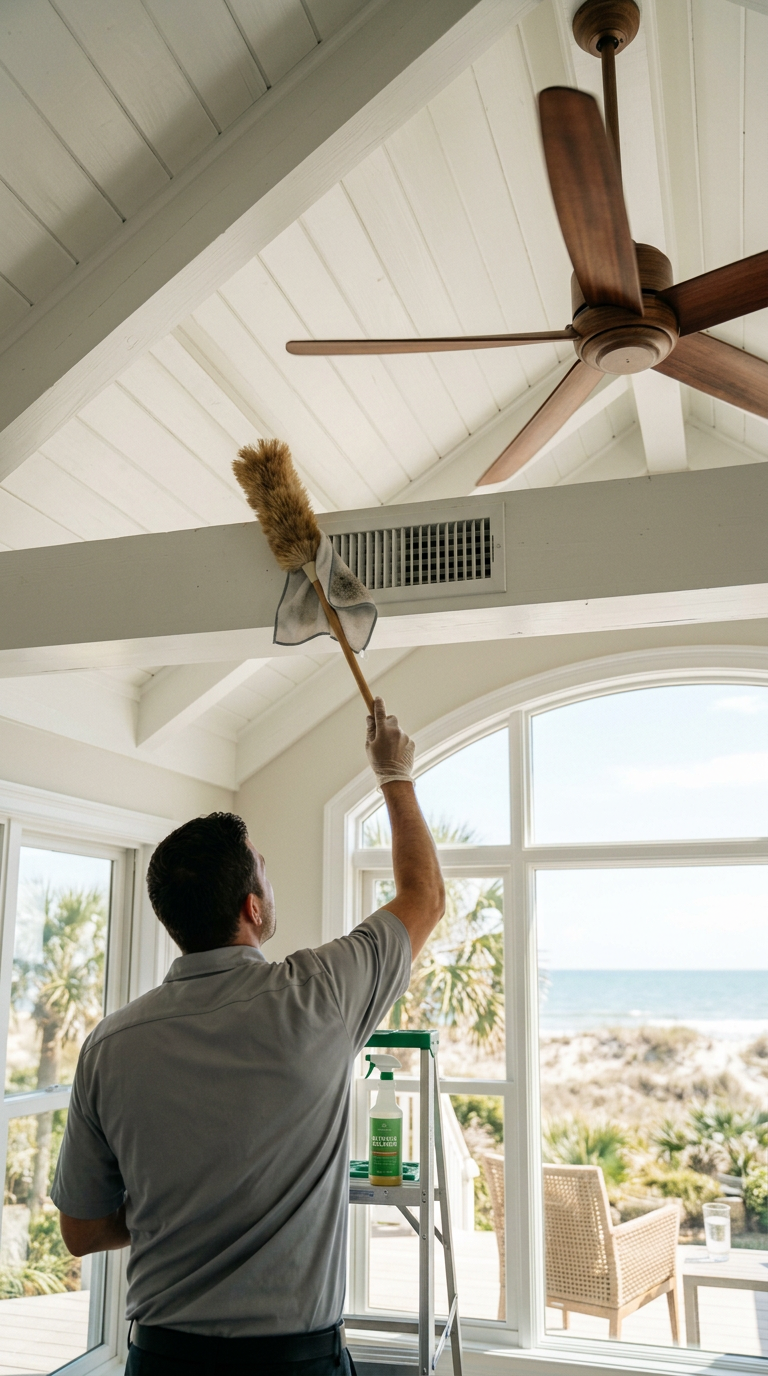
Myrtle Beach and the surrounding Grand Strand communities offer beautiful coastal views, but our humid climate presents unique challenges for maintaining a healthy indoor environment. Many homeowners focus their cleaning efforts on eye-level surfaces and floors, unaware that the air they breathe is heavily influenced by what accumulates high above their heads. High vaulted ceilings, ceiling fan blades, and HVAC register vents act as physical traps for dust, pollen, and mold spores. Understanding how to safely and sustainably remediate these overhead allergen reservoirs is essential for protecting your family's respiratory health without introducing harmful chemical residues into your home.
The Physics of Coastal Air: Why High Surfaces Attract More Than Just Dust
Grand Strand homes are subject to a unique coastal microclimate where ocean breezes and high ambient humidity meet indoor climate control systems. When warm, moisture-laden salt air enters a home, it carries microscopic salt crystals that naturally settle on flat surfaces. This creates a slightly sticky, hygroscopic film on overhead fixtures, which then acts like a magnet for airborne dust, pet dander, and seasonal pollens.
The problem is particularly pronounced on high, out-of-reach surfaces where air currents naturally rise. Vaulted ceilings, common in open-concept coastal floor plans, create thermal pockets where warm air lingers. As this warm air slowly cools and descends, it deposits fine particulate matter onto ceiling beams, high window ledges, and light fixtures, building up an unseen layer of environmental debris over time.
Unlike dry inland environments where dust remains loose and easy to brush away, coastal dust bonds to surfaces due to the constant moisture in the air. This adhesive quality makes standard dusting methods highly ineffective. To truly clear these overhead zones, homeowners must use techniques that break this moisture bond rather than simply shifting dry dust from one spot to another.
The Danger of Dusting Down: Avoiding Breathing Zone Contamination
When faced with dusty ceiling fans or high ledges, the instinctive reaction is often to grab an extendable feather duster and sweep from the bottom up. However, dry-dusting these high areas simply detaches the bound allergens, sending a cloud of fine particulates, mold spores, and dust mite droppings directly down into the living space. This process temporarily destroys your indoor air quality and triggers immediate respiratory irritation.
Once aerosolized, these microscopic irritants can hang suspended in the indoor air for hours. Family members breathing this air can suffer from sinus irritation, coughing, and heightened asthma symptoms. This is especially problematic in tightly sealed, air-conditioned homes where the HVAC system quickly recirculates the newly airborne dust throughout every room in the house.
Safe remediation requires a physical capture strategy rather than a scattering technique. By utilizing damp-trapping methods, you physically bind the dust to your cleaning medium before it can escape into your breathing zone. This sustainable approach protects both the person cleaning from inhaling concentrated debris and the home's occupants from long-term respiratory exposure.
HVAC Registers and Return Vents: The Gateway to Indoor Air Quality
The HVAC system is the lungs of your coastal home, operating almost continuously during our long, humid summers. Because return vents pull air from the living spaces, they constantly draw in dust, pet hair, and airborne spores. When this warm, damp air hits the cold metal grilles of your supply registers, condensation forms, creating the perfect damp breeding ground for mold and mildew.
Many homeowners attempt to address this by spraying commercial aerosol disinfectants directly into the vents. This is a hazardous practice that introduces volatile organic compounds (VOCs) and synthetic chemical residues directly into the ductwork, where they off-gas and contaminate your home's air supply for weeks. Furthermore, chemical sprays do not remove the physical organic matter that mold feeds on.
The sustainable, safe solution involves removing the vent covers entirely and washing them with biodegradable botanical surfactants. Removing the physical build-up of organic dust starves potential mold spores of their food source. Once the registers are clean and dry, they can be reinstalled, ensuring that the air flowing into your bedrooms and living spaces remains free of both biological allergens and chemical toxins.
Green Chemistry for Coastal Grime: Moving Beyond Harsh Solvents
Cleaning high surfaces effectively requires moving away from heavy synthetic solvents and petroleum-based cleaners. In highly humid coastal environments, residues from conventional cleaners remain sticky and attract new dust even faster than before. Green chemistry relies on plant-derived surfactants, such as alkyl polyglucosides made from coconut or corn, which lower the surface tension of water to lift greasy, salty film naturally.
Using a mild, pH-neutral botanical cleaner ensures that you do not damage delicate painted surfaces, wood finishes, or metal trim on high light fixtures. These green formulations break down the electrostatic and salt-bound bonds holding dust to surfaces without off-gassing toxic fumes. This is a critical consideration for overhead cleaning, where any dripping or vaporized cleaner falls directly toward your face and floors.
Additionally, avoiding synthetic fragrances in your cleaning solutions prevents the accumulation of phthalates in your indoor air. Many heavily scented products rely on synthetic terpenes that can react with indoor ozone to produce ultra-fine particles and formaldehyde. Opting for truly fragrance-free or naturally derived botanical extracts keeps your indoor air clean, pure, and safe for chemically sensitive family members.
The Ceiling Fan Conundrum: Preventing the Sling Effect of Mold Spores
Ceiling fans are essential for maintaining air circulation and comfort in the Grand Strand heat, but they are also notorious allergen distributors. As the blades spin through the air, friction builds up a static charge on the leading edges. This charge attracts microscopic fibers, skin cells, and mold spores, forming a thick, dark crust along the edges of the blades over several months of continuous operation.
When a fan is switched on after sitting idle, or when the build-up becomes too heavy, the rotation slings these compiled allergen chunks across the room. This distribution pattern deposits dust and fungal spores onto your bedding, upholstery, and carpets. To prevent this, ceiling fans must be cleaned using a technique that completely encapsulates the debris during the wiping process.
An excellent, low-waste method is using a damp, high-pile microfiber cloth inside an old pillowcase. By sliding the pillowcase over each individual blade, you can wipe the top and bottom surfaces simultaneously, trapping all the crusty residue inside the fabric envelope. This simple, eco-friendly method completely eliminates falling debris, protecting your furniture and your respiratory health in one motion.
Managing High-Level Architectural Features: Ledges, Transoms, and Vaults
Modern coastal architecture frequently incorporates high design elements like plant ledges, display alcoves, and transom windows above doorways. While beautiful, these features are rarely cleaned during routine weekly tidy-ups. Over time, they become silent reservoirs for settled pollen and dust mite colonies, which thrive in our warm, humid coastal air.
Accessing these areas safely requires specialized tools and careful planning. Instead of standing precariously on chairs or household ladders, use high-reach telescopic poles fitted with articulating microfiber sleeves. These sleeves should be lightly misted with a natural, biodegradable dust-binding agent to ensure that every particle is lifted rather than swept into the room below.
Cleaning these architectural features at least twice a year, specifically after the spring oak pollen season and before the winter closed-house period, drastically reduces the overall allergen load of your property. By systematically clearing these high-altitude reservoirs, you prevent the continuous drift of old dust down onto your low-level living areas, maintaining a healthier, cleaner home.
Creating a Sustainable, Year-Round Indoor Air Quality Strategy
Truly managing indoor air quality in the Grand Strand requires a holistic approach that goes beyond occasional surface cleaning. To complement your overhead cleaning routine, keep your home's relative humidity strictly between 45% and 55% using a whole-home dehumidifier or properly sized HVAC system. This range is high enough to prevent dry nasal passages but low enough to inhibit dust mite reproduction and mold growth.
Couple your dust-trapping surface care with regular HEPA vacuuming on low-level surfaces to capture any dust that does settle. Ensure your HVAC filters are rated MERV 11 or higher, and change them every 30 to 60 days, especially during peak pollen seasons. This continuous filtration loop captures airborne particulates before they have the chance to settle on your hard-to-reach vaulted ceilings and high ledges.
For homeowners and property managers who want to ensure their indoor environments are pristine without relying on harsh chemicals, professional assistance is often the safest path. A2Z Cleaning & Linen Services (843.800.2788) provides specialized, deep-cleaning services utilizing sustainable practices to keep your Grand Strand property healthy, safe, and beautifully clean from floor to ceiling.
- Set ceiling fans to run counterclockwise in summer to create a cooling downdraft, and clean them beforehand to avoid distributing winter dust.
- Inspect HVAC register boxes annually for signs of rusted metal or damp drywall, which indicate improper air sealing or excess humidity.
- Replace standard paper HVAC filters with high-efficiency pleated filters to capture fine spores and pollen.
- Wash high curtains and valances seasonally, as these fabrics act as giant air filters that trap rising dust and dander.
- Avoid heavy, synthetic aerosol room sprays which mask musty odors but degrade indoor air quality with synthetic chemical compounds.
Key takeaway
Maintaining healthy indoor air in our unique coastal environment requires addressing the hidden, high-level surfaces where salt and humidity trap allergens. By swapping dry-dusting and harsh chemicals for damp-capture microfiber and botanical cleaning agents, you can protect your family from respiratory irritants. For comprehensive, eco-friendly deep cleaning of your high ceilings, fans, and vents, contact A2Z Cleaning & Linen Services at 843.800.2788.
Keep Reading
Coastal Living
The Coastal Sliding Glass Door Track and Weep-Hole Decontamination Protocol: Mitigating Mold Bio-Sludge, Wind-Driven Allergens, and Chemical Runoff in Grand Strand Homes
ReadCoastal Living
The Coastal Window Treatment and Blackout Drapery Sanitization Protocol: Mitigating Humid Mold Spores, Pollen Reservoirs, and VOC-Free Allergen Release in Grand Strand Homes
ReadCoastal Living
The Coastal Dehumidifier and Condensate Drain Line Maintenance Protocol: Mitigating Bio-Sludge, Spore Reservoirs, and Indoor Air Quality Failures in Grand Strand Homes
ReadReady for a spotless property?
Call 843.800.2788 or request a free quote from A2Z Cleaning & Linen Services.