Home Cleaning
The Sticky Floor Syndrome: Managing Pet Hair, Child-Safe Products, and Coastal Residues in Grand Strand Homes
Learn how high coastal humidity, pet dander, and traditional household cleaners create a sticky magnet for sand, and how to safely clean your Grand Strand home for kids and pets.
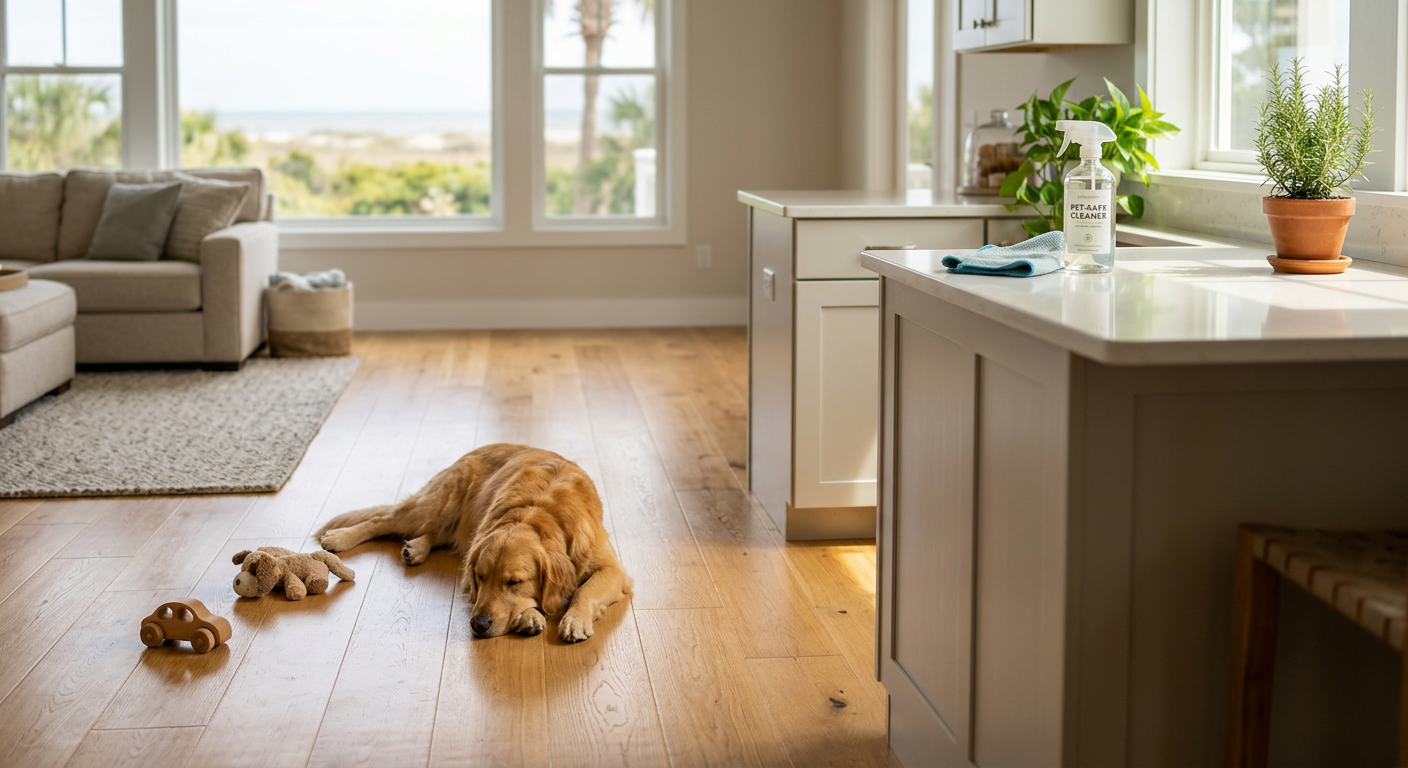
In our beautiful Grand Strand environment, raising a family alongside active pets brings endless joy, but it also presents a unique set of household maintenance challenges. The combination of fine coastal sand, high humidity, pet dander, and daily spills can quickly overwhelm standard domestic cleaning routines. Many homeowners inadvertently make the problem worse by relying on heavy chemical cleaners that leave sticky residues behind. Understanding how to clean safely and effectively in this humid climate preserves both your family's health and your home's interior finishes.
Understanding the Sticky Floor Cycle on the Grand Strand
Myrtle Beach's average summer humidity regularly exceeds 75 percent, which means moisture continuously hangs in the air inside our homes. When you use conventional supermarket floor cleaners, they leave behind a thin layer of soap, wax, or surfactant. This sticky, chemical residue never fully dries in our humid climate. Instead, it acts like flypaper, grabbing onto the ultra-fine quartz sand tracked in from our beaches and the constant drift of pet dander.
Over time, this mixture of moisture, cleaning residue, sand, and pet hair forms an invisible, abrasive slurry. Walking across these floors grinds this gritty mixture into luxury vinyl plank, hardwood, or tile grout, causing premature wear and a permanently dull appearance. It also creates a breeding ground for dust mites and mold spores, which thrive in humid environments. Families often respond by mopping more frequently with the same heavy cleaners, inadvertently compounding the problem.
To break this cycle, homeowners must shift their approach from coating floors to extracting soil. This means reducing the volume of product used and focusing on surfactant-free or residue-free agents. It is particularly important for households with young children and pets, who spend their time directly on these surfaces, constantly exposed to whatever chemical film has bonded with the floor's microscopic crevices.
The Danger of Traditional Cleaners to Toddlers and Pets
Toddlers and pets share a common physical space: the first two feet off the floor. They crawl, play, roll, and put their hands or paws directly into their mouths. Traditional household cleaners often contain synthetic fragrances, phthalates, and quaternary ammonium compounds. These chemicals are designed to linger on surfaces to provide long-lasting freshness or continuous disinfection, but they pose significant respiratory and dermal risks to small bodies with fast metabolisms.
When pets walk across a floor cleaned with harsh chemical residues, those compounds transfer directly to their paw pads. Dogs and cats then groom themselves, ingesting whatever chemical cocktail was used to mop the living room. For toddlers, the exposure is similarly direct. Synthetic residues can trigger contact dermatitis, exacerbate childhood asthma, and irritate sensitive eyes, especially in the enclosed, air-conditioned spaces of Grand Strand homes during hot summer months.
Eliminating these risks does not require sacrificing sanitation. True sanitation relies on physical soil removal first, followed by targeted, non-toxic sanitizing agents where necessary. By eliminating synthetic perfumes, harsh ammonia, and heavy chlorine bleach from your routine, you protect your family's endocrine and respiratory systems. You also prevent the accumulation of toxic dust, which is a major contributor to indoor allergy flare-ups in coastal environments.
Safe, Low-Residue Alternatives for Hardwood and Luxury Vinyl Plank (LVP)
Luxury Vinyl Plank is the dominant flooring choice in modern Myrtle Beach homes due to its moisture resistance. However, LVP is highly sensitive to chemical build-up, which ruins its matte or textured finish. For a safe, pet-and-child-friendly alternative, transition to a two-step cleaning method. Start with a thorough dry-vacuuming using a hard-floor attachment to remove sand and pet hair, then follow with a damp microfiber mop lightly misted with a pH-neutral cleaner or a highly diluted castile soap solution.
If using castile soap, add only one teaspoon of liquid soap to a gallon of warm, distilled water. This minimal concentration provides enough surface-tension reduction to lift dirt without leaving a sticky film. Microfiber mops are essential here; their split fibers carry a natural positive charge that attracts negatively charged dust, sand particles, and pet hair, physically lifting them away rather than smearing them across the surface.
Avoid all commercial mop-and-shine products. These solutions contain acrylic polymers or waxes that create a temporary artificial gloss. Over time, these coatings trap pet hair, dander, and coastal sand beneath them, requiring harsh chemical strippers to remove. A clean floor should not rely on a chemical coating to look clean; its natural finish should shine through because it is genuinely free of soil and residues.
- Dry vacuum LVP and hardwood floors with a soft-brush attachment before applying any liquid.
- Mix one teaspoon of liquid castile soap per gallon of warm water to create a residue-free cleaner.
- Use color-coded microfiber pads to prevent cross-contamination between bathrooms and living areas.
- Avoid wax, silicone, or mop-and-shine products that trap pet dander and sand grains.
Tackling Pet Hair and Dander on Soft Surfaces
Soft surfaces like area rugs, sofas, and draperies act as giant filters in Grand Strand homes, capturing floating pet dander and fine sand. Traditional vacuuming often only skims the surface, leaving deeply embedded dander behind to trigger allergies. To thoroughly extract pet hair, use a rubber-edged squeegee or a specialized rubber pet-hair brush across upholstered furniture before vacuuming. The rubber creates static electricity that pulls stubborn hairs out of woven fabrics.
When vacuuming, slow down your pace. Fast, sweeping passes do not allow the vacuum's brush roll and suction to lift heavy quartz sand from the base of the carpet fibers. Instead, use slow, deliberate strokes—about one foot per second—making overlapping passes in a grid pattern. This slow movement gives the airflow enough time to dislodge heavy, abrasive sand particles before they cut and wear down the carpet fibers from the bottom up.
Steam cleaning soft surfaces once or twice a year is highly beneficial, provided it is done correctly. High humidity in Myrtle Beach means carpets take longer to dry, creating a window for mold growth if fibers remain wet for more than 24 hours. Ensure you use an extraction-focused machine that leaves carpets only slightly damp, and run your home's air conditioning or dehumidifier alongside ceiling fans to accelerate drying times.
Managing the Entryway Sandbox: Strategic Zones for Kids and Pets
The most efficient way to keep a Grand Strand home clean is to prevent sand, pollen, and lawn chemicals from entering in the first place. Establish a multi-tiered entry system at your primary doors. The first tier is an outdoor, heavy-duty scraper mat designed to shake loose large sand grains and mud from shoes and paws. The second tier, just inside the threshold, should be a highly absorbent cotton or microfiber mat that traps fine moisture and residual dust.
Create a designated paw-cleaning station right by the entrance. Keep a shallow tray with a damp, safe microfiber cloth or hypoallergenic pet wipes to clean your dog’s paws immediately after walks. This routine stops salt water, sand, and outdoor allergens from being tracked onto your clean rugs and sofas. For children, establish a strict no-shoes-inside policy, providing a comfortable bench and cubbies for immediate shoe storage near the door.
By trapping up to 80 percent of outdoor contaminants at the entryway, you drastically reduce the frequency of full-house deep cleaning. This zoning approach also protects crawling infants from encountering lawn fertilizers, street oils, and coastal pollen that hitchhike indoors on footwear. It turns your entryway into a protective buffer, maintaining a safer, healthier indoor sanctuary for your family.
- Place a coarse coir mat outside your main entrance to strip sand from shoes and paws.
- Position a washable microfiber runner inside the door to absorb coastal humidity and dampness.
- Maintain a shallow container of warm water and a clean microfiber cloth for quick paw rinses.
- Store clean slippers or indoor-only shoes directly adjacent to the entryway seating area.
Allergy-Friendly Air Quality Routines for Coastal Homes
Indoor air quality in Myrtle Beach is heavily influenced by outdoor humidity, coastal mold spores, and local pollen. When you add pet dander and child-related dust to the mix, your HVAC system has to work incredibly hard. To maintain clean air, upgrade to MERV 11 or MERV 13 air filters. These filters are dense enough to trap pet dander, mold spores, and fine dust without restricting your HVAC system's airflow, which can damage the compressor in high-heat months.
Change these filters every 30 to 45 days, rather than the standard 90 days recommended in drier regions. The moisture in coastal air can cause trapped dust on filters to clump, restricting airflow and encouraging microscopic mold growth within the filter media itself. Additionally, wash child plush toys and pet bedding weekly in hot water (at least 130 degrees Fahrenheit) to kill dust mites and break down allergen-inducing proteins.
Keep your indoor relative humidity levels between 45 and 50 percent. This range is high enough to prevent static electricity but low enough to inhibit dust mite reproduction and mold growth. If your home's AC unit struggles to keep up, consider investing in a dedicated dehumidifier or high-quality HEPA air purifiers in bedrooms and main living spaces where your children and pets spend the majority of their time sleeping.
Safe Spot-Cleaning Solutions for Everyday Spills
In a busy household with children and pets, spills, muddy footprints, and pet accidents are daily occurrences. Instead of reaching for chemical aerosol spot-treatments, keep a safe, homemade cleaning kit ready. For organic spills like juice, mud, or pet accidents, start by blotting as much liquid as possible with a clean, dry white cotton towel. Never scrub, as rubbing forces the liquid deeper into the carpet backing or wood grain.
For acid-based stains or odors, sprinkle a generous amount of baking soda over the damp area to absorb moisture and neutralize odor. After 15 minutes, vacuum up the dry powder. If a stain remains, mist it lightly with a solution of equal parts white distilled vinegar and water. The vinegar breaks down the remaining organic matter without leaving any chemical residue that could irritate your pet’s sensitive nose or your child’s skin.
For stubborn grease or protein stains, a few drops of vegetable-based, fragrance-free dish soap mixed with warm water is highly effective. Dab the solution onto the spot, working from the outside edge inward to prevent the stain from spreading. Rinse the area by dabbing with clean, cold water, then press a dry towel over the spot under a heavy object, like a book, to draw out all remaining moisture.
Structuring a Manageable Daily and Weekly Family Cleaning Schedule
Maintaining a clean Grand Strand home does not require dedicating your entire weekend to scrubbing. Instead, break tasks down into micro-routines integrated into your daily family life. Spend ten minutes every evening doing a sweeping pass of high-traffic zones like the kitchen, dining room, and main entry. Involving children in these quick, age-appropriate tasks—like putting their toys into bins or helping wipe down low tables with damp microfiber cloths—builds healthy habits.
Dedicate one day a week to deep vacuuming all rugs and mopping hard floors using your low-residue castile soap solution. By keeping up with daily dry-sweeping, you prevent sand from acting like sandpaper on your floors during the week, making your weekly damp mop significantly faster and more effective. Rotate through soft-surface cleaning, washing one pet bed or set of kids' curtains each week so the workload remains evenly distributed.
If balancing a busy career, family obligations, and coastal lifestyle feels overwhelming, professional support can restore equilibrium. A2Z Cleaning & Linen Services provides specialized residential deep cleaning tailored specifically to families, pets, and the unique challenges of our Grand Strand climate. Our team uses safe, residue-free methods that protect your family's health while preserving the longevity of your coastal home.
Key takeaway
Keeping a busy Grand Strand household clean requires working with our coastal climate rather than fighting it. By avoiding heavy chemical cleaners that leave sticky residues, and using targeted, physical extraction methods, you protect your children and pets from harmful exposures. For professional assistance in keeping your home healthy and immaculate, contact A2Z Cleaning & Linen Services at 843.800.2788.
Keep Reading
Home Cleaning
The Coastal Pet-Crate and Indoor Dog-Bed Restoration Protocol: Mitigating Humid Yeast Biofilms, Dander Reservoirs, and Urine-Ammonia Interactions in Grand Strand Homes
ReadHome Cleaning
Low-Zone Sanitization: Protecting Crawling Toddlers and Ground-Level Pets from Coastal Residues and Harsh Chemicals
ReadHome Cleaning
The Coastal Modular Foam Play-Couch Decontamination Protocol: Managing Sand-Grit, Pet Dander, and Humidity-Trapped Spills in Grand Strand Homes
ReadReady for a spotless property?
Call 843.800.2788 or request a free quote from A2Z Cleaning & Linen Services.