Coastal Living
The Sub-Plank LVP Moisture Trap: Preventing Subfloor Mold, Joint Swelling, and Indoor Air Quality Failures in Grand Strand Homes
Discover how luxury vinyl plank flooring can trap moisture on coastal concrete slabs, how to prevent hidden subfloor mold, and safe, low-moisture green protocols to protect your home's air.
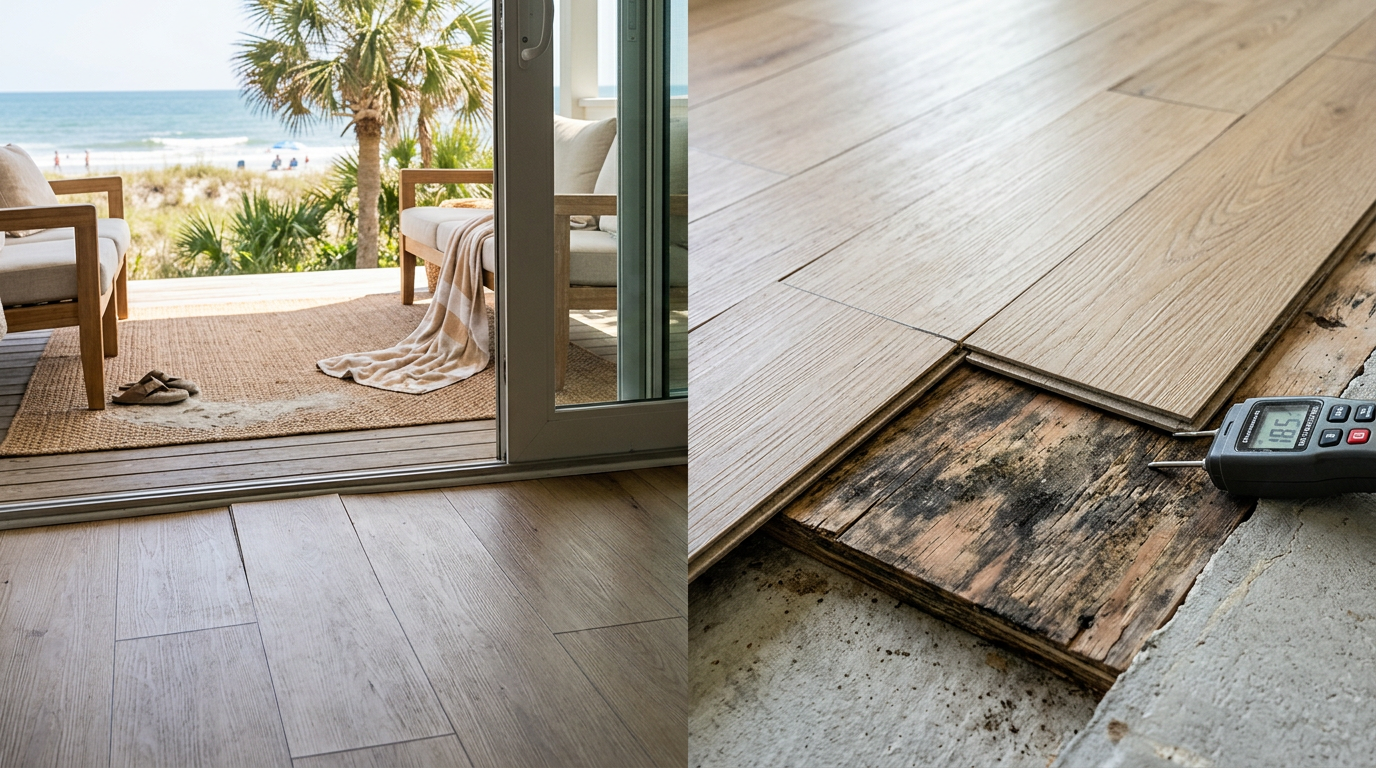
Luxury Vinyl Plank (LVP) has become the go-to flooring choice across Myrtle Beach and the wider Grand Strand, celebrated for its resistance to sand, water, and heavy foot traffic. However, beneath this seemingly impervious barrier, a silent environmental challenge often develops on our coastal concrete slab foundations. When moisture becomes trapped underneath these synthetic planks, it creates a hidden incubator for mold, deteriorating flooring joints and releasing invisible spores into the air. Understanding the dynamics of sub-plank moisture and adopting low-moisture, eco-friendly maintenance protocols is essential for protecting both your home's structural integrity and your family's health.
The Coastal LVP Vulnerability: High Humidity Meets Concrete Slabs
Myrtle Beach and the surrounding Grand Strand feature unique geographical conditions, specifically sandy soils and high water tables. Many single-family homes, coastal cottages, and ground-floor condominiums are built directly on concrete slab-on-grade foundations. Concrete is inherently porous, acting like a slow-release sponge that absorbs moisture from the damp earth beneath through capillary action. Without proper mitigation, this moisture constantly travels upward, seeking an escape route into the indoor air of your home.
When LVP is installed directly over these concrete slabs without a high-quality, taped vapor barrier, this natural moisture migration is abruptly halted. The impermeable vinyl backing of the planks prevents the rising water vapor from evaporating. Instead, the moisture accumulates directly underneath the flooring, turning the thin underlayment space into a damp, dark microclimate that remains completely hidden from view.
This issue is further aggravated by the extreme relative humidity characteristic of our South Carolina summers. As warm, moist air enters the home, it naturally condenses on cooler surfaces, including the concrete beneath your floors. This combination of rising subfloor moisture and ambient condensation creates a persistent wet zone that challenges even the highest-quality flooring installations.
The Mechanics of Sub-Plank Mold Colonization
Mold spores are a natural part of our coastal environment, traveling indoors through open doors, windows, and HVAC systems. To colonize and multiply, these spores require only two main components: an organic food source and sustained moisture. The dark space beneath LVP flooring provides the perfect incubator, especially when organic dust, drywall particles, or cellulose-based underlayment materials were left behind during the installation process.
While LVP is marketed as waterproof, this rating typically applies only to the individual planks themselves, not to the assembled floor system. Water can easily bypass the locking joints. Micro-gaps caused by minor floor movement, improper installation, or sand grit wearing down the clicking mechanisms allow spills, pet accidents, and cleaning water to seep downward.
Once liquid water or vapor gets locked beneath the vinyl barrier, the lack of air circulation prevents it from drying out. Within 24 to 48 hours, dormant mold spores begin to germinate. This unseen growth spreads rapidly along the concrete slab or underlayment, quietly degrading the materials underneath while remaining completely invisible to the household.
Aerosolized Spores and Indoor Air Quality Impacts
Although the mold growth is physically trapped beneath your flooring, it does not remain isolated from your living spaces. Floating LVP floors naturally deflect and flex slightly when walked upon. This minor vertical movement acts like a bellows, compressing the small air pocket beneath the planks and forcing trapped air upward through the expansion gaps at the baseboards.
This bellows effect constantly releases mold spores, fragments, and volatile organic compounds (VOCs) directly into your home's breathing zone. Because these microscopic particles are light enough to remain suspended in the air, they are easily inhaled by occupants. For families spending time indoors, this can lead to persistent, unexplained musty smells and poor indoor air quality.
The health implications of this hidden allergen source are particularly significant for young children crawling on the floor, pets resting near the ground, and individuals with pre-existing respiratory conditions like asthma. Mitigating this pathway is essential for maintaining a healthy coastal home environment, especially during the humid summer months when indoor time increases.
The Failure of Traditional Heavy Mopping and Harsh Sanitizers
When homeowners detect a musty odor or suspect subfloor issues, their initial reaction is often to clean the floor more aggressively. This usually involves reaching for traditional mop-and-bucket systems, steam cleaners, or heavy chemical sanitizers. Unfortunately, these aggressive wet-cleaning methods often worsen the underlying moisture problem rather than resolving it.
Steam cleaners are particularly damaging to LVP systems. The pressurized steam forces superheated moisture directly into the interlocking joints, where it instantly condenses into liquid water beneath the planks. Similarly, saturated string mops leave pools of standing water on the surface, which gravity naturally pulls down through the micro-seams of the floor.
Furthermore, using harsh chlorine bleach or ammonia-based cleaners can permanently damage your flooring. These chemicals degrade the protective wear layer of the vinyl and weaken the locking joints over time. This chemical breakdown creates wider pathways for water to seep through, accelerating the cycle of moisture accumulation and mold growth.
The Low-Moisture, pH-Neutral Cleaning Protocol
Safely maintaining LVP flooring requires a strict transition to low-moisture, high-efficiency cleaning techniques. The foundation of this protocol is a dry, dual-motor vacuum cleaner equipped with a certified HEPA filter. This setup removes fine sand, pet dander, and organic dust from the seams without scratching the wear layer or pushing dirt deeper into the joints.
For damp cleaning, we recommend using a microfiber flat mop system paired with a controlled misting spray bottle. The microfiber pad should feel barely damp to the touch—never wet enough to leave standing droplets or wet streaks that take more than a minute to dry. This dry-damp method removes surface grime without allowing moisture to penetrate the seams.
Always choose a pH-neutral, non-filming green surfactant specifically formulated for resilient flooring. These plant-derived cleaners effectively break down oils and dirt without leaving sticky residues that attract coastal sand. By avoiding film-forming detergents, you protect the mechanical integrity of the vinyl joints and prevent the chemical breakdown that leads to leaks.
- Vacuum weekly with a brush-free, HEPA-filtered vacuum to prevent sand abrasion in the joints.
- Use a microfiber flat mop system to strictly control the volume of water applied to the floor.
- Apply clean water or pH-neutral cleaners via a fine-mist spray bottle rather than pouring liquid.
- Wipe up spills immediately to prevent liquid from sitting on the seams and gravity-filtering below.
- Avoid steam mops entirely, as pressurized heat breaks down joint adhesives and vaporizes water below.
Vapor Barrier Integration and Subfloor Diagnostics
If you are preparing to install new LVP flooring or suspect an existing moisture issue, conducting a professional subfloor assessment is a vital preventive step. This process involves using non-penetrating concrete moisture meters to measure the relative humidity and vapor emission rate of your concrete slab before any flooring is laid down.
For a secure installation, a high-quality vapor barrier is non-negotiable. We recommend a minimum 6-mil polyethylene plastic sheet laid over the concrete slab, with all seams overlapping by several inches and sealed with heavy-duty, moisture-resistant tape. This simple plastic barrier blockades rising concrete vapor, keeping the underlayment dry.
For homes with existing floors, tracking relative humidity changes near your baseboards using thermal imaging can help identify hidden moisture. Cool spots on the floor surface often point to areas where water vapor is accumulating underneath, allowing you to address localized leaks or drainage issues before mold spreads across the room.
Botanical Microbial Inhibitors and Dehumidification Standards
To manage biological growth without introducing harsh synthetic chemicals into your living space, opt for botanical antimicrobial solutions. Formulations containing thymol, an active ingredient derived from thyme oil, are highly effective against mold spores while remaining safe for children, pets, and chemically sensitive individuals.
These EPA-approved, bio-based disinfectants can be lightly misted along baseboards and perimeter expansion joints. This treatment helps neutralize escaping spores and musty odors at their source without leaving toxic residues or releasing synthetic perfumes that can irritate your respiratory system.
In addition to using botanical sanitizers, keeping your indoor relative humidity below 50% is crucial. Grand Strand HVAC systems should be paired with dedicated whole-home dehumidifiers to pull excess moisture out of the air. Keeping the indoor air dry minimizes the risk of condensation forming along the edges and beneath the joints of your flooring.
Vetting Professional Cleaning and IAQ Experts
When hiring a professional cleaning service in the Myrtle Beach area, it is important to ask about their specific training in low-moisture LVP care and indoor air quality protection. Many general cleaning companies still rely on heavy wet-mopping or high-pressure extraction systems that can damage coastal flooring.
Confirm that your service provider uses certified HEPA-filtered vacuums and eco-friendly, pH-neutral green cleaning agents rather than harsh chemical strippers. Ask if their technicians understand how to manage expansion joints and perimeter areas safely, ensuring that your home receives a deep clean without any risk of subfloor water damage.
A2Z Cleaning & Linen Services specializes in providing expert, low-moisture care designed specifically for Grand Strand properties. Our family-owned team understands the unique challenges of coastal humidity and slab-on-grade foundations. To discuss a customized, health-conscious cleaning plan for your home or property, contact our local office at 843.800.2788.
Key takeaway
Protecting your Grand Strand home from hidden subfloor mold requires transitioning to low-moisture, pH-neutral cleaning methods that prevent water from seeping beneath your LVP flooring. By pairing HEPA vacuums, damp microfiber mops, and botanical sanitizers with proper humidity control, you can preserve your floors and ensure clean, healthy indoor air for your family.
Keep Reading
Coastal Living
The Coastal Window Treatment and Blackout Drapery Sanitization Protocol: Mitigating Humid Mold Spores, Pollen Reservoirs, and VOC-Free Allergen Release in Grand Strand Homes
ReadCoastal Living
The Coastal Dehumidifier and Condensate Drain Line Maintenance Protocol: Mitigating Bio-Sludge, Spore Reservoirs, and Indoor Air Quality Failures in Grand Strand Homes
ReadCoastal Living
The Under-Sink Cabinet Microclimate: Mitigating Mold Spore Colonization, Condensation Vectoring, and Chemical Off-Gassing in Grand Strand Homes
ReadReady for a spotless property?
Call 843.800.2788 or request a free quote from A2Z Cleaning & Linen Services.